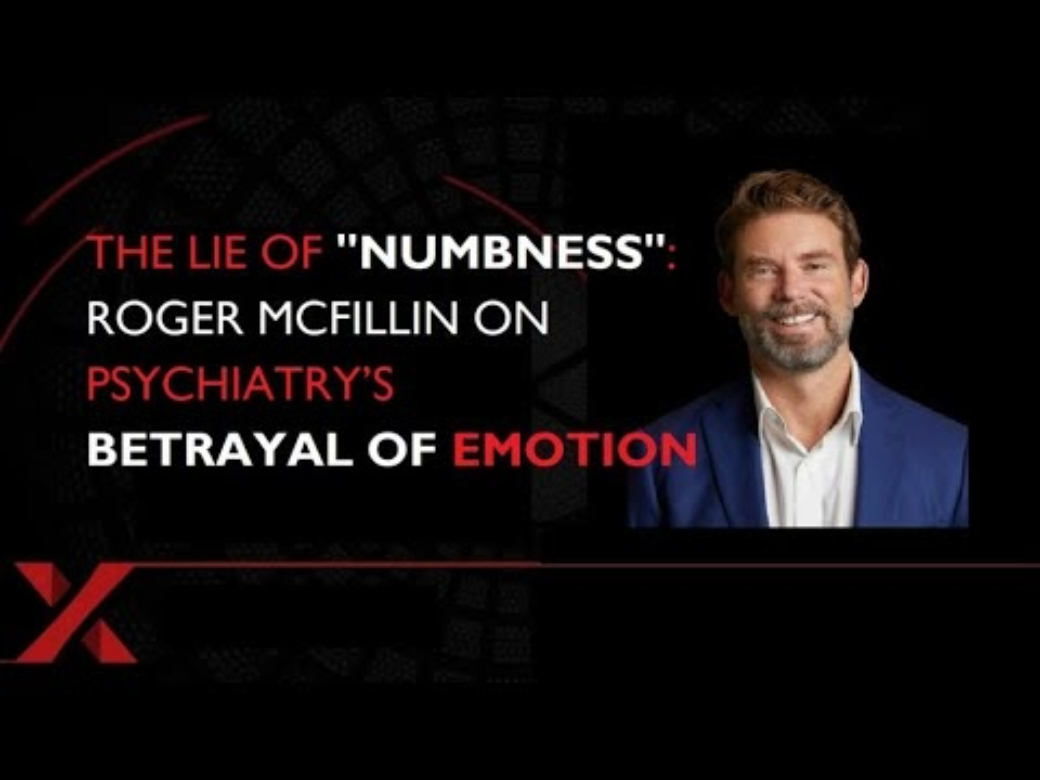

Roger McFillin, Psy. D., creator of the Radically Genuine Podcast, stands apart from the mental health establishment. His charge is simple: psychiatry has turned human struggle into disease, and in doing so, made people sicker. One in four Americans takes a psychiatric drug, mostly antidepressants. Yet rates of depression climb, suicides climb, and the culture feels more demoralized than ever.
“Clinical depression, in its severest form, was once rare. Less than one percent at any given time. Now, thirty percent identify as depressed. Something is wrong.”
McFillin calls SSRIs “mitochondrial poison.” They dull both highs and lows, dimming the light of human experience. He argues they create dependence rather than healing, leaving some patients permanently damaged. “The lie is that feeling less means feeling better,” he says.
The example he returns to is grief. To medicate grief, he insists, is to sever people from their own humanity. “Drugging grief should be a crime against humanity.” Grief is not illness but love in another form, the necessary ache of loss that allows life to continue. To erase it is to rob people of the very map they need to recover.
“If you prevent people from their darkness, you also prevent them from their light,” McFillin says. Emotions, even painful ones, are signals. They guide us to confront what is broken, to make changes, to discover who we are. To blunt them with drugs is to lose the compass.
He worries not only about psychiatry but about the broader culture. Women on birth control describe feeling emotionally narrowed, less alive. Patients confess to living on screens, eight or ten hours a day. “How are you supposed to direct your attention when your brain is stimulated twelve hours a day by a phone?” he asks. Attention is frayed, boredom intolerable, connection lost.
“The further we get away from our connection to nature, the sicker we become.” He sees it everywhere: families struggling to live on a single income, debt weighing down young adults, processed food replacing nourishment, and quick pleasures filling the space where purpose once existed: pornography, Netflix, endless scrolling—all distractions from the emptiness.
In his practice, he sees the consequences: trauma, PTSD, and eating disorders. He notes that anorexia often emerges after a stressor, a shutting down of appetite that echoes genetic memory of famine. These are not diseases without cause, but rather adaptive reactions that can spiral out of control when misunderstood. Pain, he insists, is a teacher. To medicate it away is to silence its lesson.
McFillin states that in the 1950s, before widespread psychiatric drugs, 85 percent of patients with manic depression recovered after a single episode and returned to full lives [not fact-checked [1]]. Today, drug cocktails ensure relapse and disability. What was once survivable has been made incurable.
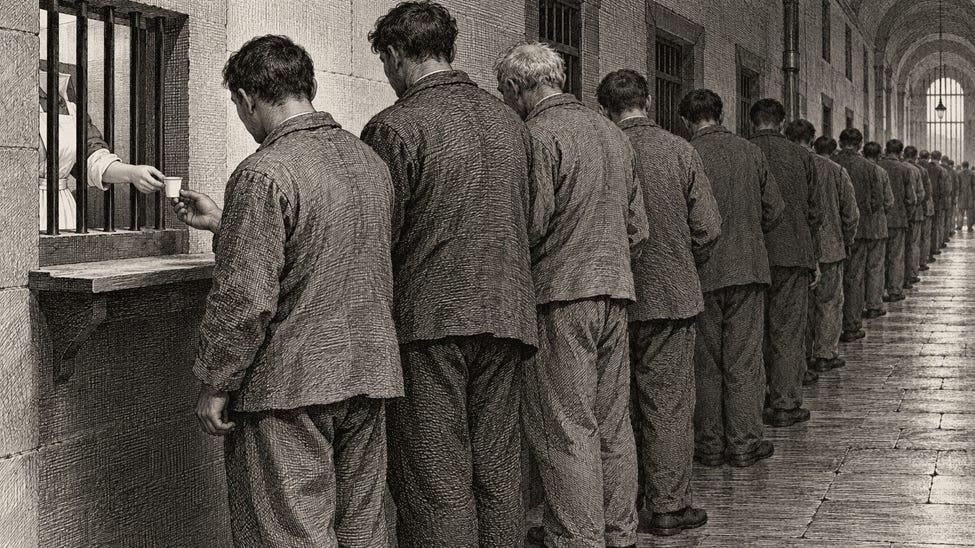
He contrasts soteria houses (small communities where patients lived close to nature, ate well, and often recovered) with today’s psychiatric hospitals. “Psychiatric hospitals are prisons,” [2] he says. Patients are locked away, sedated, cut off from families, branded with diagnoses that follow them forever.
Labels themselves, he argues, can wound. ADHD, once uncommon, has become an identity. People describe themselves as “ADHD people,” filtering every failure through the label. But the condition, he says, is often cultural. Children cannot sit still through lectures, but can focus on video games for hours. The problem lies not in the brain, but in the narrow definition of what is considered normal.
And then there is gender. Here, McFillin does not mince words. “The idea of gender dysphoria as identity is a psychological operation.” He describes it as a social contagion that targets adolescents at their most vulnerable moment. By confusing them about sex and identity, society erodes stability and weakens the individual.
Running through all these critiques is a common thread. Human beings are built to endure loss, to adapt, to recover. Emotions are signals. Grief is a teacher. Pain is not the enemy. The attempt to drag away these states leaves people without direction, wasting their lives in distraction. His appeal is to return to something older, simpler, closer to nature. To trust the body’s own homeostasis. To allow suffering its course, so that from darkness light can emerge again.
[1] Diagnostic categories in the 1950s differed from those of today, recovery was defined differently, and long-term follow-up data were limited. Outcomes then were often described as episodic and recoverable, whereas today bipolar disorder is treated as a chronic relapsing illness.
[2] and possibly the opposite is true, that absent psychiatric hospitals, many of those who can not fend themselves in society turn to crime and wind up in prison.
Join us at 5 pm ET weekdays on America Out Loud Talk Radio. Listen on iHeart Radio, our world-class media player, or our free apps on Apple, Android, or Alexa. Discover all the episodes on podcast networks, i.e., Apple Podcasts, Spotify, Pandora, TuneIn, Stitcher, and iHeart. You’ll find them the day after they air on talk radio, available on podcast. Extraordinary voices for extraordinary times.
Discover more from Randy Bock MD PC
Subscribe to get the latest posts sent to your email.