


When Cities Betray Their Promise: A Conversation About Urban Nostalgia and Institutional Collapse
California doesn’t just offer good weather—it offers amnesia. For comedian and social analyst Lou Perez, living in Los Angeles felt like existing in a perpetual present tense, where memory dissolved as quickly as it formed. “It’s like an orgy of perfect weather with the occasional wildfire,” he says, capturing both the pleasure and the warning inherent in coastal living.
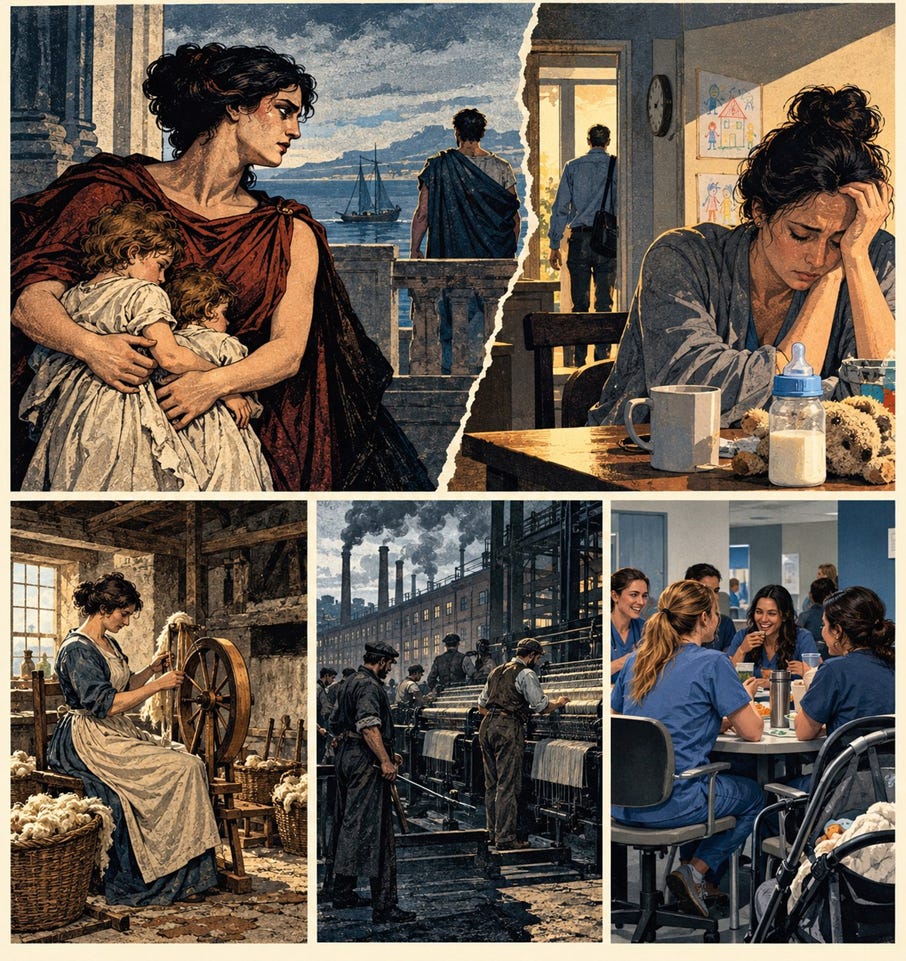
The experience of urban nostalgia—that bittersweet longing for places and times past—has become increasingly prevalent as cities undergo rapid transformation. Modern urban life presents a paradox: we’re more connected than ever, yet increasingly disconnected from the communities around us.
Table of Contents
The Geography of Memory: Why We Can’t Go Home Again
Urban nostalgia isn’t merely personal sentiment—it’s a documented psychological phenomenon. Research shows that rapid urban development triggers what scholars call “in situ displacement,” where residents stay in place while landscapes around them dramatically reconfigure. People don’t just lose buildings; they lose the sensory and emotional landscapes that anchored their memories.
For Perez, returning to Brooklyn after moving to New Jersey revealed this truth starkly. Colony Restaurant on Atlantic Avenue—where he’d celebrated milestones, learned the sex of his children, and built fifteen years of memories—closed its doors permanently. “This is really the end,” he reflected, paying the final check. “Our neighborhood that I grew to hate and then longed for is no longer there.”
This pattern repeats across American cities. Urban renewal, gentrification, and institutional changes erase the physical markers of collective memory, leaving residents with nowhere to anchor their past.
COVID and the Collapse of Urban Community
The pandemic accelerated what was already happening: the transformation of neighborhoods from communities into regulatory zones. Perez describes how COVID-era Brooklyn turned neighbors into enforcers, compliance into virtue, and common sense into dissent.
Modern urban life shows people increasingly indifferent, constantly busy, and disconnected, where neighbors might not even know each other for years, a stark contrast to traditional communities where people relied on strong economic and emotional ties.
The absurdity became visceral when Perez witnessed two fellow physicians—both in their fifties—gasping for air after playing squash while masked. The institutional mandate prioritized symbolic compliance over physiological reality. “What do you think the odds are of having a heart episode from maximum exertion without catching oxygen versus getting COVID you’ve already had?” he asked them. The answer didn’t matter; compliance did.
Institutional Failure: When Certainty Replaces Judgment
Universities, media, public health authorities, and police departments all appear in Perez’s narrative not as villains but as systems that stumble when certainty replaces judgment. The 2015 Yale Halloween costume controversy—where students demanded the resignation of administrators who suggested students could decide their own costumes—previewed the institutional capture that would accelerate during COVID.
Nicholas Christakis, the Yale professor at the center of that controversy, stood bewildered as students surrounded him, demanding his job for the crime of suggesting dialogue over institutional control. The irony, Perez notes, is that these students stood in courtyards modeled after French Renaissance and English colonial architecture, aspiring to master Western liberal arts—the ultimate cultural appropriation—while claiming victimhood over costume choices.
The Body Camera Paradox: When Surveillance Undermines the Narrative
Perhaps no institutional failure reveals itself more clearly than in the story of police body cameras. Perez is completing an essay for Pirate Wires arguing that “nothing has hurt the anti-police movement more than the very body cams they demanded police wear.”
In 2016, 47% of general-purpose law enforcement agencies had acquired body-worn cameras; for large police departments, that number reached 80%. The technology emerged from demands for police accountability following high-profile incidents. Activists assumed cameras would vindicate their narratives about systemic police brutality.
The opposite happened.
For every viral video of police misconduct, hundreds of body camera videos show officers dealing with violence, mental health crises, and dangerous situations requiring split-second decisions. Research on NYPD body cameras showed that citizen complaints against police decreased by roughly 20%, with abuse of authority complaints dropping the most.
Recent cases demonstrate the pattern. A former Georgetown basketball player experiencing a mental health crisis came out swinging a blade at an officer during a wellness check. The officer, pleading with her to stand back, ultimately had to end her life. The body camera footage showed what narrative couldn’t: the impossible position officers sometimes face.
The Michael Brown case in Ferguson epitomized the gap between narrative and reality. “Hands up, don’t shoot” became a rallying cry, despite evidence showing the phrase never reflected what actually happened. Brown, 6’4″, had just committed strong-armed robbery and was fighting for the officer’s gun. What would you have done? The body camera era forces us to confront that question.
Oliver Sacks and the Celebration of Fabrication
The conversation touches on another institutional failure: the celebration of fabrication as insight. Recent revelations show that neurologist and author Oliver Sacks fabricated many of the patient stories that made him famous. His case studies—including “The Man Who Mistook His Wife for a Hat”—read more like fiction than case reports.
“You could only get away with that once,” Perez jokes about the titular case. “There’s no way she’s letting you mistake her for a hat again.”
The medical community’s embrace of Sacks despite mounting evidence of fabrication reveals a troubling pattern: institutional prestige matters more than truth. Beautiful lies that confirm our biases receive more acclaim than mundane truths that challenge them.
The Bumper Sticker Epistemology of Modern Politics
Perez describes seeing a Subaru Forester covered in contradictory bumper stickers: “Make Love Not War” next to a Pride flag superimposed with an AK-47 and Marx’s statement on armed resistance. “F*** the Police” appeared alongside “Medicare for All.”
This bumper sticker epistemology—the inability to hold coherent principles—extends beyond individual cars. Activists demand prison abolition until they want someone imprisoned. They demand defunding police until they need police intervention. They claim to oppose violence while celebrating armed resistance.
Reality resists theory, and fear reorganizes priorities without asking permission.
Family Life as Antidote to Institutional Madness
Against this backdrop of urban nostalgia and institutional collapse, Perez finds grounding in family life. Moving from a one-bedroom Brooklyn apartment to a New Jersey house with a basement larger than their entire former living space represented more than square footage.
“We could watch our oldest son develop differently once he had room to walk around,” he explains. Space matters. Stability matters. The ability to insulate your family from institutional madness matters.
The transition from urban apartments to suburban houses, from cultural proximity to physical space, from institutional dependence to family autonomy—these aren’t just lifestyle choices. They’re survival strategies in an era when institutions have abandoned their core functions.
Tom Wolfe’s Prescient Vision
The conversation repeatedly returns to Tom Wolfe, whose “Bonfire of the Vanities” predicted the collapse of urban order decades before it happened. Wolfe wrote so vividly that readers long for eras they never experienced, creating nostalgia for times before they were born.
The novel, based partly on Al Sharpton’s race-baiting career, showed how simplified morality tales fail when confronted with complexity. Sharpton, who never paid court-ordered damages for defamation, built wealth and influence through racial grievance. “Skinny Al” or “plump Al”—the transformation matters less than the consistency of the grift.
The Return to the Familiar as Survival Strategy
In 2025, TikTok’s fastest-growing content clusters were in “comfort nostalgia,” “tradition explained,” and “ancestral wisdom,” showing people returning to the familiar as a survival strategy rather than mere sentimentality.
This isn’t reactionary politics—it’s psychological necessity. When institutions fail, when neighborhoods transform beyond recognition, when basic competence becomes controversial, people retreat to what they can control: family, tradition, memory.
Urban nostalgia emerges not from resistance to progress but from the recognition that what was marketed as progress often represented decay. The promise of community became surveillance. The promise of diversity became conformity. The promise of justice became tribal vengeance.
What the Body Camera Era Teaches Us
The police body camera paradox offers a broader lesson about institutional reform. Transparency doesn’t always produce the expected results. Sometimes reality contradicts narrative. Sometimes complexity resists simplification. Sometimes the people demanding accountability discover they preferred the ambiguity.
Chicago Police Department data shows body-worn cameras associated with a 29% reduction in use-of-force complaints, driven primarily by white officer-black civilian interactions. The cameras also showed a 34% reduction in officers reporting striking civilians. But they also revealed what officers actually face, undermining simplified narratives about systemic racism and police brutality.
For every legitimate case of police misconduct, body cameras captured hundreds of interactions showing officers exercising remarkable restraint under extraordinary pressure. They showed citizens attacking officers, lying about encounters, and refusing lawful commands. They showed mental health crises, domestic violence, and armed resistance.
The footage restored context that narrative had removed.
Nostalgia as Political Resistance
Perhaps urban nostalgia represents more than personal sentiment. Perhaps it’s a form of political resistance—a refusal to accept institutional gaslighting about what we’ve lost.
When officials claim cities are safer than ever while residents flee, nostalgia says: I remember when this was true. When activists claim police brutality is epidemic while body cameras show restraint, nostalgia says: I remember when evidence mattered. When universities demand conformity while claiming to celebrate diversity, nostalgia says: I remember when education meant learning to think, not what to think.
Nostalgia became institutionalized in museums and urban memorials during rapid industrialization, as people longed for slower rhythms and social cohesion. The current wave follows the same pattern: rapid technological and social change produces longing for stability.
The Geography of Meaning in a Placeless World
Perez’s journey from Los Angeles to Brooklyn to New Jersey traces a common American arc: seeking meaning in place, finding constraint in proximity, discovering freedom in space. Each location offered different possibilities and different limitations.
California provided pleasure without depth. Brooklyn offered culture without stability. New Jersey delivers space for family life.
These aren’t just geographic preferences—they’re choices about what matters. In an era of institutional collapse, family becomes the primary institution that works. Physical space becomes more valuable than cultural proximity. Stability trumps stimulation.
Cicero and the Eternal Return
The conversation touches on reading Cicero’s “On Duties,” a 2,000-year-old text that reads as contemporaneously relevant today as when written. Cicero’s insights about political stability, civic virtue, and institutional competence apply directly to current crises.
The work reminds us that institutional collapse isn’t new. Rome faced it. So did every civilization that forgot the basics of social trust, competent administration, and shared reality.
Reading Cicero while watching modern institutions stumble produces a strange doubling effect: we’re living through patterns documented millennia ago, yet convinced our moment is unique.
Conclusion: Living Through the Loss of Marbles
Growing up as the world lost its marbles means developing the capacity to see clearly while institutions insist on preferred narratives. It means trusting memory when officials dismiss it as nostalgia. It means believing evidence when activists demand faith in theory.
Urban nostalgia isn’t merely longing for the past—it’s resistance to institutional gaslighting about the present. When body cameras undermine anti-police narratives, when COVID policies defy common sense, when universities punish dialogue, when cities decay while officials claim progress, nostalgia becomes a form of sanity.
Perez’s journey from California amnesia to Brooklyn nostalgia to New Jersey stability traces a path many Americans now follow. Not because they reject progress, but because what was marketed as progress often represented decay.
The world may have lost its marbles, but family, memory, and evidence remain. In an age of institutional collapse, that might be enough.
Discover more from Randy Bock MD PC
Subscribe to get the latest posts sent to your email.