
Pain, narcotics, and the slow collapse of clinical judgment under regulatory fear.
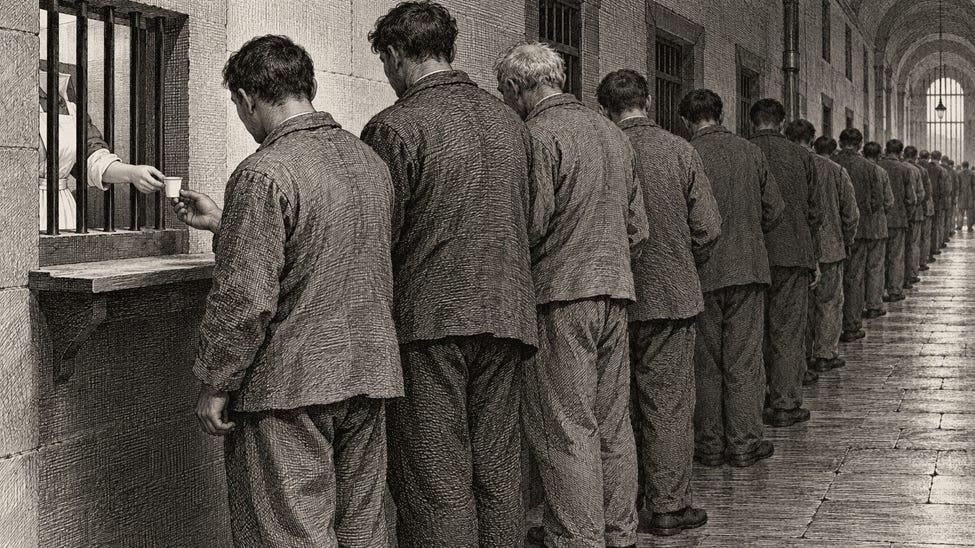
The system no longer trusts the patient, and once that happens, everything else starts to wobble. A man walks in with two failing hips, years of documentation, imaging, surgeries lined up, and a long record of playing it straight, yet the first instinct is suspicion. Not assessment, not judgment, but suspicion. I said early on, and I stand by it: “Gun control and narcotic control follow the same arc; the misuse by a few constrains the legitimate use by many.” Brian, who has lived this for fifteen years, did not push back. He put it more bluntly: “Everybody is treated like an addict until you’re not.” That is not commentary. That is policy translated into behavior.
His condition is not mysterious. Dysplasia is fairly basic mechanics: the ball-in-joint does not fit, the labrum frays, and when it goes, it goes hard. There is no subtlety to level eight pain. The subtlety shows up in the response, because the drug that works best carries baggage. Narcotics are reliable. They work across patients, across species frankly, because they tap into the same receptor system that governs endogenous reward and relief. That is precisely why they scare people. The same pathway that quiets pain can quiet other things too, and the system has decided it does not trust itself to manage that distinction.
So we blur it. Dependence, tolerance, and addiction are all pushed into one pile. Brian describes the reality in plain terms: “If you’ve been on oxycodone for three months, you don’t get a chance to stop immediately; it is an absolute hell.” That is physiology. Any intern should know it. Yet patients say it like they are admitting guilt, because they know how it will be heard. Once you reach that point, the conversation is already compromised.
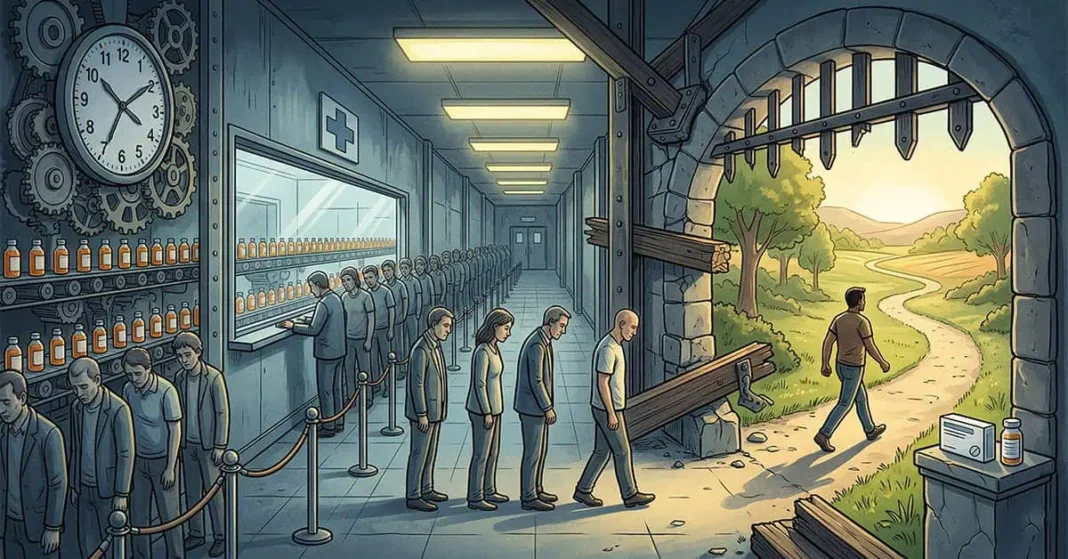
In place of judgment, we built a process that grinds the system down. Brian’s primary care doctor told him straight: “All scheduled products need to come from a single physician… I’ve got to write a fifteen-minute report because of it.” Suddenly, you are not practicing medicine; you are feeding a machine. Good doctors burn out from this nonsense.
The downstream effect is predictable. We start making decisions for regulatory comfort rather than clinical sense. Long-acting narcotics, which actually smooth things out and let people sleep, get sidelined because they were abused years ago. Short-acting pills take over. Now the patient is waking up at two in the morning to stay ahead of pain. That is not better medicine. That is safer paperwork.
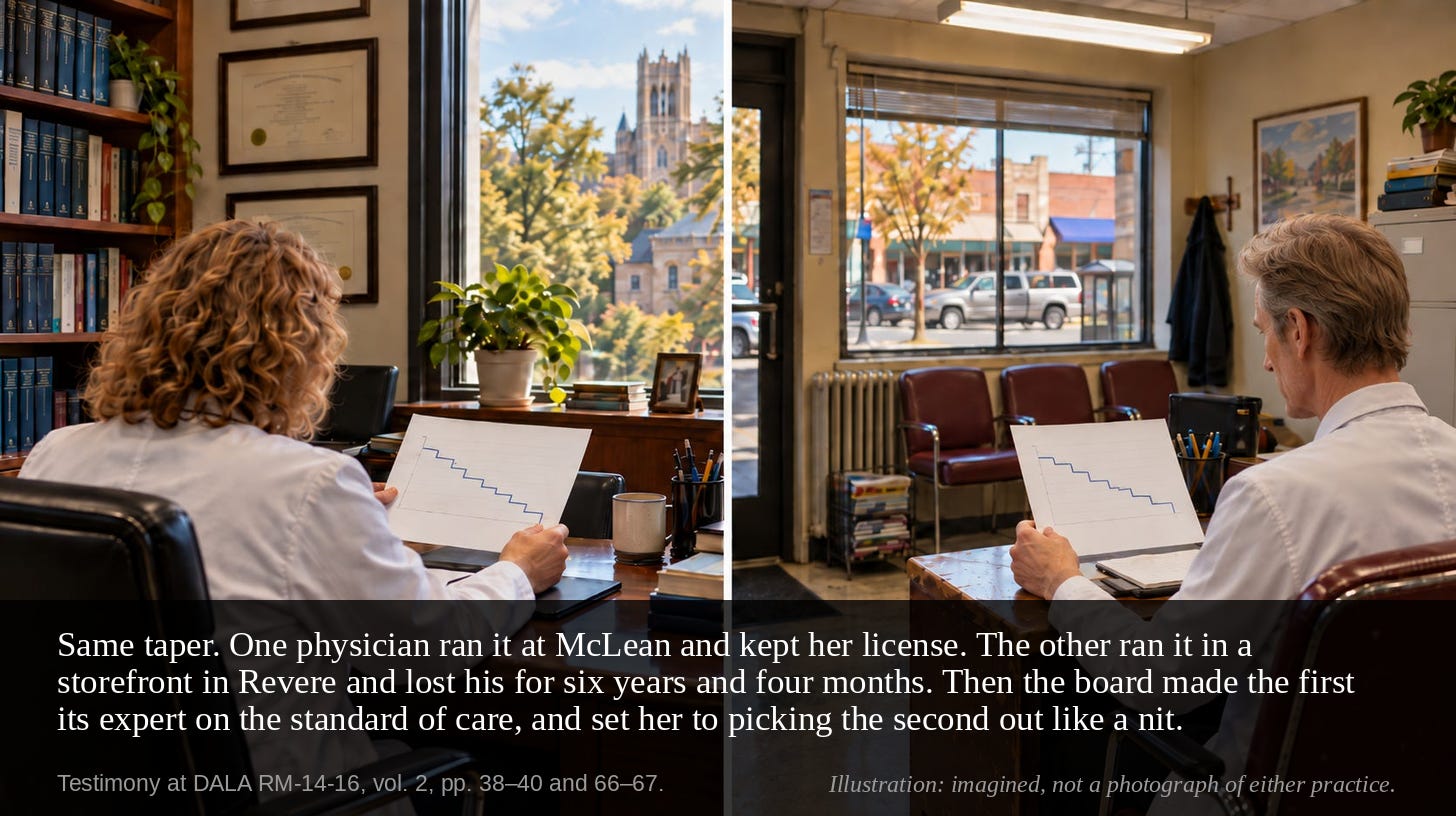
Then tolerance hits, right on schedule. Brian said it cleanly: “At exactly three months, the activity of the drug goes away… It’s a doubling.” Any physician who has done this long enough has seen that curve. It is not exotic. It is expected. Yet the patient comes in half-apologizing for it, because escalation looks like misuse on paper. We have trained people to hedge when they should be direct.
Buprenorphine stabilizes the receptor and lets you walk the dose down without chaos. But let’s be honest: we are treating narcotic dependence with another narcotic. Medicine tolerates that (self-serving) contradiction; meanwhile, the real problem has moved. Brian said it outright: “The largest problem lies in the counterfeits and fentanyl.” That is where the deaths are: fake “oxycodone” pills made in a garage with fentanyl pressed into something that looks legitimate. You can clamp down all you want in the clinic, and that supply chain will not notice. Demand does not disappear.
So now we have a two-tier mess. The honest patient struggles to get reasonable pain control, and the dishonest market gets more efficient and more lethal. We are squeezing the part of the system we can see and measure, and leaving the part that actually kills people to adapt on its own. What is missing is basic triage. Not every patient is at the same risk. We know that. We act like we do not. Other systems figured this out years ago. You separate out the known quantities, the compliant ones, the people with track records, and you stop treating them like first-time offenders. Medicine has the data to do that. It lacks the will.
Brian is not unusual. That is the point. He has a clear problem, a clear course, and a clear endpoint. He will taper off, get back to his life, and use medication when he needs it, not because he craves it, but because it works. The system cannot recognize that in real time, so it treats him like everyone else and hopes for the best. The bottom line is simple. We have replaced judgment with protocol, blurred categories that matter, and aimed our effort at the part of the problem that is easiest to regulate. The patient who plays it straight feels that first. The rest of the system follows right behind him.
Join us at 5 pm ET weekdays on America Out Loud Talk Radio. Listen on iHeart Radio, our world-class media player, or our free apps on Apple, Android, or Alexa. Discover all the episodes on podcast networks, i.e., Apple Podcasts, Spotify, Pandora, TuneIn, Stitcher, and iHeart. You’ll find them the day after they air on talk radio, available on podcast. Extraordinary voices for extraordinary times.
Discover more from Randy Bock MD PC
Subscribe to get the latest posts sent to your email.