

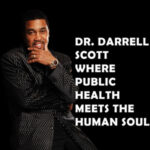
When Faith Confronts America’s Health Crisis: Pastor Darrell Scott’s Uncommon Perspective
In the sterile world of health policy debates, where statistics replace stories and demographics disguise destinies, Pastor Darrell Scott offers something revolutionary: humanity. The Cleveland minister who shocked America by endorsing Donald Trump in 2015 refuses to accept that health disparities are written into anyone’s DNA. Instead, he points to broken homes, lost purpose, and communities starved of meaningful work.
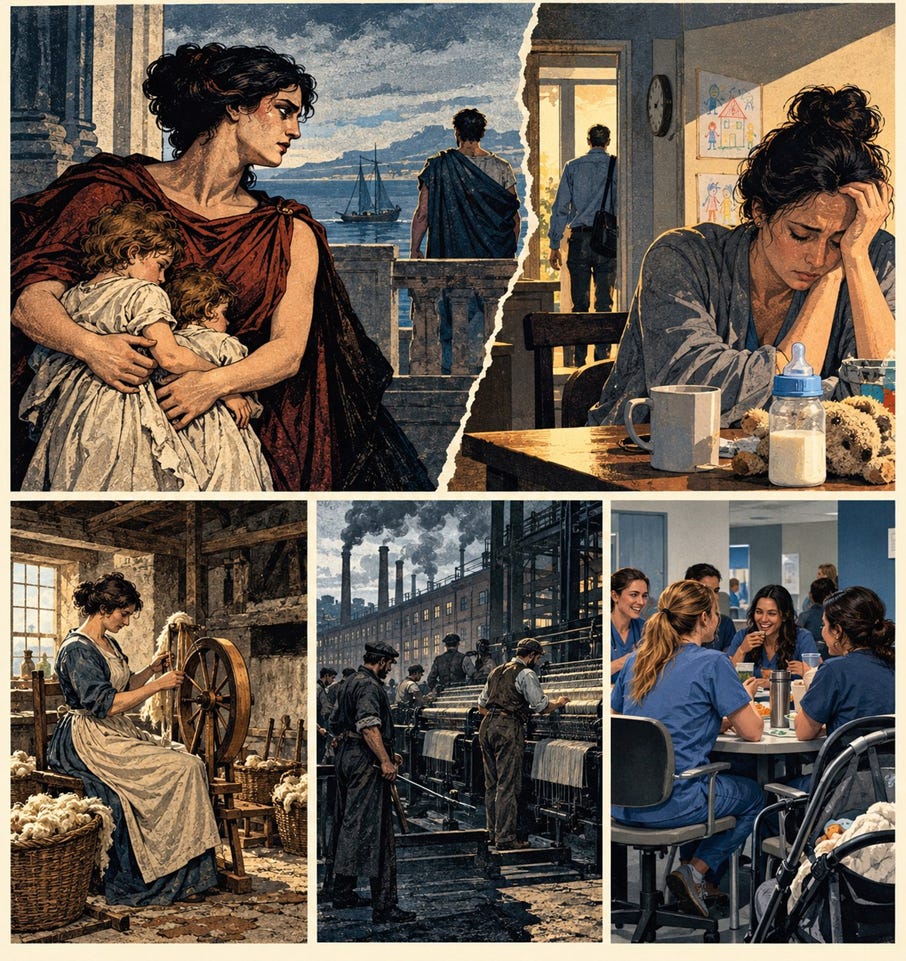
“Black and White America experience such different health outcomes, not from biology, but from broken homes, lost purpose, and the slow corrosion of work and meaning,” Scott declares with the conviction of someone who has walked both sides of America’s fault line.
Table of Contents
The Cost of Courage: Why a Black Pastor Endorsed Trump
When Pastor Scott endorsed Trump in 2015—long before it was politically expedient—he became a marked man. The labels came fast: “sellout,” “Uncle Tom,” worse. But Scott didn’t flinch.
“I wasn’t going to vote for Hillary Clinton,” he states plainly. “My decision wasn’t emotional—it was intellectual.”
This intellectual honesty extends to his analysis of Black voters and political alignment. Scott represents a growing demographic shift: recent data shows Trump gained support among Black voters, with estimates ranging from 12-16% in 2024, up from 8% in 2020. Among Black men specifically, support reached as high as 24% in some exit polls.
The First Republican to Actually Try
Born during the Eisenhower administration, Scott offers historical perspective: “President Trump was the first Republican candidate in my memory that actively courted the black vote.”
This matters. As Scott explains through a basketball analogy: “My grandson plays college basketball. During recruitment, coaches told him: ‘Don’t go where you want to go. Go where someone wants you to come.'”
Trump wanted Black voters. He actively pursued them with proactive economic policies rather than reactive sympathy. This distinction—action versus emotion—defines Scott’s entire political philosophy.
The Economics of Health: Where Policy Meets Reality
Scott’s most powerful insight connects economic opportunity directly to health outcomes. Drawing from Cleveland’s experience, he recalls: “There was a city, East Cleveland, with heavy gang presence. They elected a mayor who broke up the gangs. You know how? He gave them jobs. City jobs. When they got those jobs, they didn’t have to sell dope anymore.”
This isn’t just anecdote—it’s evidence. During Trump’s first administration, opioid-related deaths plateaued for the first time in decades. The correlation? Economic revitalization in the Midwest. Men had jobs. They had purpose. They didn’t need the needle.
The Opioid Crisis: A Tale of Two Americas
Scott draws a stark contrast between how America treats different communities facing substance abuse:
“We’ll look down on the drug addict but look up to the alcoholic,” he observes. “Liquid highs are acceptable. Dry highs are unacceptable.”
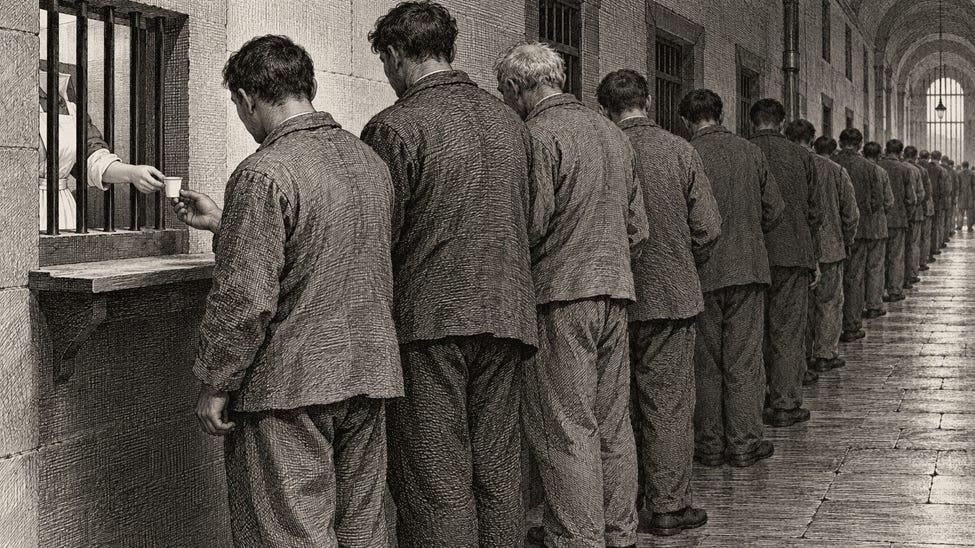
But more damning is the disparity in treatment. When opioid addiction hit white suburban America, the response was treatment centers, methadone clinics, and compassion. When crack devastated Black communities, the response was mass incarceration.
Scott shares a story: A young Black woman, never arrested before, received three years in prison for an empty crack pipe found in her boyfriend’s car. “Her life has been affected ever since because she has a felony on her record,” he says. “Whereas those type of situations would be dealt with differently if the person arrested had not been black.”
The data supports his claim: research shows Black individuals faced significantly harsher sentences for drug offenses compared to white individuals with similar charges, contributing to mass incarceration that separated families far more than border enforcement policies.
The Fatherhood Myth and Family Structure
Scott challenges prevailing narratives about Black families with uncomfortable truths:
“Just because a Black father isn’t in the home doesn’t mean he’s not in the child’s life,” he insists. “I know men who had babies out of wedlock. Some sons are very successful—their mother and father weren’t married, but their father was in their life.”
He points to LeBron James as an example. While many assume James lacked a father figure, Scott reveals: “Eddie Jackson was there for LeBron almost his entire life. He negotiated LeBron’s very first Nike contract. Everybody up here in Cleveland knows that.”
This matters for understanding health disparities. Research consistently shows that father involvement—regardless of marital status or living arrangements—positively impacts children’s health outcomes, educational achievement, and economic mobility.
Conservative Values Rooted in Faith, Not Politics
For Scott, conservative values aren’t a political calculation—they’re a spiritual conviction:
“My conservatism is rooted in Christianity,” he explains. “I was naive enough to believe that all Christians should be automatically conservative because the values that the conservative party espouses line up with my biblical worldview.”
This faith-based conservatism puts him at odds with the Democratic Party’s social policies but also challenges Republicans on their empathy deficit. Scott doesn’t mince words about Republican failures:
“The Republican party does not present good optics for the black community to embrace. They always have statistics—black people do this, black people do that—as if the wrongs of the black community absolve the wrongs of the white community.”
His critique cuts both ways, refusing the comfortable narratives either party offers.
The PR Problem: Sympathy Versus Solutions
Scott makes a crucial distinction between the Democratic and Republican approaches:
“The Democratic Party seems more sympathetic to the plight of the black community vocally than the Republican party does. When we were hurting growing up, we just wanted mama to kiss it. My father would say, ‘Why are you crying?’ I don’t want to hear that. I just need some sympathy right now.”
But sympathy without solutions breeds dependency. Scott argues that Trump offered something different: respect through results.
“He’s the most pro-black president in my lifetime,” Scott asserts. “Not because he reacted to riots, but because he acted before they happened.”
This “proactive versus reactive” framework explains Trump’s appeal to working-class voters of all races. First Step Act for criminal justice reform. Opportunity Zones for economic development. HBCU funding increases. These weren’t responses to protests—they were initiatives.
The Medical Mistrust Legacy
Scott’s analysis of health disparities extends to medical mistrust. Historical abuses—from the Tuskegee experiments to forced sterilizations—created justified skepticism toward healthcare institutions in Black communities.
This mistrust manifests in lower vaccination rates, delayed cancer screenings, and avoidance of preventive care. Research from the Kaiser Family Foundation confirms that Black adults are more likely to report discrimination in healthcare settings and less likely to trust medical providers.
The solution? Scott would argue it’s not more government programs but more economic opportunity and genuine relationship-building between communities and healthcare providers who understand their lived experience.
Where Work and Health Intersect
The connection between employment and health outcomes cannot be overstated. Scott’s East Cleveland example illustrates what research confirms: employment provides:
- Financial stability for healthcare access
- Social capital through workplace relationships
- Mental health benefits from purpose and routine
- Reduced stress from economic security
- Community stability that supports healthy behaviors
When Trump’s policies brought manufacturing jobs back to the Midwest, the health benefits rippled through communities. Lower opioid deaths. Reduced crime. Stronger families. Better health outcomes.
This is what Scott means when he says Trump understood that “when men can earn, they don’t need the bottle or the needle.”
The Incarceration Health Crisis
Scott highlights an often-overlooked health crisis: mass incarceration’s impact on Black families and community health.
“More families were separated, more Black families were separated, fathers taken out of homes because of indiscretions,” Scott explains, comparing minor drug charges to the family separation at the border that dominated Democratic rhetoric.
The health implications are profound. Research shows that parental incarceration increases children’s risk of:
- Mental health disorders
- Substance abuse
- Chronic diseases
- Educational failure
- Future incarceration
It’s a multi-generational health crisis created by policy choices that treated addiction as a crime in Black communities but a disease in white communities.
The Political Realignment and Health Policy
Scott’s endorsement of Trump in 2015 seemed impossible then. Today, it looks prophetic. The political realignment he represented—working-class voters of all races prioritizing economic opportunity over identity politics—is reshaping American politics.
For health policy, this means:
- Economic Development as Health Policy: Jobs programs as addiction prevention
- Criminal Justice Reform: Reducing incarceration to improve family and community health
- Community-Led Solutions: Supporting faith-based and local initiatives over federal mandates
- Merit-Based Healthcare: Focusing on outcomes rather than demographic quotas
Lessons from Cleveland: Faith, Work, and Healing
Scott’s Cleveland provides a microcosm of America’s challenges. A Rust Belt city devastated by deindustrialization, plagued by opioid addiction, struggling with health disparities. Yet also a city with strong faith communities, resilient families, and potential for renewal.
The lesson Scott offers: health equity won’t come from government programs alone. It requires:
- Economic opportunity that provides dignity and purpose
- Family stability supported by sensible policies
- Faith communities that provide spiritual and social support
- Personal responsibility paired with systemic reform
- Political courage to challenge comfortable narratives
The Road Forward: Health as Human Flourishing
Pastor Darrell Scott’s perspective challenges both conservative and progressive orthodoxies. He refuses to reduce health disparities to either personal responsibility (conservative) or systemic racism (progressive). Instead, he insists on a both/and approach:
Yes, systemic issues matter—mass incarceration, differential treatment, economic neglect. But also, yes, personal choices matter—fatherhood, work ethic, faith commitment.
His endorsement of Trump wasn’t about party loyalty. It was about recognizing that economic opportunity is health policy. That work is healing. That family stability matters more than family structure. That faith communities are health institutions.
As America grapples with persistent health disparities, rising mental health crises, and fracturing communities, Scott’s message resonates: True healing happens where public health meets the human soul. Where policy recognizes that people need purpose as much as they need programs. Where we stop treating symptoms and start addressing causes.
The Human Factor in Health Policy
What makes Scott’s perspective powerful is its refusal to abstract human beings into data points. Every statistic represents a person. Every disparity tells a story. Every health outcome reflects a life lived.
When he talks about the woman imprisoned for an empty crack pipe, he’s talking about a daughter, maybe a mother, certainly someone made in God’s image. When he discusses LeBron James and Eddie Jackson, he’s illustrating that fatherhood transcends legal marriage. When he describes East Cleveland’s gang members getting jobs, he’s showing that people want to work, want to contribute, want dignity.
This is the insight that political and health establishments often miss: people don’t need more pity. They need more opportunity. They don’t need more programs. They need more purpose.
A Challenge to Both Parties
Scott’s story challenges Democrats to recognize that economic opportunity matters more than identity politics, that family structure affects health outcomes regardless of ideology, that faith communities strengthen society in ways government programs cannot.
It challenges Republicans to show compassion alongside conviction, to recognize that systemic issues exist even if they’re not the whole story, to actively court communities they’ve taken for granted.
Most importantly, it challenges all of us to see health not as a technical problem requiring expert solutions, but as a human challenge requiring wisdom, empathy, and practical action.
Conclusion: The Verdict of History
When Pastor Darrell Scott endorsed Trump in 2015, he was mocked. When he spoke at the RNC in 2016, he was dismissed. When he argued Trump would help Black communities, he was called worse.
Today, the data tells a different story. Black voters are increasingly open to Republican candidates who offer economic opportunity. Health disparities, while persistent, responded positively to economic growth during Trump’s first term. Communities decimated by the opioid crisis found hope through employment, not just treatment.
Scott wasn’t prophetic because he had special knowledge. He was prophetic because he insisted on seeing people as humans, not demographics. Because he recognized that conservative values rooted in faith, family, and work cross racial lines. Because he understood that true economic opportunity is the best health policy.
As America enters a new political era with Trump’s return, Scott’s perspective matters more than ever. Health equity won’t come from dividing Americans by race or identity. It will come from uniting them around shared values: work, family, faith, and opportunity.
That’s where public health meets the human soul. That’s where Pastor Darrell Scott has been pointing all along.
About Pastor Darrell Scott: Senior Pastor of New Spirit Revival Center in Cleveland Heights, Ohio, and longtime advisor to President Donald Trump. Known for his candid commentary on faith, race, and politics in America.
Discover more from Randy Bock MD PC
Subscribe to get the latest posts sent to your email.