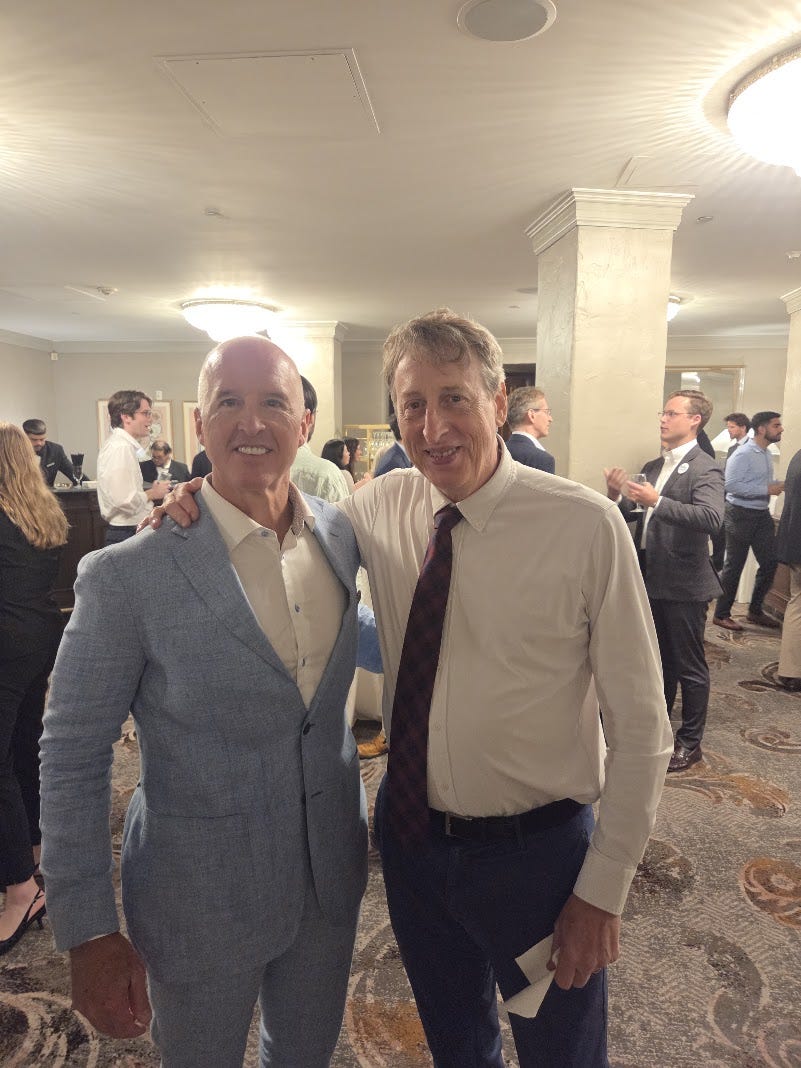

Anil Makam works in a place where medicine is not theoretical. Patients arrive with problems that do not wait for consensus statements. He practices hospital medicine and studies outcomes, moving between bedside reality and published evidence. “I’m a hospital medicine physician. I’m also a health services outcomes epidemiology researcher.” His orientation is grounded in observation first, then tested against the literature.
He describes his work as an extension of clinical instinct. “It’s really my clinical intuition that drives all my impulses in my career.” That instinct does not replace evidence, but it shapes how evidence is weighed, and when it should be questioned.
The current environment makes that balance difficult. Medicine has developed visible camps, and each speaks with confidence. “I think both are archetypes of two different camps.” One side builds narratives around optimization and longevity, often tied to personal branding. The other speaks through institutions, journals, and guidelines, and carries the imprimatur of authority.
The distinction matters because the risks differ. I suggested that the more obvious commercial behavior, the selling of supplements or protocols, is at least transparent. It is a cost of entry that the consumer can evaluate. The institutional voice is less visible in its incentives. It operates through consensus and credentials, and it carries greater reach.
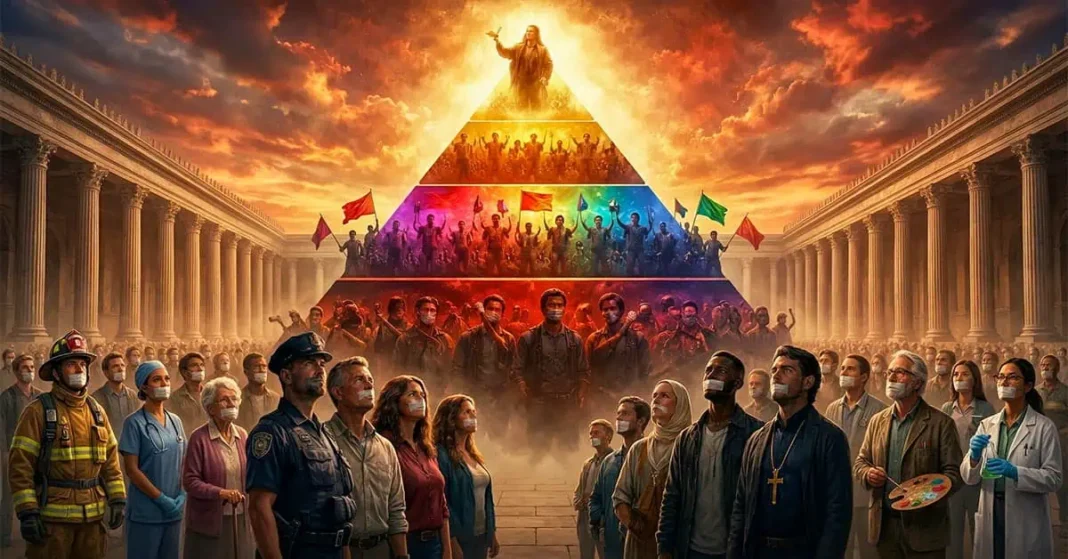
Makam agrees with the asymmetry. “It’s experts who wear the cloak of the science.” He does not reject expertise, but he questions how it is deployed. The problem arises when the process is replaced by proclamation. “It’s equating published with reliable and peer-reviewed with settled.” In that shift, science becomes less a method and more a language of authority.
I framed this as a recurring historical pattern. In earlier periods, correctness followed position. If the authority declared something true, the matter closed. The terminology has changed, but the instinct persists. The appeal to “the science” can function in the same way, not as inquiry but as closure.
Makam returns to first principles. “Science is very fluid. There’s a lot of ins, a lot of outs.” The phrase captures what is often lost in public discourse. Scientific knowledge is provisional. It accumulates and corrects. It does not resolve itself cleanly at the moment of publication.
He points to a subtler force shaping interpretation. “There’s something called intellectual conflicts of interest.” These do not involve money. They involve identity. A researcher becomes attached to a hypothesis. A field organizes around a framework. Evidence that fits is amplified. Evidence that does not is managed or ignored.
I raised the problem in a different register. Academic systems protect themselves. Funding, reputation, and internal cohesion depend on continuity. When a challenge arises, it is often easier to exclude it than to absorb it. That dynamic is not unique to medicine, but its consequences are more immediate.
Makam addresses this in his teaching. “You should be passionate about the question, but not the answer.” The distinction is simple and difficult. Questions invite revision. Answers demand defense. A career built on the latter becomes resistant to change.
At the clinical level, the implications are direct. Evidence-based medicine has been reduced in practice to guideline adherence. That simplification raises a baseline, but it narrows judgment. Makam rejects that narrowing. “I can see the same person with the same disease and I might treat them ten different ways.” The variation reflects context, patient priorities, and the limits of existing studies.
I described the role differently. The physician functions as a selector within a large body of available knowledge. The task resembles informed curation rather than algorithmic execution. The patient does not purchase a drug in isolation. He purchases judgment.
Makam articulates the structure more formally. “There is a concept of best available evidence.” That evidence must be integrated with circumstance and patient values. It is not a directive. It is one component of a decision that remains situational.
The broader marketplace of ideas has shifted as well. Authority no longer flows exclusively through journals or committees. Makam sees value in that expansion. “I think the public square is where I find most of my knowledge now.” The exchange is less controlled, but it allows competing interpretations to surface more quickly.
I noted that medicine has lagged behind other domains in adopting this openness. In most areas of life, individuals weigh options, assign value, and make choices. In medicine, those processes are often mediated or constrained. The result is a system that can feel paternal, even when it is well-intentioned.
His clinical experience reinforces the need for flexibility. He treats patients whose conditions do not fit neatly into categories, particularly in areas like addiction, where biology, environment, and behavior intersect. Outcomes depend on more than pharmacology, and no single framework captures the whole.
Across the exchange, a shared premise emerges. Medicine requires structure, but it cannot rely on structure alone. It requires expertise, but it must remain open to challenge. It requires evidence, but it must preserve the process that produces it.
The task, as Makam presents it, is not to eliminate disagreement but to manage it honestly. That requires judgment that is willing to revise itself, and authority that does not confuse its position with proof.
Additional reading:
Guidelines Schmidelines Why Following Guidelines is Not Synonymous with Evidence-Based Medicine Anil Makam
How to Fix Science, by Dr Randall Bock 12 December 2025 , in The Daily Sceptic
Methadone Maintenance Ignited America’s Opioid Crisis
Join us at 5 pm ET weekdays on America Out Loud Talk Radio. Listen on iHeart Radio, our world-class media player, or our free apps on Apple, Android, or Alexa. Discover all the episodes on podcast networks, i.e., Apple Podcasts, Spotify, Pandora, TuneIn, Stitcher, and iHeart. You’ll find them the day after they air on talk radio, available on podcast. Extraordinary voices for extraordinary times.
Discover more from Randy Bock MD PC
Subscribe to get the latest posts sent to your email.