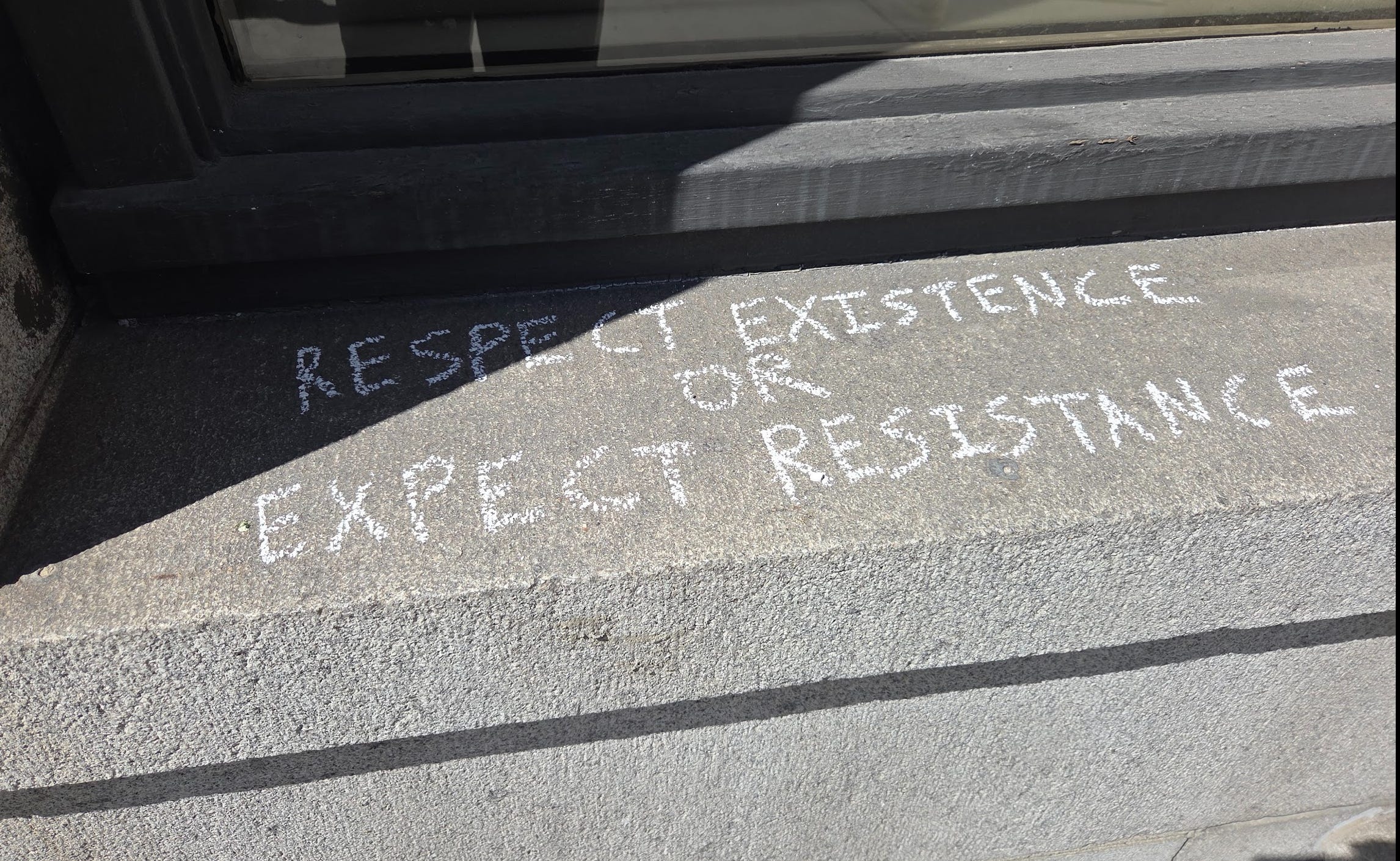

This program carries a theme: sovereignty. Not the sovereignty of nations, but of individuals. The sovereignty we each hold — or should hold — over our words, our bodies, our children.
Charlie Kirk “REQUIESCAT IN PACE
…sed ad proelium te para”; (rest in peace, but prepare for battle)
The death of Charlie Kirk is a tragedy on a national scale. September 11 has always been a day to mourn lives lost in terror, and this year the shadow deepens. Charlie was assassinated on September 10. The aim was the same as in any terrorist act: not only to kill a man, but to frighten a people. Yet when tragedy strikes, we cannot stop living. We must continue, persevere, and speak truth to power. That is what Charlie embodied — liberty, freedom, and the American way.
Charlie entered every arena knowing the danger. Students lined up to denounce him, pundits mocked him, and strangers hurled venom. He returned hatred with civility. He stood when others knelt. He spoke when silence was demanded. Civilization means nothing without civility, and Charlie lived by that principle. His death is devastating, but his legacy is a charge: we need not one Charlie, but a thousand, a million, so that no bullet can silence the voice of truth.
Autonomy Under Siege: The FDA and Your Cells
Sovereignty also extends to the body. Here, the adversary is not a gunman but the Food and Drug Administration. The FDA claims authority over food and over drugs — but does it have authority over your own cells? Scratch your knee and it heals. No regulator approves the platelets, the growth factors, or the stem cells at work. Yet if a physician isolates those same cells and reintroduces them into your body, the FDA insists on jurisdiction.
Dr. Ryan Welter has practiced in this field for years. He explained how the agency draws its lines. If tissue is “minimally manipulated,” it is exempt from regulation. Manipulate it “too much,” and suddenly it is a drug, demanding a billion-dollar pathway. Fat, for example, is not just fat. It encompasses thousands of cell types, including vascular, neural, progenitor, and stem cells. To call it one substance is as childish as calling the sea just water. Yet on such simplistic categories hinge the treatments patients can receive.
Ryan admitted guilt over patients he could not treat because of the changing rules. He emphasized that most of these therapies are overwhelmingly safe. Regulation should protect against harm, not against healing. The act of love itself — sperm and egg, man and woman — remains unregulated. Shouldn’t a man also hold sovereignty over the cells of his own body?
The Overdiagnosis Trap
The same struggle shows itself in psychiatry, where sovereignty over childhood is at stake. My own son, tall for his age, was nearly swept into speech therapy because he said “lelo” instead of “yellow.” The therapist assumed he was six; he was not yet four.
His speech developed normally, without intervention. Later, teachers pressed for an ADHD label. They wanted him medicated. He was bright, curious, restless — in other words, a boy. Rather than do him, I walked with him. I asked about his book reports, recorded his answers, and transcribed them for him to edit. The words were his. The framework was mine. He matured. He thrived. He never needed the pill.
Too often, psychiatry transforms ordinary struggle into disease. Grief becomes depression. Energy becomes pathology. Roger McFillin has called this the betrayal of modern psychiatry, and I agree. Medication may blunt emotions, but it also robs us of the opportunity for growth. Maturity is the slow antidote that cannot be bottled. Sovereignty means allowing children to grow into themselves, not forcing them into chemical compliance.
Charlie Kirk understood this wider battle. He spoke not only of politics, but of faith, of discipline, of courage. He respected power the way one respects a lion — not admiring its hunger, but acknowledging its teeth. He would want us to remember that sovereignty is never granted by institutions. It is practiced, defended, and lived.
So we keep going. We speak truth to power, whether that power is the FDA, schools, or professional guilds. We look out for our own rights, for liberty, for freedom, for the American way. Charlie lived those values fully. His death is not the end. It is the challenge.
Join us at 5 pm ET weekdays on America Out Loud Talk Radio. Listen on iHeart Radio, our world-class media player, or our free apps on Apple, Android, or Alexa. Discover all the episodes on podcast networks, i.e., Apple Podcasts, Spotify, Pandora, TuneIn, Stitcher, and iHeart. You’ll find them the day after they air on talk radio, available on podcast. Extraordinary voices for extraordinary times.
Discover more from Randy Bock MD PC
Subscribe to get the latest posts sent to your email.