

The Crisis of Confidence in Science
For generations, science represented one of humanity’s most trusted institutions. Breakthroughs in medicine, engineering, communications, and public health transformed modern civilization and dramatically extended human life. Yet the COVID-19 pandemic exposed something many people had never fully appreciated: science itself and the institutions claiming to represent science are not always the same thing.
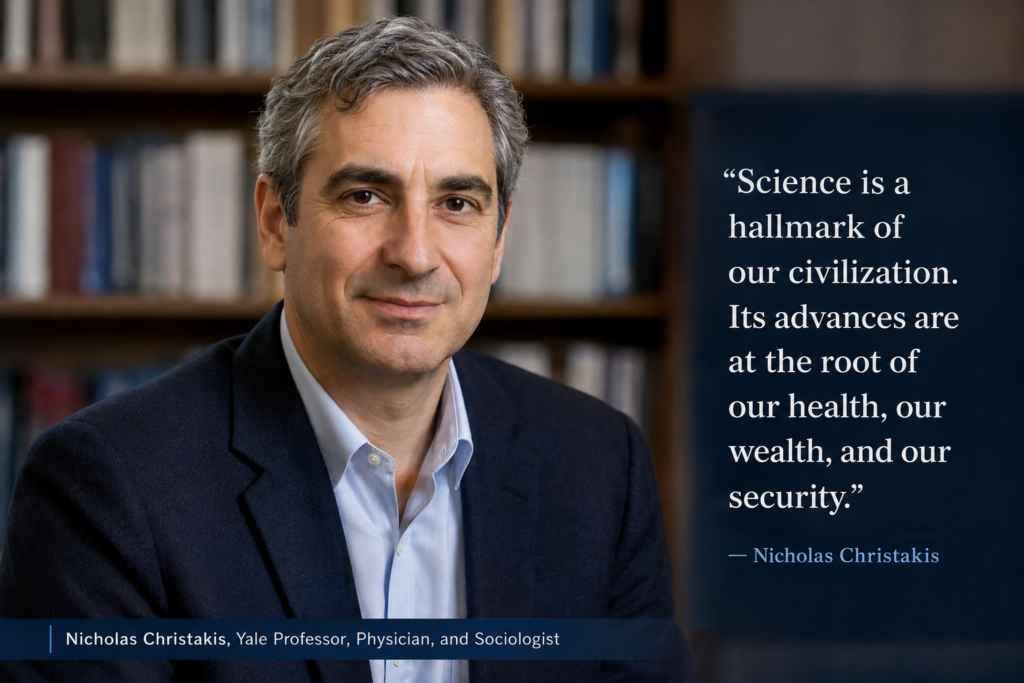
That distinction became the central theme of a wide-ranging conversation with Yale physician, sociologist, and network scientist Nicholas Christakis. Rather than defending every decision made during the pandemic, Christakis focused on something more fundamental—the scientific process itself. He argued that science should never be understood as a rigid body of unquestionable conclusions but as a disciplined method of continual learning, revision, and self-correction. His recently launched educational initiative, For the Love of Science, aims to teach not only scientific knowledge but also what it means to think and work like a scientist, particularly for young people considering careers in research.
The timing of that message could hardly be more important. Public confidence in scientific institutions has become deeply polarized. During the pandemic, many people watched recommendations evolve as new evidence emerged, yet these changes were often communicated as contradictions rather than as examples of science functioning exactly as it should. The result was confusion, skepticism, and, in many cases, outright distrust.
Christakis suggests that rebuilding confidence will require more than asking people to “trust the experts.” It requires explaining how scientific knowledge is actually created, why uncertainty is inevitable, and why changing one’s conclusions in light of better evidence is not weakness but one of science’s greatest strengths.
Science Is a Process, Not a Religion
One of the interview’s most important lessons is deceptively simple: science is a method of inquiry rather than a collection of immutable truths.
Too often, public discussions frame scientific findings as if they were final verdicts. When recommendations later change, critics claim science has failed. In reality, the opposite is true. Science advances precisely because it allows earlier conclusions to be revised.
Christakis emphasizes that scientists do not emerge fully formed. They learn through repetition, failed experiments, peer review, criticism, and years of incremental progress before making significant discoveries. The image of the lone genius suddenly producing revolutionary insights is largely a myth. Instead, scientific expertise develops through countless small contributions that gradually build toward larger breakthroughs. He illustrates this with the metaphor that scientists do not emerge “like Athena, fully armored from the head of Zeus,” but instead master their craft through sustained practice and experience.
This distinction matters because it changes how society should evaluate scientific disagreement. Healthy disagreement is not evidence that science is broken. It is often evidence that science is working.
Real science welcomes criticism because criticism improves knowledge.
Dogma resists criticism because criticism threatens authority.
Understanding that difference may be one of the most valuable forms of scientific literacy.
COVID Revealed the Difference Between Science and Institutions
Few events have challenged public trust as profoundly as the COVID-19 pandemic.
During those years, governments, public health agencies, universities, pharmaceutical companies, and media organizations frequently presented policies as if they represented settled science. Yet recommendations evolved as new evidence accumulated. For many observers, this evolution appeared inconsistent or politically motivated.
Christakis acknowledges that public frustration was understandable. He has openly discussed his own disagreement with prolonged policies such as masking children outdoors and other measures that persisted even after the supporting evidence weakened. His broader concern, however, is not simply about any single policy but about confusing institutional decision-making with scientific reasoning.
Scientific reasoning demands humility. Institutions often prioritize stability, consistency, and public messaging. Those goals can come into conflict when evidence changes rapidly.
The lesson extends well beyond COVID.
Every major scientific revolution—from heliocentrism to germ theory, from plate tectonics to genetics—required researchers willing to challenge prevailing assumptions. Scientific institutions are most trustworthy when they remain open to revising conclusions rather than defending previous positions at all costs.
That openness is exactly what Christakis hopes younger scientists will embrace through his educational efforts. He argues that society benefits not merely from scientific discoveries but from citizens who understand how those discoveries are made and why intellectual humility is indispensable to the process.
Why Learning the Craft of Science Matters
One of the most refreshing themes throughout the interview is Christakis’s emphasis on the craft of science.
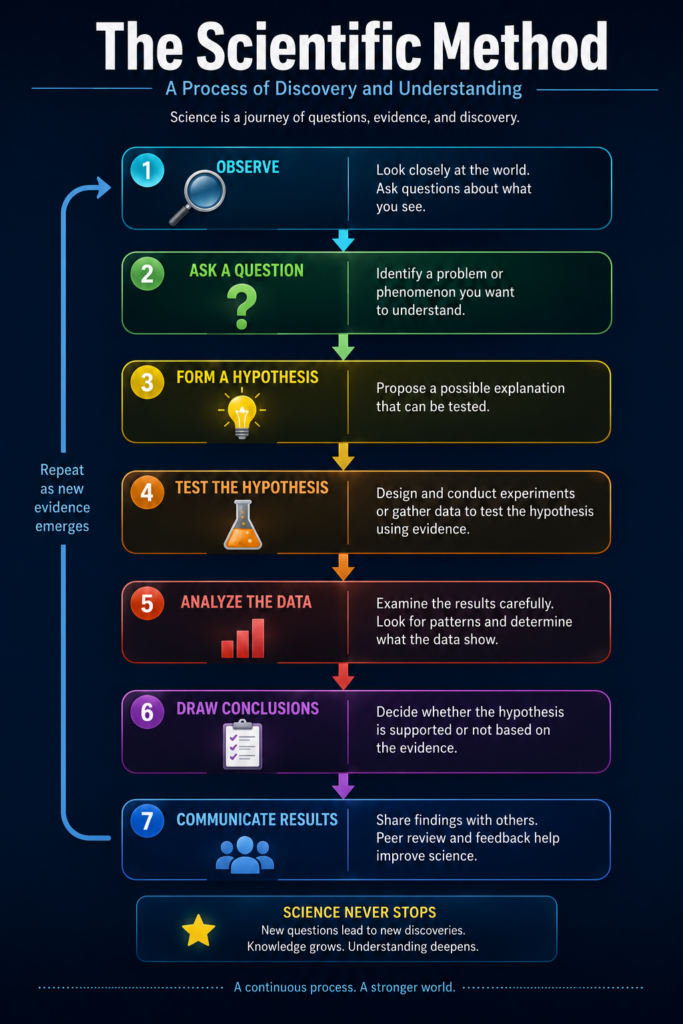
His project is not designed primarily to teach biology, chemistry, or epidemiology. Instead, it introduces students to the daily realities of becoming a scientist: learning from rejection, writing effectively, seeking mentorship, refining ideas through feedback, and finding purpose in discovery. These practical lessons are often absent from textbooks, yet they shape every successful research career.
Scientific careers are built on persistence rather than certainty.
Experiments fail.
Grant proposals are rejected.
Hypotheses collapse.
Data refuse to cooperate.
Yet these setbacks are not signs of failure; they are integral to the scientific enterprise. Every correction, every revision, and every unexpected result contributes to a deeper understanding of reality.
Christakis describes the exhilaration of making a genuine discovery as one of the most rewarding experiences in a scientific life. Once a researcher witnesses something previously unseen, the desire to continue exploring becomes almost irresistible. That excitement, rather than prestige or authority, is what sustains many scientists through years of painstaking work.
The Thrill of Scientific Discovery
Most people imagine science as a steady accumulation of facts. Nicholas Christakis paints a far more human picture—one filled with years of uncertainty, painstaking work, failed hypotheses, and occasional moments of extraordinary revelation.
He explains that scientists typically begin their careers by contributing small pieces to a much larger body of knowledge. Early research often involves replicating previous findings, refining existing methods, or measuring known phenomena with greater precision. These incremental contributions may seem modest, but they are essential for building the skills necessary to tackle more ambitious questions.
As Christakis notes, no scientist begins their career as an Einstein or a Darwin. Instead, researchers spend years mastering experimental design, statistical reasoning, critical thinking, and the discipline required to distinguish evidence from assumption. This gradual development is what transforms curiosity into expertise.
Yet beneath this methodical process lies something profoundly exciting.
Every scientist dreams of witnessing something no one has ever seen before.
Christakis describes this experience with remarkable enthusiasm. After decades of preparation, he recalls finally observing a phenomenon that had never previously been documented. That first genuine discovery, he says, was intoxicating.
Once you’ve experienced discovering something entirely new, ordinary research is never quite the same again.
This passion for discovery—not prestige, funding, or recognition—often motivates scientists to persevere through years of painstaking work.
Science Is Built One Stitch at a Time
One of Christakis’s most memorable metaphors compares scientific progress to a vast fabric woven across centuries.
Every researcher contributes another thread.
Some add a single stitch.
Others add an entire row.
Only a handful reshape the entire tapestry.
The important point is that science is fundamentally collaborative.
Unlike popular portrayals of isolated geniuses making revolutionary discoveries overnight, scientific advancement is cumulative. Each generation inherits the work of previous generations while creating opportunities for those who follow.
This perspective encourages humility.
Individual scientists matter, but the scientific enterprise is larger than any single career. Researchers become participants in an ongoing conversation stretching across centuries, contributing evidence that future scientists will refine, challenge, or expand. Christakis emphasizes that this continuity is one of science’s greatest strengths and one of the reasons he finds scientific work so meaningful.
For readers interested in restoring confidence in science, this idea is especially important.
Trust should not be placed in individual personalities.
It should be placed in a process that continually evaluates, tests, and improves knowledge over time.
The Discovery That Changed Network Science
Although Christakis has published extensively across medicine, sociology, and public health, one discovery transformed his career and helped redefine how researchers understand human behavior.
In 2007, he and collaborator James Fowler published groundbreaking research examining whether obesity could spread through social networks.
At first glance, the idea sounded implausible.
Obesity is not contagious like influenza.
People cannot “catch” body weight through physical contact.
Yet Christakis suspected that behaviors influencing obesity might spread socially through friendships, families, and communities.
His research asked a simple but revolutionary question:
Could changes in one person’s behavior influence the behaviors of friends, whose behaviors then influence their own friends, creating ripple effects throughout entire social networks?
Answering that question required years of work.
The researchers collected enormous datasets, digitized complex social relationships, developed new analytical techniques, secured funding, and created innovative visualizations capable of showing networks evolving over time.
Only after years of effort did the hidden patterns emerge.
The results suggested that weight gain appeared to spread through interconnected social relationships in ways previously undocumented. Christakis describes the first visualization of these patterns as one of the most thrilling moments of his scientific career because it revealed something entirely new about human behavior.
Understanding Social Contagion
The phrase social contagion is often misunderstood.
It does not imply that ideas or behaviors spread identically to viruses.
Instead, it describes the tendency for human attitudes, emotions, habits, and decisions to influence one another through social connections.
Researchers have since studied social contagion across numerous domains, including:
- Smoking cessation
- Exercise habits
- Happiness
- Political opinions
- Cooperation
- Financial behavior
- Technology adoption
- Vaccination decisions
- Panic during emergencies
Human beings rarely make decisions in complete isolation.
We constantly observe those around us.
Friends shape expectations.
Families influence beliefs.
Communities reinforce norms.
Over time, these interactions create patterns that cannot be explained solely by individual psychology.
This realization fundamentally changed how many scientists study public health.
Instead of focusing exclusively on individuals, researchers increasingly examine the structure of the networks connecting them.
Why Social Networks Matter More Than We Realize
One of Christakis’s central insights is that networks possess properties that individuals alone do not.
Imagine two communities containing exactly the same people.
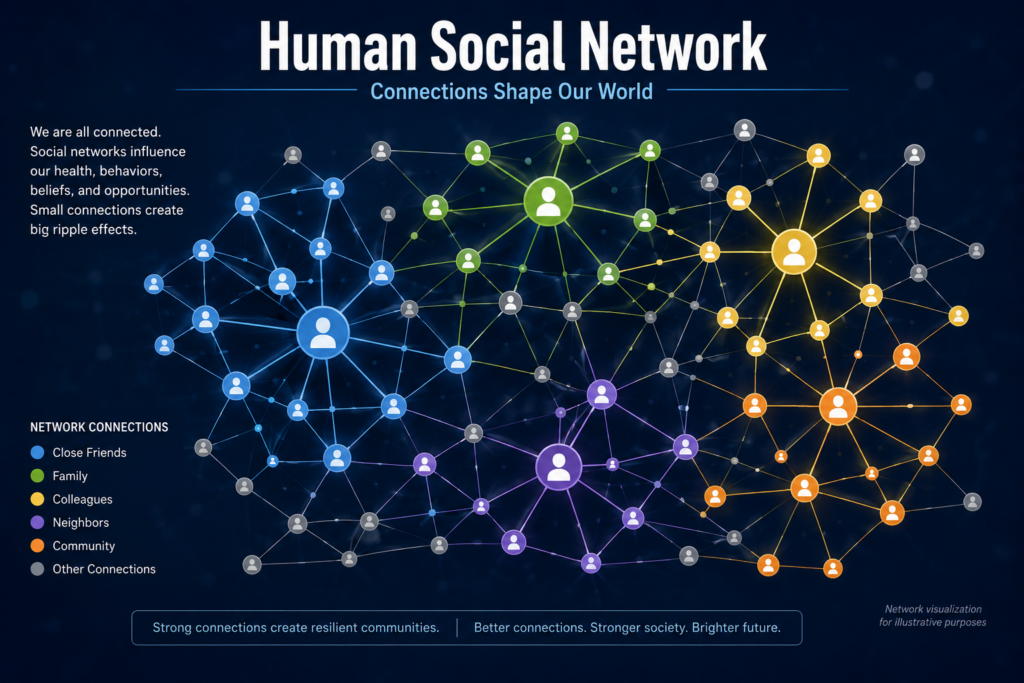
Everyone has identical personalities.
The only difference is how those people are connected.
Surprisingly, entirely different social outcomes can emerge.
One network may encourage cooperation.
Another may foster distrust.
One community may spread healthy behaviors rapidly.
Another may amplify misinformation.
The people remain unchanged.
Only the relationships differ.
This observation has profound implications for medicine, economics, sociology, and public policy.
Rather than asking only:
“Who are these people?”
Researchers must also ask:
“How are these people connected?”
This shift moves scientific attention from individual characteristics toward systems thinking.
It also helps explain why interventions sometimes succeed in one community while failing in another.
The underlying network structure may determine whether beneficial behaviors spread—or disappear.
Beyond Obesity: Cascades of Human Behavior
Following the obesity research, Christakis expanded his work far beyond weight gain.
His laboratory began experimentally demonstrating that numerous behaviors could cascade through social networks.
Acts of generosity.
Cooperation.
Trust.
Punishment.
Risk-taking.
Health behaviors.
These cascades illustrate that humans exist within interconnected systems rather than isolated units.
Each interaction subtly influences future interactions.
Every friendship creates new pathways through which information, beliefs, emotions, and behaviors can travel.
Rather than viewing society as millions of disconnected individuals, Christakis encourages us to see dynamic webs of relationships continuously shaping one another. His laboratory’s subsequent experiments explored how these network effects could be observed and measured under controlled conditions, providing stronger evidence for social contagion across multiple behaviors.
Friendship: One of Humanity’s Most Remarkable Adaptations
Perhaps the most fascinating part of the interview concerns friendship itself.
Most people take friendship for granted.
Evolutionary biology does not.
From an evolutionary perspective, friendship presents an intriguing puzzle.
Humans voluntarily form long-lasting relationships with individuals who are not biological relatives.
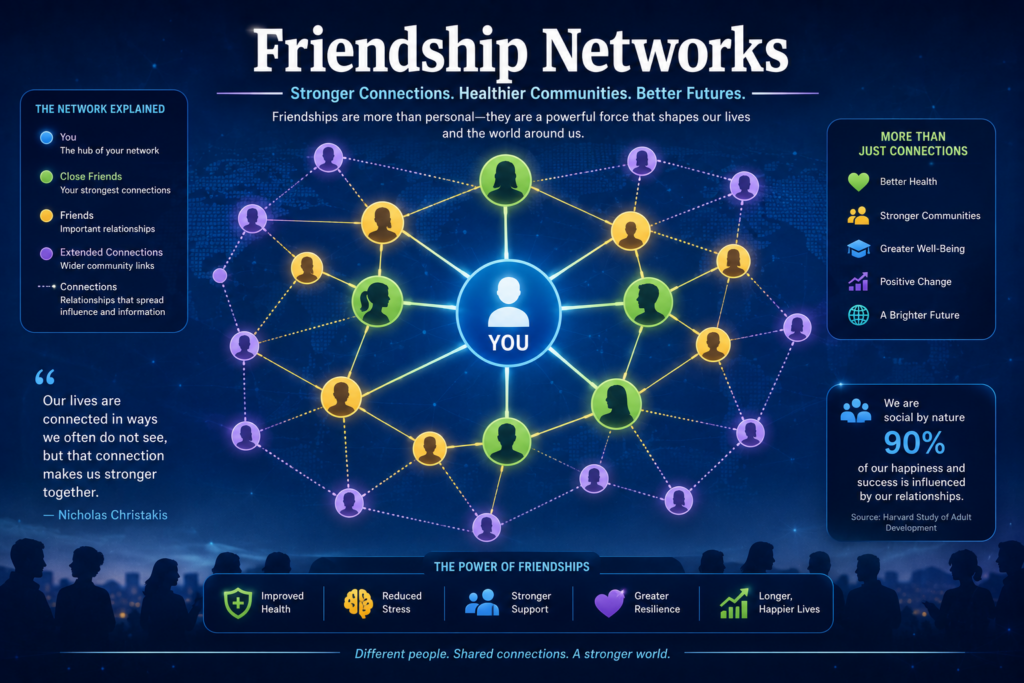
Unlike kinship, these bonds provide no direct genetic advantage.
Yet they exist across virtually every culture.
Christakis argues that this makes friendship one of humanity’s most unusual evolutionary adaptations.
Very few species display comparable patterns.
Certain primates.
Elephants.
Some cetaceans.
But among mammals, humans remain exceptional in building enduring, voluntary, emotionally significant relationships with unrelated individuals.
His laboratory now investigates the biology underlying these relationships.
Why do friendships form?
Why do certain individuals immediately connect?
What genetic, neurological, and physiological mechanisms encourage social bonding?
These questions bridge sociology, neuroscience, evolutionary biology, and psychology, illustrating how modern science increasingly crosses traditional disciplinary boundaries.
Science Is Becoming Increasingly Interdisciplinary
Another lesson emerging from Christakis’s work is that today’s biggest scientific questions rarely fit neatly into a single academic department.
Understanding human behavior requires expertise from:
- Medicine
- Sociology
- Epidemiology
- Psychology
- Evolutionary biology
- Genetics
- Computer science
- Mathematics
- Network theory
This interdisciplinary approach reflects a broader transformation in modern science.
Complex problems demand collaboration.
Pandemics.
Mental health.
Artificial intelligence.
Climate.
Economic inequality.
Social polarization.
Each involves interacting systems that cannot be understood through a single discipline alone.
Christakis’s research illustrates how integrating diverse perspectives often reveals patterns invisible to narrower approaches.
Emergence: When the Whole Becomes More Than the Sum of Its Parts
One of Nicholas Christakis’s most profound contributions to public understanding of science is his explanation of emergence—a concept that helps explain everything from consciousness to civilization.
Emergence refers to a simple but extraordinary principle:
Individual components can combine to produce properties that none of those components possess independently.
This idea appears throughout nature.
A single neuron is not conscious.
A single water molecule is not a wave.
A single ant cannot build a colony.
A single human cannot create a society.
Yet when enough components interact in particular ways, entirely new behaviors emerge.
These collective properties cannot be fully understood by examining the individual parts alone.
For Christakis, emergence is not merely an abstract philosophical idea. It provides the foundation for understanding human societies, epidemics, cooperation, friendship, and even civilization itself. He explains that many of the most awe-inspiring phenomena in nature arise from the organization of simpler elements rather than from the elements themselves.
The Diamond and Graphite Analogy
To explain emergence, Christakis turns to an elegant example familiar to nearly every high school chemistry student.
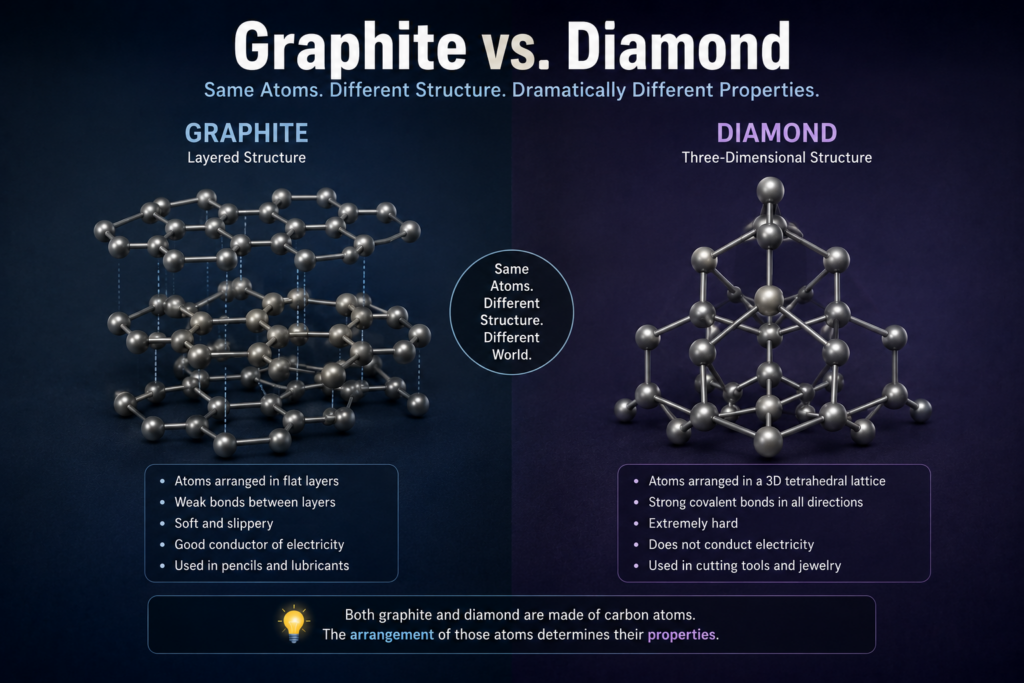
Consider carbon.
Every carbon atom is identical.
Yet carbon can produce remarkably different materials.
Arrange carbon atoms one way and the result is graphite.
Soft.
Dark.
Flexible.
Arrange the same atoms differently and the result is diamond.
Transparent.
Extremely hard.
One of the strongest naturally occurring materials on Earth.
Nothing about the individual carbon atoms has changed.
Only their arrangement has.
The remarkable properties belong not to the atoms themselves but to the structure they create together.
Christakis argues that human societies operate according to exactly the same principle.
People remain fundamentally the same.
What changes is how they are connected.
Those connections determine whether communities become cooperative or hostile, resilient or fragile, innovative or stagnant. His laboratory has demonstrated experimentally that identical groups of people can display dramatically different collective behaviors simply by changing the structure of their social networks.
Human Nature Does Not Fully Explain Human Society
Modern public debates often focus almost entirely on individuals.
Individual intelligence.
Individual morality.
Individual responsibility.
Individual freedom.
While these factors undoubtedly matter, Christakis argues they tell only part of the story.
Societies possess characteristics that no individual possesses alone.
Trust.
Culture.
Markets.
Institutions.
Democracy.
Scientific communities.
Financial systems.
Languages.
All are emergent phenomena.
None exist inside a single person’s mind.
They arise from relationships among millions of people.
This perspective fundamentally changes how social problems should be approached.
Rather than asking only,
“How do we change people?”
we might also ask,
“How should people be connected?”
That subtle shift opens entirely new possibilities for improving public health, education, economic opportunity, and scientific collaboration.
Network Structure Shapes Human Behavior
Christakis’s experiments demonstrate something many people find surprising.
Two groups composed of identical individuals can produce dramatically different outcomes.
Imagine assigning one hundred people into two separate networks.
The participants have identical personalities.
The same intelligence.
The same education.
The same motivations.
The only difference is how friendships and interactions are arranged.
One network may encourage generosity.
Another may reward selfishness.
One network may spread accurate information efficiently.
Another may amplify rumors.
One community may cooperate during crises.
Another may fragment under pressure.
The difference lies not inside individuals but within the architecture connecting them.
This insight has become one of the defining ideas of modern network science.
It also explains why identical public health policies often produce different outcomes across communities.
Social structure matters.
Why COVID Highlighted Network Science
The COVID-19 pandemic reminded the world that disease spreads through networks rather than through isolated individuals.
Every infection depends upon connections.
Families.
Workplaces.
Schools.
Transportation systems.
Neighborhoods.
Healthcare settings.
Understanding those connections became essential for predicting outbreaks, allocating medical resources, and evaluating interventions.
Yet Christakis’s work extends beyond biological contagion.
Behavior itself also spreads through networks.
Fear spreads.
Confidence spreads.
Misinformation spreads.
Cooperation spreads.
Even public trust can become contagious.
This broader perspective helps explain why societies sometimes react collectively in unexpected ways.
Individuals respond not only to facts but also to the behaviors of those around them.
That observation continues to influence research in epidemiology, economics, political science, and public health.
Collective Intelligence and Collective Immunity
Perhaps one of Christakis’s most fascinating ideas is that groups possess capabilities unavailable to individuals alone.
Scientists often discuss herd immunity.
Most people think of immunity as something that exists inside individual bodies.
Christakis points out that immunity also exists at the level of entire networks.
Depending on how people are connected, the same number of immune individuals can produce dramatically different epidemic outcomes.
Simply rearranging network connections can alter how efficiently disease spreads.
The implications extend well beyond infectious disease.
Collective intelligence works similarly.
Knowledge does not simply reside within brilliant individuals.
It emerges through collaboration.
Peer review.
Debate.
Replication.
Shared evidence.
Distributed expertise.
Scientific progress depends upon networks of researchers continuously testing one another’s ideas rather than isolated geniuses working alone. Christakis illustrates this concept by explaining how collective immunity and other group-level properties emerge from network structure rather than from individuals in isolation.
Why Scientific Collaboration Matters
Public discussion often celebrates scientific heroes.
Einstein.
Curie.
Newton.
Darwin.
Their achievements deserve admiration.
Yet every major discovery also depended upon countless collaborators.
Laboratory technicians.
Graduate students.
Peer reviewers.
Funding agencies.
Previous researchers.
Universities.
Editors.
Scientific journals.
Modern science resembles an enormous interconnected network rather than a collection of isolated geniuses.
Every publication becomes part of a conversation extending across generations.
Christakis frequently returns to this idea because it reinforces humility.
Scientists inherit knowledge.
They refine it.
Then they pass it forward.
No individual owns science.
Science belongs to humanity.
Public Trust Depends on Understanding the Process
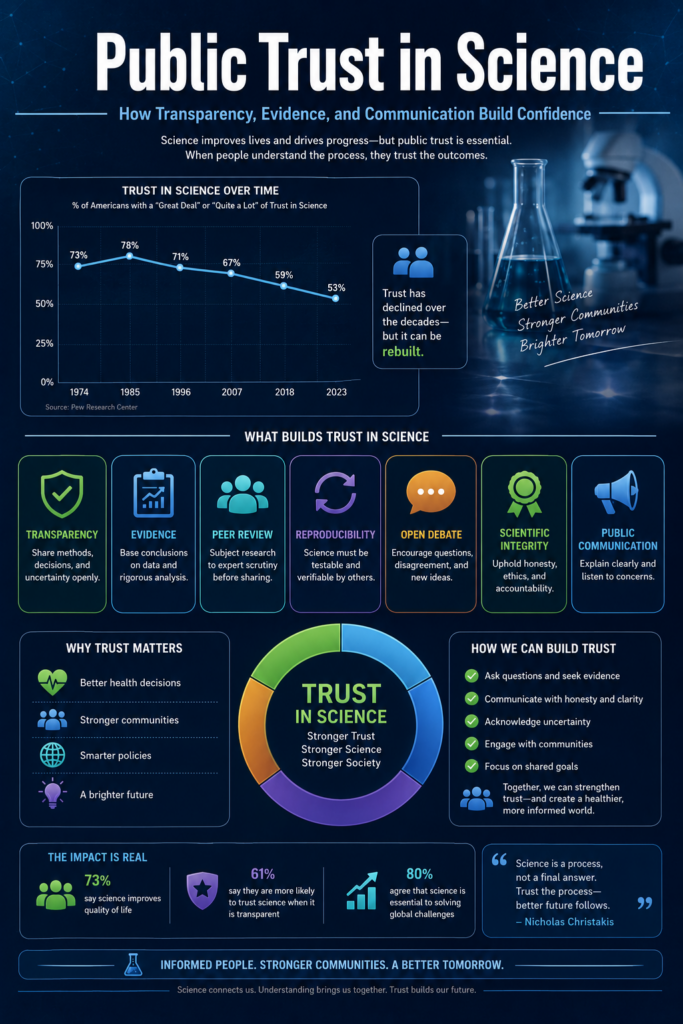
One of the central messages emerging from this interview is that rebuilding confidence in science requires improving scientific literacy—but not merely teaching more scientific facts.
Facts change.
Measurements improve.
Theories evolve.
Methods advance.
Scientific literacy means understanding how knowledge develops.
When people appreciate that uncertainty is expected rather than embarrassing, they become less likely to interpret changing recommendations as evidence of incompetence or deception.
The scientific method is designed to correct itself.
Indeed, its capacity for self-correction distinguishes science from ideology.
Ideologies protect conclusions.
Science protects inquiry.
That distinction may prove increasingly important in an era dominated by social media, political polarization, and rapidly evolving technologies.
The Responsibility of Scientists Beyond the Laboratory
Christakis’s launch of For the Love of Science reflects another important realization.
Producing excellent research is no longer sufficient.
Scientists must also communicate.
Explain.
Teach.
Listen.
Engage.
The gap between scientific institutions and the public widens whenever complex research is presented without transparency or humility.
Communication itself has become part of scientific responsibility.
This does not mean simplifying science beyond recognition.
It means inviting the public into the process.
Showing uncertainty.
Explaining disagreement.
Demonstrating how evidence changes conclusions.
These habits build trust far more effectively than appeals to authority.
For younger scientists especially, Christakis argues that learning to communicate clearly may become just as important as learning experimental methods.
Looking Beyond COVID
Although much public attention continues to focus on the pandemic, Christakis’s ideas reach far beyond any single historical event.
Artificial intelligence.
Genomics.
Climate science.
Mental health.
Biotechnology.
These rapidly evolving fields will all require societies capable of understanding uncertainty, evaluating evidence, and adapting responsibly as knowledge changes.
The greatest scientific advances of the coming decades may depend less on producing new discoveries than on rebuilding public confidence in the process that creates them.
Understanding emergence, networks, and scientific humility offers a powerful foundation for that effort.
Friendship: Humanity’s Hidden Evolutionary Superpower
One of the most fascinating moments in the conversation comes when Nicholas Christakis shifts from epidemiology and network science to something almost everyone experiences every day—friendship.
Most of us rarely stop to consider why friendships exist.
From an evolutionary perspective, however, friendship is extraordinary.
Natural selection is often described as favoring behaviors that improve the survival of genetically related individuals. Parents invest in children because they share genes. Siblings cooperate because helping family can indirectly increase the survival of shared genetic material.
Friendship challenges that simple explanation.
Humans voluntarily form lifelong relationships with people who are not biologically related.
These relationships require time.
Energy.
Resources.
Emotional investment.
Yet they persist across nearly every known culture.
Christakis argues that this capacity for creating durable, voluntary bonds with unrelated individuals is one of humanity’s defining evolutionary innovations. Rather than viewing friendship as a pleasant social luxury, he treats it as a biological adaptation that has helped humans cooperate on a scale unmatched by most other species.
This perspective changes how we think about society itself.
Civilizations are not built merely by families.
They are built by networks of trusted strangers who become friends, colleagues, neighbors, and collaborators.
Why Humans Became the Most Social Species
Unlike many mammals, humans survive through cooperation.
No individual can build a modern civilization alone.
Every meal.
Every road.
Every hospital.
Every scientific discovery.
Every university.
Every legal system.
Every technological breakthrough.
Each depends upon thousands—or millions—of people cooperating across time and space.
Friendship makes that cooperation possible.
It creates trust.
Trust reduces conflict.
Reduced conflict enables specialization.
Specialization fuels innovation.
Innovation builds civilization.
Christakis’s work repeatedly returns to one central insight:
The connections between people are often just as important as the people themselves.
That idea applies equally to biology, economics, public health, and political institutions.
The Biology Behind Human Connection
Christakis’s laboratory has expanded beyond studying friendship as a social phenomenon.
It now investigates its biological foundations.
Why do some people immediately become friends?
Why do certain relationships last decades while others disappear within months?
Could biology influence social attraction in ways we barely understand?
These questions have led his research into fascinating territory, including genetics, physiology, neuroscience, and even human chemosignaling—the role of smell in social interaction.
At first glance, these topics may seem unusual.
Yet they illustrate how modern science often begins with questions that appear deceptively ordinary.
Why do we like some people instantly?
Why do others make us uncomfortable?
Why do some groups naturally cooperate?
These questions bridge multiple disciplines, demonstrating how biology and sociology increasingly overlap.
Can Humans Really Smell Friendship?
Perhaps the interview’s most surprising discussion concerns human smell.
Most people believe humans rely primarily on vision and language.
Christakis suggests our sense of smell remains far more important than commonly recognized.
His research explores whether subtle chemical signals influence first impressions, friendship formation, and social bonding.
Although humans rarely sniff each other consciously, studies indicate that people often engage in unconscious scent sampling.
For example, after shaking hands, individuals frequently raise their hands toward their faces without realizing it.
Researchers believe this behavior may allow people to gather chemical information about one another.
While the science remains an active area of investigation, it challenges the long-standing assumption that humans possess an insignificant sense of smell. Christakis discusses emerging work on human social chemosignaling and the possibility that olfactory cues contribute to immediate feelings of affinity or aversion.
The broader lesson is not merely about smell.
It is about scientific curiosity.
Even everyday behaviors may conceal biological mechanisms that remain poorly understood.
Science Advances by Asking Better Questions
Throughout the interview, Christakis demonstrates a quality shared by many influential scientists.
He asks questions that others overlook.
Instead of asking:
“Why are people obese?”
He asked:
“Can obesity spread through social networks?”
Instead of asking:
“Why do humans have friends?”
He asked:
“Why does friendship exist at all?”
Instead of assuming social behavior belongs exclusively to psychology, he explored its biological foundations.
Scientific breakthroughs often emerge not from having better answers but from asking better questions.
This lesson extends beyond academia.
Businesses innovate by questioning assumptions.
Medical advances arise when clinicians reconsider accepted treatments.
Public policy improves when governments remain willing to revise ineffective approaches.
The scientific mindset is fundamentally a questioning mindset.
Intellectual Humility: The Hallmark of Good Science
Another recurring theme throughout the interview is humility.
Scientific knowledge is always provisional.
Even the strongest theories remain open to refinement.
That principle distinguishes science from ideology.
Ideological systems seek certainty.
Scientific systems seek accuracy.
Accuracy sometimes requires admitting previous conclusions were incomplete.
This distinction became particularly relevant during the COVID-19 pandemic.
Many controversies arose not because evidence changed—that is expected—but because institutions often communicated uncertainty poorly.
When evolving evidence appeared inconsistent, public confidence suffered.
Christakis argues that rebuilding trust requires greater transparency about uncertainty rather than pretending certainty exists where it does not. His emphasis on explaining the craft of science reflects a belief that understanding revision and self-correction is essential to restoring confidence in scientific institutions.
Humility does not weaken science.
It strengthens it.
Lessons for Medicine
For physicians and healthcare professionals, Christakis’s ideas carry practical implications.
Medicine increasingly recognizes that health depends upon more than biology alone.
Patients exist within families.
Communities.
Social networks.
Economic systems.
Cultural traditions.
Behavioral norms.
Treating disease therefore requires understanding the environments in which patients live.
For example:
- Smoking spreads through social groups.
- Exercise habits spread socially.
- Dietary behaviors spread socially.
- Mental health is influenced by social connectedness.
- Loneliness increases health risks.
- Community trust affects healthcare decisions.
Network science provides tools for understanding these broader influences.
Future public health strategies may increasingly target relationships rather than individuals alone.
Lessons for Public Policy
Policymakers frequently focus on changing individual behavior.
Christakis’s work suggests another possibility.
Change the network.
Rather than asking citizens to become more cooperative, governments can create institutions that encourage cooperation.
Rather than relying exclusively on educational campaigns, policymakers can identify influential social connections that accelerate beneficial behaviors.
Public trust itself may spread through networks.
So can misinformation.
So can civic engagement.
Network science therefore offers valuable insights for designing more resilient communities.
Lessons for Education
Education often emphasizes memorization.
Christakis emphasizes process.
Students should certainly learn scientific facts.
But they should also understand:
- How experiments are designed.
- Why replication matters.
- How peer review works.
- Why hypotheses fail.
- Why disagreement improves knowledge.
- How evidence evolves.
Teaching the process of science prepares students not merely to consume information but to evaluate it independently.
In an age of misinformation, that skill may be more valuable than memorizing any particular set of facts.
The Future of Science Communication
Christakis’s For the Love of Science project reflects a broader shift in science communication.
Researchers increasingly recognize that publishing papers alone is insufficient.
Science must also be explained.
Not simplified beyond recognition.
Not politicized.
Not marketed.
Simply explained honestly.
That means discussing uncertainty.
Showing failed experiments.
Explaining why revisions occur.
Helping the public distinguish genuine scientific disagreement from institutional politics.
Such transparency builds credibility far more effectively than appeals to expertise alone.
Why This Conversation Matters
The interview ultimately offers something larger than a discussion about COVID, sociology, or network science.
It presents a vision of science as one of humanity’s greatest collaborative achievements.
Science is not perfect.
Scientists are not infallible.
Institutions sometimes fail.
Policies sometimes prove mistaken.
Yet the scientific process remains humanity’s most reliable method for discovering objective truths about the natural world.
Its greatest strength lies not in always being right.
Its greatest strength lies in its willingness to become less wrong over time.
That commitment to continual learning may be the most important lesson Nicholas Christakis offers—not only to scientists but to anyone seeking to understand an increasingly complex world.
Conclusion: Restoring Trust Begins with Understanding the Scientific Process
Nicholas Christakis offers something increasingly rare in today’s public discourse—a defense of science that does not depend on claiming scientists are always right.
Instead, he reminds us that science is valuable precisely because it allows itself to be corrected.
Throughout history, every major scientific advance has emerged through observation, skepticism, experimentation, criticism, and revision.
Those qualities distinguish science from ideology.
They also explain why scientific knowledge becomes increasingly reliable over time.
The COVID-19 pandemic exposed weaknesses in how scientific findings were communicated, interpreted, and implemented by institutions. It also revealed the consequences of confusing evolving evidence with institutional certainty.
Christakis argues that rebuilding public trust requires more than restoring confidence in experts.
It requires restoring confidence in the scientific process itself.
That means teaching future generations how science actually works.
How hypotheses are tested.
Why disagreement matters.
Why peer review exists.
Why failed experiments remain valuable.
Why changing one’s mind after seeing better evidence represents intellectual strength rather than weakness.
His work in network science, social contagion, human cooperation, and emergence demonstrates another equally important lesson.
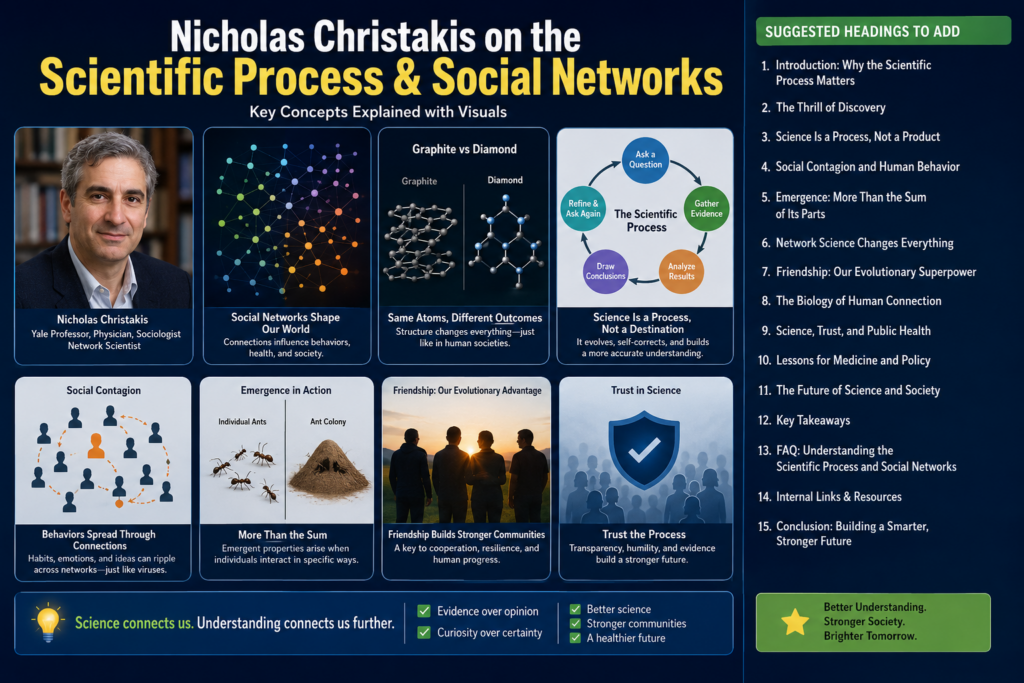
Human beings are never isolated.
We exist within networks.
Those networks shape our health.
Our friendships.
Our beliefs.
Our politics.
Our economies.
Even our capacity for kindness.
Understanding those invisible connections may become one of the defining scientific challenges of the twenty-first century.
For readers seeking a healthier relationship with science, Christakis offers an encouraging perspective.
Science is not a finished book.
It is an ongoing conversation.
And every generation has the opportunity to contribute another chapter.
Key Takeaways
✔ Science is a process, not a collection of permanent facts.
✔ Scientific uncertainty is a strength—not a weakness.
✔ Public trust grows through transparency and intellectual humility.
✔ Social networks influence health, behavior, cooperation, and beliefs.
✔ Human relationships create emergent properties that individuals alone cannot produce.
✔ Friendship is one of humanity’s most remarkable evolutionary adaptations.
✔ The future of public health increasingly depends on understanding network science.
✔ Better science communication begins with explaining how science works, not merely presenting conclusions.
Frequently Asked Questions
What is the scientific process?
The scientific process is a systematic method of asking questions, forming hypotheses, conducting experiments, analyzing evidence, and revising conclusions based on new information. Its defining feature is continuous self-correction.
Who is Nicholas Christakis?
Nicholas Christakis is a Yale physician, sociologist, and network scientist whose research focuses on social networks, human behavior, public health, cooperation, and the evolution of friendship.
What is social contagion?
Social contagion refers to the spread of behaviors, attitudes, emotions, or beliefs through social networks rather than through biological infection.
What is emergence?
Emergence describes situations where interactions among individuals produce collective properties that cannot be explained by examining individuals alone.
Why are social networks important in public health?
Social networks influence how diseases, information, behaviors, trust, cooperation, and health habits spread throughout communities.
Why did public trust in science decline after COVID?
Many people perceived evolving recommendations as contradictions rather than expected outcomes of an evidence-based scientific process. Communication challenges and institutional decision-making also contributed to declining trust.
What is network science?
Network science studies how relationships among individuals influence collective behavior, information flow, disease transmission, innovation, and cooperation.
Addiction & Public Health
COVID & Medical Freedom
Science & Society
- Scientific Method Explained
- Why Science Changes
- Evidence vs Authority
- Social Contagion Explained
- Public Trust in Medicine
External Authority References
Reference authoritative resources such as:
- Human Nature Lab
- https://humannaturelab.net/director
- Yale School of Medicine
- Yale Sociology Department
- Google Scholar profile of Nicholas Christakis
- Peer-reviewed publications on network science
- Books authored by Nicholas Christakis (e.g., Connected, Blueprint, Apollo’s Arrow)
- Follow on X
Discover more from Randy Bock MD PC
Subscribe to get the latest posts sent to your email.