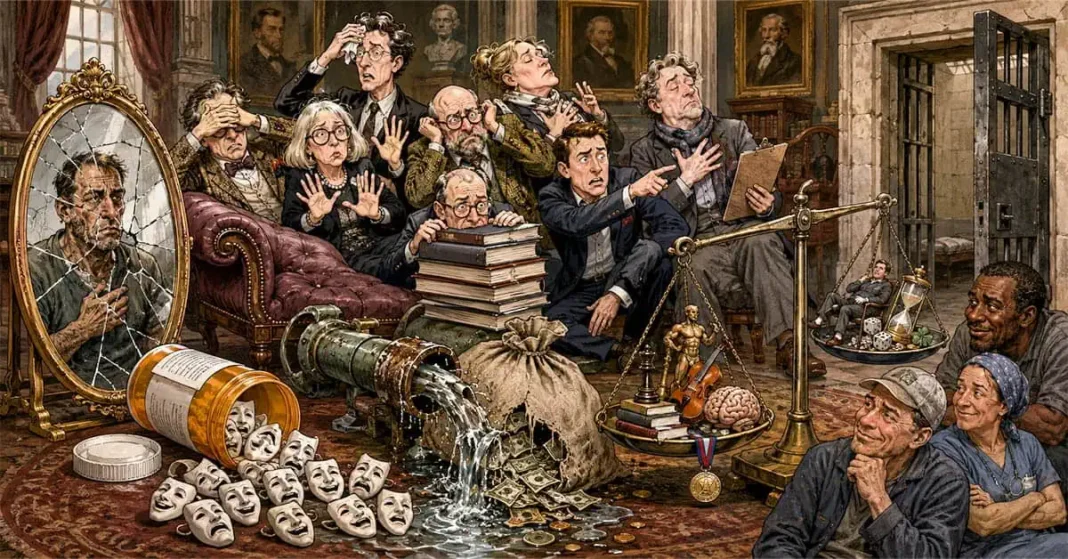



Addiction is not a disease — at least not according to Dr. Randy Bock, a Massachusetts general practice physician who spent nearly three decades treating patients before becoming a target of his own state medical board. In a candid interview on the Culmination podcast, Bock lays out a controversial but compelling case: that the modern addiction-treatment industry, built on lifelong Suboxone maintenance and propped up by mental health parity laws, profits from keeping patients dependent rather than helping them recover. His story is part medical philosophy, part whistleblower account, and part cautionary tale about what happens when a doctor challenges a multibillion-dollar treatment complex.
Table of Contents
1. The Goldilocks Model: Why 4-Month Tapers Beat “Forever” Suboxone
Dr. Bock developed a buprenorphine (Suboxone) tapering protocol based on what he calls the “Goldilocks principle” — not too short, not too long, but just right. Standard 3-to-10-day detoxes are often too aggressive for patients deep in narcotic withdrawal, causing relapse. On the other end, the “forever” maintenance model — keeping patients on methadone or Suboxone indefinitely — creates permanent dependency rather than recovery.
His solution: a roughly four-month taper, a timeline he modeled loosely on the psychological process of grieving a loved one’s death. The model was successful enough that Bock was invited to lecture for Reckitt Benckiser, the manufacturer of Suboxone, as an example of how a buprenorphine practice should operate.
How the DATA 2000 Law Shaped Addiction Treatment
The Drug Addiction Treatment Act of 2000 (DATA 2000) was designed to destigmatize narcotic treatment by allowing qualified physicians to prescribe buprenorphine in an office setting, capped at 30 patients per doctor under a special DEA “X” license. Bock argues this regulatory structure inadvertently created a financial incentive for doctors to keep the same 30 patients on Suboxone indefinitely — generating steady, low-effort revenue without ever resolving the underlying addiction.
2. Why Dr. Bock Says Addiction Is Not a Disease
At the core of Bock’s philosophy is a rejection of the disease model of addiction. He draws a sharp contrast with insulin-dependent diabetes: take away a diabetic’s insulin, and they will die from their disease. Take away a heroin addict’s drug supply, and while withdrawal is miserable — “a lot like the flu,” in Bock’s words — it is not, by itself, fatal.
This distinction, he argues, matters enormously for how treatment is framed. If addiction is treated as a permanent, incurable disease requiring lifelong medication — much like insulin for diabetes — then maintenance becomes the only “responsible” option. But if addiction is better understood as a behavioral and spiritual struggle, then the goal of treatment should be returning the patient to a drug-free baseline, not managing a chronic illness forever.
The “Church of Suboxone”
Bock describes how the standard 30-patient Suboxone practice model can become what he calls “the church of Suboxone” — patients receive their medication like a weekly sacrament, doctors get reliable recurring income, and pharmaceutical companies profit from continuous prescriptions. Everyone in this triangle is satisfied except, arguably, the patient who never actually gets better and the taxpayer footing the bill.
3. Mental Health Parity: The Hidden Driver Behind Rising Diagnoses
Bock traces much of this dynamic back to a policy concept from the 1990s called mental health parity — the requirement that insurance cover mental health conditions the same way it covers physical injuries like a broken bone. While well-intentioned, especially for severe conditions like schizophrenia, Bock argues the policy created a structural conflict of interest: the same professionals who diagnose conditions are also the ones financially benefiting from those diagnoses.
He points to what he calls “the four A’s” — addiction, ADD, autism, and anxiety — as categories that have seen explosive diagnostic growth since mental health parity laws took effect, alongside related conditions. Bock is careful to note this is correlation, not proven causation, but argues the financial incentive structure deserves far more scrutiny than it currently receives.
4. A Patient’s Death and a Career-Ending Complaint
One of the most striking parts of Bock’s story involves a former patient — a man in his mid-40s who had been collecting disability while secretly working odd jobs and selling heroin. During a counseling session, the patient broke down and admitted, in Bock’s retelling, that his addiction stemmed from his own unwillingness to change — what the patient himself called being “lazy.”
The patient never returned for follow-up care. Months later, he filed a formal complaint with the Massachusetts Board of Registration in Medicine accusing Bock of physical assault, property damage, and verbal abuse toward his wife — allegations Bock says were fabricated and contradicted by witnesses present in the office at the time. The patient later died of a heroin overdose. Bock views the complaint as a turning point that placed him squarely in the board’s crosshairs.
5. How a Book Manuscript Became Evidence Against Him
While building his taper-based practice, Bock was also writing a book — Withdraw to Freedom: Getting Out of the Narcotic Addiction Maze — arguing that addiction should not be classified as a disease. When Bock voluntarily submitted the manuscript to the medical board to demonstrate his credibility, the board instead used the book’s central thesis as evidence in its 2014 case to suspend his license.
According to Bock, this suggests the board’s objection was not primarily about patient safety, but about his philosophical challenge to the prevailing maintenance-based treatment model — a model in which several board members and their professional peers had a financial stake.
6. The “Mass Overreach” Era: A Board Under Scrutiny
Bock’s suspension occurred during the decade-long tenure of a board chairperson he describes as having pursued an aggressive pattern of physician discipline. Independent legal reporting at the time — published by Massachusetts Lawyers Weekly — examined a set of cases that had been appealed to the state’s administrative appeals division and found the overwhelming majority were overturned, a result described as highly unusual compared to historical norms.
Bock connects this pattern to a broader legal principle: when regulatory boards are staffed by professionals who are also market participants — competitors, in effect, of the people they’re disciplining — courts have recognized this creates a conflict of interest deserving heightened scrutiny.
7. The Wrong Legal Standard — and a Decade-Long Fight for Vindication
Perhaps the most damning detail in Bock’s account: his 2014 suspension was later determined to have been decided under the wrong evidentiary standard entirely. Medical board suspensions are supposed to require a “preponderance of the evidence” — roughly an 85-90% likelihood of truth. Bock’s case, and others from the same period, were reportedly decided under a far lower threshold.
This error was uncovered through a separate physician’s lawsuit, but the board never proactively notified affected doctors — including Bock — that their cases may have been wrongly decided. It took until 2018 for Bock to secure a rehearing, and by 2020 his license was fully reinstated. By then, his practice — built over more than 30 years and representing a significant portion of his retirement nest egg — had been destroyed.
The Bigger Picture: Physician Accountability vs. Physician Persecution
Bock’s story raises uncomfortable questions that extend well beyond his individual case. Are medical boards functioning as neutral arbiters of patient safety, or have some become instruments for enforcing ideological and financial orthodoxy within medicine? When the people writing the rules for “addiction treatment” also profit from the prevailing treatment model, can dissenting physicians get a fair hearing?
Bock now practices part-time and devotes much of his energy to public health writing and advocacy — including continued efforts to highlight the cases of other physicians, such as a colleague he refers to by the nickname “Barani,” who remain in regulatory limbo years after similar disputes with their state boards.
Frequently Asked Questions
Is addiction classified as a disease in mainstream medicine?
Yes — major medical organizations, including the American Society of Addiction Medicine and the National Institute on Drug Abuse, classify substance use disorder as a chronic brain disease. Dr. Bock represents a minority but vocal viewpoint that challenges this framing, arguing it can discourage patients from pursuing full recovery.
What is Suboxone maintenance treatment?
Suboxone maintenance is the practice of keeping patients on buprenorphine (combined with naloxone) for an extended or indefinite period to manage opioid use disorder, reduce cravings, and lower overdose risk, rather than tapering them off the medication entirely.
What is the DATA 2000 law?
The Drug Addiction Treatment Act of 2000 allows qualified physicians to prescribe buprenorphine for opioid use disorder in an office-based setting, originally capping patient rosters at 30 per physician under a special DEA waiver.
What is mental health parity?
Mental health parity refers to laws requiring health insurers to cover mental health and substance use disorder treatment at the same level as physical health conditions. While intended to reduce stigma and improve access, critics like Dr. Bock argue it has also expanded the financial incentives around diagnosis.
What happened to Dr. Randy Bock’s medical license?
Dr. Bock’s license was suspended by the Massachusetts Board of Registration in Medicine in 2014, reportedly under an incorrect legal evidentiary standard. After a multi-year legal battle, he received a rehearing in 2018 and had his license fully reinstated by 2020.
Discover more from Randy Bock MD PC
Subscribe to get the latest posts sent to your email.