


Medical assistance in dying is only the entry point. Across a full hour with Dr. Randy Bock, medical writer and author Gabrielle Bauer worked through cancellation, the Great Barrington Declaration, a rejected JAMA article on Zika, the Kamloops “unmarked graves” story, autism’s diagnostic explosion, and gender ideology — all circling the same question: how does a society decide whose life, and whose opinion, gets protected?
Bauer has written about medicine professionally for more than three decades. Politics, by her own account, arrived late — in her 60s, during COVID — and it arrived through a side door: free speech.
Table of Contents
How COVID Radicalized a Medical Writer
Bauer describes herself as having been “not really a political person” before the pandemic. What changed her wasn’t the online insults she absorbed while defending her views — she got used to being called things like a “mouth-breathing trumpard” and shrugged it off. What actually moved her was watching other people get cancelled for asking questions the public health establishment didn’t want asked.
That experience pulled her into the Free Speech Union of Canada, the sister organization to the UK’s Free Speech Union founded by Toby Young. She now sits on its communications team and writes for the Daily Skeptic. She calls herself “politically homeless” — more conservative on free speech, more left-leaning on assisted dying, and unwilling to fully claim either label. “Sometimes I call myself a radical centrist,” she said.
A Rejected JAMA Article and the Cost of Dissent
Bauer’s own brush with cancellation predates the term “woke” as a household word. In early 2019, she wrote an article on Zika and the microcephaly response — later expanded into a full book — and had it provisionally accepted by JAMA, one of the top five medical journals in the world. On a Zoom call with two of the journal’s chief editors, Howard Bauchner and Edward Livingston, she was told they’d hold the piece because they didn’t want to “sow doubt in the public health establishment” about mistakes made during the Zika response — right as COVID was emerging. Her article never ran in JAMA.
The postscript is darker: both editors were later swept up in a separate racism controversy at the journal, defended each other, backtracked under pressure, and both ultimately resigned. Bauer’s dry conclusion: “Don’t ever turn down my articles.”
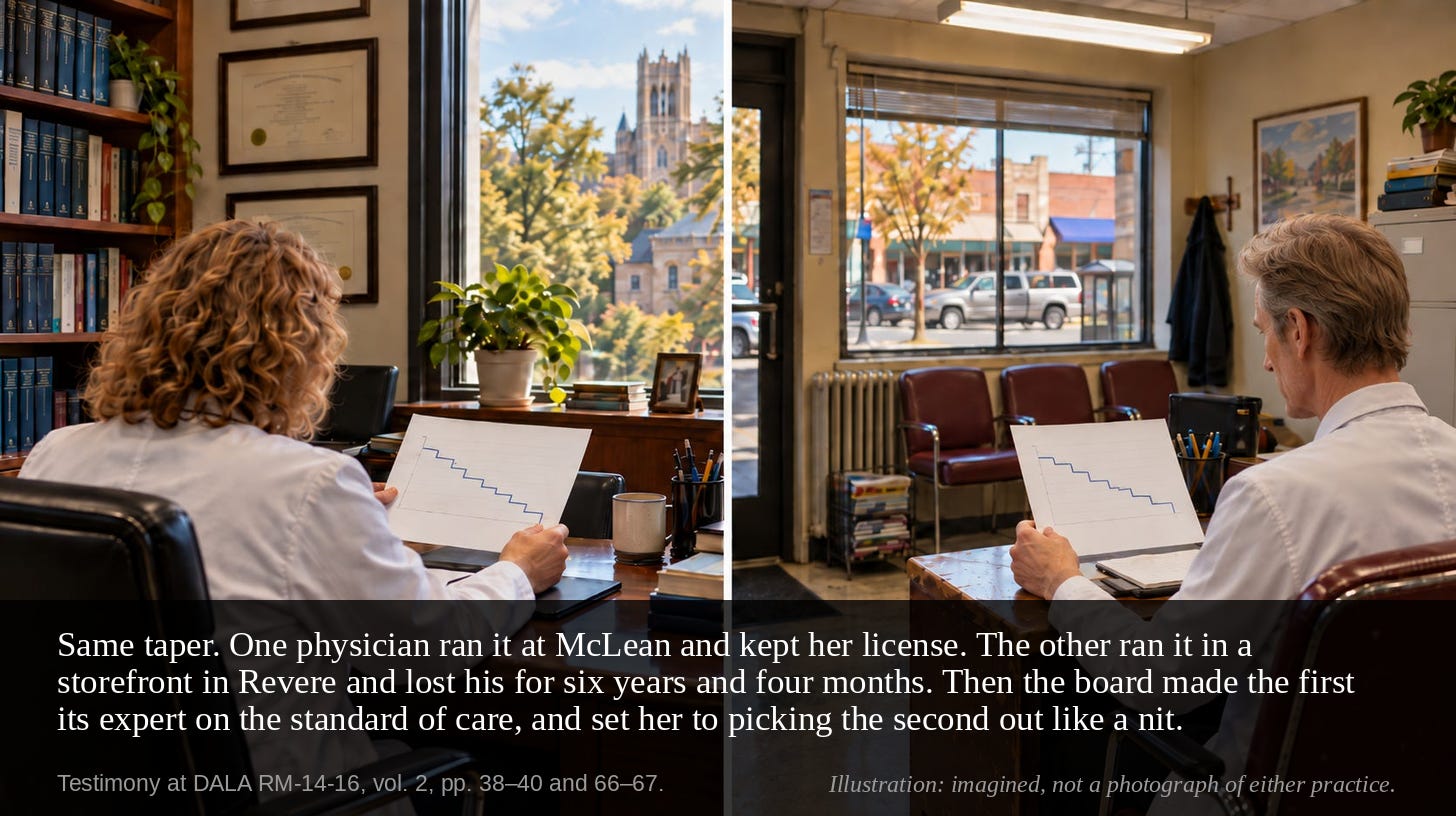
Dr. Bock shared a parallel story from his own career — losing his practice, worth roughly a million dollars in built value plus years of income, after a medical board effectively cancelled him for stating publicly that narcotic addiction is an addiction, not a disease. Bauer agreed with the underlying medical distinction.
Cancel Culture’s Greatest Hits — From Great Barrington to Kamloops
The conversation widened into a broader indictment of institutional cancel culture. Bauer brought up Jay Bhattacharya and the Great Barrington Declaration — the Stanford-trained physician who proposed focused protection as an alternative to blanket lockdowns and was, in her words, “shouted down” and “excoriated,” despite an academic pedigree built almost entirely at Stanford.
She then drew a Canadian parallel to the summer of George Floyd: the 2021 story out of Kamloops, British Columbia, where a First Nations community used ground-penetrating radar near a former residential school and reported soil disturbances interpreted as 215 unmarked graves. The story became a national reckoning — churches were burned, the federal government committed roughly $12 million to investigate, and academics who questioned the narrative, including a well-known professor Bauer named, lost their standing. Five years later, in 2026, the Globe and Mail’s editorial board — by Bauer’s description a centrist, mainstream outlet — published a piece acknowledging that no physical evidence of graves had ever been produced.
Bauer’s framing: this is what happens “when you don’t have good ideas — shut up is always a good answer.” She compared it to Cold War East Germany blocking Western broadcasts to protect the illusion of socialist success, and cited the McMartin preschool case from 1990s California — a satanic-abuse panic built on testimony from children about a basement that, it turned out, didn’t exist — as an earlier example of the same social-contagion pattern repeating with different subject matter.
The Medical Assistance in Dying Debate
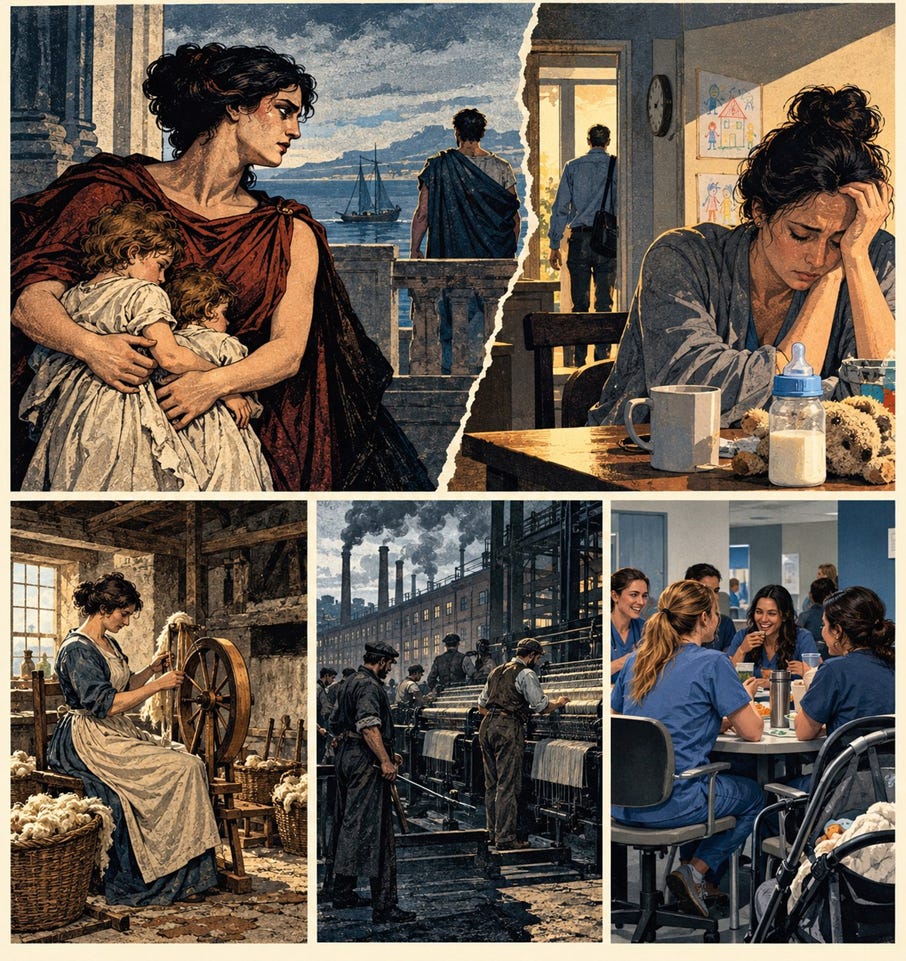
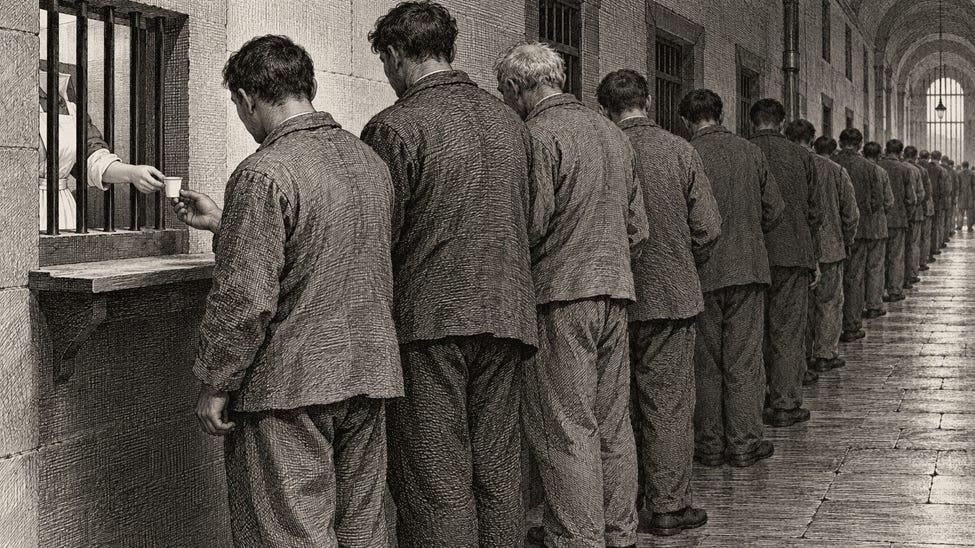
This is where host and guest diverged most sharply. Bauer supports Canada’s MAID program, arguing that modern medicine has become too attached to extending “bare life” — a term she borrows from philosopher Giorgio Agamben — regardless of quality, dignity, or cost. She pointed to cancer drugs priced between half a million and a million dollars that add roughly six months of life to patients with incurable metastatic disease, calling that a symptom of a healthcare system that has lost respect for the natural arc of life, even as it drives up taxes and diverts resources from other needs.
She pushed the argument further into an efficiency framework — noting, half-provocatively, that cemeteries themselves represent a kind of societal inefficiency, and that a society obsessed with productivity could just as easily turn against Down syndrome patients or ventilated elderly patients on cost-benefit grounds. Her point wasn’t a policy proposal; it was a warning about where pure utilitarian thinking leads if taken to its logical end — invoking the Nazi regime’s early “useless eater” euthanasia program as the historical low bar. She was explicit that she doesn’t hold a 100% utilitarian view herself: “It’s useful to respect life and give it special status.”
Dr. Bock’s pushback centered on a narrower ethical line: physicians have long had latitude to withdraw aggressive treatment, wean a patient off a ventilator, or increase comfort medication and let death occur naturally. Deliberately administering a lethal substance, he argued, is a different act entirely — one that changes the core mission of doctoring. He also raised a “cui bono” question, worrying about the incentive structure once assisted death becomes institutionalized and legalized rather than practiced quietly at the margins. Bauer’s answer leaned on personal autonomy: at nearly 70, and in good health, she said she’d rather have the option than be forced to “prolong my bare life” against her own wishes, spending down savings she’d rather leave to her children.
Prenatal Diagnosis and the Down Syndrome Controversy
Bauer brought up the recent public backlash against a well-known YouTuber, Jesse Ridgeway, and his wife, who terminated a pregnancy after an amniocentesis revealed Down syndrome at roughly four and a half months along. What drew the real outrage, in Bauer’s telling, wasn’t the decision itself but how the couple publicly rationalized it — statements that read as dismissive of Down syndrome as a diagnosis.
She then pointed to the statistics that got lost in the outrage cycle: roughly 60–66% of parents in the U.S. who receive a prenatal Down syndrome diagnosis choose termination, and in countries like Denmark and Iceland the rate approaches 100%. Her conclusion wasn’t a moral judgment — it was an observation about hypocrisy: a lot of the people condemning the couple publicly would, statistically, make the same private choice.
Is There Really an Autism Epidemic?
Bauer doesn’t hedge on this one. She argues there is no autism epidemic — the diagnostic category has simply expanded to the point of near-meaninglessness, calling it “diagnostic inflation gone mad.” She contrasted her childhood understanding of autism — essentially the Rain Man archetype — with today’s much broader use of the term, including self-described “TikTok autists” who, in her account, are often indistinguishable from neurotypical people with ordinary social quirks. She dismissed the “we all have to mask” counterargument, noting that everyone masks to some degree in professional and social settings.
Gender Ideology and Social Contagion
Bauer described herself as “morbidly fascinated” by trans issues and has read extensively on the topic. Her core position: something can be real and simultaneously amplified a thousandfold by social contagion — the two aren’t mutually exclusive. She distinguishes between the underlying discomfort some people feel with their bodies, which she believes is genuine, and “I am trans” as a specific interpretive framework she considers a product of the current era rather than a timeless truth.
She illustrated the idea with a personal anecdote: attending a concert by musician Audrey Hobert and only afterward learning the artist is transgender, then reflecting on how much of the surrounding fan culture’s language — “be yourself,” “affirm yourself” — functions almost as its own belief system, or as she put it, “its own religion.” The conversation also drifted into an extended, half-joking riff about “trans-age” identity and a more serious aside comparing the mutability of racial identity (citing Rachel Dolezal and public discussion of Barack Obama’s mixed heritage) to the far less socially permissible territory of “transracial” claims — Bauer’s point being that society tolerates fluidity in some categories of identity far more than others, inconsistently.
Why Dissent Still Matters
Bauer’s closing thought tied the entire conversation together: dissenters aren’t always right, but a society that punishes dissent loses its ability to correct its own mistakes. Her hope, stated plainly at the end of the interview, is for “a world in which we can all be more honest and speak freely and listen to what the other person is saying” — the same principle driving her work with the Free Speech Union of Canada.
Key Takeaways
- Bauer’s political awakening came from watching COVID-era cancellations, not from personal insults she received online
- Her own article on Zika microcephaly was shelved by JAMA’s editors, who were later swept up in a separate cancellation themselves
- She draws a direct line between the Great Barrington Declaration backlash and Canada’s Kamloops “unmarked graves” story as parallel social-contagion events
- She supports medical assistance in dying but explicitly rejects a fully utilitarian view of human life
- Statistics on Down syndrome terminations reveal a gap between public outrage and private choices
- She argues there is no true autism epidemic — only diagnostic inflation
- She sees gender dysphoria as real but heavily amplified by social contagion and generational interpretation
Read more of Gabrielle Bauer’s work on medicine, ethics, and free speech at her site, or follow her essays at the Daily Skeptic. For related conversations, browse other interviews on [randybock.com] — including discussions on the WHO pandemic treaty and the science replication crisis.
FAQ
What is medical assistance in dying (MAID) in Canada?
MAID is a legal process allowing eligible Canadians suffering from a grievous and irremediable medical condition to receive assistance from a physician or nurse practitioner in ending their life, under strict federal eligibility criteria and safeguards.
Why did Gabrielle Bauer’s article on Zika get rejected by JAMA?
JAMA’s editors initially planned to publish it but delayed it as COVID emerged, saying they didn’t want to sow doubt in the public health establishment. The article never ran in the journal; both editors involved later resigned following an unrelated controversy.
What is the Kamloops unmarked graves story Bauer referenced?
In 2021, a First Nations community in British Columbia reported soil disturbances detected by ground-penetrating radar near a former residential school, interpreted as unmarked graves. The story triggered national outrage and church burnings; by 2026, no physical evidence had been produced, according to a Globe and Mail editorial Bauer cited.
Why does Gabrielle Bauer support medical assistance in dying?
Bauer argues modern medicine over-prioritizes extending biological life at any cost and that MAID respects the natural arc of life, while stating she does not hold a fully utilitarian view of human worth.
What did Gabrielle Bauer say about autism diagnosis rates?
She believes there is no true autism epidemic, attributing rising diagnosis rates to diagnostic inflation rather than a genuine increase in the underlying condition.
What did Bauer say about gender dysphoria and social contagion?
She argued something can be a real experience and still be amplified by social contagion at the same time, distinguishing the underlying feeling from “I am trans” as a modern interpretive framework.
Discover more from Randy Bock MD PC
Subscribe to get the latest posts sent to your email.