
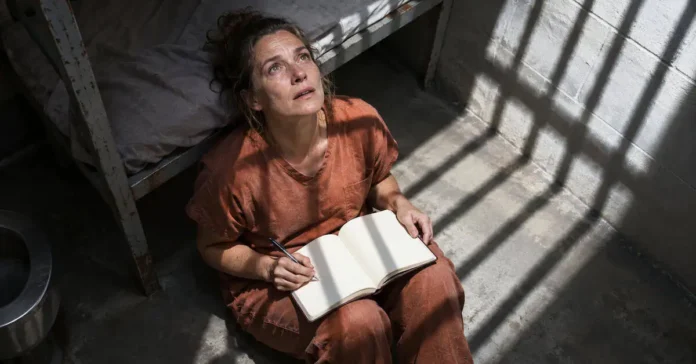
Ginny Burton went to prison. Andi B. was taken off Massachusetts Avenue and brought to rehab. Each credits that interruption with making sobriety possible. A stretch of time away from opiates gave Ginny room to think, and Andi came to be grateful that someone intervened while his attention was still fixed on heroin.
Ginny had spent nearly thirty years in active addiction. In The Space of Clarity, I wrote about what prison gave her: days without drugs in which she could begin to see her own conduct clearly. She could readily write down what others had done to her. It took longer to examine what she did with what had happened to her. The author of The Gabriel Plan now brings that experience to people in custody.
Andi had spent time in jail, too. He remembers thinking about how he would get high when he got out. For him, the decisive interruption came on Boston’s Methadone Mile, when people from a treatment program took him to rehab. I called his story “They Stole Me” (Thank God) and drew a parallel with Isaiah’s answer when called upon. Andy’s gratitude makes sense beside Ginny’s account of prison. Both came to value an interruption that began before either had fully chosen sobriety.
Both are outspoken about abstinence. Both also know the appeal of getting through the day with something that makes it bearable. Ginny recalled receiving methadone in the hospital after years of heroin use. She said she was so sedated she could scarcely get up to leave. I raised the question of tolerance. She took it back to the bedside, where the dose had a consequence she could describe from experience. A physician needs to hear that account in full before answering it.
A 2017 BMJ review of opioid treatment and mortality found pooled overdose mortality of 2.6 deaths per 1,000 person-years during methadone treatment and 12.7 outside treatment. The authors also found that the weeks after leaving treatment carried particular risk. Those figures tell me why retention matters and why a patient’s plans for the future deserve a careful clinical conversation. They also leave room to ask what a program offers a patient beyond the next appointment.
Ginny’s experience raises a question for correctional programs that offer methadone or buprenorphine. What room do they make for someone who wants the kind of drug-free interval that mattered to her? I’ve written about the incentives that built the methadone system. A clinic can count visits and doses. It takes more work to find out whether a patient has people to call, whether he can manage a bad week, or whether his day still revolves around getting to the clinic. The questions concern what we pay institutions to do and what patients are entitled to ask of them.
When I asked Andi what he meant by the fourth and fifth steps, he described writing down his resentments, fears, and conduct, then telling another person what he had written. Some of it concerned harm done to him as a child. He was clear about where responsibility lay. His work as an adult was to see how his own responses carried over into his dealings with other people. That distinction helped me understand why an inventory could be an exercise in agency for someone who had spent years feeling at the mercy of his circumstances.
A 2020 Cochrane review of Alcoholics Anonymous and Twelve-Step Facilitation found that structured programs that help people with alcohol use disorder participate in AA generally achieved higher rates of continuous abstinence than other established approaches. Andy’s own account ranges across the drugs he used. He gives particular weight to what happened after meetings, when people went for coffee or dinner and he could see how someone further along handled ordinary problems.
Andi went from sleeping outdoors to running a real estate office. When he wanted to explain how he lives now, he chose a smaller example. He sees a piece of trash on the sidewalk and picks it up. He knows he can make a great deal of the rule about doing the next right thing. He acts on it when nobody is watching.
Ginny ended with her own version of that practice. She had spent years absorbed in what she needed and what other people had done to her. The Twelve Steps gave her a way to direct her attention to someone else. In her words, “I don’t think love is a feeling. I think love is an action.”
Discover more from Randy Bock MD PC
Subscribe to get the latest posts sent to your email.