

In May 2026, a wildlife expedition cruise ship called the MV Hondius departed Argentina carrying roughly 150 passengers bound for Antarctica. Within days, a handful of travelers who had hiked in rodent-inhabited mountain terrain fell gravely ill. By the time the ship made port, two had died, a third death was suspected, and eleven passengers total were linked to the Andes strain of hantavirus — the only hantavirus known to transmit person to person.
It should have been a regional public health notice. Instead, it became a global media event.
Warships were dispatched to remote Atlantic islands. Biocontainment units across three continents activated. Wire services led with breathless dispatches for days. And social media lit up with one burning question: Is this the next COVID?
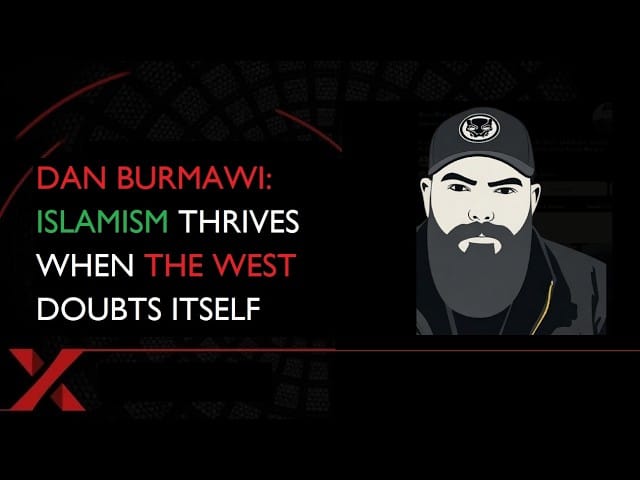
In a recent interview, Dr. David Bell — physician, epidemiologist, former WHO staffer of nine years, and one of the more outspoken critics of the global pandemic-preparedness industrial complex — offered a very different question: Who benefits from the panic?
Table of Contents
What Is Hantavirus — and How Serious Is the 2026 Outbreak, Really?
Before unpacking the politics, the science deserves a fair hearing.
Hantaviruses spread primarily through inhalation of aerosolized rodent droppings, urine, or saliva. The Andes variant — endemic to South America — is unique in that it can, under conditions of prolonged close contact, spread from person to person. Nurses caring for severely ill patients have contracted it. Household members sharing beds with infected partners have gotten sick. But casual transmission in public settings has never been documented.
The hantavirus outbreak 2026 aboard the MV Hondius produced 8 confirmed cases, 3 more suspected, and 2–3 deaths among 150 people confined together for weeks in the South Atlantic. That is a meaningful but contained cluster — not an exponential spread event.
More telling: population surveys in rural South America show that over 1% of residents — and many people who keep pet mice — carry hantavirus antibodies, meaning they were exposed and their immune systems handled it without hospitalization. The hospitalization fatality rate is high, but that reflects who gets counted, not the full picture of infection. Most exposures appear to be mild or completely silent.
The WHO estimates 10,000–100,000 hantavirus cases occur globally each year, including several thousand in Europe. This is not a new pathogen. It has not mutated into something novel. The genome sequenced from the cruise ship cluster is consistent with a 2018 isolate and shows the expected rate of natural mutation. No lab-origin theory holds water.
So why did it dominate the news cycle for weeks?
A Pattern Worth Recognizing: The Outbreak Carousel
Dr. Bell describes what he calls a recurring carousel of “petty plagues” — small outbreaks inflated into existential threats:
- SARS-1 (2003): Fewer than 800 deaths globally
- Zika (2015–16): Recorded deaths in the single digits; microcephaly link disputed
- MPOX / Monkeypox (2022): Fewer than 1,000 deaths across two outbreaks globally
- Avian Flu H5N1: Sporadic, limited human-to-human transmission
- Hantavirus 2026: 2–3 deaths on one ship
Compare these numbers to the diseases that kill people every single day without front-page coverage:
- Malaria: ~2,000 children die daily
- Tuberculosis: ~4,000 people — mostly young adults — die daily
- Malnutrition: Worsening across sub-Saharan Africa, partly because COVID-related debt redirected health budgets
The disparity is not an accident of newsworthiness. It reflects something structural about how the global health agenda is now set — and who funds it.
The WHO Pandemic Treaty: Still Struggling, Still Necessary to Sell
At the time of the MV Hondius outbreak, the WHO was in the middle of yet another attempt to finalize its pandemic agreement — specifically, the Pathogen Access and Benefit-Sharing (PABS) annex, the section dealing with how countries share disease samples and receive equitable access to resulting vaccines and treatments.
The agreement has been stalling for years. African nations in particular have pushed back, questioning whether signing on delivers genuine equity or merely locks them into a system that funnels public money toward Western pharmaceutical production lines while their own health systems remain underfunded.
For the pandemic preparedness agenda to move forward, the argument needs to feel urgent. Outbreaks that stay in the news help that argument. Outbreaks that quietly resolve in a fishing village in rural Chile do not.
Bell’s pointed observation: once a story is placed with Reuters or AP, it becomes a global story automatically, because virtually every downstream outlet sources from them. The question isn’t why the MV Hondius story ran everywhere. The question is why it was placed prominently enough to run everywhere in the first place.
The mRNA Vaccine Angle: Marketing a Product Without a Market
Here is where the commercial dimension becomes impossible to ignore.
Moderna — the mRNA vaccine company that became a household name during COVID-19 — has been working with a South Korean partner to develop an mRNA-based hantavirus vaccine. The scientific challenge of developing such a vaccine is real. The commercial challenge is more pressing: hantavirus has historically been so rare in public consciousness that there is essentially no demand for a vaccine against it.
Vaccines, as Bell explains, represent an ideal commercial model compared to, say, antibiotics. You give an antibiotic only to someone with a confirmed infection. A vaccine, in theory, goes to everyone — healthy adults, children, elderly — and may require multiple doses, boosters, and eventually mandates to maximize the addressable market. As mRNA technology has matured, the marginal cost of producing a new vaccine from a pathogen’s genetic sequence has dropped dramatically. The bottleneck is no longer manufacturing. It is demand.
Creating demand for a product no one feared requires making people afraid of the underlying disease. A cruise ship outbreak, with its built-in drama of isolation, repatriation flights, biocontainment units, and tearful passengers in hazmat-zone footage, is — at minimum — extremely fortuitous timing.
How the WHO’s Funding Model Changed Everything
The WHO that Dr. Bell joined in the 2000s was an institution funded primarily by member states, which gave the secretariat significant discretion over how to allocate resources based on technical need and public health evidence.
That institution no longer exists.
Today, approximately 80% of WHO funding is “specified” — meaning donors earmark it for particular programs. The largest individual donor to the WHO is Bill Gates, who holds substantial private investments in vaccine-related companies and funds. The second largest is GAVI, the vaccine alliance (established around 2001), a public-private partnership whose explicit mandate is to accelerate global vaccine uptake. CEPI — the Coalition for Epidemic Preparedness Innovations, founded in 2017, a century after the Spanish flu — focuses almost entirely on pandemic vaccines and outbreak-response products.
The cumulative result: an institution once tasked with improving health outcomes in low-income countries by fighting malaria, tuberculosis, childhood malnutrition, and sanitation deficits is now substantially organized around emergency outbreak response — the one area most lucrative to pharmaceutical manufacturers.
The proposed budget for pandemic preparedness infrastructure is approximately $31 billion per year — nearly ten times the WHO’s total annual operating budget. The beneficiaries of that spending are overwhelmingly Western pharmaceutical corporations and the global health bureaucracy that orbits them.
The Real Cost: What Doesn’t Make the Headlines
Every dollar diverted toward theoretical pandemic preparedness for diseases that infect hundreds — or even thousands — is a dollar not spent on the diseases that kill millions.
COVID-era debt has already produced measurable downstream harm: African nations that borrowed heavily to respond to COVID-19 have since reduced their domestic health spending. Nutrition funding globally has contracted. The number of children dying of malaria is increasing. Tuberculosis case fatality rates are rising as treatment programs are squeezed.
As Bell frames it: the fear machine doesn’t just waste money. It actively makes things worse. Poverty is the primary driver of infectious disease severity. Malnourished children die of MPOX; well-nourished children typically do not. People with healthy immune systems and access to early supportive care survive hantavirus; people without those things often don’t. The pandemic-preparedness industrial complex diverts resources precisely away from the poverty-reduction investments that would do the most to reduce future outbreak mortality — and redirects them toward product pipelines that may never be needed.
Vaccines as Medicine, Not Mandates
It would be reductive to read Bell’s critique as anti-vaccine absolutism. His position is more precise and, arguably, more defensible: vaccines should be evaluated the way any other medicine is evaluated — on an individual cost-benefit basis for the specific patient in front of you.
A newborn in a hepatitis B-negative household in a small North American town does not need a hep-B vaccine on day one of life. A physician working in rural Philippines, where rabies is endemic and post-exposure prophylaxis may be unavailable, should absolutely get vaccinated against rabies. The question is not whether vaccines work. It is whether the mandate-and-mandate-everything model serves public health — or serves revenue targets.
The pandemic treaty, as currently envisioned, would institutionalize the COVID response model globally: mass vaccination campaigns regardless of risk stratification, emergency authorities that override normal regulatory scrutiny, and surveillance infrastructure that benefits the donors who fund it. Bell’s assessment: it will likely do more net harm than good.
What Would Actually Help
The conversation between Bell and host Randy Bock ultimately circles back to something unglamorous and difficult to monetize: economic development.
Hong Kong — a city with no natural resources and an airport famously difficult to land at — became wealthier and healthier than Tanzania, which has fertile land, mineral wealth, beaches, and an educated workforce, because Hong Kong made it possible to start a business in an afternoon. Tanzania, at least historically, burdened entrepreneurs with years of bureaucratic obstacles and corruption at every step.
The same principle applies to global health. Clean water reaches people when economies produce the infrastructure to deliver it. Surgeons wash their hands when hospitals have the equipment and culture to expect it. Malaria kills fewer children when primary care systems can test and treat in the same visit. None of this requires a $31-billion-a-year pandemic preparedness budget. It requires conditions under which countries can build functioning health systems — which begins with debt relief, fair trade, and stopping the deliberate destabilization of resource-rich low-income economies for extraction purposes.
Those are harder problems than sequencing a pathogen and printing an mRNA vaccine. They don’t produce quarterly earnings reports. And they require confronting interests far more powerful than a rodent-borne virus on a cruise ship.
The Bottom Line on Hantavirus 2026
The MV Hondius outbreak was real. The people who died were real tragedies. The Andes hantavirus is a genuine disease that kills people who encounter it without adequate medical support.
It was never going to become a global pandemic. Its own biology — the close-contact requirement, the lack of airborne transmission at scale, the immune clearance that most exposed people experience silently — makes that extremely unlikely. Even WHO epidemiologists said as much during the peak of the media coverage.
What it was — and what Bell argues convincingly — is a case study in how the infrastructure of pandemic fear now operates: which stories get amplified, why certain outbreaks become international incidents while others are ignored, and who stands to benefit when the public believes the next existential pathogen is always just one cruise ship away.
Understanding that machinery isn’t conspiracy thinking. It’s public health literacy.
FAQs
Q1: Is the hantavirus outbreak 2026 a pandemic risk to the general public?
No. Both the CDC and WHO have confirmed that the overall risk to the general public from the 2026 hantavirus outbreak is extremely low. The Andes virus — the strain involved in the MV Hondius cruise ship cluster — requires prolonged, close physical contact to spread person to person. Unlike COVID-19, it has no demonstrated airborne transmission at scale. Of 150 passengers confined together for weeks on the ship, only 11 cases were confirmed or suspected. Epidemiologists do not expect this outbreak to trigger community spread in any country.
Q2: Why did the 2026 hantavirus outbreak get so much media coverage if it wasn’t a major threat?
That is exactly the question Dr. David Bell, former WHO adviser, raises in this interview. Hantavirus causes an estimated 10,000–100,000 cases globally every year with little media attention. The MV Hondius outbreak — involving 11 cases and 2–3 deaths — became an international story almost overnight. Bell points to two converging factors: the WHO’s ongoing struggle to finalize its pandemic treaty, which requires sustained public concern about outbreak risk to build political momentum, and the active development of an mRNA hantavirus vaccine by Moderna — a product that needs a fearful public to create market demand.
Q3: What is the WHO pandemic treaty, and why is it controversial?
The WHO Pandemic Agreement is an international framework intended to coordinate global responses to future pandemics, including pathogen sharing, vaccine distribution, and emergency health authorities. The Pathogen Access and Benefit-Sharing (PABS) annex — the most contested section — determines how countries share disease samples and receive equitable access to resulting vaccines and treatments. Critics, including many African nations, argue the treaty disproportionately benefits Western pharmaceutical manufacturers while locking low-income countries into a system that drains resources from proven health interventions like malaria and tuberculosis treatment. As of mid-2026, the PABS annex remains unfinalized.
Q4: How does the mRNA hantavirus vaccine connect to the media coverage of the 2026 outbreak?
Moderna has been developing an mRNA-based hantavirus vaccine in partnership with a South Korean research group. The commercial challenge is significant: hantavirus has historically been so obscure that consumer demand for a vaccine against it is essentially nonexistent. mRNA vaccines are most profitable when administered broadly — ideally to entire populations, with boosters, and eventually under mandate. Without public fear of the underlying disease, the return on investment for such a product is extremely difficult to justify. A highly publicized cruise ship outbreak, with repatriation flights and biocontainment footage, provides exactly the kind of visibility that transforms an obscure pathogen into a household concern.
Q5: What does Dr. David Bell recommend instead of pandemic preparedness spending?
Bell argues that the single most effective investment in global health is economic development in low- and middle-income countries — not emergency outbreak infrastructure. Clean water, functioning primary care systems, nutrition support, and debt relief do more to reduce infectious disease mortality than $31-billion-a-year pandemic preparedness budgets. He points out that people die from diseases like MPOX, malaria, and tuberculosis primarily because of poverty and malnutrition — not because vaccines or surveillance systems are unavailable. The pandemic-preparedness model, in his view, diverts public money toward pharmaceutical production lines while the interventions that would most reduce suffering remain chronically underfunded.
Discover more from Randy Bock MD PC
Subscribe to get the latest posts sent to your email.