


Percy Menzies argues that addiction medicine took a wrong turn when methadone became entrenched as a long-term treatment model—and that naltrexone, patient autonomy and the possibility of recovery without indefinite opioid maintenance deserved far more attention.
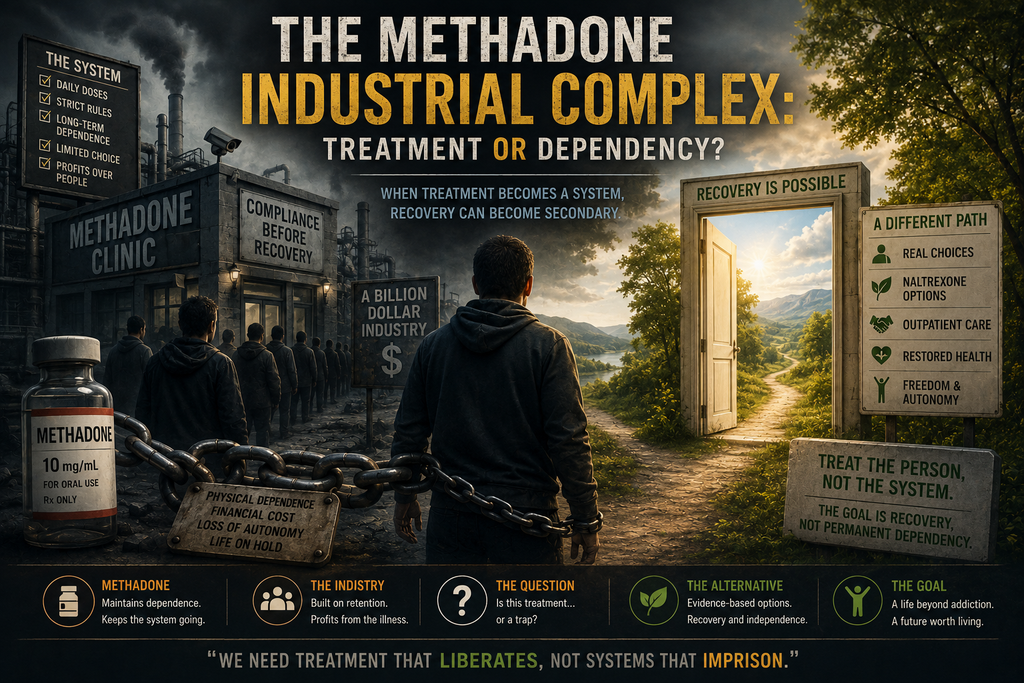
What happens when a treatment system designed to solve a problem becomes an institution of its own?
That is the provocative question at the center of Percy Menzies’ conversation about methadone, naltrexone, opioid addiction and the history of addiction medicine.
Menzies, a pharmacologist who spent years in the pharmaceutical industry before establishing his own addiction-treatment clinic, argues that the history of opioid treatment cannot be understood simply as a story of medical progress. It is also a story about pharmacology, regulation, incentives, institutional inertia and competing ideas about what recovery should mean.
His central criticism is particularly controversial: the treatment system may have become more focused on maintaining patients in treatment than on helping them eventually leave it.
The interview does not present this as settled medical fact. It presents Menzies’ interpretation of how addiction treatment evolved and why he believes an alternative approach was marginalized.
Table of Contents
The forgotten promise of naltrexone
Menzies’ professional journey began in the pharmaceutical industry, where he encountered medications derived from the opium poppy and became fascinated by the biology of opioid receptors and endorphins.
That experience eventually brought him to naloxone and naltrexone.
The distinction between the two drugs is important.
Naloxone is primarily associated with reversing opioid overdose. Naltrexone, by contrast, is an opioid antagonist used in the treatment of opioid use disorder and alcohol use disorder. Unlike methadone, naltrexone does not activate opioid receptors to produce opioid effects; it blocks opioid effects instead. Current federal health information identifies methadone, buprenorphine and naltrexone as medications used to treat opioid addiction.
In the interview, Menzies argues that this pharmacological difference represented an important opportunity.
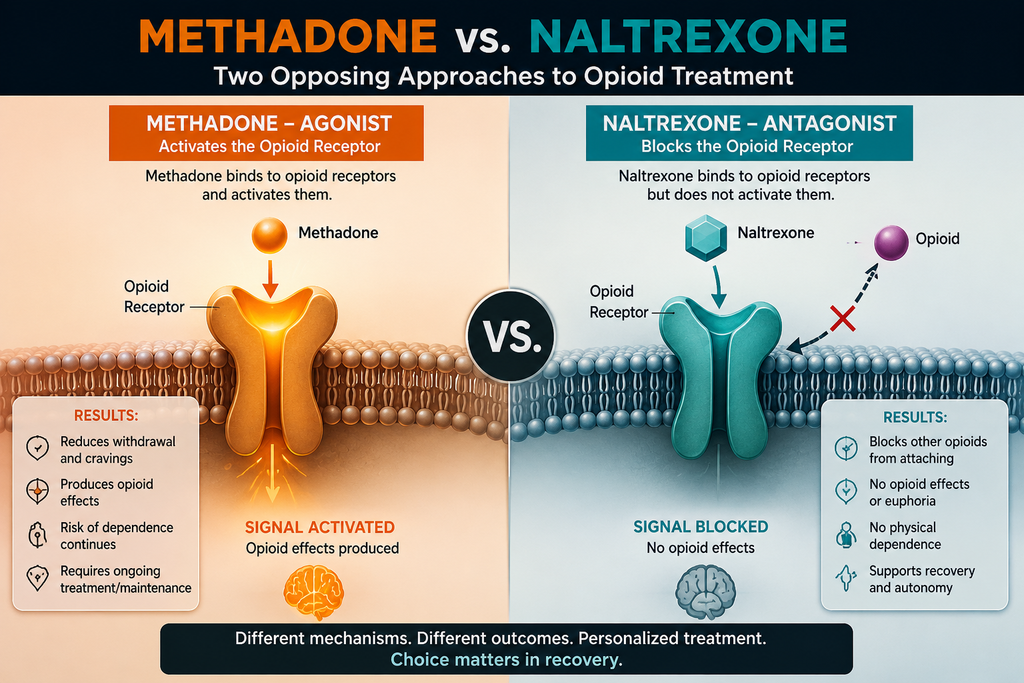
He describes methadone and naltrexone as occupying almost opposite ends of the pharmacological spectrum: one maintains opioid receptor activity while the other blocks it.
The transcript describes the historical conflict this way: naltrexone potentially offered a path toward opioid blockade without continued opioid dependence, while methadone had become embedded in a highly regulated clinic system.
That contrast is the foundation of Menzies’ critique.
Methadone treatment became an institution
Methadone has a legitimate and important role in modern opioid use disorder treatment. Current clinical guidance recognizes it as an evidence-based medication, and major guidelines consider methadone and buprenorphine preferred first-line treatments for many patients with opioid use disorder.
But Menzies asks a different question:
What happens when a treatment designed to stabilize addiction becomes a permanent system?
According to his account, methadone was initially conceived in a more limited context. Over time, however, methadone treatment became institutionalized through specialized clinics, regulations and daily treatment structures.
The result, he argues, was a system in which the patient could become permanently connected to the treatment infrastructure.
In the interview, Menzies contrasts that model with the possibility of using methadone as stabilization followed by a transition toward an opioid antagonist such as naltrexone. He argues that treatment providers should have viewed naltrexone as another tool rather than as a threat to the existing system.
That is where his phrase “methadone industrial complex” enters the discussion.
Did the system have an incentive to keep patients?
This is the most provocative part of the interview.
Menzies argues that an industry can develop around any chronic condition when treatment becomes a long-term source of revenue. He compares addiction treatment to other industries in which the commercial incentive is to retain customers.
His criticism is not that every physician or clinic deliberately exploits patients. Rather, his argument is about institutional incentives.
As the interview puts it, the system can become structured around keeping the patient, rather than making the patient’s eventual independence the ultimate measure of success.
That claim deserves careful consideration.
There is an important distinction between long-term treatment and commercial exploitation.
Modern clinical guidance explicitly recognizes that some people with opioid use disorder benefit from long-term medication treatment. MedlinePlus notes that methadone or buprenorphine may be taken for months, years or longer, depending on the individual, and warns patients not to discontinue treatment without medical guidance.
Therefore, the existence of long-term methadone treatment does not by itself demonstrate that a treatment system is designed to keep patients dependent.
Menzies’ criticism is instead a question about the goals and incentives of the system.
Naltrexone offers a fundamentally different mechanism
Naltrexone is particularly important to Menzies because it does not work like methadone.
Methadone is a full opioid agonist. Buprenorphine is a partial opioid agonist. Naltrexone is an opioid antagonist.
That distinction is pharmacologically significant. Naltrexone blocks opioid receptor activation rather than maintaining it.
Menzies believes this difference should have made naltrexone a more important part of addiction treatment.
The interview argues that naltrexone could provide an opportunity for patients to move beyond opioid maintenance rather than remaining permanently tied to an opioid medication.
But there is an important qualification.
Naltrexone is not a universal replacement for methadone or buprenorphine. Current guidance recognizes it as an alternative treatment, and successful initiation requires the patient to be sufficiently free of opioids because taking naltrexone too soon can precipitate withdrawal.
Naltrexone also has its own adherence and treatment-retention challenges.
In other words, the real question is not whether methadone is bad and naltrexone is good.
The more useful question is:
How can patients be offered a genuine choice among evidence-based treatments according to their goals, circumstances and response?
Naloxone and naltrexone are not the same thing
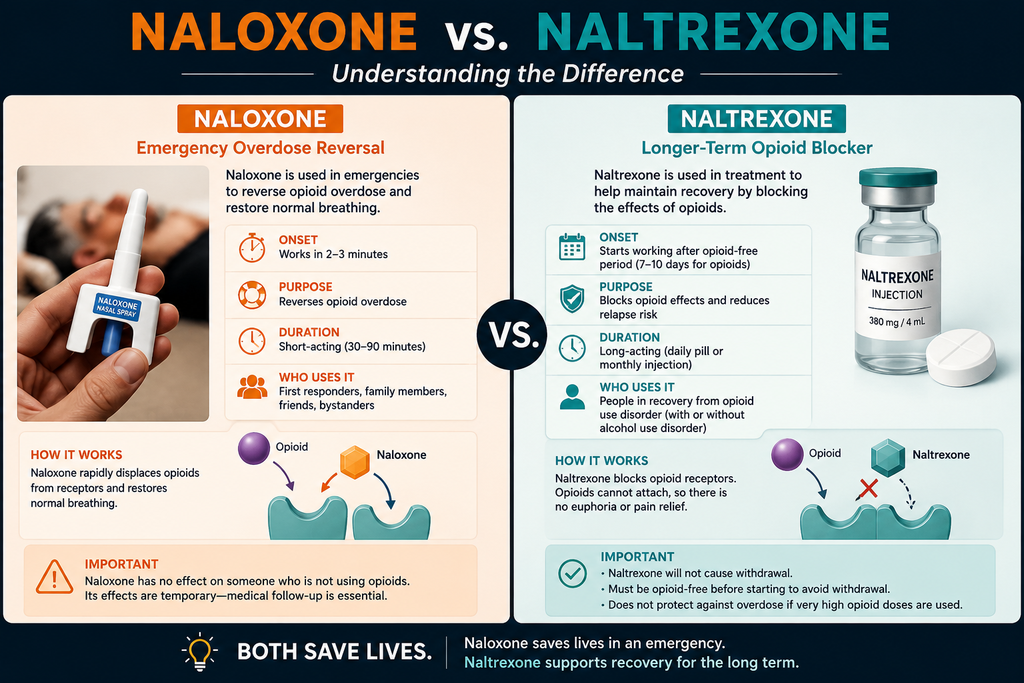
The names are easy to confuse, but their roles are different.
Naloxone
Naloxone is primarily an emergency medication used to reverse opioid overdose. It is a critical component of overdose-response strategies.
Naltrexone
Naltrexone is an opioid antagonist used as a treatment option for opioid use disorder and alcohol use disorder. Extended-release injectable naltrexone is among the FDA-approved medications for opioid use disorder.
The transcript emphasizes this distinction because Menzies believes the pharmacological potential of opioid antagonists was historically underappreciated.
The interview also discusses how naloxone’s pharmacology helped lead researchers toward longer-acting opioid blockade.
The treatment system Menzies built
Menzies did not merely criticize the existing system.
He attempted to build a different model.
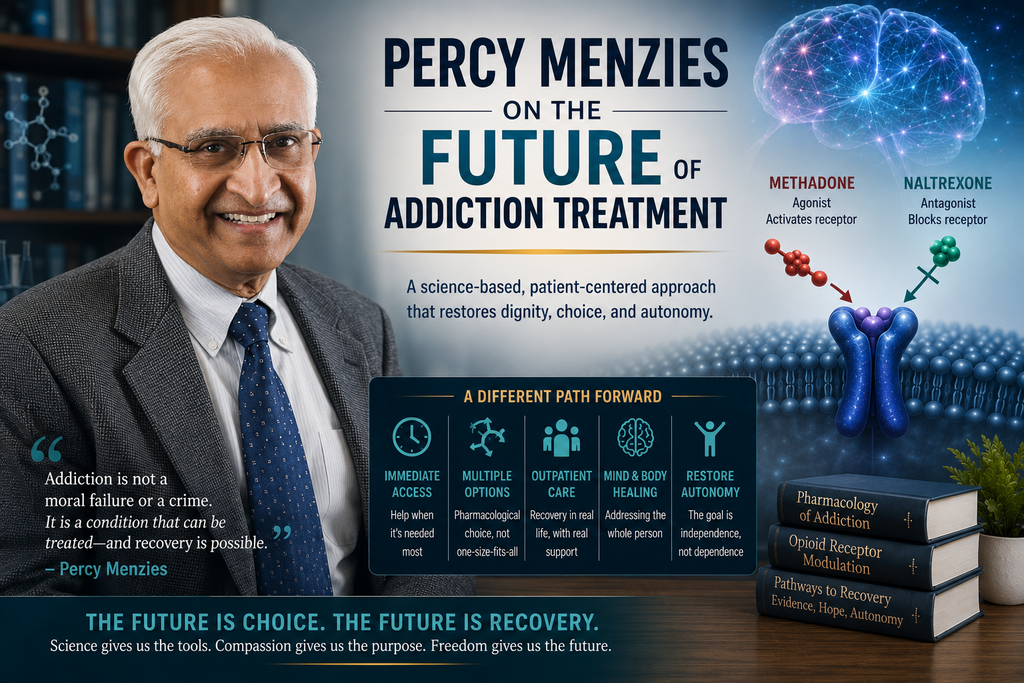
When he opened his clinic, he says the goal was to make treatment immediately accessible rather than forcing patients to wait for an opening. Patients experiencing withdrawal were given what he calls “comfort medications” to reduce anxiety and physical distress.
Patients were then offered pharmacological options, including buprenorphine and naltrexone, together with counseling and psychiatric support.
The treatment was conducted on an outpatient basis.
This was central to Menzies’ philosophy.
He argues that people need to recover in the environment in which they actually live.
Recovery does not happen only in a rehabilitation center
One of the interview’s most interesting ideas is that successful recovery should involve exposure to ordinary life.
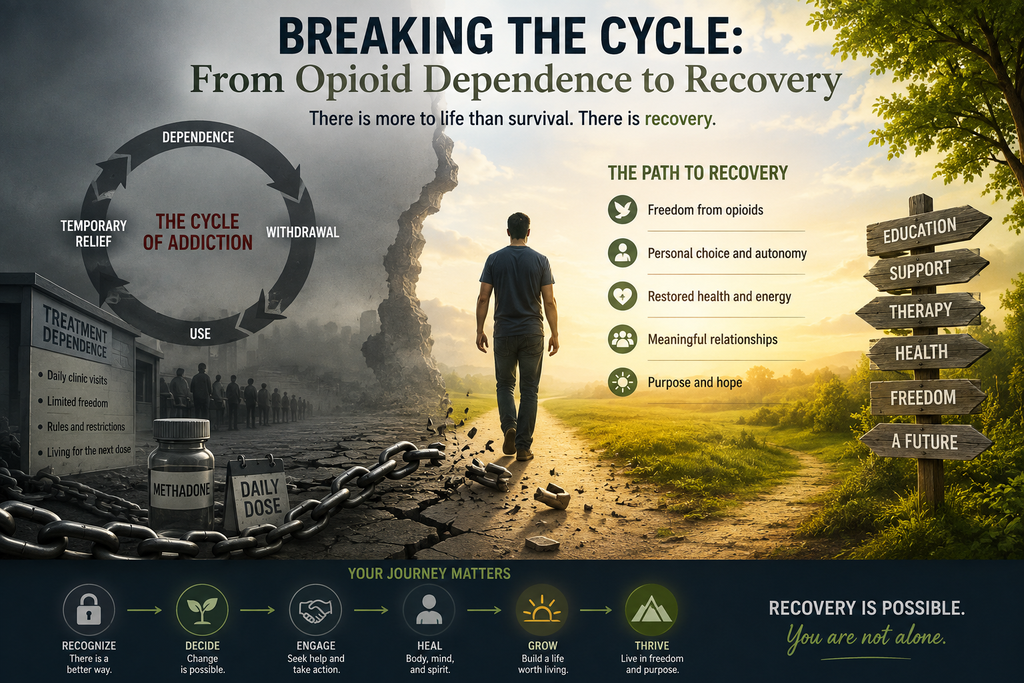
Menzies rejects the assumption that someone must necessarily leave home, travel to a distant rehabilitation facility and spend 30 days away from normal life before recovery can occur.
His clinic instead attempted to treat people while they remained in their ordinary environments.
The reasoning is straightforward: eventually, people must return to work, family, social situations and the everyday cues that previously surrounded their drug use.
Menzies argues that learning to function in that environment is itself part of recovery.
This does not mean residential treatment is never appropriate. Different patients have different levels of risk, support and medical need.
But the interview challenges the idea that one treatment environment can work for everyone.
Addiction, agency and personal responsibility
The conversation becomes even more philosophical when Menzies and the interviewer discuss whether addiction should be understood primarily as a disease.
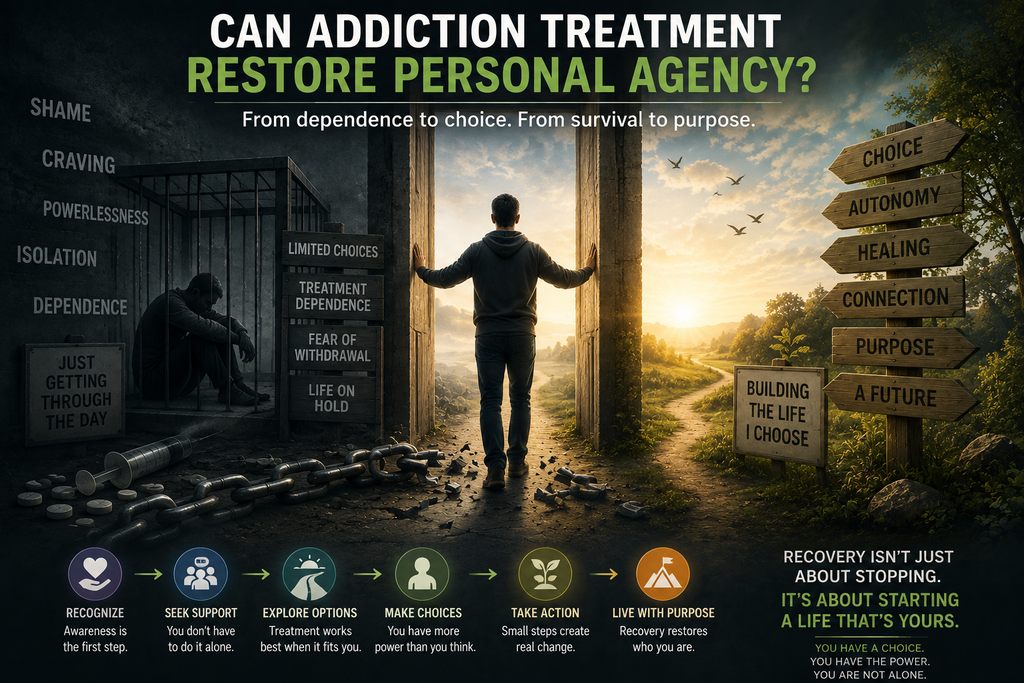
Menzies objects to what he calls the “medicalization” or “diseaseification” of addiction because he believes it can unintentionally weaken personal agency.
The transcript argues that people can adapt to circumstances and, under the right conditions, can also adapt away from addiction.
This is a controversial position.
Contemporary medicine generally recognizes opioid use disorder as a serious medical condition requiring evidence-based treatment. Major health agencies support medications and behavioral interventions for OUD.
But acknowledging a medical condition does not necessarily require believing that an individual has no agency.
That distinction may be one of the most productive questions raised by the interview:
Can addiction be treated medically without treating the person as permanently helpless?
The Vietnam veteran example
Menzies also uses the history of Vietnam veterans to challenge the assumption that opioid exposure inevitably produces lifelong addiction.
The interview discusses veterans who used heroin during the Vietnam War and subsequently stopped using it after returning to the United States. Menzies argues that environmental circumstances, social reintegration and individual factors played an important role in determining whether drug use continued.
His broader argument is that human beings are adaptable.
A person can become deeply involved in a pattern of drug use under one set of circumstances and later move away from that pattern under another.
That does not mean addiction is easy to overcome.
It means that treatment should not assume that permanent dependence is the only possible outcome.
The supply problem
Another important theme is the changing opioid supply.
The interview describes a progression from prescription opioids to heroin, fentanyl and increasingly unpredictable illicit drug supplies.
Menzies argues that opioid-substitution medications become more complicated to manage when people have easy access to illicit opioids at the same time.
The contemporary opioid crisis makes this issue particularly important.
The illicit drug market is not static. Fentanyl and other highly potent synthetic opioids have dramatically changed the risk environment.
That reality also explains why current public-health authorities continue to support medications for opioid use disorder. The objective is not simply to eliminate every opioid from a person’s life immediately; it is also to reduce overdose risk, stabilize health and create an opportunity for recovery.
Is methadone treatment the problem—or the way it is used?
This may be the most important distinction to draw from the interview.
Methadone itself is not an experimental or fringe treatment.
It is an established medication for opioid use disorder, and contemporary evidence supports its effectiveness.
The more controversial question is whether methadone should become the default endpoint rather than one option within a broader recovery strategy.
Menzies argues that the treatment system should not confuse stabilization with cure.
For him, the goal should be to stabilize the patient, reduce withdrawal and craving, restore normal functioning, provide psychological and social support, and—when appropriate and desired—move toward opioid blockade and independence from opioid maintenance.
That is the model he describes from his own practice.
What does modern medicine say?
The current evidence creates a more complicated picture than either side of the debate sometimes suggests.
Federal health authorities recognize methadone, buprenorphine and naltrexone as medications for opioid use disorder.
Current guidelines also emphasize that treatment should take individual circumstances and patient preferences into account.
Importantly, contemporary guidance does not treat naltrexone as a universal replacement for methadone or buprenorphine.
Some patients do well with antagonist treatment. Others benefit substantially from opioid agonist treatment.
The evidence therefore supports a more nuanced conclusion:
There is no single medication that represents the correct answer for every person with opioid use disorder.
The strongest case for reform may therefore be not “replace methadone with naltrexone,” but expand meaningful treatment choice and make the patient’s goals central to the decision.
The deeper question: What does recovery mean?
The Menzies interview ultimately raises a question larger than methadone.
What is the purpose of addiction treatment?
Is the goal to prevent overdose?
To reduce illicit opioid use?
To stabilize a patient’s life?
To eliminate cravings?
To restore family relationships?
To return someone to work?
To achieve abstinence?
Or, ultimately, to help the patient no longer need the treatment system?
These goals can overlap, but they are not identical.
A person who remains stable for years on medication may regard that as a successful recovery. Another person may define recovery as eventually becoming medication-free.
A good treatment system must be capable of recognizing both possibilities.
The case for patient autonomy
One of Menzies’ strongest themes is autonomy.
His criticism of daily clinic attendance is partly about convenience, but it is also about dignity.
The interview questions the logic of requiring patients to repeatedly appear at a specialized facility when treatment could potentially be delivered in less restrictive settings.
Menzies’ own clinic attempted to make treatment accessible, outpatient-based and compatible with ordinary life.
That approach reflects a broader principle:
Treatment should fit the patient’s life whenever medically appropriate—not force the patient’s entire life to fit the treatment system.
Did the “cure” really get killed?
That depends on what is meant by “cure.”
If “cure” means that naltrexone should have replaced methadone for everyone, current evidence does not support such a sweeping conclusion.
If “cure” means the possibility of recovery beyond indefinite opioid maintenance, however, Menzies’ criticism raises a legitimate philosophical and policy question.
The transcript argues that addiction medicine became too comfortable with maintenance and too reluctant to pursue alternatives.
Menzies believes naltrexone was one of those alternatives that deserved a much larger role.
Whether one accepts that conclusion or not, the question is worth asking.
A treatment system should ultimately serve the patient
The most compelling part of Percy Menzies’ argument is not necessarily his attack on methadone.
It is his challenge to institutional inertia.
Medical systems can become complicated. Regulations accumulate. Specialized clinics develop. Financial incentives emerge. Professional identities become attached to particular models of care.
Eventually, the system itself can become difficult to question.
Menzies’ answer is to return to first principles:
What actually helps the patient?
His clinic model emphasizes immediate access, relief from withdrawal distress, pharmacological choice, counseling, outpatient treatment and the opportunity to function in the real world.
That philosophy does not require denying the seriousness of opioid addiction.
It requires refusing to assume that every patient must follow the same path.
Conclusion: Beyond the methadone debate
Percy Menzies’ critique of the methadone system is deliberately provocative.
He argues that addiction medicine became trapped in an institutional model that can prioritize maintenance over independence, while naltrexone and other approaches received less attention than they deserved.
Modern evidence adds an important qualification: methadone remains an evidence-based and potentially lifesaving treatment for opioid use disorder, while naltrexone is an important alternative with a different pharmacological mechanism.
The real lesson may therefore be broader than choosing one drug over another.
Patients need access to multiple evidence-based options.
They need treatment that recognizes their individual goals.
They need clinicians who can distinguish stabilization from recovery.
And they need a system willing to ask whether its structures still serve the people they were originally created to help.
Menzies’ most challenging proposition is that addiction treatment should not merely make long-term treatment possible.
It should make recovery and restored autonomy possible, too.
That is the debate behind the phrase “the methadone industrial complex killed the cure”—and it is a debate that deserves much more serious examination.
Frequently Asked Questions
Is methadone an effective treatment for opioid addiction?
Yes. Methadone is an established medication for opioid use disorder, and major clinical guidance recognizes it as an effective treatment option.
What is the difference between methadone and naltrexone?
Methadone is a full opioid agonist that activates opioid receptors and helps reduce withdrawal and cravings. Naltrexone is an opioid antagonist that blocks opioid receptor activation.
Is naltrexone a cure for opioid addiction?
Naltrexone is an evidence-based treatment option, but it should not be described as a universal cure. Its suitability depends on the individual patient, and treatment requires appropriate opioid-free initiation.
What is naloxone used for?
Naloxone is primarily used to reverse an opioid overdose. It is different from naltrexone, which is used as an opioid antagonist in longer-term treatment.
Does addiction treatment have to involve methadone?
No. Methadone is one of several FDA-approved medications for opioid use disorder. Buprenorphine and naltrexone are also recognized treatment options.
What does Percy Menzies believe about methadone?
Menzies argues that methadone became too deeply embedded in addiction treatment and that naltrexone and approaches emphasizing patient autonomy and eventual independence deserved greater consideration. This is the central argument of the interview rather than an established consensus of medical authorities.
Final takeaway
The debate over methadone treatment should not be reduced to a simple choice between “methadone” and “naltrexone.” The more important question is whether addiction medicine can combine effective medical treatment with patient choice, dignity, agency and a genuine opportunity for long-term recovery.
Watch the full Percy Menzies interview and consider the question for yourself: Are we treating addiction—or merely managing it?
📚 Related Resources, Videos, and Links
- https://www.linkedin.com/in/percy-menzies-5285b120/
- https://www.arcamidwest.com/post/naloxone-saves-lives-but-it-s-not-enough-percy-menzies-on-the-future-of-addiction-treatment
Discover more from Randy Bock MD PC
Subscribe to get the latest posts sent to your email.