

How institutions consume the competence, trust, and inherited capital that once sustained them
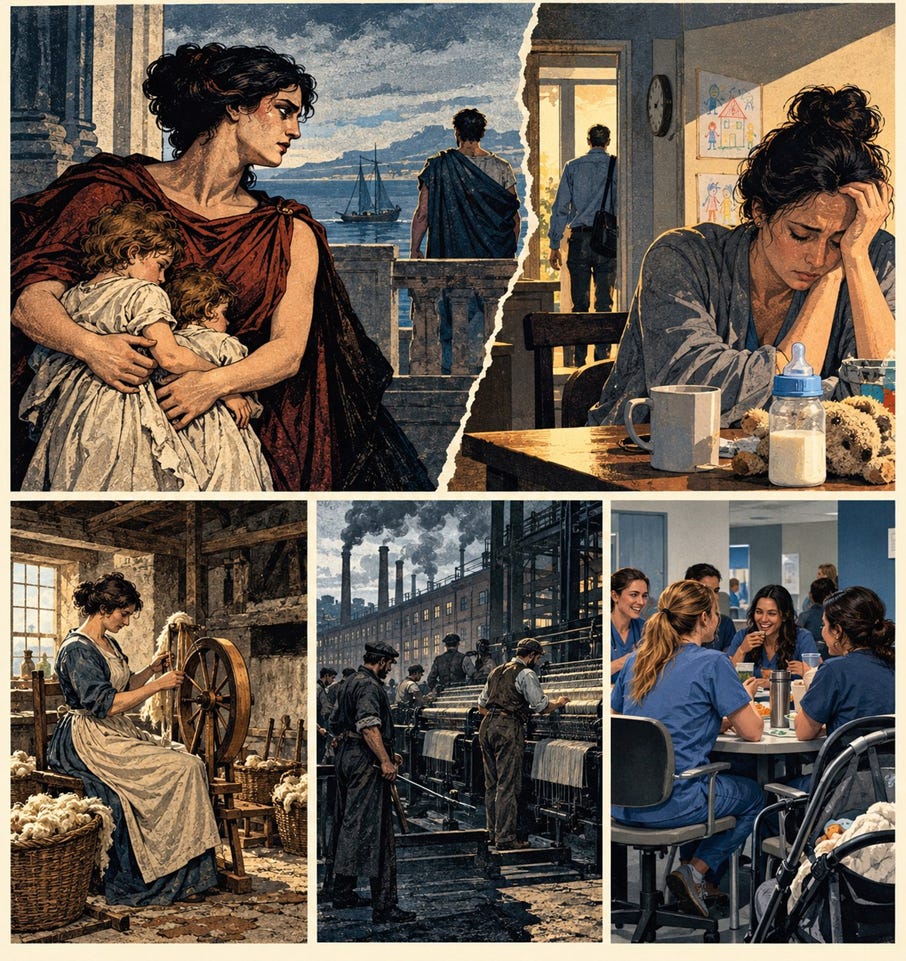
America inherited universities with old names, professions governed by demanding standards, cities rich in productive capital, and a civic culture built upon ordinary trust. These assets seemed permanent because they had survived wars, depressions, corruption, and bad government. Their durability concealed the labor that created them; reputation continued paying dividends after institutional practice ceased deserving it.
Attorney and writer Ron Coleman, host of Coleman Nation, calls this error the “fallacy of abundance.” An institution begins with genuine wealth, talent, competence, or public confidence; its custodians then assume that this reserve cannot be exhausted. They spend it on purposes unrelated (and sometimes hostile) to the institution’s function.
The Institutional Inheritance
Coleman first recognized the pattern in universities and diversity programs. Elite schools believed that their names, endowments, and accumulated prestige could absorb lower admissions and professional standards without losing value. Administrators treated competence as one consideration among many, although competence had created the prestige they were now distributing.
The damage does not end with one admissions decision. Lower entrance standards require modified grading, altered faculty selection, indulgent research evaluation, and eventually adjusted professional licensing. Each accommodation demands another; the institution preserves its outward form while losing the substance that earned its reputation. “You can squander, and you can lose brand equity a lot faster than you can build it back.”
The same principle applies to government. California possessed wealth, fine weather, productive industries, skilled workers, and an extraordinary civic brand. Political leaders treated these advantages as inexhaustible resources; they believed the state could finance policies hostile to production, public order, and competent administration without becoming poorer, less orderly, or less desirable.
The Medical Record
Medicine provides a smaller and more intimate case. I visited a new primary-care physician through Amazon One Medical. She performed little physical examination; the medical record later described findings from an examination that had not occurred. The chart also referred to me throughout as “they,” despite my being male, requesting male pronouns, and presenting medical issues specific to men.
When I requested corrections, the physician partly revised the fictional examination but defended the pronouns as inclusive practice. She then ended the physician-patient relationship, citing an absence of trust. The system tolerated inaccurate documentation, weak examination, undisclosed artificial-intelligence recording, and ideological language more readily than it tolerated a patient’s objection.
Coleman saw more than a dispute over etiquette. A professional had classified disagreement as danger; a patient who questioned inaccurate records and political language had become a source of friction. “Political disagreements make you a “problem person”.”
The Shrinking Circle
This contraction extends into family life, friendship, commerce, and public association. Citizens assume their social worlds contain enough people to permit their cutting off anyone who violates the latest political test. Each purge makes the circle smaller; each new test demands more exact conformity. “We think that our social lives are sufficiently rich and varied that we can afford to cut off everyone who disagrees with us.”
The fallacy persists because modern life conceals production. Food arrives wrapped; electricity enters through the wall; aircraft cross oceans on schedule. People rarely see the engineers, mechanics, farmers, pilots, investors, builders, and maintenance workers whose knowledge keeps ordinary life intact.
“Scarcity is an information engine.”
Reality eventually audits every institution. A bridge must bear weight regardless of the designer’s biography, politics, or declared intentions. The Florida International University pedestrian bridge collapsed during construction on March 15, 2018; six people died. Physical forces did not consult institutional aspirations.
Coleman invoked the biblical account of Joseph and Pharaoh to make the older point. Seven abundant years did not abolish scarcity; they created a duty to preserve grain for the seven lean years that would follow. Abundance properly understood creates stewardship, while abundance mistaken for permanence licenses waste.
Where Reality Keeps Score
Sports retain a similar honesty because performance remains visible. A team may award a roster position through favoritism, sentiment, or family influence; the player must eventually perform. The basket does not widen to accommodate a preferred narrative.
Coleman does not argue that every position requires the single best candidate. Many tasks require competence rather than genius; opportunity can help overlooked talent enter closed professional networks. The danger begins when exceptions become entitlements, increments grow into systems, and institutions conceal results to protect the policy. “Once you open that door, those increments start growing and growing.”
America still possesses reserves of capital, technical skill, energy, and initiative. It has survived repeated predictions that Japan, China, or another rival would eclipse it. That resilience should inspire gratitude and discipline; it should not encourage further withdrawals from a finite account. “You need the real people who can really do the thing to do the things.”
The inheritance remains, but it is neither magical nor self-renewing. Prosperity requires work; trust requires truth; medicine requires attention; engineering requires calculation. Institutions survive when they remember their purposes and refuse to spend their remaining substance on appearances.
Ron Coleman writes at Coleman Nation, publishes videos at @RonColeman, and posts on X as @colemannation1.
Discover more from Randy Bock MD PC
Subscribe to get the latest posts sent to your email.