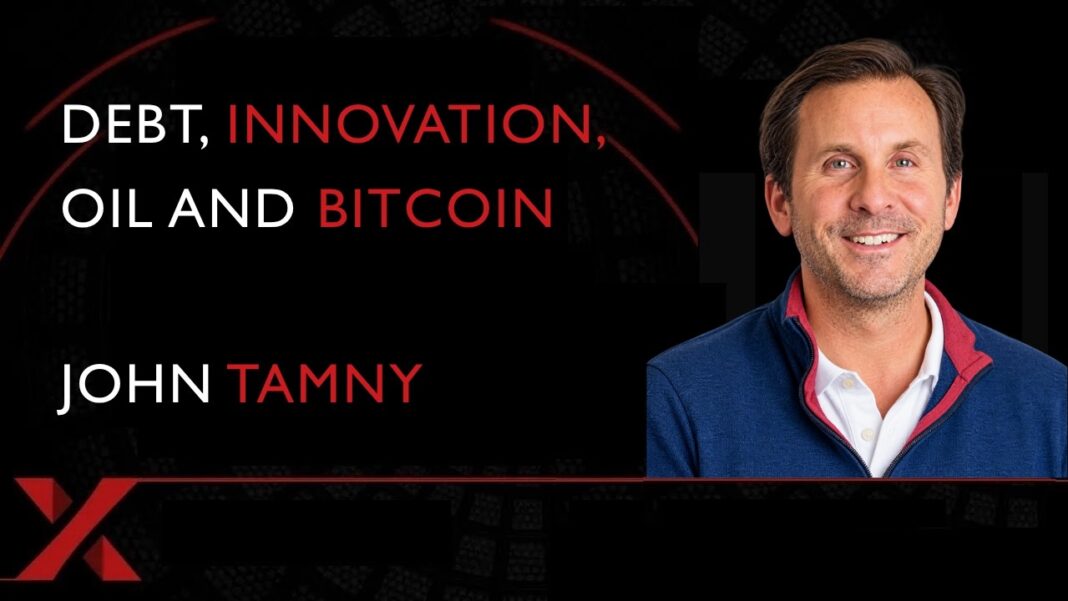


What makes someone decide to challenge an established political figure for a seat in the United States Senate? For John Deaton, the answer begins with his personal experience of poverty, violence, and the opportunities that helped him build a different life.
In this interview with Dr. Randy Bock, Deaton discusses his background, his experience as a U.S. Marine and attorney, and his reasons for entering politics. He also outlines his views on Massachusetts’ economic challenges, healthcare costs, energy policy, immigration, addiction, and the role of government.
His central argument is that political leadership should focus on practical solutions rather than partisan loyalty.
Deaton presents himself as someone who understands the struggles of working families firsthand. His message challenges voters to consider whether established political leaders are delivering results on the issues that matter most to ordinary Americans.
This article summarizes the interview and identifies Deaton’s policy proposals as his own views. It is not an endorsement of his candidacy.
Who Is John Deaton? From Poverty to Public Service
John Deaton begins the interview by explaining the experiences that shaped his life and political outlook.
He describes growing up in extreme poverty in Highland Park, Detroit, in a household led by a single mother who relied on public assistance and food stamps to support her children. His childhood was marked by violence, personal trauma, and circumstances that made completing school difficult.
Deaton explains that he left high school before finding an opportunity at a small Catholic school in the Detroit suburbs. The school’s principal reduced his tuition and established clear expectations for his academic performance and extracurricular participation.
That opportunity became a turning point.
Deaton says he worked long hours while continuing his education, eventually completing high school and attending college. He later studied law in Massachusetts and joined the U.S. Marine Corps, where he served on active duty for seven years before a training injury led to his medical retirement.
He subsequently built a legal career representing people affected by asbestos exposure, including victims of mesothelioma and lung cancer.
These experiences form the foundation of his political message: a person’s circumstances at birth should not determine the limits of their future.
The American Dream and the Importance of Opportunity
For Deaton, the American Dream is not simply about financial success. It is about having a genuine opportunity to improve one’s circumstances through education, work, and personal responsibility.
He questions whether a child growing up in poverty in Massachusetts today would have the same opportunities he eventually found.
His story also highlights the influence of people willing to give others a chance. The school principal who helped him return to education did not remove expectations; instead, he provided an opportunity while requiring Deaton to meet specific standards.
Deaton sees that combination of support and accountability as an important lesson for public policy.
He argues that helping people should involve more than acknowledging their difficulties. Society should also create pathways for education, employment, and greater independence.
Food Stamp Warrior: How Personal Experience Shaped His Politics
During the interview, Deaton discusses his memoir, Food Stamp Warrior, which explores his experiences growing up in poverty and the lasting effects of childhood trauma.
He describes how memories he had kept private for decades resurfaced later in life, despite his professional success and financial stability.
According to Deaton, writing the book helped him understand that people can carry emotional wounds long after their external circumstances improve.
He connects this experience to a broader observation about human life: financial success does not automatically erase trauma, grief, or painful memories.
His story adds another dimension to his political message. Deaton argues that people who have experienced poverty, family hardship, or other serious challenges should not be defined solely by those experiences.
Instead, public policy should recognize both the barriers people face and their capacity to rebuild their lives.
For him, these experiences also explain why he believes political leadership should remain connected to the everyday concerns of ordinary citizens.
Why Is John Deaton Challenging the Political Establishment?
Deaton explains that he entered politics because he became concerned about the future of the American Dream.
He questions whether political institutions are doing enough to address the economic pressures facing working families and whether established politicians have become too focused on maintaining power.
In the interview, he argues that voters need representatives who concentrate on practical problems instead of treating every issue as a contest between political parties.
He believes this approach could appeal to independent voters, as well as Democrats and Republicans who are dissatisfied with their own parties.
John Deaton vs. Ed Markey: A Debate About Political Priorities
The interview frames Deaton’s campaign around a challenge to the political establishment represented by Senator Ed Markey.
Deaton argues that voters should judge candidates by their proposals and their ability to address problems, rather than by party affiliation alone.
His proposed standard is straightforward: does a policy benefit Massachusetts and the United States?
He maintains that elected officials should be willing to evaluate proposals on their merits, even when those proposals come from a president or political party they oppose.
This position is central to his criticism of partisan politics. In his view, a senator’s responsibility is to constituents and the country, not unconditional loyalty to a political leader.
The broader question raised by the interview is whether voters would prefer a representative who emphasizes practical problem-solving over party conflict.
Massachusetts’ Economic Challenges: Housing, Jobs, and Affordability
One of Deaton’s major concerns is the cost of living in Massachusetts.
He discusses housing affordability, private-sector employment, and the difficulty many families face in remaining in a state where living expenses can be substantial.
He argues that Massachusetts needs policies that encourage economic growth while making it easier for working families to build stable lives.
For Deaton, these problems are interconnected. Housing costs affect where people can live and work, while energy prices influence household budgets and the cost of operating businesses.
He also argues that excessive bureaucracy can slow economic activity and make development more expensive.
Reducing Barriers to Housing Construction
Deaton proposes reducing bureaucratic obstacles that he believes make housing construction slower and more expensive.
His argument is that lengthy approval processes can increase development costs, which may ultimately be passed on to buyers and renters.
Rather than relying exclusively on government promises about affordability, he advocates making it easier to build additional housing.
The interview presents this as part of a broader economic philosophy: government should identify and remove unnecessary barriers to opportunity rather than unintentionally making essential goods and services more expensive.
The effectiveness of particular housing reforms would depend on their implementation, local conditions, and the balance between development and other community priorities.
John Deaton’s Energy Policy: Affordability and Nuclear Power
Energy costs are another major subject in the interview.
Deaton argues that Massachusetts needs an energy strategy that balances affordability, reliability, environmental concerns, and economic growth.
He criticizes policies he believes place excessive financial burdens on households and businesses. He also questions approaches that exclude particular technologies because of political or ideological commitments.
Why Deaton Supports Small Modular Nuclear Reactors
Deaton proposes expanding nuclear power through small modular reactors, which he believes could provide dependable electricity while limiting carbon emissions.
In the interview, he outlines a proposal involving four small modular reactors to supply a substantial share of Massachusetts households’ electricity needs.
He also argues that energy policy should consider a broader range of technologies and resources rather than relying on a single preferred approach.
His position is that energy decisions should be evaluated according to practical outcomes, including cost, reliability, and environmental performance.
These are proposals rather than demonstrated results. Their feasibility would require independent assessment of costs, construction timelines, regulatory requirements, grid infrastructure, and safety considerations.
Nevertheless, the discussion illustrates his broader approach to policymaking: evaluate different options and prioritize measurable results.
Healthcare Costs: Competition, Insurance, and Affordability
Healthcare is another central issue in the interview.
Deaton criticizes the concentration of power among large healthcare and insurance companies. He argues that the current system leaves too much influence in the hands of intermediaries while patients struggle with rising costs.
He questions whether a system can deliver affordable care when competition is limited and consumers have difficulty understanding the prices they are expected to pay.
Deaton’s Criticism of Healthcare Consolidation
Deaton argues that vertically integrated insurance companies can exercise excessive influence over healthcare spending and access.
He describes this concentration as a problem of market power rather than healthy competition.
His preferred approach emphasizes structural reform, competition, and greater accountability for companies involved in healthcare financing and delivery.
The interview also explores a wider economic question: what happens when government policy and corporate concentration combine to make essential services less responsive to consumers?
Deaton’s argument is that healthcare reform should address the mechanisms that drive costs, rather than focusing exclusively on expanding government programs.
The interview does not establish that his proposed approach would solve these problems. It presents his criticism of the existing system and his preference for a more competitive model.
Immigration, Border Security, and the Opioid Crisis
The conversation also turns to immigration and drug-related deaths.
Deaton argues that border security should be part of the response to the illegal drug trade, particularly the movement of fentanyl into the United States.
He discusses a visit to the Yuma border crossing in 2024 and presents border enforcement as an important component of efforts to disrupt drug trafficking.
He also emphasizes personal responsibility, employment, and the importance of helping people build more stable lives.
Addressing Addiction Beyond Political Slogans
The interview connects the discussion of addiction with a broader debate about public policy.
Deaton argues that economic opportunity and employment matter when communities are struggling with drug-related harm.
He also expresses the view that policies should address the practical circumstances surrounding addiction rather than becoming exercises in partisan messaging.
However, addiction is a complex public-health issue involving multiple factors, including individual circumstances, access to treatment, the availability of illicit drugs, and broader social conditions.
Border enforcement alone cannot address every aspect of the crisis. Prevention, evidence-based treatment, overdose response, and long-term recovery support are also important parts of a comprehensive response.
The discussion raises a useful question: how can policymakers combine enforcement, treatment, and economic opportunity to reduce drug-related harm?
Cryptocurrency, Bitcoin, and Financial Innovation
The interview also explores Deaton’s interest in Bitcoin and blockchain technology.
The discussion considers whether financial technologies can reduce reliance on traditional intermediaries and make certain transactions faster or more efficient.
Deaton describes blockchain as a potentially transformative technology. He sees opportunities for direct transactions and more efficient financial processes.
The conversation also touches on the role of regulation in shaping innovation.
Can Bitcoin Reduce Financial Barriers?
Bitcoin and other blockchain-based systems have attracted interest partly because they can facilitate transactions without relying on every traditional financial intermediary.
Supporters argue that these systems may improve access to financial services and offer alternatives to established payment networks.
However, cryptocurrencies also carry risks, including price volatility, security vulnerabilities, fraud, and regulatory uncertainty.
The interview’s broader point is that policymakers should understand emerging technologies before deciding how to regulate them.
For Deaton, the challenge is to preserve opportunities for innovation while avoiding unnecessary restrictions that prevent people from exploring new financial tools.
Political Accountability: Should Elected Officials Face Term Limits?
One of the interview’s most important themes is the relationship between political power and accountability.
Deaton argues that political institutions should be more responsive to the people they serve. He questions whether long-serving politicians can become too insulated from the consequences of their decisions.
He also invokes former President Theodore Roosevelt as an example of leadership willing to challenge concentrated corporate power.
For Deaton, the lesson is that supporting a market economy does not require accepting every concentration of corporate influence.
He argues that genuine competition depends on limiting arrangements that protect powerful organizations from meaningful challenges.
Practical Solutions Over Partisan Loyalty
Throughout the conversation, Deaton returns to the idea that public policy should be judged by its results.
He wants elected officials to consider whether a proposal improves people’s lives rather than automatically accepting or rejecting it based on which party introduced it.
This philosophy connects the interview’s seemingly separate subjects:
- Housing: Remove unnecessary barriers to construction.
- Energy: Balance affordability, reliability, and environmental considerations.
- Healthcare: Address market concentration and rising costs.
- Addiction: Consider enforcement, responsibility, and economic opportunity.
- Financial innovation: Evaluate new technologies on their merits.
- Government: Make elected officials more accountable to constituents.
The underlying argument is that voters should expect more than political rhetoric. They should demand clear proposals and a willingness to explain how those proposals would work.
What John Deaton’s Interview Reveals About His Political Philosophy
Deaton’s personal story and policy arguments are linked by a common theme: opportunity matters, but institutions must work well enough to make opportunity possible.
His childhood experiences shaped his belief that a person’s future should not be determined by poverty. His educational journey reinforced the importance of receiving a chance while being expected to work hard. His legal career exposed him to disputes involving powerful corporations, while his interest in technology led him to examine alternatives to established financial systems.
He brings these experiences into his criticism of political institutions.
Rather than presenting his campaign solely as a contest between Republicans and Democrats, he argues that voters should focus on affordability, economic opportunity, public accountability, and practical policy outcomes.
Whether voters agree with his specific proposals is a separate question. The interview offers a clear explanation of the experiences and beliefs that he says motivate his entry into politics.
Conclusion: Can Practical Problem-Solving Change Massachusetts Politics?
John Deaton’s interview with Dr. Randy Bock offers a portrait of a candidate whose political outlook is strongly influenced by his personal history.
He describes a path from childhood poverty to education, military service, and a legal career. He then connects those experiences to his concerns about housing costs, healthcare, energy policy, immigration, addiction, and the accountability of elected officials.
His central message is that government should concentrate on solving problems rather than reinforcing partisan divisions.
The interview also invites a broader discussion about what voters should expect from their representatives. Should political leaders be judged primarily by their party affiliations, their policy promises, or the results they achieve?
For Massachusetts voters, those questions remain relevant to debates about affordability, economic opportunity, and the future direction of the state.
Watch the full interview with John Deaton and Dr. Randy Bock to hear Deaton explain his background, political motivations, and policy proposals in his own words.
Frequently Asked Questions (FAQ)
1. Who is John Deaton?
John Deaton is an attorney, former U.S. Marine, and political candidate. He discusses his childhood poverty, professional career, and reasons for entering politics in his interview with Dr. Randy Bock.
2. Why is John Deaton challenging Ed Markey?
Deaton argues that Massachusetts needs stronger leadership focused on affordability, economic opportunity, healthcare costs, energy policy, and government accountability. He advocates judging political proposals by their practical results rather than party affiliation.
3. What are John Deaton’s main policy priorities?
In the interview, Deaton discusses housing affordability, energy costs, nuclear power, healthcare competition, border security, addiction, cryptocurrency, and political accountability.
4. What does John Deaton propose to address healthcare costs?
Deaton criticizes the concentration of power among large healthcare and insurance companies. He argues that greater competition and structural reforms could help address rising healthcare costs.
5. What is John Deaton’s position on Bitcoin and cryptocurrency?
Deaton views blockchain technology and Bitcoin as potential tools for improving financial efficiency and reducing reliance on traditional intermediaries. Cryptocurrency nevertheless carries financial, security, and regulatory risks.
Relevant Existing Posts on Randybock.com
- Healthcare costs in America
- The opioid crisis and addiction policy
- Medical freedom and public policy
- Political accountability
- The economics of energy and healthcare
Suggested External References
- John Deaton’s official campaign website
- John Deaton’s published policy positions
- Senator Ed Markey’s official website
Discover more from Randy Bock MD PC
Subscribe to get the latest posts sent to your email.