

Sean Flynn argues that American healthcare fails because prices have lost their connection to costs, while Singapore protects patients by making both visible.
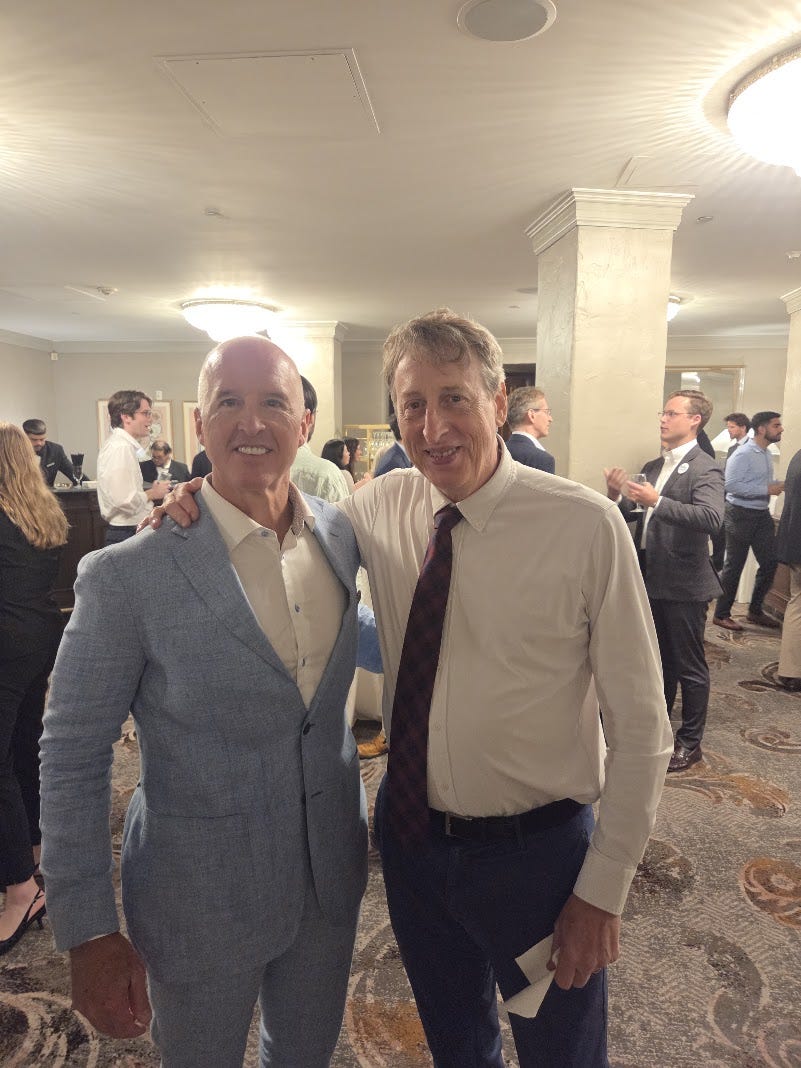
American healthcare consumes more money than any medical system in history. It does not produce the longest lives, the broadest access, or the most secure patients. Professor Sean Flynn, an economist at Scripps College and author of The Cure That Works, sees no mystery in the result. Americans built a system in which the buyer seldom knows the price, the seller often hides the cost, and a third party pays the bill.
Singapore chose another course. Its government rejected both the British single-payer model and the American insurance model. It placed much of the ordinary spending power in patients’ health savings accounts, required meaningful price transparency, and retained public protection for those unable to pay. Competition holds down routine prices; government assistance buys care at those lower prices.
The American system does almost the reverse. Hospitals maintain chargemaster prices bearing little relation to the cost of providing a service. Insurers negotiate different payments for the same procedure at the same institution. Medicare and Medicaid enter this distorted market and pay prices formed within it. The government may subsidize the patient, but it also subsidizes the machinery that made the care expensive.
Flynn’s central distinction is between price and cost. When competition operates, the two tend to approach each other. When licenses, hospital consolidation, insurance contracts, opaque billing, and government reimbursement restrain competition, the distance between them widens. That space fills with administrators, pharmacy benefit managers, billing specialists, consultants, and corporate intermediaries. Each takes a portion without necessarily adding medical value.
The evidence appears wherever conventional insurance has a limited role. LASIK surgery improved while its price fell. Dental implants became better and more widely available. The Surgery Center of Oklahoma publishes bundled prices, while Atlas MD offers direct primary care for a fixed monthly fee. Veterinary orthopedics advanced without canine Medicare or a federal schedule of dog-hip reimbursement codes.
These markets remain imperfect, but patients can ask the elementary questions that ordinary commerce permits. What will this cost? What does the price include? Who provides the best result? When buyers can compare answers, providers must compete on value. A hospital billing $18,000 for eight stitches would face more resistance if the patient had known the price before entering the building.
Single-payer medicine offers a simple political answer, but Flynn considers it the wrong one. Britain and Canada restrain expenditures through limited capacity, queues, and delayed treatment. Their private sectors provide escape routes for people who can afford them. Canada also benefits from the United States’ being close enough to supply care that its own system cannot provide promptly.
An American single-payer law would encounter another hazard. Hospitals, insurers, pharmaceutical manufacturers, and benefit managers would shape the legislation intended to control them. The result could preserve current markups while placing the taxpayer behind every bill. Corporate medicine would gain a larger trough and a stronger claim upon it.
Free-market advocates have their own weakness. They often invoke competition without explaining how a sick or injured person will obtain necessary care. People fear cancer, a wrecked car, or an uncovered emergency for good reason. Any durable reform must provide catastrophic protection and a credible safety net. Singapore succeeds because it combines personal control with public assurance.
Flynn would redirect existing subsidies into individual health savings accounts. Patients would control the money used for ordinary care; a catastrophic backstop would cover costs beyond reasonable personal means. A trusted national system could publish prices, surgical outcomes, and complication rates. Interstate medical practice could widen access, while direct care arrangements could pay physicians for maintaining health rather than generating billable encounters.
That change would alter conduct because ownership alters attention. People handle money more carefully when an unused dollar remains theirs. Physicians working for a monthly fee benefit when patients remain well. Neither side gains from unnecessary visits, inflated billing, or services chosen because someone distant appears to be paying.
Healthcare cannot become identical to a market for pencils or shoes. Emergencies limit shopping, illness weakens judgment, and medical knowledge remains unequal. Yet most care does not occur during the few minutes after a highway collision. Imaging, laboratory work, primary care, scheduled surgery, and much specialty care allow time for comparison.
The American system has trained patients to ignore price and providers to conceal it. It has trained administrators to defend revenue and politicians to confuse greater spending with greater care. Flynn’s remedy begins with a plain reversal: give patients the money, show them the prices, protect them from catastrophe, and permit providers to compete for their trust.
Discover more from Randy Bock MD PC
Subscribe to get the latest posts sent to your email.