
Bruce Alexander spent his life overturning one of the most durable falsehoods in modern science: that addiction is a chemical possession, a loss of will, a collapse of the soul. He (un)learned this myth at a young age. At twelve, he read a Batman comic in which gangsters beat a junkie senseless while Batman waited to catch them in a more serious crime. Alexander asked his father why Batman let the beating happen. His father answered with the belief of the age: “A junkie is someone who no longer has a soul.”
The idea stayed with him. Years later, as a young scholar, he walked into a laboratory where white rats lived alone in metal boxes. Each rat had a lever that pumped heroin through a catheter into its vein. The rats pushed the lever until they collapsed. This, he was told, proved the junkie myth. “Everyone believed the rat was a model human being,” he said, “and everyone believed the drug just takes your mind away.”
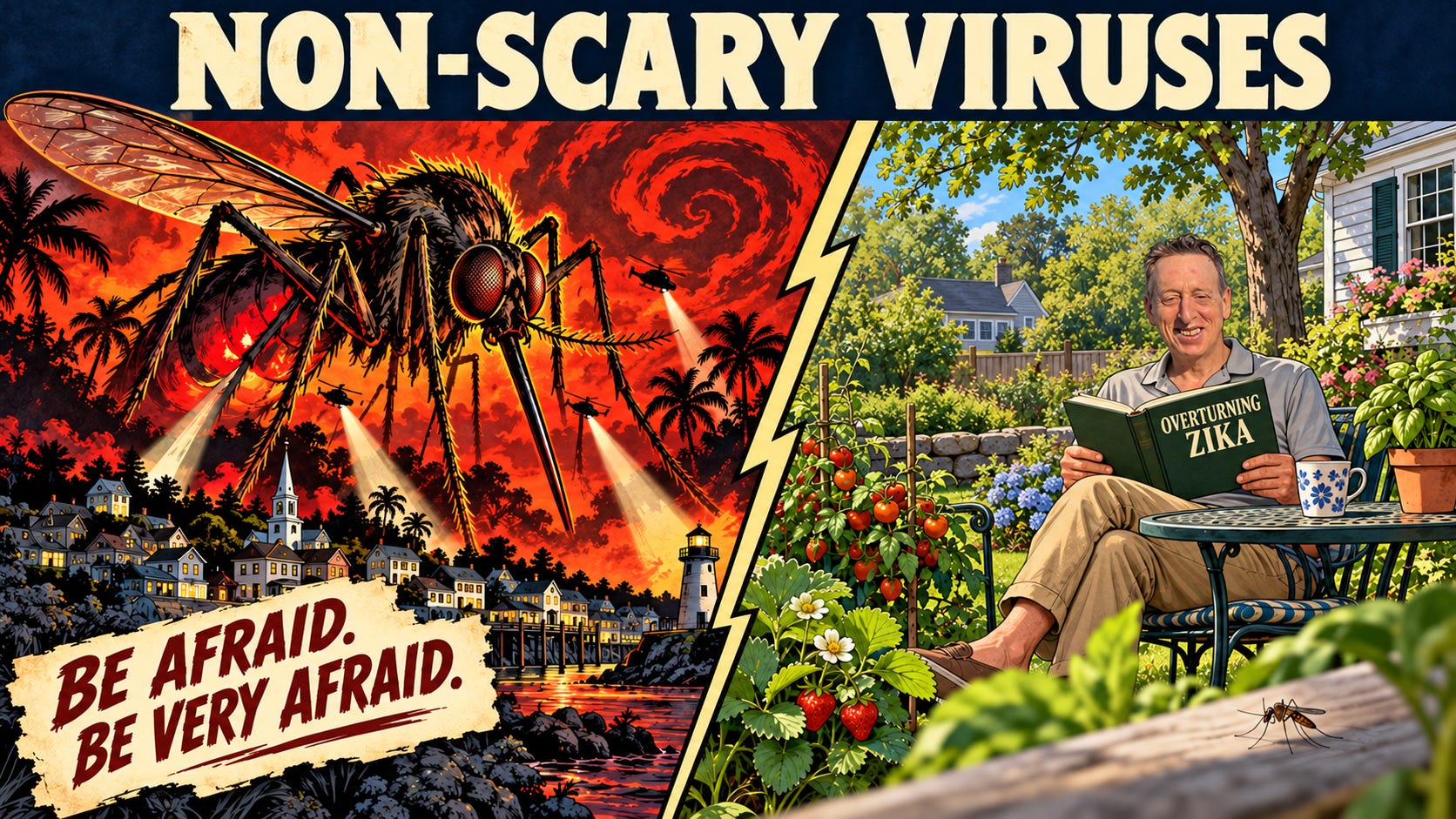
But Alexander saw what others had missed. Rats are communal animals. They live in groups, fight, mate, explore, and never, by instinct or in nature, live alone. The experiment was not testing the drug. It was testing solitary confinement. So he and his colleagues built Rat Park. It was not a complicated device. It was the removal of the cage and allowance of rodent friends and (sexual) mates in a larger space with more visual satisfaction. Into that newly replenished world, they put two bottles: water and morphine(a very graphic choice). In the isolated cages, rats drained the morphine. In far more exciting Rat Park, they ignored it.
The message was shattering. “The cage creates the desperation. The drug is only the symptom.”
Rat Park did not simply challenge drug mythology. It cut its roots. It showed that addiction was not a supernatural force. It was a response to emptiness, exclusion, and despair. Yet the world was not ready to hear it. “Nobody believed us,” Alexander said, “because the weight of public opinion is very heavy.” Institutions kept the myth because the myth made the systems run.
Alexander kept working. He turned from rats to human beings and spent years in methadone programs. There, he saw the same truth in a different form. Young men with no jobs, no families, no hope. Men who had fallen out of school and out of the world. Men who found in heroin the first identity they could hold onto. “People don’t lose their souls,” he would say. “They lose their place in the world.”
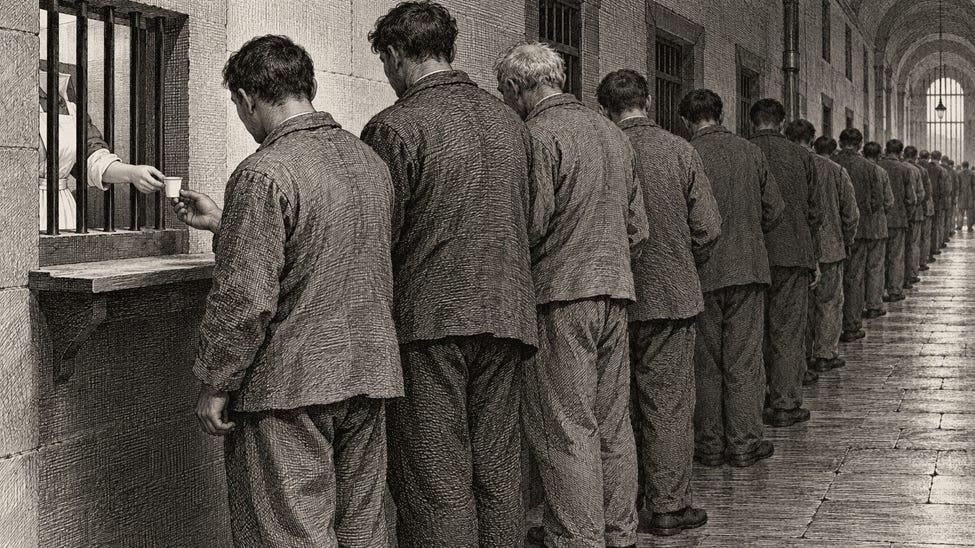
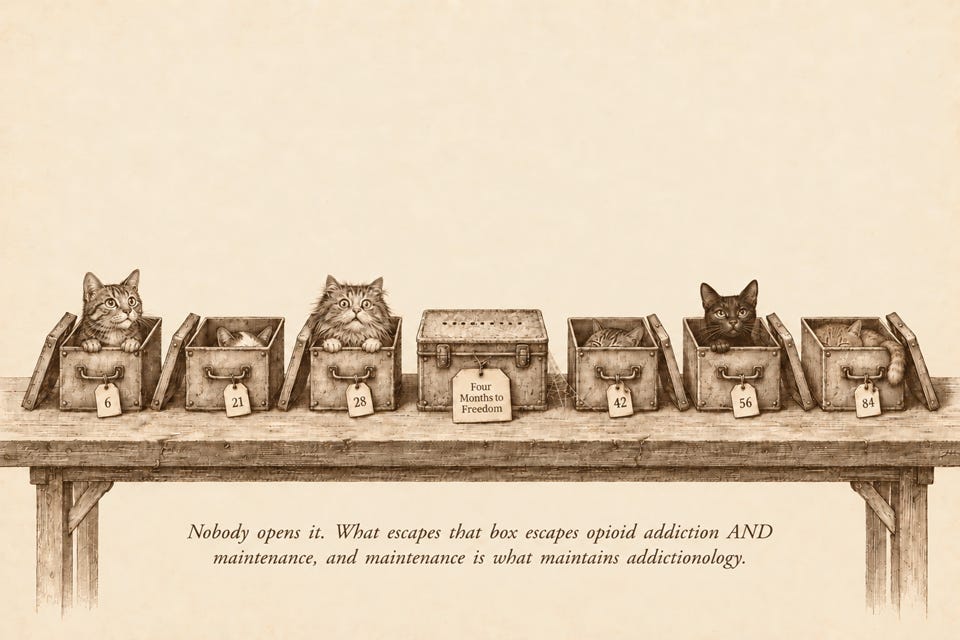
Methadone did not restore that place. Methadone froze them in place. It created routine but not renewal. It created dependence without belonging. It kept people alive, but it kept them still. “Some people will need substitutes forever,” he allowed, but he also saw the trap: maintenance became the new cage. It kept the clinic running, the staff busy, the numbers stable, and the addict suspended between misery and relief.
Compared to Rat Park, methadone maintenance was the anti–Rat Park. It was structured without community. A schedule without purpose. Comfort without growth. Society does not give replacement vodka to alcoholics. It does not prescribe replacement blackjack to gamblers. But opioids built an industry around permanent substitution. Alexander’s work suggested the opposite path. Humans, like rats, thrive when they have connection, work, identity, and meaning. Addiction collapses when life expands. “Addiction isn’t a disease,” he said. “It is the way we devote ourselves when other paths are closed.”
He watched men on methadone who never improved until life changed around them: a job or a relationship, a chance. Then, often suddenly, the drug lost its hold. A relative of his quit Suboxone only when his loveless marriage ended. The drug was never the anchor. The life was.
Rat Park became not just an experiment but a lens. Wherever societies fracture, addiction spreads. Wherever societies bind together, addiction recedes. When people find purpose, they let go of chemicals because they have something better to hold. Alexander speaks about addiction the way a naturalist talks about evolution. Conditions shape behavior. Isolation breeds the need to escape. Belonging creates the will to stay. “Most of us who are fortunate get absorbed by something productive,” he said. “Others never find the opening. Who are we to punish them for that?”
His work did not diminish personal responsibility. It clarified it. The goal is to build human Rat Parks: communities, families, teams, workplaces, traditions, rituals, obligations. Places where men and women wake up are needed by someone. When that exists, heroin loses its power. When it does not exist, heroin fills the hole. His achievement was scientific and cultural. Rat Park remains one of the rare experiments that rewrote an entire field. It replaced superstition with structure, blame with understanding, and despair with possibility.
The lesson is simple enough to say, but hard for society to accept: If you give people a life they want, they will not cling to the drug. Addiction is not a matter of chemistry. Addiction is a matter of the cage. The soul remains. The environment decides what it reaches for.
Bruce Alexander is retired now, but his mind is sharp, and his ideas remain vital. He talks with the same clarity he had when he first questioned the boxes full of lonely rats. The world still fights over clinics, punishments, and substitutes. But Rat Park endures because it told the truth plainly.
Transcript Summary of this podcast episode ⤵Full Transcript (Auto-Transcribed)
We were taught to see the addict as a creature without a soul. I learned that myth as a child, and for years it shaped how medicine and society responded to opioid dependence. It is wrong. The evidence is clear. When animals and people live in isolation, they seek out drugs. Give them community, purpose, work, and love, and the craving fades. That simple truth is the most dangerous fact to the maintenance industry.
I spent decades in primary care and then treating narcotic dependence. I watched men and women trapped in clinics where substitution had become a way of life. Methadone and buprenorphine can save lives when used to stabilize. They can also become a trap when clinics profit from chronic dependence and fail to build pathways out. I believe addiction is a response to trauma, defeat, and social dislocation. It is not a chronic brain disease that must be managed for life.
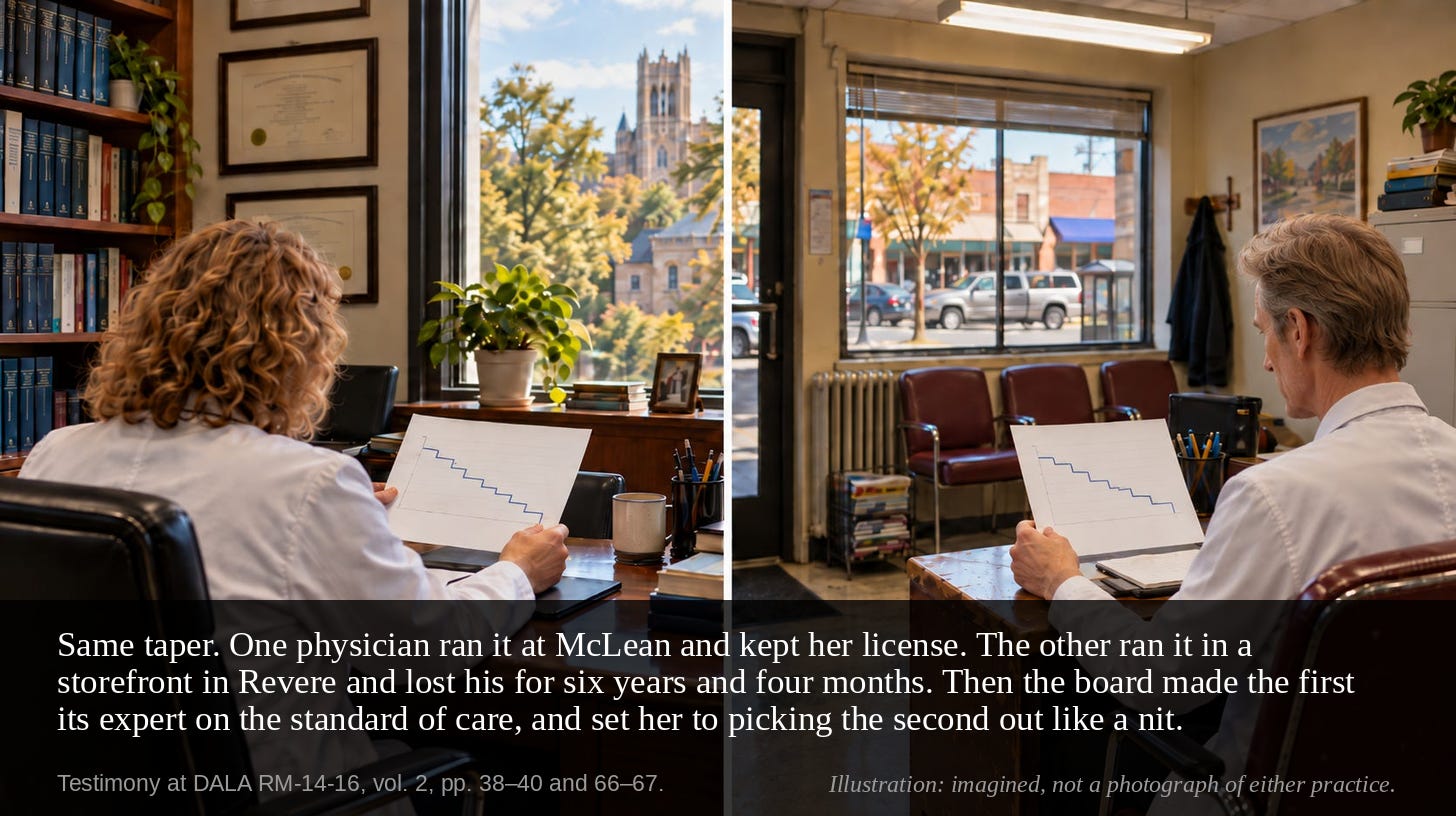
Tapering to sobriety is not cruelty. It is respect for the human person and faith in the capacity to recover when given a scaffold. That scaffold is not medication alone. It is family, friends, steady work, meaningful habits, faith when it helps, and yes, a little fun. Call it a rat park or call it community. The mechanism is the same. People who belong do not need to bury their lives under maintenance forever.
Policy must change. Clinics should be judged by how many patients regain independent lives, not by how many scripts they maintain. Physicians must resist financial incentives that trap people in a cycle of substitute dependence. And the public must stop celebrating the myth that an addict has no soul. We can and must expect better. Build communities that restore dignity. Offer short and tailored tapers. Teach that recovery is possible. That is how we end the epidemic, not by accepting permanent maintenance as the final answer.
Join us at 5 pm ET weekdays on America Out Loud Talk Radio. Listen on iHeart Radio, our world-class media player, or our free apps on Apple, Android, or Alexa. Discover all the episodes on podcast networks, i.e., Apple Podcasts, Spotify, Pandora, TuneIn, Stitcher, and iHeart. You’ll find them the day after they air on talk radio, available on podcast. Extraordinary voices for extraordinary times.
Discover more from Randy Bock MD PC
Subscribe to get the latest posts sent to your email.