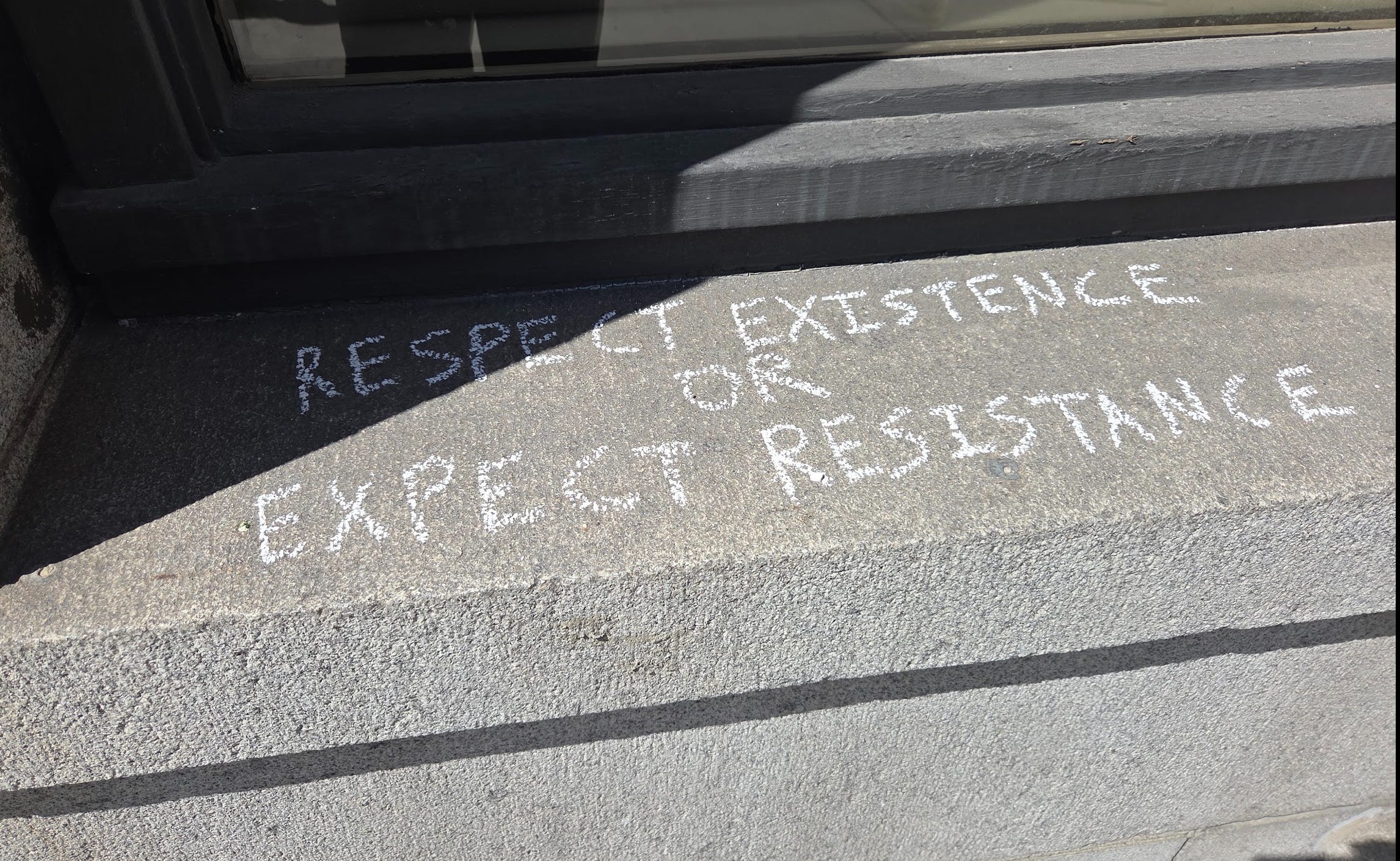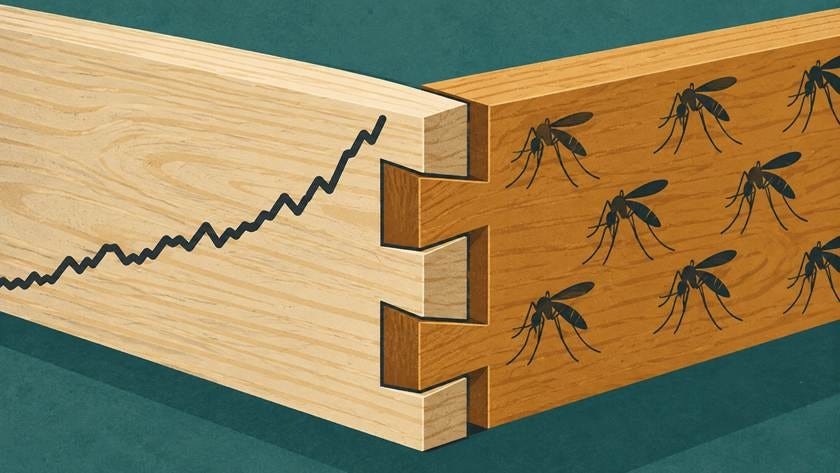

Arrangements that work among people who know and trust one another become harder to sustain across millions of strangers. At that scale, competing institutions and competing ideas give us ways to challenge power. A society needs people whose judgments differ, including people whose judgments annoy us. “You only function well because there are so many people who are not like you.”
During COVID, public officials sought uniform compliance while governments adopted restrictions on movement and ordinary life. Frijters argued that the costs deserved a fuller accounting: “We have a certain amount of healthy years.” Wages can sometimes be recovered. A year of childhood, a final opportunity to conceive, or a season of vigorous life cannot be stored for later use.
In Is it Time to Accept That Omicron is not COVID-19? I questioned Omicron’s asserted continuity with the original virus, given its genomic distance and the missing account of its emergence. My objection is to institutions’ carrying yesterday’s fear into today’s medicine without having to defend the connection, the terminology, or the policies that depend upon them.
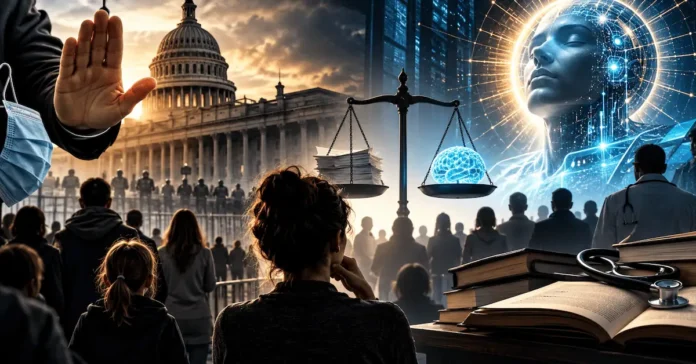
We then turned to Frijters’s speculative proposal that communities might build artificial “gods.” He meant specialized systems organized around human purposes, perhaps healing, with greater continuity than an individual life permits. His comparison drew on fallible, competing gods. It was a forecast about possible institutions, not evidence that machines had acquired divinity or that their judgments deserved obedience.
I pressed the question of who would control those systems. The people selecting acceptable answers can shape a machine’s apparent wisdom. A confident voice on a screen does not dissolve the interests of its owners or designers. I described the danger of repeated copying as “infinite mirror meets watering down the vodka.” Each repetition can preserve the appearance of substance while diminishing the original thought.
Frijters expected AI to produce enormous quantities of conventional prose, making some forms of administrative and academic work harder to defend. We considered a hypothetical physician who helps many patients but also makes harmful mistakes. Frijters argued that professional and legal incentives can discourage candor. I asked whether we can accept fallibility and still demand responsibility. Punishing every admission of uncertainty encourages concealment; treating every error as harmless abandons the patient.
His closing advice was to distrust anyone’s claim to complete correctness, including the person whose judgment seems best. “We need a whole diversity of views,” he said. I want that freedom in medicine as much as anywhere else: room to question a claim, compare results, admit an error, and change course before more lives are spent defending it.
Also see my
“ChatCCP? – The Know-It-All With Flair- Chatbot’s Hidden Agenda” MAR 10, 2023
Discover more from Randy Bock MD PC
Subscribe to get the latest posts sent to your email.