


Stanton Peele has spent more than five decades challenging the idea that addiction is best understood as a permanent brain disease. His alternative is not a denial of drugs, biology, trauma, or suffering—but a model that puts human behavior, relationships, purpose, responsibility, and the possibility of change at the center of recovery.
What If Addiction Is Not a Life Sentence?
At five years old, psychologist and addiction researcher Stanton Peele witnessed something that stayed with him for decades.
A man on his South Philadelphia block came home drunk night after night, apparently losing control of his life. The young Peele wondered why an adult would surrender command of his own behavior.
That childhood question eventually became the foundation of a career devoted to challenging conventional ideas about addiction.
In his view, the central question is not simply what a drug does to the brain. It is what happens when a particular behavior becomes embedded in a person’s life—and what happens when that person’s life changes.
This perspective puts Peele at odds with the dominant brain disease model of addiction, which has shaped addiction research and treatment for decades. The model describes addiction as a chronic condition involving changes in brain systems associated with reward, motivation, learning, and self-control.
But the model remains controversial. A 2025 Lancet Psychiatry review argued that the concept of addiction as a brain disease has significant theoretical and empirical problems, while a separate 2025 paper described the brain disease model as highly contested and criticized its tendency to underemphasize social and economic context and natural recovery.
For Peele, the issue is ultimately bigger than terminology.
It is about whether people are told that they are capable of changing—or that their brains have permanently taken control.
Table of Contents
Stanton Peele and the Idea That Addiction Is Not a Disease
Peele’s position is often misunderstood.
Saying addiction is not a disease does not mean saying addiction is imaginary. It does not mean drugs are harmless. It does not mean trauma is irrelevant. And it does not mean every person can simply stop using through willpower.
Instead, Peele challenges the idea that a disease label provides the most useful explanation for why addictive behavior develops and why people recover.
His own website describes his work as emphasizing the range of experiences that can become addictive, the phenomenon of natural recovery, and harm reduction.
The distinction matters.
A person can experience profound problems with alcohol, opioids, nicotine, gambling, or another behavior without being defined forever by that problem.
Peele’s approach asks a different question:
What is happening in this person’s life that makes the addictive behavior so compelling—and what could make a different life more compelling?
That question shifts the emphasis from permanent pathology toward development and change.
The Evidence for “Maturing Out” of Addiction
One of the ideas that influenced Peele was sociologist Charles Winick’s research on people who had been identified as narcotic addicts.
Winick’s 1962 study, Maturing Out of Narcotic Addiction, examined records of more than 7,000 people and found that many who had been identified as narcotic users eventually became inactive in the records, with a substantial concentration reaching that point in their 30s. Winick suggested that the pattern could reflect the life cycle or the length of addiction.
Peele calls this process “maturing out.”
The concept is straightforward: people sometimes grow out of destructive patterns as their circumstances, priorities, relationships, and responsibilities change.
That does not mean everyone naturally recovers.
It means that permanent addiction is not the only possible trajectory.
Peele has written extensively about “maturing out,” natural recovery, and spontaneous remission, arguing that many people resolve addictive patterns without the kind of lifelong treatment implied by traditional disease models.
The National Academies has also discussed the historical “maturing out” hypothesis and subsequent research examining recovery from opioid dependence.
When People Have Something to Lose—and Something to Gain
One of the most powerful themes in Peele’s work is the role of life incentives.
People change when their circumstances change.
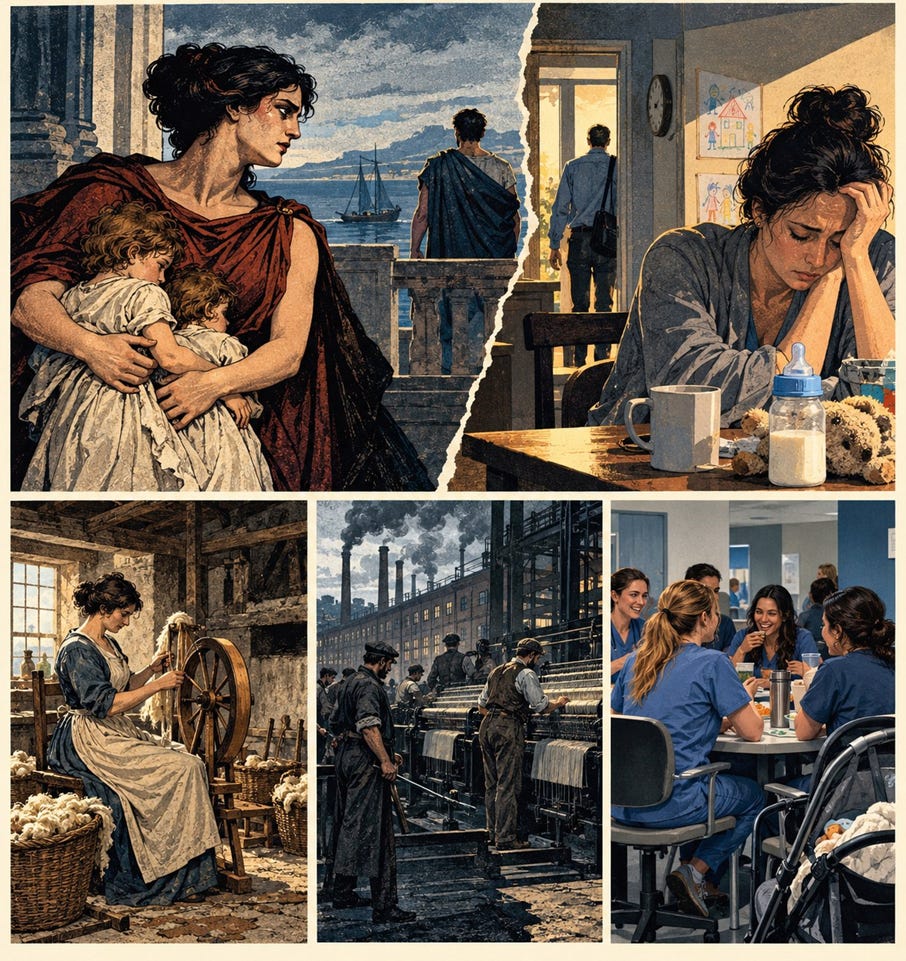
A person may continue smoking for decades and then stop after a heart attack. Another may quit during pregnancy. Someone else may stop when they get married, have a child, change careers, or realize that smoking is threatening a future they value.
Peele refers to these ordinary turning points as the “stupid reasons of life.”
But perhaps they are not stupid at all.
They are reasons.
They provide something that abstract warnings about disease often cannot provide: a meaningful future that competes with the addictive behavior.
The same principle can apply to other forms of addiction.
If a person develops a career they care about, repairs a damaged relationship, becomes responsible for children, discovers a community, develops new skills, or develops a sense of purpose, the balance of incentives can change.
Recovery becomes more than simply removing a substance.
It becomes building a life in which the substance has less power.
The Vietnam Heroin Example
Another famous example discussed in the addiction literature involves American soldiers who used heroin during the Vietnam War.
Research associated with sociologist Lee N. Robins examined what happened to American servicemen who had used heroin in Vietnam after they returned home.
The example became important in debates about addiction because many soldiers who had used heroin overseas did not remain chronically dependent after returning to the United States.
The drug had not changed.
The environment had.
Returning home meant reconnecting with family, work, community, responsibilities, and ordinary life.
For Peele, this illustrates a fundamental principle:
Addiction does not exist independently of context.
The same substance can have very different consequences depending on the person’s circumstances, relationships, goals, and environment.
This does not prove that biology is irrelevant. It demonstrates that biology is not the entire story.
Brain Changes Are Real—but Are They Destiny?
This is perhaps the most important part of Peele’s argument.
The brain disease model points to measurable changes in the brain associated with repeated drug exposure and addictive behavior. Mainstream addiction science continues to regard these neurobiological changes as important.
Peele does not have to deny that these changes occur to challenge the interpretation placed on them.
The brain changes when people learn.
It changes when they develop habits.
It changes through relationships, stress, trauma, exercise, education, grief, love, and recovery.
Neuroplasticity means that the brain is not static.
Therefore, observing a brain change does not automatically establish that the person has an irreversible disease.
A 2017 review similarly argued that many neural changes associated with addiction can be understood through learning, habit formation, motivation, and neuroplasticity rather than necessarily being interpreted as evidence of an irreversible brain disease.
This is where the philosophical disagreement becomes important.
The question is not whether the brain is involved.
Of course it is.
The question is whether brain involvement equals disease—and whether disease language accurately describes the person’s capacity for change.
No Brain Scan Diagnoses Addiction
Peele also emphasizes the practical side of the debate.
Addiction is not diagnosed simply by looking at a brain scan.
Clinicians evaluate patterns of behavior, substance use, impairment, consequences, and functioning.
The brain disease model may provide one explanatory framework for these behaviors, but it does not eliminate the importance of the person’s environment and decisions.
That distinction matters because labels influence expectations.
If someone is repeatedly told, “You have a chronic disease and you will always be an addict,” the statement can become part of that person’s identity.
Peele worries that this can undermine self-efficacy—the belief that one’s actions can actually produce change.
Recent research has begun examining this issue directly. A 2026 study found that discussing the brain disease model in therapeutic settings can have mixed effects, including effects on expectations of recovery and therapeutic alliance.
The debate, therefore, is no longer simply about whether addiction involves the brain.
It is also about what kind of story about the brain helps people recover.
Stanton Peele’s Life Process Model
Peele’s alternative is reflected in his Life Process Program.
Rather than treating recovery as simply eliminating a pathological condition, the approach focuses on the broader structure of a person’s life.
Its key elements include:
- Values and purpose
- Motivation
- Life skills
- Relationships
- Community
- Responsibility
- Personal goals
- Meaningful rewards
The Life Process Program describes recovery as building a fulfilling life in which addiction no longer fits.
This is a radically different emphasis from simply asking:
“How do we stop the addict from using?”
Instead, Peele asks:
“How do we help this person build a life worth choosing?”
That distinction may be one of the most important contributions of his work.
Recovery Is About More Than Abstinence
Traditional addiction discussions often make abstinence the entire objective.
Peele’s framework broadens the definition of recovery.
Stopping a behavior matters, but so does everything that makes stopping sustainable.
A person needs something to move toward.
That might mean meaningful employment.
It might mean repairing family relationships.
It might mean developing skills.
It might mean finding community.
It might mean learning how to tolerate discomfort without returning to an old coping mechanism.
It might mean discovering a purpose that makes yesterday’s behavior incompatible with tomorrow’s ambitions.
The Life Process approach explicitly emphasizes values, motivation, life skills, and relationships as components of recovery.
In that sense, recovery becomes a life-building project.
Medicine Can Help Without Becoming the Whole Answer
Peele’s argument should not be reduced to “medicine is bad.”
Medication can play an important role in addiction treatment, and evidence-based medical interventions can reduce harm and help people stabilize.
The deeper question is whether medication should be considered the entire destination.
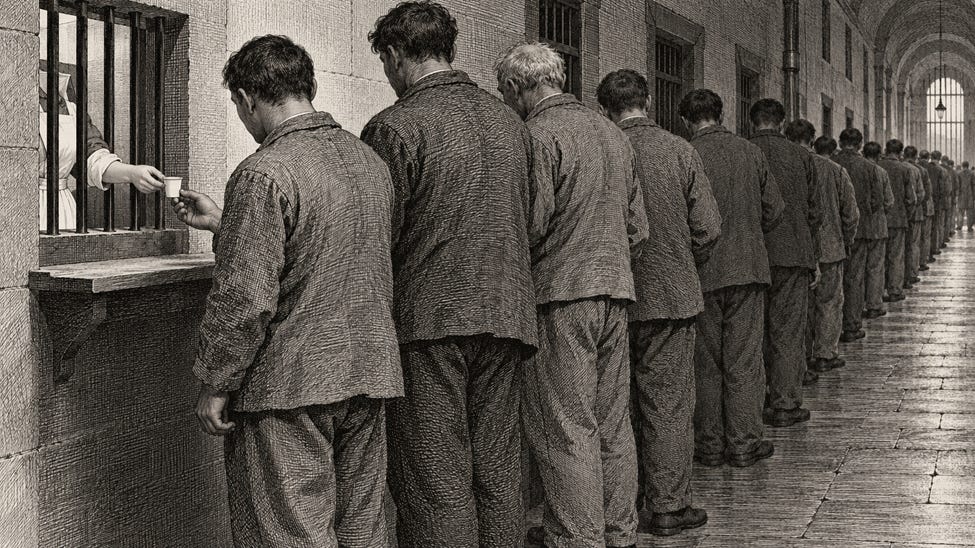
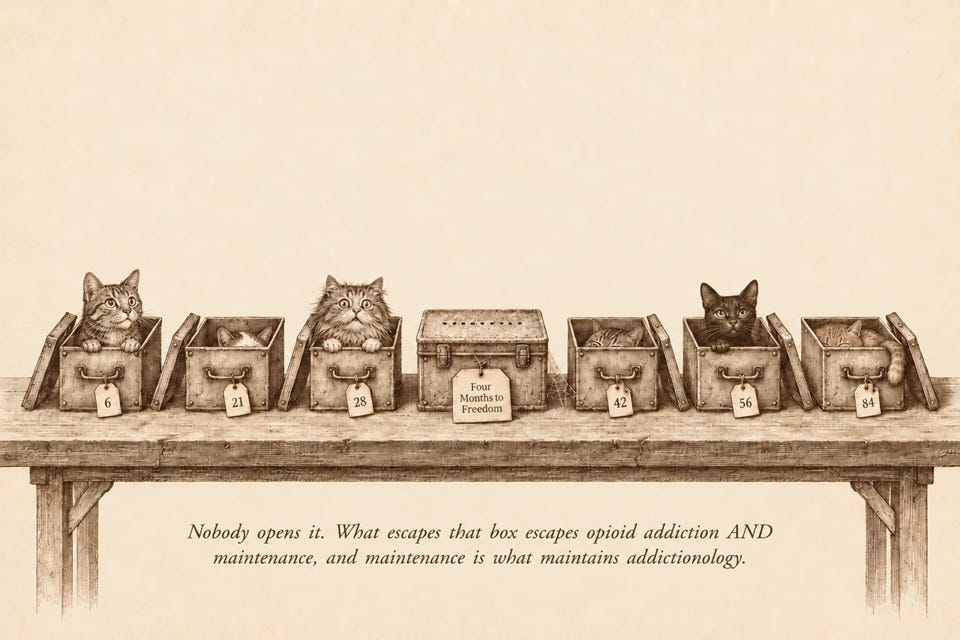
In the interview, the idea is presented that medication can function as a bridge toward a more independent life rather than automatically becoming a permanent definition of recovery.
That distinction is especially relevant to opioid dependence, where medication-based treatments can be lifesaving while questions about duration, goals, autonomy, and long-term recovery remain subjects of discussion.
The broader principle is simple:
Treatment should support a person’s ability to build a life—not convince that person that life will always be organized around treatment.
Responsibility and Compassion Are Not Opposites
One of the strongest aspects of Peele’s philosophy is the attempt to combine compassion with responsibility.
Rejecting the disease model does not require returning to the old idea that addiction is simply a moral failure.
There is a third possibility.
A person can be understood compassionately while still being treated as an agent capable of making choices.
Trauma can matter.
Biology can matter.
Environment can matter.
Social conditions can matter.
But none of these necessarily means that a person’s future has already been written.
Peele’s approach therefore attempts to replace both extremes:
“You are morally defective.”
and
“You are powerless because your brain is diseased.”
His alternative is closer to:
“Your behavior has causes, your circumstances matter, and you can still participate in changing your life.”
The Bigger Question: What Is Addiction?
Ultimately, Stanton Peele is asking us to reconsider the definition of addiction itself.
Is addiction primarily a disease?
A brain disorder?
A learned behavior?
A developmental process?
A maladaptive relationship with a substance or activity?
A response to trauma or environment?
A combination of biology, psychology, culture, and personal circumstances?
The modern scientific literature does not provide a simple answer.
The brain disease model remains influential, but recent scholarship continues to debate its definitions, evidence, limitations, and consequences.
That makes Peele’s perspective worth examining—even for people who ultimately disagree with him.
Because the consequences of the model are not merely academic.
How we define addiction affects how we treat people.
It affects what clinicians expect.
It affects how families respond.
It affects public policy.
And perhaps most importantly, it affects what people believe is possible for themselves.
Stanton Peele’s Most Hopeful Message
Peele’s central message is ultimately one of hope.
Addiction can become deeply embedded in a person’s brain, behavior, relationships, and identity.
But people change.
Their priorities change.
Their environments change.
Their relationships change.
Their brains change.
Their identities change.
And sometimes, the life that once sustained an addiction becomes the very thing that makes the addiction unnecessary.
That is the meaning behind Peele’s emphasis on purpose, connection, responsibility, and natural recovery.
The goal is not to pretend addiction is easy.
The goal is to refuse the assumption that addiction must define a person’s entire future.
As Peele puts it:
“The question is not whether people will use psychoactive substances, but in what fashion they’ll use them and how they’ll be integrated constructively or destructively in their lives.”
That question moves the conversation beyond labels.
Instead of asking only “What disease does this person have?”, perhaps we should also ask:
“What kind of life is this person living—and what kind of life could they build?”
For Stanton Peele, that is where the possibility of recovery begins.
Frequently Asked Questions About Stanton Peele and Addiction
Is Stanton Peele saying addiction is not real?
No. Peele does not deny that addictive behavior can be serious, destructive, compulsive, or difficult to change. His argument challenges the idea that addiction should necessarily be understood as a permanent disease that determines a person’s future.
What is Stanton Peele known for?
Stanton Peele is known for challenging disease-based approaches to addiction and emphasizing natural recovery, personal agency, relationships, environment, life purpose, and harm reduction. His website describes these as central themes of his work.
What is the Life Process Program?
The Life Process Program is an approach developed by Stanton Peele that emphasizes values, motivation, life skills, relationships, community, and purpose as tools for overcoming addictive behavior.
What is the brain disease model of addiction?
The brain disease model describes addiction as a chronic condition involving changes in brain systems associated with reward, motivation, learning, and behavioral control. It remains influential but is also the subject of continuing scientific debate.
What does “maturing out” of addiction mean?
“Maturing out” describes the phenomenon in which some people stop addictive drug use as they move into different stages of adulthood and assume new responsibilities. Charles Winick’s 1962 research is an important historical source for the concept.
Conclusion: Recovery Requires Something to Recover To
Stanton Peele’s challenge to the disease model ultimately comes down to a deceptively simple idea:
People need something to live for.
A diagnosis may describe a problem, but it cannot by itself create a future.
Recovery requires goals.
It requires relationships.
It requires skills.
It requires responsibility.
It requires purpose.
And it requires the belief that change remains possible.
The most important question may therefore not be whether addiction is entirely biological or entirely psychological.
It may be whether our understanding of addiction leaves enough room for the human capacity to change.
Peele’s answer is unequivocal.
Addiction may be powerful, but it does not have to be destiny.
📚 Related Resources
- Stanton Peele’s official website: peele.net
- Life Process Program: Life Process Program
- Charles Winick’s “Maturing Out of Narcotic Addiction”: Office of Justice Programs research record
- Research on the brain disease model of addiction:
Discover more from Randy Bock MD PC
Subscribe to get the latest posts sent to your email.



A brain disease? Who knows, maybe. Seems more like a lack of self-control. Eventually, we must accept responsibility for our actions.