

The Reckoning: Inside the COVID-19 Pandemic Policy Failure With Garrett Wallace Brown
The COVID-19 pandemic policy failure may be one of the most consequential and least examined crises of our time. Professor Garrett Wallace Brown — a health economist who sat inside the UK Cabinet Office and WHO committees during the early months of 2020 — argues that those entrusted with global health security had no coherent plan, no reliable evidence base, and no accountability for the decisions that shuttered economies and cost trillions. His REPPARE project now offers a systematic, evidence-based reckoning with what went wrong — and what must change before the next outbreak.
The early months of the COVID-19 pandemic revealed a disturbing truth: those tasked with protecting global health security had “no idea what they were doing.” This assessment comes not from an outside critic, but from Professor Garrett Wallace Brown, a health economist who sat inside the UK Cabinet Office and WHO committees during the crisis.
What Brown witnessed during those critical first weeks of 2020 should concern anyone interested in pandemic preparedness and global health security. Politicians grasped for certainty amid chaos, choosing the most frightening projections under a dangerous doctrine called “no regrets.” The result? Trillions spent, economies shuttered, and a pandemic response architecture built on flawed assumptions that persists today.
Table of Contents
The REPPARE Project: Exposing Flawed Pandemic Risk Assessments
Brown’s journey from health economics researcher to pandemic policy critic began with a simple question: How did the WHO and World Bank calculate pandemic preparedness costs? When asked to contribute data for a major preparedness cost analysis, he discovered something troubling—the inputs didn’t match the outputs, and officials couldn’t (or wouldn’t) explain their methodology.
This sparked the REPPARE project (Re-Evaluating Pandemic Preparedness and Response), a comprehensive three-year investigation examining post-COVID pandemic preparedness policy. What the research team found challenges virtually every assumption driving current global health security investments.
Inflated Risk: The Evidence Doesn’t Support the Alarm
Current WHO pandemic risk assessments claim a major pandemic is “highly likely” within 20-40 years. The problem? This conclusion misquotes the very research it cites.
The Mariani study referenced by WHO actually estimates a COVID-scale event every 209 years, not 20-40 years. Brown’s team found this pattern repeatedly—severity models leaning heavily on the 1918 Spanish flu (which occurred before antibiotics and amid a world war), while ignoring crucial context.
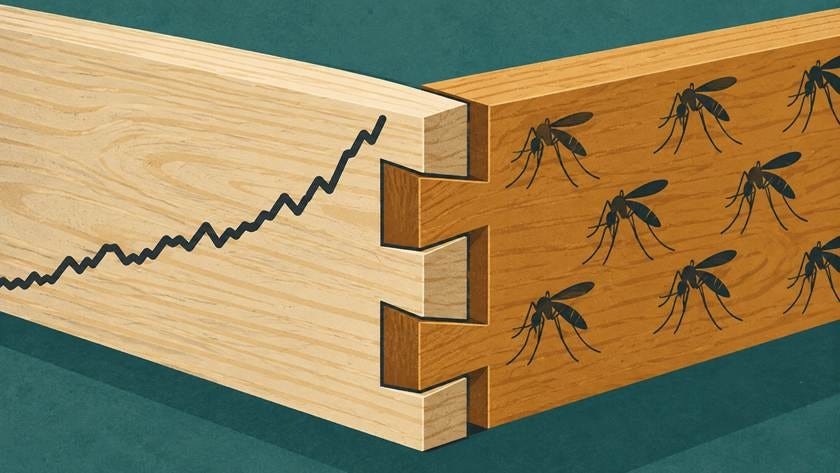
Most importantly, none of these pandemic risk models account for the explosion in diagnostic capacity since 1983, when PCR testing revolutionized pathogen detection. As Brown explains: “Our diagnostic and surveillance capacities have increased exactly along the same curve as the number of new pathogens or outbreaks reported.”
When adjusted for improved detection capabilities, the trend for natural spillover events is actually downward—with COVID-19 representing an outlier, not a trend.
The Economics Don’t Add Up: Pandemic Preparedness Cost Models Under Scrutiny
The financial projections driving pandemic preparedness are equally problematic. Brown’s analysis of WHO and World Bank cost estimates revealed:
- Extrapolation from just five wealthy countries with high-quality data, skewing global cost projections
- Failure to separate direct pandemic costs from indirect policy costs (like economically unnecessary measures)
- Impossible assumptions that proper preparedness would prevent “100% of future pandemic economic losses”
“No one in their right mind would say that,” Brown notes. The moment an outbreak spreads beyond a small population, economic costs are inevitable. Yet return-on-investment calculations for pandemic preparedness assume perfect prevention—a fantasy that inflates the perceived value of current spending.
Consider the UK’s “Eat Out to Help Out” scheme, which cost billions to encourage restaurant dining after lockdowns. This wasn’t a necessary pandemic response cost—it was an expensive fix for self-inflicted economic damage. Yet such indirect costs are lumped together with legitimate pandemic expenses, artificially inflating the economic case for current preparedness strategies.
The “No Regrets” Policy: How Fear Overrode Evidence
Inside UK Cabinet meetings, Brown observed a consistent pattern. Officials presented five epidemiological models weekly—none optimistic, most catastrophic. Politicians invariably chose the worst-case scenario, operating under what they called “no regrets” doctrine: better to overreact than risk blame for underreaction.
This approach explains why countries overbought PPE, overbought vaccines, and implemented extreme measures despite limited supporting evidence. Neil Ferguson’s Imperial College projections consistently showed the most frightening outcomes and received disproportionate weight, despite questions from the Office of National Statistics about inflated estimates.
The evidence was there for a different approach. Diamond Princess cruise ship data clearly showed age-stratified risk. The French aircraft carrier Charles de Gaulle demonstrated minimal impact on young, healthy military populations. Yet this nuanced evidence was “largely ignored” in favor of population-wide panic measures.
A One-Trick Pony: The Over-Biomedicalization of Pandemic Response
Perhaps most concerning is the governance structure emerging from COVID-19. Every major institution created or empowered—the Pandemic Fund, the 100-Day Vaccine Mission, the German BioHub, new countermeasure distribution systems—follows the same narrow playbook:
- Detect pathogen
- Sequence genome
- Declare emergency
- Rush vaccine to market
“It’s a one-trick pony,” Brown warns. This biomedicalized approach ignores the real killers claiming millions annually: tuberculosis (1.3 million deaths per year), malaria (47,000 children dead annually in DRC alone), and basic health system weaknesses.
The WHO’s priority pathogen list—including the mysterious “Disease X”—accounts for just 17,000 total historical deaths across all listed diseases combined. Yet these rare exotic threats receive disproportionate attention and resources compared to endemic diseases with massive proven impacts.
The Mpox Example: Misplaced Priorities in Action
The recent Mpox response in Democratic Republic of Congo illustrates this misallocation. With 55 deaths from Mpox (spread primarily through direct contact, not airborne transmission), the international response allocated resources equivalent to $1.2 million per life saved.
Meanwhile, 47,000 children die from malaria in DRC annually, and basic health clinics lack reliable electricity. As Brown pointedly asks: “You can’t keep the lights on in your clinics and you’re going to spend 1.2 million per life saved?”
WHO’s Pandemic Response Reversal: Following the Crowd
Brown’s findings on WHO behavior during COVID-19 reveal an organization that followed rather than led. The WHO’s 2019 “Managing Epidemics” handbook explicitly advised against:
- Travel bans
- Society-wide isolation or quarantines
- Lockdowns (not mentioned at all)
- School closures
- Trade restrictions
- Masks (considered an “extreme measure”)
Yet by 2022, the second edition normalized all these interventions. What changed? Not the evidence—the WHO simply adapted its guidance to match what countries were already doing, likely to preserve institutional authority after being ignored during the crisis.
China’s Outsized Influence on Global Health Governance
Brown identifies a troubling dynamic in UN health agencies: dependence on China’s development statistics to demonstrate global progress. China’s dramatic poverty reduction has masked stagnation elsewhere, creating perverse incentives.
“If you want to see progress towards your UN goals, you get China to do it,” Brown observes. This dependency may explain the WHO’s deference to Chinese authorities during early pandemic response, when critical information sharing lagged.
Entrenched Paradigms: Why Reform Faces an Uphill Battle
Despite clear evidence of pandemic policy failures, changing course remains difficult. Brown identifies a “bad cocktail” of factors perpetuating the status quo:
- Strong paradigms that create self-fulfilling prophecies
- Economic and market interests with lobbying power
- Political systems where decision-makers lack time to evaluate expert claims
- Securitization of health threats that crowds out contextual thinking
Having participated in G7 and G20 meetings five times each and sat on WHO subcommittees, Brown understands how these forces operate. “Politicians are told things, they don’t even know if it’s right or wrong. They’re just told.”
A Path Forward: Evidence-Based Pandemic Preparedness
The REPPARE project doesn’t argue against pandemic preparedness—it argues for honest, evidence-based preparedness that doesn’t sacrifice known solutions for hypothetical threats.
Key Reform Priorities:
1. Realistic Risk Assessment
- Account for improved surveillance capabilities when calculating outbreak trends
- Stop misquoting research to support predetermined conclusions
- Distinguish between natural and lab-related pandemic risks
2. Honest Cost-Benefit Analysis
- Separate direct pandemic costs from indirect policy costs
- End impossible assumptions about 100% economic loss prevention
- Calculate opportunity costs of over-investing in rare threats
3. Balanced Health System Approach
- Invest in primary health care and endemic disease control
- Protect vulnerable populations rather than imposing universal restrictions
- Maintain proportionality between threat severity and response intensity
4. Diverse Intervention Portfolio
- Move beyond vaccine-only strategies
- Strengthen actual health system capacity (diagnostics, treatment, infrastructure)
- Develop flexible response frameworks adaptable to different pathogens
5. Transparent Governance
- Require evidence disclosure for international health recommendations
- Include diverse expert perspectives, not just biomedicalization advocates
- Build accountability mechanisms for prediction accuracy
Lessons for Future Health Emergencies
Brown’s Swedish-style recommendations during COVID-19—protecting the vulnerable, avoiding long lockdowns, keeping schools open—were derided as reckless at the time but have since been largely vindicated. His warnings against putting “all our eggs in one basket” with vaccination-only strategies proved prescient as variants emerged and vaccine effectiveness against transmission disappointed.
The core lesson isn’t that preparation is unnecessary—it’s that panic-driven preparation creates its own catastrophe. As Brown told his wife after that first Cabinet meeting: “These people have no idea what they’re doing.”
Five years later, with pandemic preparedness architecture firmly entrenched, the question remains: Will evidence matter more than fear next time?
The Stakes for Global Health Security
The decisions made now about pandemic preparedness will shape global health for decades. Every dollar directed toward hypothetical exotic pathogens is a dollar not spent on tuberculosis, malaria, maternal health, or strengthening fragile health systems in low-resource settings.
Brown’s research suggests we’re building the wrong architecture—securitized, biomedicalized, and unmoored from evidence. The paradigms are strong, the interests entrenched, but the possibility of course correction exists if political will can be mustered.
“Maybe it’s hope before reality,” Brown acknowledges. But with projects like REPPARE forcing honesty about pandemic evidence, costs, and priorities, there’s a chance to “repair” what went wrong before the next panic takes hold.
About the REPPARE Project
The REPPARE project (Re-Evaluating Pandemic Preparedness and Response) is a three-year research initiative examining post-COVID pandemic policy and governance. Led by Professor Garrett Wallace Brown at Leeds University, the project has published 15+ academic articles in major journals including The Lancet, with comprehensive reports on zoonotic risk, cost and financing, and governance architecture.
Key Publications:
- Pandemic risk and zoonotic spillover assessment (2023)
- Global pandemic cost and financing analysis (2024)
- Post-COVID governance architecture review (forthcoming 2025)
For researchers, policymakers, and public health professionals seeking evidence-based pandemic preparedness strategies, the REPPARE findings offer crucial insights into building more effective, proportionate, and accountable health security systems for future global health emergencies.
📚 Related Resources, Videos, and Links
https://www.americaoutloud.news/garrett-wallace-brown-on-pandemic-policy-failure/
https://essl.leeds.ac.uk/politics/staff/64/professor-garrett-wallace-brown
Discover more from Randy Bock MD PC
Subscribe to get the latest posts sent to your email.