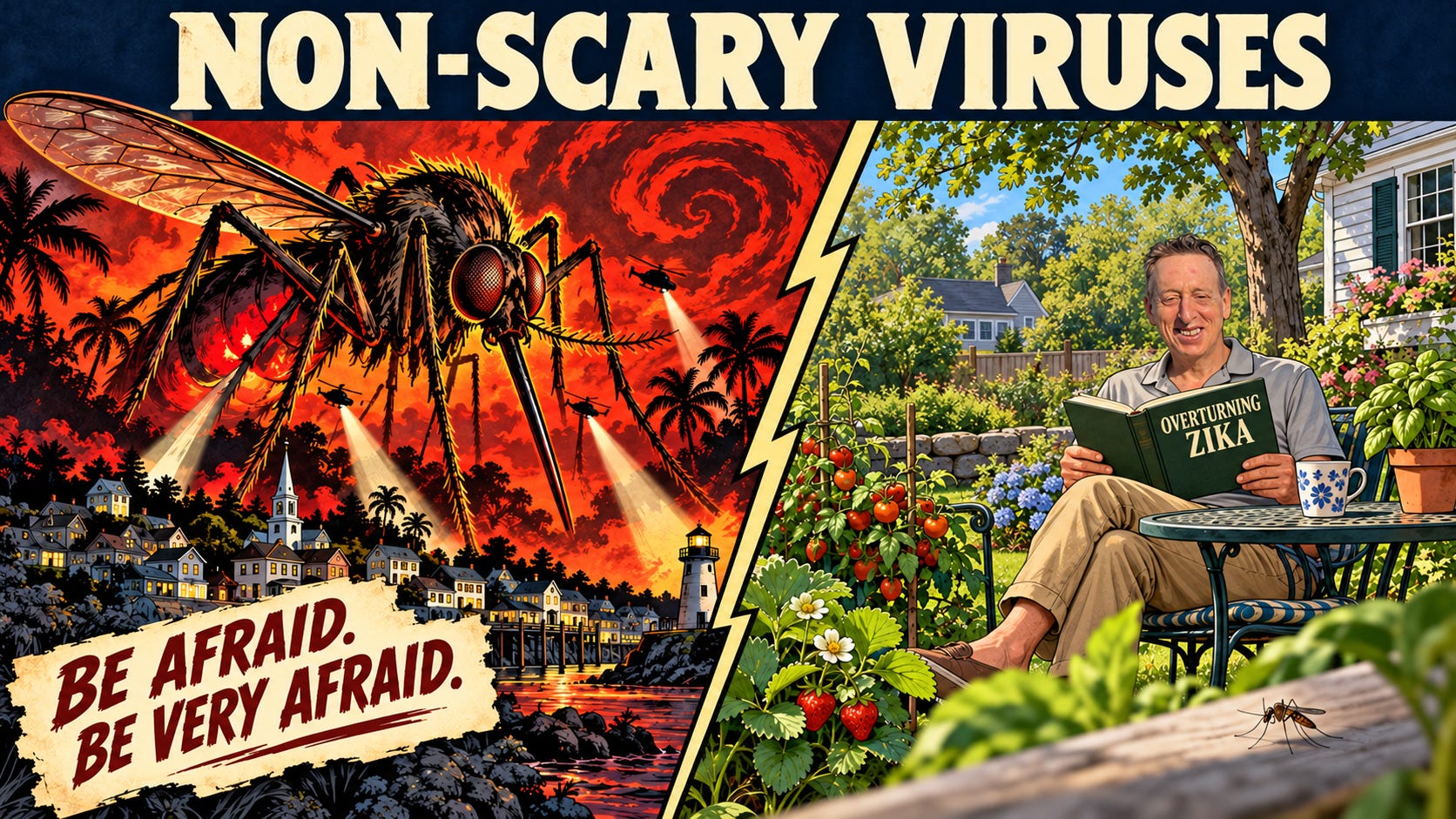


What happens when medical diagnoses become explanations for nearly every human difficulty? In an interview with Anthony Daniels, the physician, psychiatrist, and essayist better known as Theodore Dalrymple, we explore medical fear, psychological explanations, questionable interpretations of scientific research, and the gradual erosion of personal responsibility.
Daniels argues that modern societies have become increasingly uncomfortable with uncertainty, ordinary suffering, and individual differences. As people seek explanations for their behavior and protection from potential dangers, medical and psychological frameworks can sometimes offer reassurance at the expense of independent judgment.
His criticism is not simply that doctors make mistakes or that psychological treatment is unnecessary. Rather, it concerns a broader cultural tendency: the transformation of provisional explanations into established truths, and the temptation to treat people as passive products of their circumstances rather than individuals capable of making choices.
The conversation draws on several of Daniels’s books, including False Positive, Admirable Evasions, and Life at the Bottom. Together, these works provide a framework for examining medical research, public health policy, psychological diagnosis, and the relationship between human behavior and moral responsibility.
Table of Contents
Who Is Anthony Daniels, Also Known as Theodore Dalrymple?
Anthony Daniels is a retired British physician and psychiatrist who worked in hospitals and prisons before becoming widely known for his writing on medicine, culture, morality, and social policy. He publishes much of his work under the pen name Theodore Dalrymple.
Daniels explains in the interview that the pseudonym initially provided a degree of separation from his medical work. Writing about patients and institutions required discretion, and the pen name allowed him to develop a distinct public identity.
Over time, Theodore Dalrymple became the name most associated with his essays and books.
His writing frequently challenges prevailing assumptions about social problems, human behavior, and the institutions that claim to explain them. Rather than accepting fashionable theories at face value, he emphasizes observation, judgment, and the importance of examining evidence.
Three books are particularly relevant to this interview:
- False Positive: A critical examination of medical research, statistical reasoning, and the conclusions drawn from scientific literature.
- Admirable Evasions: How Psychology Undermines Morality: An argument about how certain psychological explanations can encourage people to evade personal responsibility.
- Life at the Bottom: A collection of essays examining social problems, culture, and human behavior.
These books frame the central question of the interview: Can a society become so committed to explaining human behavior that it gradually loses the ability to exercise judgment?
1. Why Modern Society Has Become Obsessed With Medical Fear
One of the most striking arguments in the conversation concerns the paradox of modern health and safety.
Daniels observes that people living in contemporary Western societies generally benefit from medical advances and safer living conditions that earlier generations could scarcely imagine. Yet improvements in safety do not necessarily produce a proportional reduction in fear.
Instead, when familiar dangers become less common, exceptional threats can assume greater psychological importance.
An illness may begin to feel like an injustice rather than an unavoidable possibility of human existence. People may believe that if they have followed the rules, maintained healthy habits, and taken precautions, serious illness should not happen to them.
When it does, the experience can seem almost inexplicable.
Daniels suggests that this expectation contributes to an environment in which potential catastrophes receive extraordinary attention. The possibility of a disease outbreak, an environmental threat, or a future health crisis can become a source of public fascination even when the actual level of danger remains uncertain.
This is not an argument that disease should be ignored or that public health warnings are inherently wrong. It is a challenge to the assumption that greater fear necessarily produces better decisions.
The central issue is proportionality: Does the intensity of the response match the evidence about the threat?
A responsible approach to medical risk requires distinguishing between a genuine danger, a plausible but uncertain possibility, and a speculative worst-case scenario.
Without that distinction, fear can become a substitute for careful reasoning.
2. How Medical Fear Can Shape Public Health Policy
The interview moves from individual anxiety to the incentives facing politicians during a potential health crisis.
Daniels describes a difficult political calculation. If an official responds cautiously to a warning and people subsequently die, critics may argue that the government failed to act. The official may be blamed for deaths that opponents believe could have been prevented.
By contrast, the damage associated with excessive intervention can be harder to attribute to a single decision.
Economic disruption, educational setbacks, social isolation, and other indirect consequences may develop gradually. Their causes can be difficult to establish, and responsibility may be distributed across many institutions and decisions.
This imbalance creates what Daniels sees as an incentive to overreact.
A politician may perceive that taking the most restrictive action is safer for their reputation than acknowledging uncertainty and weighing competing risks.
The interview therefore raises an important question about public health decision-making: How should governments balance the dangers of inaction against the potential harms of intervention?
A sound policy assessment should consider several factors:
- The quality and limitations of the available evidence.
- The probability and potential severity of the threat.
- The expected benefits of intervention.
- The direct and indirect costs of proposed measures.
- The availability of less restrictive alternatives.
- The conditions under which a policy should be reviewed or withdrawn.
These considerations do not automatically favor intervention or restraint. They provide a framework for evaluating each decision on its merits.
Daniels’s broader point is that policies should be judged by their overall consequences, not merely by whether officials can demonstrate that they took dramatic action.
3. False Positive: Why Medical Research Requires Critical Thinking
In False Positive, Daniels examines research published in the New England Journal of Medicine during 2017. His criticism focuses on what he sees as weaknesses in the reasoning, interpretation, and presentation of some published findings.
The interview highlights two important concepts: correlation versus causation, and relative risk versus absolute risk.
Correlation Does Not Automatically Establish Causation
A study may discover that two variables occur together more often than expected. That association can be worth investigating, but it does not, by itself, establish that one variable causes the other.
Other explanations may include chance, confounding factors, reverse causation, or differences between the groups being studied.
For example, suppose researchers discover an association between a particular dietary habit and a medical condition. Before concluding that the dietary habit causes the condition, researchers must consider whether other factors could explain the relationship.
A correlation may provide a useful starting point for further investigation. It is not necessarily the final answer.
The distinction matters because scientific findings can be simplified as they move from research papers into news reports, public discussion, and everyday advice.
A tentative association may eventually be remembered as a proven danger, even when the original evidence was more limited.
Relative Risk Versus Absolute Risk
Daniels also emphasizes how risk statistics can create misleading impressions when their context is omitted.
Relative risk compares the risk between two groups. Absolute risk describes the actual probability of an outcome within a population or group.
Consider a hypothetical example:
Suppose a condition occurs in 2 out of every 1,000 people in one group and 3 out of every 1,000 people in another.
The second group has a 50% higher relative risk. However, the absolute difference is only 1 additional case per 1,000 people.
Both figures are mathematically correct, but they communicate different aspects of the same result.
A headline emphasizing a 50% increase may sound alarming without explaining how uncommon the outcome is in absolute terms.
Understanding this distinction helps readers assess the practical significance of medical findings rather than reacting to a percentage in isolation. Researchers and clinicians likewise need to communicate risk in ways that help people understand both relative changes and actual probabilities.
How Weak Findings Can Become Cultural Beliefs
Daniels argues that research findings can have a lasting cultural effect even when their evidentiary foundations are uncertain.
Once an association becomes familiar, people may incorporate it into their everyday decisions. A particular food, behavior, or environmental exposure may acquire a reputation for being dangerous.
Correcting that impression can be difficult because the original claim may be remembered long after its qualifications have been forgotten.
This is why critical reading matters.
Readers should ask what a study actually measured, whether its results establish causation, how large the absolute risk is, and whether other research supports the conclusion.
Scientific skepticism does not require rejecting medical research. It requires examining what the evidence can—and cannot—establish.
4. Admirable Evasions: When Psychology Undermines Personal Responsibility
A major theme of the interview is the relationship between psychological explanations and personal agency.
In Admirable Evasions, Daniels argues that certain approaches to psychology can encourage people to interpret their behavior primarily through external explanations, including childhood experiences, genetics, neurochemistry, and social circumstances. In his view, these explanations can sometimes become substitutes for honest self-examination.
The problem, as he presents it, is not that circumstances are irrelevant.
People are influenced by their upbringing, environment, relationships, biology, and experiences. Some conditions substantially limit a person’s ability to control their behavior. Understanding these influences can be essential to providing appropriate support.
The concern arises when an explanation is treated as a complete account of a person.
If every undesirable behavior is interpreted as the inevitable consequence of circumstances, the possibility of exercising judgment or changing one’s conduct can appear to disappear.
A person may begin to see themselves as a case to be managed rather than an individual who can reflect, make decisions, and develop different habits.
Daniels argues that this shift can weaken the language of personal responsibility.
Understanding Behavior Is Not the Same as Excusing It
One of the most important distinctions in the interview is the difference between explaining behavior and absolving a person of responsibility.
Understanding why someone acted in a particular way may help us assess their circumstances, identify contributing factors, and determine what support or consequences are appropriate.
But an explanation does not automatically settle the moral question.
The circumstances surrounding an action matter. So do a person’s capacities, intentions, knowledge, and degree of control.
A serious assessment must consider these factors rather than assuming either that circumstances explain everything or that every person has complete control over every action.
The challenge is to preserve room for both compassion and accountability.
5. ADHD, Depression, and the Limits of Diagnostic Categories
The discussion becomes particularly contentious when Daniels considers psychological and psychiatric diagnoses.
He questions whether the boundaries between certain medical conditions and ordinary human experiences can become blurred when diagnosis relies heavily on symptoms that also occur in people without the condition.
The interview specifically addresses ADHD and depression.
Daniels argues that difficulties with concentration, restlessness, disappointment, and sadness can sometimes be interpreted through a medical framework without sufficient attention to individual circumstances and clinical judgment.
He worries that a reluctance to make difficult distinctions can encourage the expansion of diagnostic categories.
However, the question requires care.
ADHD and depression are recognized clinical conditions, and the absence of a single definitive biological marker does not, by itself, establish that a condition is unreal.
Diagnosis often involves evaluating patterns of symptoms, duration, severity, functional impairment, developmental history, and alternative explanations. Ordinary sadness is not automatically clinical depression, just as occasional distraction does not automatically establish ADHD.
The important question is whether a diagnosis accurately reflects the person’s difficulties and helps guide appropriate care.
Daniels’s criticism is directed at what he sees as the risk of replacing careful clinical judgment with overly broad explanations.
His argument invites clinicians and patients to consider several questions:
- What specific symptoms or difficulties are present?
- How long have they persisted?
- How substantially do they affect everyday functioning?
- What other explanations should be considered?
- What evidence supports the diagnosis?
- Does the proposed treatment address the person’s actual needs?
These questions encourage thoughtful assessment without dismissing genuine illness or assuming that everyone experiencing distress needs the same response.
The broader lesson is that diagnostic labels should help clarify a person’s situation, not become substitutes for understanding it.
6. Equality Does Not Mean Everyone Is Identical
Another important section of the interview concerns equality, individual differences, and the role of education.
Daniels distinguishes between the equal moral worth of human beings and the claim that everyone possesses identical abilities.
People differ in temperament, intelligence, interests, talents, and aptitude. Treating people with equal dignity does not require denying these differences.
He illustrates the argument through the example of Wolfgang Amadeus Mozart. Recognizing Mozart’s exceptional musical ability does not imply that people without comparable talent possess less human worth.
Conversely, the principle of human equality does not require assuming that every difference in ability can be explained entirely by upbringing or social circumstances.
This distinction has practical implications for education.
A system that recognizes individual differences can provide different forms of support to students with different needs. Some students may require additional assistance, while others may benefit from more demanding material or opportunities to develop particular talents.
The objective should be to help people flourish without confusing equal dignity with identical outcomes.
For Daniels, a culture that becomes uncomfortable acknowledging differences risks replacing judgment with comforting but unrealistic assumptions.
7. The Political and Cultural Incentives Behind Diagnosis
The interview also raises questions about the institutional incentives surrounding medical and psychological diagnoses.
Daniels and the interviewer discuss how diagnoses can affect access to treatment, insurance coverage, educational accommodations, and financial support.
These systems can serve legitimate purposes. People with genuine medical or psychological difficulties may need treatment, assistance, or accommodations to participate fully in society.
However, the participants question whether institutional arrangements can sometimes encourage the expansion of diagnostic categories.
When a label unlocks services or changes how behavior is interpreted, different parties may have incentives to favor that label. The interview presents this as a potential feedback loop in which diagnostic categories influence institutions, while institutional practices reinforce the use of those categories.
That possibility deserves examination, but it should not be treated as proof that an individual diagnosis is false or that patients are deliberately misrepresenting their difficulties.
The appropriate questions concern the design and operation of the system:
- Are diagnostic standards applied consistently?
- Are assessments sufficiently individualized?
- Are accommodations based on documented needs?
- Do financial or administrative incentives distort clinical judgment?
- Can institutions support people without reducing them to labels?
These questions allow the debate to move beyond accusations and toward an examination of how systems function.
The larger issue is whether institutions can provide necessary support while preserving individual dignity, sound judgment, and appropriate expectations.
8. Why Human Agency Still Matters
The central theme connecting medical fear, scientific interpretation, psychology, and social policy is human agency.
Agency is the capacity to make choices, respond to circumstances, and influence the direction of one’s life.
It does not mean that everyone has equal opportunities or complete control over every outcome. Illness, disability, poverty, trauma, and other circumstances can place real limits on what a person can do.
Recognizing those limitations is part of understanding human behavior.
But acknowledging constraints need not mean abandoning the idea that people can exercise judgment or develop greater control over aspects of their lives.
Daniels worries that an excessive reliance on psychological explanations can encourage people to regard themselves as passive recipients of forces beyond their control.
In that view, the person becomes someone to be explained, categorized, and managed rather than someone who can participate actively in understanding and changing their circumstances.
A more balanced approach would recognize the influence of biology and environment while preserving the possibility of meaningful choice.
That balance matters in medicine, education, rehabilitation, and public policy.
Support should help people navigate genuine difficulties. It should not automatically imply that they lack the capacity to participate in their own decisions.
Likewise, personal responsibility should not become an excuse to ignore suffering or deny appropriate treatment.
The objective is not to choose between compassion and accountability. It is to understand when each is appropriate and how the two can coexist.
9. The Final Question: Can Society Recover the Art of Judgment?
Throughout the interview, Daniels returns to the importance of judgment.
Medical research requires judgment about evidence. Public health policy requires judgment about competing risks. Diagnosis requires judgment about symptoms and individual circumstances. Education requires judgment about different abilities and needs.
None of these tasks can be reduced entirely to formulas or labels.
Statistics are essential, but they must be interpreted. Diagnoses can be useful, but they must be applied carefully. Social explanations can illuminate behavior, but they should not automatically erase questions of choice and responsibility.
Judgment also requires intellectual humility.
A willingness to question a published finding does not mean assuming that it is wrong. Recognizing the limitations of a diagnosis does not mean dismissing the condition. Acknowledging personal responsibility does not mean ignoring circumstances that constrain a person’s choices.
The challenge is to resist simplistic answers, especially when they provide immediate reassurance or fit a familiar narrative.
Daniels’s work encourages readers to look more carefully at the assumptions behind accepted explanations and to consider what may be lost when difficult questions are avoided.
His preferred remedy, offered humorously at the end of the interview, is for people to read his books and undergo something resembling an intellectual conversion.
Whether readers agree with his conclusions or not, the underlying challenge remains relevant: Can we explain human behavior without reducing people to their diagnoses, and can we offer compassion without abandoning judgment?
Conclusion: Reclaiming Personal Responsibility Without Ignoring Human Suffering
The conversation with Anthony Daniels, also known as Theodore Dalrymple, examines a tension at the heart of modern medicine and psychology.
Scientific research can improve understanding, diagnoses can connect people with treatment, and public institutions can protect those facing genuine risks. Yet these tools can be misused when uncertainty is overlooked, provisional findings become accepted truths, or explanations are treated as complete accounts of human behavior.
Daniels argues that medical diagnosis and personal responsibility should not be understood as competing concepts. His concern is that diagnostic and psychological explanations can sometimes overshadow the individual’s capacity for judgment and action.
A thoughtful response requires distinguishing established evidence from speculation, understanding the difference between correlation and causation, evaluating risk in absolute as well as relative terms, and recognizing that individual circumstances matter.
It also requires resisting two opposite errors: blaming people for difficulties beyond their control and assuming that every difficulty removes their capacity for responsibility.
The most useful question is not whether medicine or psychology should explain human behavior. Both can offer important insights.
It is whether those explanations help us understand people more accurately—or prevent us from seeing them as individuals capable of judgment, growth, and meaningful action.
As Daniels’s work suggests, explaining a person is not necessarily the same as understanding them, and understanding them does not automatically settle the question of responsibility.
Frequently Asked Questions
1. Who is Anthony Daniels, also known as Theodore Dalrymple?
Anthony Daniels is a retired British physician and psychiatrist who writes under the pen name Theodore Dalrymple. His work explores medicine, psychology, morality, culture, and social policy.
2. What does Theodore Dalrymple argue in Admirable Evasions?
In Admirable Evasions: How Psychology Undermines Morality, Dalrymple argues that some psychological explanations can encourage people to attribute their behavior entirely to external influences, potentially weakening self-examination and personal responsibility.
3. What is the difference between correlation and causation in medical research?
Correlation means two variables are associated. Causation means that one factor contributes to producing an outcome. An observed association alone does not establish that one variable causes the other.
4. Why is the distinction between relative risk and absolute risk important?
Relative risk compares the likelihood of an outcome between groups, while absolute risk describes its actual probability. Considering both helps readers understand the practical significance of a reported increase or decrease in risk.
5. Does personal responsibility mean ignoring mental health conditions?
No. Personal responsibility and appropriate mental health care are compatible. Genuine conditions can affect a person’s choices and functioning, and individual circumstances should be considered when determining appropriate treatment, support, and accountability.
Further Reading
Readers interested in the arguments discussed in this interview can explore these books by Theodore Dalrymple:
- Admirable Evasions: How Psychology Undermines Morality
- False Positive: A Year of Error, Omission, and Political Correctness in the New England Journal of Medicine
- Theodore Dalrymple’s author biography at Bloomsbury
Watch the full interview: Fear, Diagnosis, and the Erosion of Human Agency, Anthony Daniels.
Discover more from Randy Bock MD PC
Subscribe to get the latest posts sent to your email.