
…as ‘Compassion’ Over-Medicalized Life
Mental health parity may be the most stealth concept in American public life. Most people have never heard the term. Almost everyone is living with its consequences.

It slipped into law quietly and rewired incentives across medicine, education, and insurance. Parity sounds humane. Treat the brain like a sprain. No one ever needed to be convinced to ensure heart attacks or broken bones. But somewhere along the way, emotional life itself became subject to the same logic.
Keith Ablow put the central question plainly. “Talking about mental health parity is important because the question is, is it a mirage? Is it reality? What does it really do for people?” It changed how suffering is defined. Sadness, distraction, appetite, sleep, libido, anxiety, and indecision now sit on a spectrum that can be coded, reimbursed, and incentivized.
“Parity” blurred the line between illness and ordinary human struggle. “Every step along the way we try to fix the problem, like, but the fix becomes the next problem.” Health insurance became less like insurance and more like an open tab. People learned to enter the system after the problem arose rather than paying into it beforehand. That inversion matters.

Ablow traced the downstream effects inside psychiatry itself. “If you look at the burgeoning DSM diagnostic codes, you see a pathologizing of the range of human experience.” He noted that once a category exists, “it’s very convenient because then you qualify for insurance reimbursement, and you qualify for medications.”
The result is not merely higher spending. It is a moral shift. “Everything’s a disease that befell you, and by the way, there’s a code for that,” Ablow said. “And by the way, there’s a medicine. Everybody’s getting paid.”
Disability becomes sticky when it comes with benefits. Extra time on tests. Academic accommodations. Housing privileges. Disability payments. As I observed, “You can almost shop for a diagnosis, but you’re shopping with someone else’s credit card.” That is not compassion. That is incentive design.
Ablow offered a deliberately absurd but disturbingly plausible example. “Here’s one. Sleep resistance disorder. People resist going to bed because they want more time for themselves. So now you match that with a sleeping medicine, and suddenly it’s reimbursable.” He paused, then added, “Did they have a disorder? Well, I just invented one.”
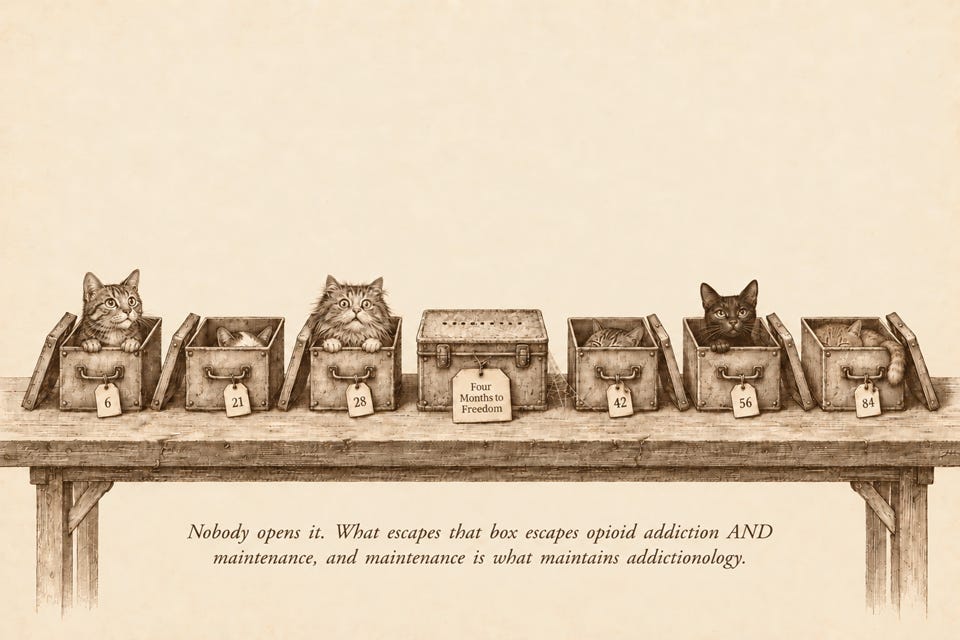
The same logic applies everywhere: too much sex; not enough sex–overworking versus underperforming. Each can be nested into a diagnosis and rewarded accordingly. What began with addiction hardened into a template. Behavior became disease. Responsibility softened. Maintenance replaced recovery.
“We have come to see ourselves as ‘diseased’ as a baseline condition.” That belief acts like a mind virus. It lowers expectations and turns fragility into identity.
Ablow underscored what has been lost. “The best things about psychiatry defy explanation. They’re rooted in empathy.” Yet insurers will not pay for empathy. They pay for speed. “If you try to get an insurance company to pay a psychiatrist to talk to you for fifty minutes, good luck. That’s not happening.”
The conversation ends where good medicine often begins. With restraint. With judgment. With the courage to say no.
As Ablow said near the close, “ ‘Dr. No’ is sometimes the best doctor.” This is not an argument against care, but against open spigot financing mandates that have come to confuse (medically self-serving) labeling with healing.
Join us at 5 pm ET weekdays on America Out Loud Talk Radio. Listen on iHeart Radio, our world-class media player, or our free apps on Apple, Android, or Alexa. Discover all the episodes on podcast networks, i.e., Apple Podcasts, Spotify, Pandora, TuneIn, Stitcher, and iHeart. You’ll find them the day after they air on talk radio, available on podcast. Extraordinary voices for extraordinary times.
Discover more from Randy Bock MD PC
Subscribe to get the latest posts sent to your email.