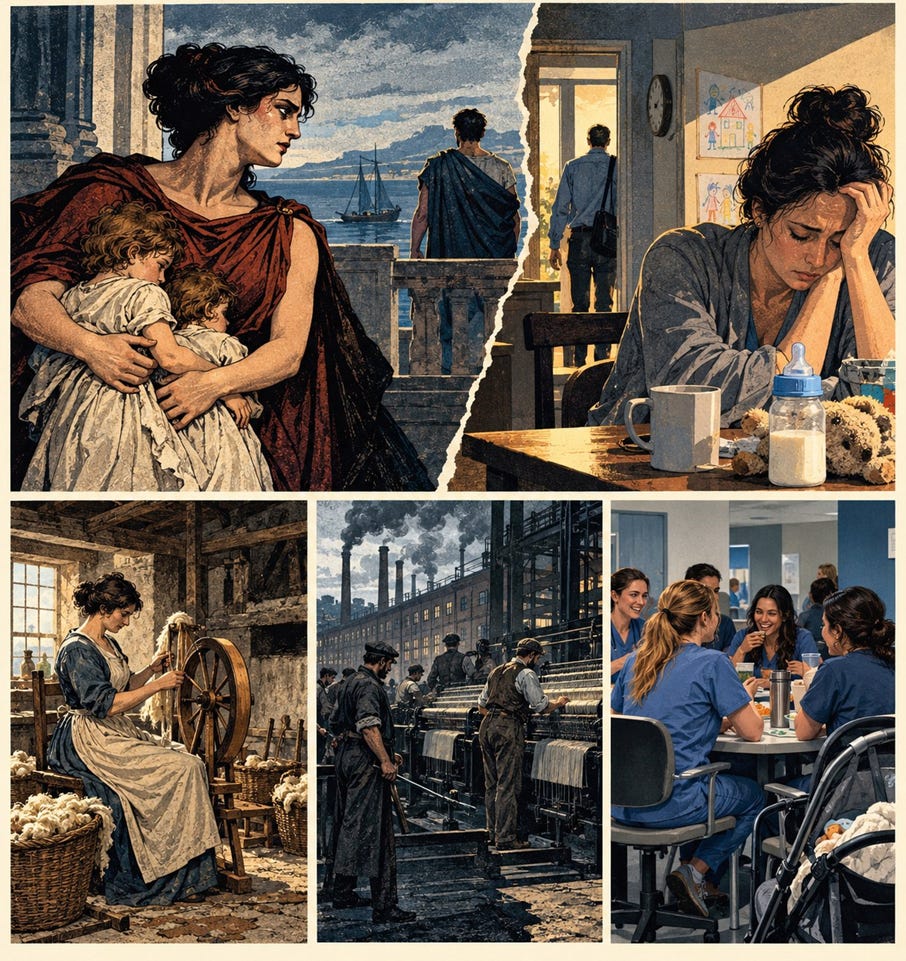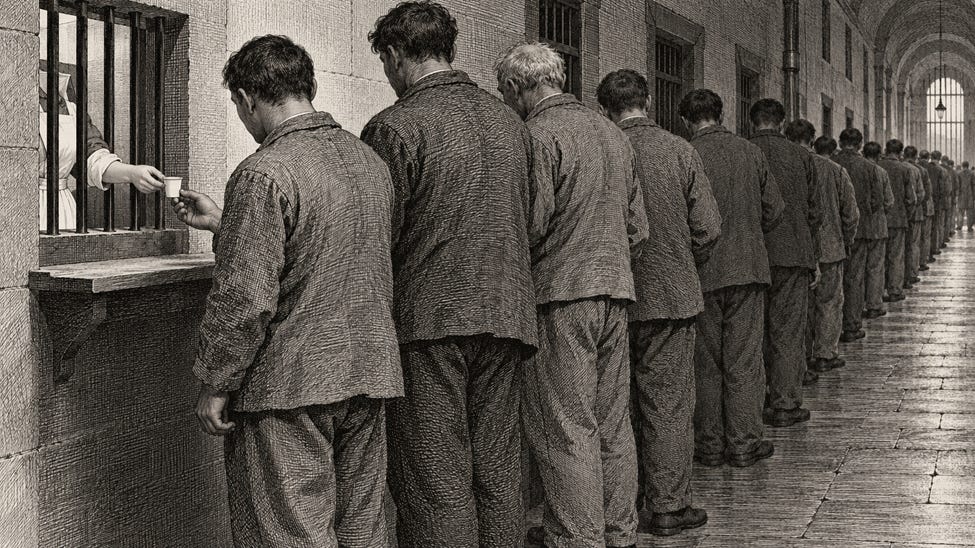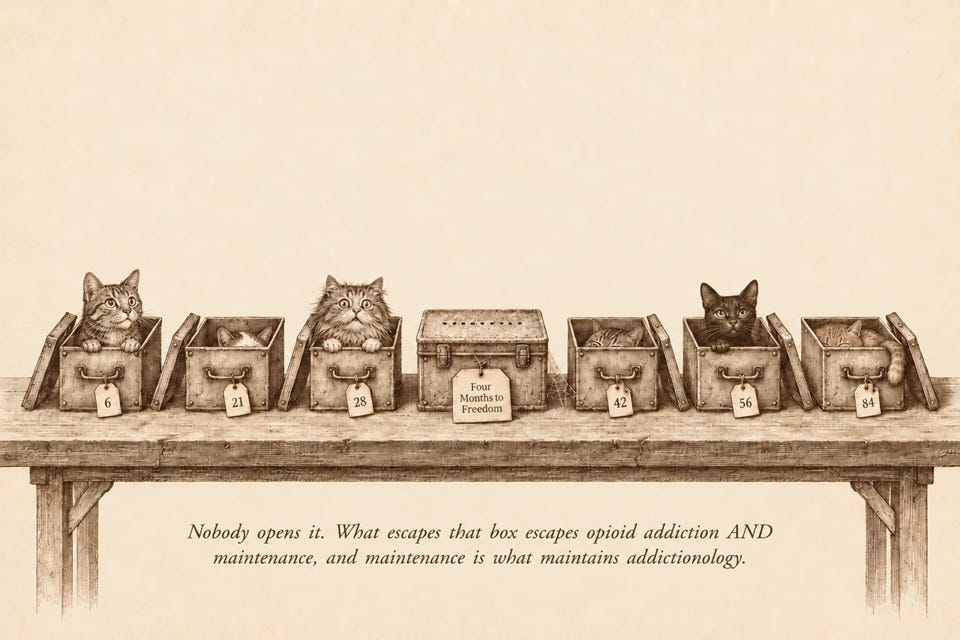


What happens when a system designed to relieve psychological suffering begins to shape how suffering itself is defined?
In his interview on the mental health industrial complex, clinical psychologist Eric Greene examines the assumptions, economic incentives, diagnostic categories, institutional pressures, and treatment models that shape modern mental health care.
Greene’s argument is not simply that psychiatry is bad or that medication never works. In fact, he explicitly says that medication can help some people. His deeper concern is that a dominant model of mental health can become so powerful that practitioners begin treating its assumptions as unquestionable—even when patients continue to suffer.
The interview moves from Greene’s experiences in community mental health to questions about race and class, psychiatric diagnosis, the DSM, pharmaceutical influence, medication, mental health insurance, cognitive behavioral therapy, psychoanalysis, Freud, Jung, Lacan, ego, language, and the social conditions that shape psychological suffering.
It is ultimately a conversation about a more fundamental question:
Are we treating people’s suffering—or simply fitting their suffering into the categories our institutions know how to treat?
Table of Contents
What Is the Mental Health Industrial Complex?
The phrase mental health industrial complex is used in the interview to describe a system in which mental health care, diagnostic categories, insurance structures, pharmaceutical interests, professional institutions, and prevailing theories of psychological illness can reinforce one another.
The concept is deliberately provocative.
The interviewer connects the phrase to President Dwight Eisenhower’s famous warning about the military-industrial complex and the possibility that institutions receiving large amounts of funding can develop incentives that perpetuate their own expansion.
Greene approaches the idea somewhat differently.
Rather than reducing the problem to pharmaceutical companies or financial incentives alone, he describes a historical process in which competing theories of psychological suffering gradually gave way to increasingly standardized models of diagnosis and treatment.
That distinction matters.
The mental health industrial complex, as discussed in this interview, is less a conspiracy theory than a question about systems:
- How are mental illnesses defined?
- Who decides what counts as a disorder?
- What happens when diagnosis becomes increasingly standardized?
- How do insurance systems influence treatment?
- What role does pharmaceutical medicine play?
- Are social conditions adequately considered?
- What happens when a treatment model fails to relieve suffering?
- And what alternatives remain available?
Eric Greene’s Experience in Community Mental Health
Greene’s critique began with firsthand experience.
While working as a pre-licensed clinician in a community mental health clinic in West Philadelphia, he encountered a mental health environment that he found deeply troubling. He describes working with patients in a low-income neighborhood while observing attitudes among some practitioners that he considered racist and classist.
His concern was not simply that inappropriate comments were being made.
He believed those attitudes reflected a deeper failure to understand how race, class, poverty, and social conditions can affect mental health and behavior.
That experience became the foundation for his academic work.
Greene explains that his paper grew partly out of his dissertation research into how social determinants affect mental health. He wanted to examine more specifically how money, race and class influenced mental health within the community clinic where he worked.
The resulting article took years to find a home.
Greene says that manuscripts were accepted and then rejected immediately before publication, and that presenting the work at seminars generated significant disagreement. Eventually, the Journal of Humanistic Psychology published it with relatively few changes.
For Greene, that experience demonstrated how difficult it can be to challenge dominant assumptions within a professional field.
When Practitioners Become Part of the Problem
One of the most striking observations in the interview concerns the pressure placed on mental health professionals themselves.
Greene argues that patients are not the only people affected by institutional stress.
Doctors and therapists can also become exhausted, underpaid, overworked and pressured by the systems in which they operate.
Under those conditions, he describes an “us versus them” mentality emerging between practitioners and patients.
The irony, he suggests, is profound.
A mental health system intended to help people deal with psychological suffering can itself become a source of psychological pressure for the people working inside it.
Greene argues that practitioners can become caught in the same pressures that affect their patients—overwork, economic insecurity, institutional expectations, psychiatric conventions and the limitations of the prevailing mental health model.
That raises an uncomfortable question:
What happens when the people providing mental health care are themselves working inside conditions that make genuine understanding more difficult?
The Problem With Explaining Suffering Too Quickly
Greene’s criticism goes deeper than institutional culture.
He questions the assumptions used to explain psychological suffering.
In the interview, he describes the dominant model as one that can explain suffering through concepts such as brain chemistry, personality problems or childhood trauma.
His objection is not that these factors can never matter.
Instead, he asks whether the model is sufficiently broad to account for the social circumstances in which people actually live.
A person does not experience anxiety, depression, anger or despair in a vacuum.
People live in families, communities, workplaces, economic systems and political environments.
Their relationships and social circumstances can influence how they understand themselves and their suffering.
Greene argues that these contextual factors can disappear when mental health becomes primarily an exercise in identifying an internal disorder.
Diagnosis and the Rise of the DSM
Another major theme is the growing standardization of psychiatric diagnosis.
Greene describes a historical transition from competing psychological theories toward increasingly operationalized diagnostic categories.
He identifies cognitive behavioral therapy as an important part of this transformation because of its ability to systematize psychological problems and establish specific criteria for diagnosis.
The advantage is obvious.
Standardized criteria make it easier for professionals to communicate about patients and for institutions to establish common diagnostic definitions.
But Greene asks what may be lost when psychological suffering is translated into standardized categories.
He points to the expansion of the Diagnostic and Statistical Manual of Mental Disorders, or DSM, and argues that the growing number of categories creates questions about how psychological distress is classified and understood.
The question is not whether diagnosis has any value.
The question is whether diagnosis can become a substitute for understanding.
Does a Diagnosis Explain the Person?
This distinction sits at the center of Greene’s criticism.
A diagnosis can describe a collection of symptoms.
But does it explain why a particular person is suffering?
And does identifying a diagnostic category necessarily tell us what that person’s life means?
Greene’s approach suggests that the answer may sometimes be no.
A person may experience anxiety because of relationships, work, financial pressure, isolation, trauma, identity conflicts or a combination of factors.
Reducing that experience to a diagnostic label may make the person easier for a system to classify without necessarily making the person easier to understand.
This is one reason Greene places such importance on social determinants.
The social world does not merely surround psychological experience.
It can help construct it.
The Pharmaceutical Question
The interview also examines the relationship between psychiatric diagnosis and medication.
Greene argues that increasingly operationalized diagnoses can fit comfortably within a medical model in which specific disorders can be matched with specific pharmaceutical interventions.
He is particularly critical of the assumption that psychiatric suffering can straightforwardly be explained by a chemical abnormality in the brain.
Greene notes that correlations between brain chemistry and psychiatric diagnoses do not automatically establish causation.
This is an important distinction:
Correlation is not necessarily causation.
At the same time, Greene does not argue that psychiatric medication should never be used.
He explicitly says that medication helps some people and rejects the idea that he is advocating the abolition of psychiatric medicine. His criticism is instead directed toward what he considers the excessive use and overprescription of medication.
That nuance is important.
The interview is not an argument that every psychiatric medication is ineffective.
It is an argument about whether medication should automatically become the central response to psychological suffering.
When Medication Doesn’t Resolve the Problem
Greene describes patients who continue seeking mental health treatment despite taking psychiatric medication that does not appear to resolve the problem they originally sought help for.
His concern is that continuing to increase or maintain medication can sometimes leave the underlying question untouched:
Why is this person suffering in the first place?
The question shifts the focus from symptom management toward meaning.
Instead of asking only:
What diagnosis does this person have?
Greene’s approach asks:
What is happening in this person’s life?
That distinction becomes especially important when psychological distress is closely connected to relationships, identity, social conditions and the person’s understanding of themselves.
Why Psychoanalysis Still Matters to Greene
After becoming increasingly disillusioned with mainstream mental health practice, Greene says he experienced several crises in which he considered leaving the field altogether.
Eventually, he returned to psychoanalysis.
He describes finding intellectual inspiration in Freud, Jung and later thinkers including James Hillman and Jacques Lacan.
For Greene, psychoanalysis offers a fundamentally different way of approaching suffering.
Rather than simply identifying dysfunctional thoughts or symptoms, psychoanalysis can explore the meanings embedded in a person’s language, self-narrative and relationships.
This brings the conversation back to one of the most interesting ideas in the interview:
Language matters.
How Language Shapes Mental Health
Greene emphasizes an aspect of Freud’s work that he believes remains important: the relationship between language and psychological suffering.
He describes the psychoanalytic task as partly separating the person from the story that person tells about themselves.
That means examining the difference between:
Who I am
and
The story I have learned to tell myself about who I am.
Greene’s interpretation of ego involves the image or idea a person has of themselves—the imagined self that overlays the physical person. Self-narrative, preferences, desires and statements about “I” become part of that psychological construction.
This offers a very different approach to mental health.
Instead of asking only whether a person’s thoughts are rational or irrational, psychoanalysis can ask:
Where did this story about myself come from?
What does it protect?
What does it conceal?
What does it make possible?
And perhaps most importantly:
Does the story actually describe me?
Ego Strength: A Different Way of Understanding the Self
The interview also explores the meaning of ego strength.
Greene explains that mainstream mental health approaches may assess functioning through areas such as employment and relationships.
But his own understanding of the ego is more imaginative.
He describes the ego as an image projected onto the body—a conception of ourselves that overlays whatever reality exists beneath it.
This perspective changes the question.
Instead of treating the self as a fixed object, psychoanalysis can investigate how the self is constructed through language, memory, desire and interpretation.
The goal is not necessarily to build a stronger ego in the conventional sense.
Greene describes his approach as being influenced by Freud, Lacan, Jung and Hillman and emphasizes the importance of questioning the ego rather than simply strengthening it.
What Happens When People Have Tried Everything Else?
Greene says that many of the people who eventually seek his particular form of psychoanalytic practice have already passed through the mainstream mental health system.
They have tried conventional approaches and concluded that those approaches did not adequately address their suffering.
They then begin looking for something different.
Greene describes psychoanalysis as a kind of alternative or “third” approach to working with suffering, positioned differently from mainstream mental health and psychiatry.
Whether one agrees with that characterization or not, it reveals something important about the mental health debate:
People do not all experience treatment in the same way.
A treatment model that helps one person may not help another.
A diagnostic label that clarifies one person’s experience may feel reductive to someone else.
A medication that benefits one patient may provide little relief to another.
The existence of multiple approaches is therefore not necessarily evidence of failure.
It can also be evidence that human psychological suffering is extraordinarily complicated.
The Social World Cannot Be Ignored
Perhaps the strongest theme running through the entire interview is the relationship between psychological suffering and social conditions.
Greene’s original research examined how money, race and class influence mental health.
Later in the conversation, he returns to the idea that psychology can become overly focused on the individual’s internal life while neglecting the social forces that help shape that internal life.
This is an important challenge to any mental health model.
Suppose a person is living with extreme financial insecurity.
Suppose another is trapped in a destructive relationship.
Suppose someone works in an environment characterized by humiliation, instability or chronic stress.
Suppose another person is socially isolated.
If these conditions contribute to psychological distress, simply diagnosing the resulting symptoms may not address the underlying problem.
A diagnosis may describe the experience.
It does not necessarily explain its origin.
The Mental Health Industrial Complex and Incentives
The phrase mental health industrial complex becomes most controversial when economics enter the discussion.
The interview raises the possibility that increased funding, insurance coverage, diagnostic expansion, pharmaceutical research and professional specialization can create a larger institutional ecosystem around mental health.
The host connects this idea to the broader concept of the industrial complex: once money and institutions become attached to a problem, the system can develop incentives to maintain and expand itself.
Greene’s response is more historically focused.
He describes the emergence of competing treatment methodologies during the twentieth century and the eventual dominance of increasingly standardized approaches.
This means the “industrial complex” cannot be reduced to one villain.
It can instead be understood as an interaction between:
- diagnostic systems
- medical institutions
- insurance
- professional training
- pharmaceutical research
- treatment models
- academic publishing
- economic incentives
- cultural assumptions about mental illness
The system may function this way without requiring every individual participant to consciously intend it.
The People Inside the System Are Not Necessarily the Problem
One of the most useful lessons from Greene’s experience is that institutional criticism should not automatically become personal condemnation.
He himself acknowledges the pressures faced by practitioners.
Doctors and therapists can become exhausted.
They can be underpaid.
They can experience institutional pressure.
They can become dependent on established models because those models are what they were trained to use.
They may genuinely believe that they are doing the right thing.
In that sense, the problem may be less about individual bad actors and more about the structure in which individuals operate.
That is why Greene’s early observation about an “us versus them” mentality is so significant.
When practitioners and patients become opposing camps, the therapeutic relationship has already suffered.
A Bigger Question: What Counts as Mental Health?
Ultimately, Eric Greene’s critique raises a philosophical question.
What exactly do we mean by mental health?
Is mental health simply the absence of symptoms?
Is it the ability to work and maintain relationships?
Is it emotional stability?
Is it conformity to social expectations?
Is it the ability to function within existing institutions?
Or does mental health involve something deeper—the ability to understand one’s desires, conflicts, relationships, history and place in the world?
Different answers produce different forms of treatment.
If mental health is primarily defined as functional behavior, then treatment may focus on restoring functioning.
If mental health is defined as symptom reduction, treatment may focus on eliminating symptoms.
If mental health is understood as a relationship with one’s own unconscious life, treatment may look very different.
Greene’s psychoanalytic perspective belongs largely to this third tradition.
Beyond the Mental Health Industrial Complex
The most valuable part of this interview is not necessarily whether readers agree with every criticism Greene makes.
It is the invitation to question assumptions.
Mental health treatment should be capable of asking difficult questions about itself.
Are diagnostic categories always helpful?
Can medication be overused?
Can social conditions be overlooked?
Can institutional incentives shape treatment?
Can professionals become disconnected from patients?
Can psychological suffering be reduced too quickly to biological explanations?
Can language and personal meaning be neglected?
And can alternative approaches such as psychoanalysis contribute something that standardized models cannot?
These questions do not require rejecting modern medicine.
They require intellectual humility.
Greene himself makes this distinction when discussing medication: he acknowledges that medicine can help some people while arguing that it can also be overused.
That position is considerably more nuanced than simply being “for” or “against” psychiatry.
The Patient Should Remain a Person
Perhaps the central lesson of the conversation can be reduced to one principle:
A patient is more than a diagnosis.
Behind every diagnosis is a person with a history.
Behind every symptom is a life.
Behind every behavior is a context.
And behind every description of the self is a story.
The challenge for mental health care is to determine whether its systems are helping practitioners understand those stories—or merely making them easier to classify.
That is the question at the heart of the mental health industrial complex.
And it is why Eric Greene’s critique deserves attention.
Conclusion: Rethinking Mental Health Treatment
Eric Greene’s interview offers a provocative examination of modern mental health care through the lenses of community psychology, social determinants, psychiatry, diagnosis, medication and psychoanalysis.
His central concern is that mental health systems can become so committed to particular models that the models themselves become invisible.
The diagnosis becomes reality.
The treatment becomes routine.
The patient becomes a case.
And the larger social world disappears.
Greene proposes a different possibility: that psychological suffering should be understood in context and that language, self-narrative, social conditions and unconscious life deserve a larger place in the therapeutic process.
Whether readers ultimately agree with his critique or not, the questions are worth asking.
What if treating mental illness requires more than treating symptoms?
What if understanding suffering requires understanding the person?
And what if the future of mental health depends not on choosing between medicine and psychology, but on becoming more willing to question the assumptions behind both?
Frequently Asked Questions
What is the mental health industrial complex?
The term refers to the interconnected institutions, professional systems, diagnostic models, economic incentives and treatment structures involved in modern mental health care. In the interview, it is used critically to question how these systems can influence the definition and treatment of psychological suffering.
Who is Eric Greene?
Eric Greene is a clinical psychologist whose work, as described in the interview, focuses on the intersection of psychology, social conditions and broader cultural and political questions. He currently practices psychoanalysis and discusses Freud, Jung, Lacan and Hillman as important influences on his thinking.
Does Eric Greene oppose psychiatric medication?
No. Greene explicitly states that medication can help some people. His criticism is that psychiatric medication can be overused or overprescribed and that medication may not address the underlying causes of suffering for every patient.
What does Greene criticize about mainstream mental health treatment?
His criticisms include the limitations of dominant diagnostic models, insufficient attention to social conditions, overreliance on medication, institutional pressures and the tendency to understand suffering primarily through standardized categories.
Why does Eric Greene emphasize psychoanalysis?
Greene believes psychoanalysis offers a different way of understanding suffering by examining language, self-narrative, unconscious processes, relationships and the meanings people attach to their experiences.
What role do race and class play in mental health?
Greene argues that race and class can influence mental health and behavior and that these social determinants should be taken seriously when trying to understand psychological suffering. His original work grew partly from observations in community mental health.
Is the mental health industrial complex a conspiracy?
The interview does not establish a single coordinated conspiracy. Rather, the phrase is used to question how institutions, funding, professional models, diagnosis, insurance and pharmaceutical interests can interact and potentially create incentives that shape mental health care.
Why is the DSM important to the discussion?
Greene discusses the DSM as an example of the increasing standardization and operationalization of psychiatric diagnosis. He questions whether increasingly detailed diagnostic categories necessarily produce a deeper understanding of human suffering.
What is ego strength?
The term has several meanings. In the interview, Greene discusses the ego as an image or conception of oneself that overlays one’s physical existence. Self-narrative, desires and the way people describe themselves therefore become important parts of his psychoanalytic approach.
What is the main message of the interview?
The central message is that mental health treatment should not lose sight of the person behind the diagnosis. Greene argues for greater attention to social context, language, personal meaning and alternative ways of understanding psychological suffering.
Recommended internal link
- Psychiatry and psychiatric diagnosis
- Medical freedom
- Public health
- Addiction and the medicalization of addiction
- Methadone and the opioid epidemic
- Evidence-based medicine
- The pharmaceutical industry
- Institutional incentives in medicine
Discover more from Randy Bock MD PC
Subscribe to get the latest posts sent to your email.