
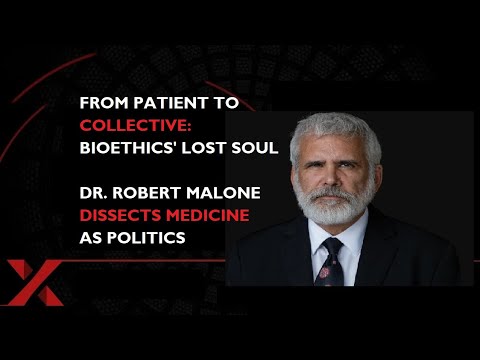
In a sweeping interview, Dr. Robert Malone provides a critical update on the seismic shifts occurring within the Trump administration’s approach to public health—shifts that represent nothing less than a philosophical war over the future of medicine itself. From RFK Jr.’s historic rejection of globalist health declarations to explosive revelations about vaccine policy and autism research, the battle lines are being drawn between individual liberty and collective control.
Follow Dr. Robert Malone
Table of contents
The UN Rejection: A Historic Stand for National Sovereignty
Secretary of Health and Human Services Robert F. Kennedy Jr. made headlines by delivering an unequivocal rejection of the United Nations’ new health declaration at the UN General Council—a document actively promoted by the World Health Organization (WHO). Dr. Malone characterizes this as “a blanket unequivocal rejection to globalism” the likes of which have rarely, if ever, been heard from a U.S. government representative.
The health declaration, according to critics, contained what Malone describes as “the usual subtext of Trojan horse that would compromise national sovereignty” by allowing increased surveillance and international oversight of domestic health policies. Kennedy’s five-minute speech, which corporate media largely ignored, represents a fundamental shift in how the United States engages with international health organizations.
When have you heard that from a representative of the US government?” Malone asks, noting the historic nature of Kennedy’s direct challenge to the UN and WHO’s authority.
The Autism Press Conference: Twenty Years in the Making
Perhaps even more explosive was President Trump’s recent press conference addressing autism, vaccine schedules, and the contentious Tylenol-autism connection. According to Dr. Malone, this wasn’t a spontaneous event—Trump opened the conference by stating he had been “waiting for this for 20 years.
The timeline is significant: approximately twenty years ago, Trump and RFK Jr. had discussions about these very issues, coinciding with Baron Trump’s birth. Dr. Malone suggests that Trump’s personal experience with Baron—who reportedly exhibits some social characteristics associated with autism spectrum disorder (ASD)—has fueled the president’s long-standing commitment to understanding the autism epidemic.
The Tylenol-Autism Connection: Science or Politics?
One of the most controversial elements of the press conference was the president’s endorsement of data linking prenatal Tylenol (acetaminophen) use to autism and ADHD. Dr. Malone, having reviewed the scientific literature, confirms there is indeed “significant data supporting the association.”
The mechanism of action involves glutathione depletion—the same biochemical pathway affected by folate metabolism, which explains why leucovorin (a folate-like molecule) has shown remarkable clinical improvement in some ASD patients. Malone explains: “The folate receptor in some of these cases with ASD is either compromised through an autoimmune process or some other process, and you can bypass that receptor.”
However, critics point to contradictory studies, particularly a notorious Dutch study that Malone systematically dismantles. The Dutch researchers, he notes, focused only on prescription acetaminophen use while failing to account for over-the-counter usage—meaning both control and treatment groups were actually taking Tylenol, rendering the comparison meaningless.
The Backlash: “Committing Violence Against the Truth”
The response to Trump’s autism statements was swift and revealing. Former President Barack Obama released a video claiming that Trump’s press conference represented “committing violence against the truth”—a statement Malone calls “a propaganda statement that is profoundly twisted.”
Even more disturbing was the social media phenomenon of pregnant women posting videos of themselves consuming excessive amounts of Tylenol in protest, with at least one woman reportedly hospitalized with fulminant liver failure. Malone notes darkly that “apparently nobody gave them the memo that Tylenol can actually kill you through fulminant liver failure and it’s a nasty way to die.”
The Philosophical Battle: Utilitarian Bioethics vs. Patient-Centered Medicine
At the heart of these controversies lies a fundamental philosophical divide that Dr. Malone identifies as the true battleground of modern medicine. He explains that the academic world of bioethics has undergone a revolution since he took his bioethics training, with the emergence of what’s called “utilitarian bioethics.”
The Greatest Happiness Principle—And Its Dangers
Utilitarian bioethics operates on the principle of promoting “the greatest happiness for the greatest number.” While this sounds benign, Malone warns of its inherent dangers: “The power all flows to whoever defines happiness.”
This represents a fundamental departure from traditional medical ethics, which historically focused on the individual patient. As Malone frames it: “Public health is fundamentally based on utilitarian logic and focused on advancing the interests of the collective. Medical practice historically is focused on the patient as an individual, not a patient as a member of a broader collective society.”
The implications are profound. Under utilitarian bioethics, individual patient rights can be subordinated to collective interests—as we saw during COVID-19 lockdowns and vaccine mandates, where specific parameters were optimized while “other impacts were disregarded in the overall analysis.
Malone points to an alarming example from an American medical school bioethics group that seriously proposed engineering all humans to be allergic to meat (via the alpha-gal pathway from tick bites) because “eating meat is bad for the environment.” He initially thought it was satire—it wasn’t.
The CDC Crisis: Leadership Vacuum and Scientific Decay
Dr. Malone reveals a stunning fact that few Americans know: the CDC has not had an onsite director for decades. Former Director Michelle Walensky, for instance, stayed at her home in New England throughout her tenure.
“The place has been allowed to run itself,” Malone explains, with the consequence being that “we have decades of slide in terms of scientific rigor and quality.”
He identifies three key bureaucrats who recently resigned from the CDC—individuals who were functionally running the agency. The result has been an institution captured by what Malone describes as “B and C level minds” hired under the government’s “lowest cost technically acceptable” contracting philosophy.
The MMWR Problem
The CDC’s Morbidity and Mortality Weekly Report (MMWR), historically held in high regard, is actually non-peer-reviewed. “If you’re a CDC employee and you come up with some report about whatever it is you’ve been doing, you can slip it into the MMWR. It gets no peer review,” Malone reveals.
This lack of rigorous oversight extends to diagnostic testing. When Malone challenged CDC officials about the sensitivity, specificity, and positive predictive value of COVID-19 PCR tests—fundamental epidemiological metrics—the response was dismissive: “those are academic questions.
Pediatricians Firing Patients: An Ethical Crisis
One particularly troubling practice Dr. Malone highlights is the growing trend of pediatricians firing families who refuse certain medical interventions. According to a 2020 survey, 34% of pediatricians indicated they would terminate the doctor-patient relationship if parents refused not just vaccines, but even vitamin K shots for newborns.
“That is not ethically acceptable,” Malone states firmly. “We’re in theory as a profession bound to treat our patients to the best of our ability. This business of ‘well, if you won’t accept my paternalistic mandate, then you’re out’—that’s just bizarre behavior.”
This practice exemplifies the shift from patient-centered care to a collective-focused, mandate-driven model that prioritizes compliance over the physician’s duty to serve individual patients.
Operation Warp Speed: Achievement vs. Product Safety
Dr. Malone offers a nuanced perspective on Operation Warp Speed that’s often missing from both sides of the debate. He credits it as “a remarkable achievement in cutting across silos and enabling a whole of government response,” particularly in getting the Department of Defense and HHS to cooperate—historically difficult due to turf battles over biodefense authority.
However, he clearly separates process from product: “That’s separate from the issue of whether the work product was safe and effective as advertised.”
Regarding Pfizer CEO Albert Bourla’s suggestion that Trump deserves a Nobel Prize for Operation Warp Speed, Malone notes the cynical nature of the statement, pointing out that the Nobel Prize in Medicine was already awarded to Karikó and Weissman for mRNA technology and “doesn’t give isn’t given for the same topic twice.
The Malone “Hostage Video”: Vindication Through Data
Dr. Malone addresses attacks on his 2021 video warning parents about COVID vaccine risks for children—attacks that resurfaced during Kennedy’s confirmation hearings. In that three-minute segment, which went globally viral and prompted official responses from the Israeli and Spanish governments, Malone warned that:
- The vaccines could harm children’s hearts, reproductive systems, and brains
- Parents would be left alone to deal with any harms
- The products could cause a form of acquired immunodeficiency
At the time, he was vilified for these statements. But recent ACIP presentations have documented IgG4 class switching and “a variety of other immunologic suppression pathways” that validate his warnings.
“The things that went down at ACIP recently were pretty big time,” Malone notes, referring to unprecedented dissent among committee members—”exactly what you would expect if you had a group of scientists actually trying to make decisions about data.”
The Measles Case Study: When Bias Blinds Medicine
Malone recounts a tragic case from West Texas that illustrates how media narratives can compromise medical judgment. Two young girls from an unvaccinated Mennonite community died after being treated for presumed measles pneumonia. However, they actually had secondary bacterial or mycoplasma infections—completely treatable conditions.
“There were clinical signs and symptoms as well as laboratory diagnostic signs that clearly demonstrated that those patients did not have measles pneumonia,” Malone explains. Both cases are now being pursued as medical malpractice because physicians, pre-wired by media coverage to assume measles, failed to properly diagnose and treat bacterial pneumonia.
This mirrors what happened with COVID-19: “If you presented with upper respiratory symptoms during COVID, you were by default considered to have COVID,” regardless of whether it might be influenza, RSV, or other respiratory viruses.
The Bigger Battle: Liberty vs. Collectivism
Dr. Malone frames the entire medical freedom debate within a larger philosophical and political context—what he calls “the historic battle” between two competing visions of society.
On one side: the liberty-focused framework embodied in the U.S. Constitution and Bill of Rights, emphasizing individual rights and personal sovereignty. Liberty, Malone notes, is distinct from mere freedom—it’s “the intersection of freedom and responsibility.”
On the other: the collectivist model associated with Marxist thought and social justice movements, prioritizing group outcomes over individual autonomy.
“This fundamental dialectic exists within society of whether we want to be prioritizing the rights of the collective over the rights of the individual,” Malone states. “I’m ready to have that fight.”
He connects this to the broader cultural moment, noting that Secretary Kennedy’s UN speech and the Trump administration’s rapid policy changes represent an unprecedented pushback against globalism and collectivist health policies.
The Pace of Change: “Wicked Fast”
Perhaps most remarkable is the sheer velocity of transformation occurring within HHS. Malone describes the news cycle as “wicked” (using the Boston regional intensifier), meaning events are unfolding so rapidly that “it is very difficult to keep up.”
From Kennedy’s UN speech to Trump’s autism press conference to ACIP meeting upheavals to CDC director changes—the administration is creating what one of Malone’s colleagues describes as a “rope-a-dope” strategy. Like Muhammad Ali’s famous boxing technique, the Trump administration positions issues in ways that cause corporate media and medical establishment to reflexively defend untenable positions, further delegitimizing themselves.
“He can take whatever position he wants,” Malone observes. “They say ‘not A’ reflexively, like oppositional defiant disorder.”
Looking Forward: Three More Years and Beyond
With three and a half years remaining in Trump’s term (and the possibility of JD Vance continuing these policies), Dr. Malone is optimistic about lasting change. He notes that by the time a potential Vance administration ends, key globalist figures like Bill Gates and George Soros will likely be gone, creating space for a fundamentally different public health paradigm.
However, he also warns of emerging threats like Palantir, central bank digital currencies, and other technological tools that could infringe on personal liberty in new ways.
The comparison to historical revolutions is apt: as Malone notes, both sides are living out 18th-century conflicts—the American Revolution’s emphasis on individual liberty versus the French Revolution’s collective focus. Trump, in this framework, serves as a restorative figure challenging decades of leftist institutional capture.
Conclusion: The Soul of Medicine at Stake
Dr. Robert Malone’s wide-ranging analysis reveals that current health policy battles are not merely about specific drugs or disease management strategies. At stake is the fundamental philosophical orientation of medicine itself: Will we return to a patient-centered model that honors individual autonomy and informed consent? Or will we continue down the path of utilitarian bioethics that subordinates individual welfare to collective metrics?
The Trump administration’s approach—from Kennedy’s rejection of WHO declarations to challenges of vaccine schedules to investigations of autism causes—represents a comprehensive repudiation of the utilitarian model that has dominated public health for decades.
As Malone concludes, this is nothing less than “a political, scientific, and philosophical war being waged for the future of public health.” The outcome will determine whether medicine returns to its traditional ethical foundations or continues its drift toward collectivist control.
For those paying attention, these are indeed extraordinary times.
Find Dr. Randall Bock’s articles at Brownstone:

Follow Dr. Randall Bock on Substack:

Get Dr. Randall Bock’s Book “Overturning Zika: The Pandemic That Never Was:

Discover more from Randy Bock MD PC
Subscribe to get the latest posts sent to your email.