
Iran today contains two countries occupying the same geography. One Iran is governed by clerical power that claims divine authority and enforces ideological obedience through law, surveillance, and intimidation. The other Iran is composed of engineers, shopkeepers, physicians, students, entrepreneurs, and artists who simply want to build lives in a modern country. The first ruler of Iran ruled the state. The second Iran carries the country on its back.
The regime calls itself the Islamic Republic, yet the daily experience of most Iranians looks less like theology and more like coercion. Political rule in Iran rests on a fusion of religion and state power that treats dissent as apostasy and disagreement as sedition. That arrangement places the ideological guardians of the revolution in permanent tension with the country’s educated and productive classes.
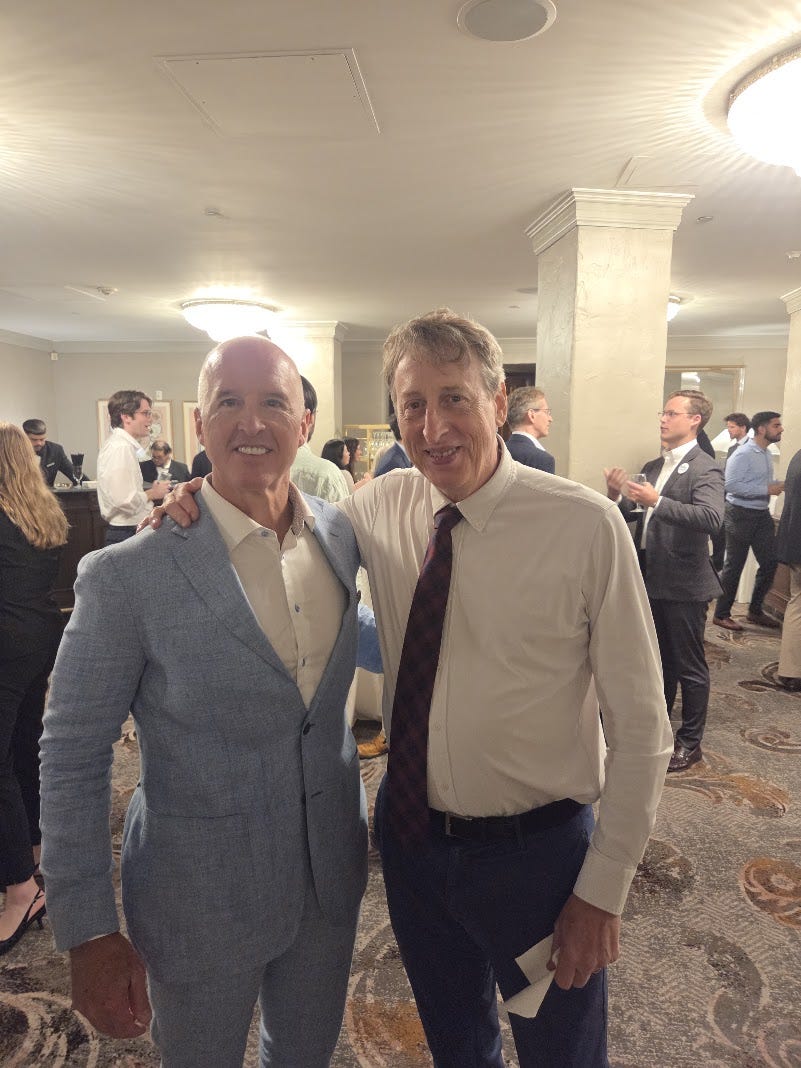
Mark Changizi approaches this tension with a blunt thesis. He argues that Islam itself, not merely Islamism, poses a structural obstacle to modern political life. He insists that the West has avoided the harder conclusion for reasons of politeness and fear. “Islamism is not equal to Islam.” Yet in his telling, the distance between the two remains far narrower than many Western observers prefer to admit.
I pushed him on that premise because the historical record raises a difficult question. If Christianity once fused religious authority and political power just as tightly, then perhaps the Muslim world simply runs on a longer historical clock. Europe took centuries to separate church from state. The Reformation fractured authority. Enlightenment political theory weakened clerical rule. Even then, the twentieth century produced fascism and communism inside societies that had long called themselves Christian.
Changizi accepts that historical lag exists but doubts that it explains the whole problem. “There’s no doubt the Muslim world is behind the West in moving toward democracy.” Yet he questions whether the religious framework itself resists the institutional changes that produced modern liberal states in the West. Islamism today is widely described as a political ideology that seeks to reorder society according to Islamic law and religious authority rather than secular governance.
The dispute, therefore, turns on whether Islamism is a distortion of Islam or one of its natural political expressions. Changizi leans toward the latter conclusion. I argued that the evidence is less decisive.
The deeper historical transformation in Europe involved more than theology. Medieval church law gradually outlawed cousin marriage and other tight kin alliances. Those rules forced families to marry outside the clan and slowly weakened tribal structures that once dominated social organization. Over centuries, the change diluted kin loyalty and strengthened broader civic institutions. Tribal societies became societies of individuals capable of forming impersonal political systems.
Many Muslim countries still retain strong kinship structures that resemble Europe’s earlier tribal order. Pakistan, for example, continues to exhibit extremely high rates of cousin marriage. Those patterns reinforce family networks that compete with national institutions. The question, therefore, becomes whether religion is the cause or whether religion merely sits inside older social structures that evolve slowly.
Changizi remains skeptical that time alone will produce the same outcome. He believes Islamism functions as a modern ideological project that seeks to preserve religious authority over political life. “Islamism is just another collectivism.” In that sense, he sees it less as a medieval remnant than as a contemporary political movement using sacred language to maintain power.
Iran illustrates the argument with unusual clarity. Before 1979, the country was culturally Muslim but politically secular. Photographs from Tehran in the 1960s resemble southern Europe more than revolutionary theocracy. The Islamic Republic, therefore, represents not the ancient default of Iranian civilization but a political rupture imposed through revolution.

The result is the divided country visible today. On one side stand the clerical guardians of ideological purity. On the other side stands a population that largely wants normal life, economic opportunity, and freedom from religious policing.
Iran has grown steadily stronger. The country produces scientists, engineers, doctors, filmmakers, and entrepreneurs at a rate that surprises outsiders who only see the regime. These people form the industrious intelligentsia of modern Iran.
The regime still holds the guns, but it no longer commands the country’s imagination. The central question is whether the ideological rulers can indefinitely suppress the society beneath them or whether the two Irans will eventually collide. History suggests that when those collisions occur, they often arrive suddenly.
Join us at 5 pm ET weekdays on America Out Loud Talk Radio. Listen on iHeart Radio, our world-class media player, or our free apps on Apple, Android, or Alexa. Discover all the episodes on podcast networks, i.e., Apple Podcasts, Spotify, Pandora, TuneIn, Stitcher, and iHeart. You’ll find them the day after they air on talk radio, available on podcast. Extraordinary voices for extraordinary times.
Discover more from Randy Bock MD PC
Subscribe to get the latest posts sent to your email.