
Percy Menzies describes his entry into addiction medicine not as a calculated move but as a circumstance shaped by training and exposure. He came from India into the pharmaceutical world, where the opium poppy stood not as a symbol of vice but as a source of powerful and sometimes contradictory tools. “I believe it was fate that brought me into this field.”
Morphine and codeine emerge from the plant, but for Percy Menzies, the more interesting compound is thebaine. From it came both the drugs that fed addiction and the drugs that could block it. Naloxone and naltrexone, he argues, were misunderstood from the start, misclassified as opioids when in fact they functioned in opposition. “It’s called like an opioid… but the pharmacology is exactly the opposite.”
The history matters because the reaction to these drugs set the tone for everything that followed. Naloxone, approved in 1973, arrived in a climate of skepticism shaped by repeated failures of so-called ‘non-addictive opioids’. The medical community hesitated. Meanwhile, the epidemiology shifted. Heroin use had contracted after the Vietnam era, and interdiction efforts had reduced supply. There was, for a brief moment, a narrow window in which addiction might have been reframed and treated differently.
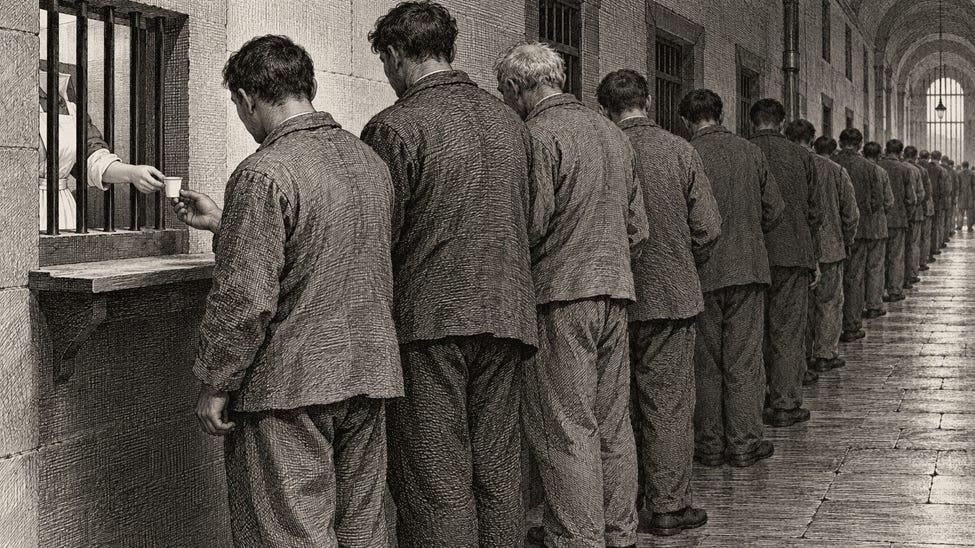
Menzies describes that window as missed, not by accident but by institutional force majeure: methadone clinics had already taken hold, requiring ‘maintenance’ rather than tapering and resolution. “Never in the history of medicine have we had two drugs at the opposite ends, methadone and naltrexone.” The clash was not (only) pharmacologic but economic and bureaucratic. One model required daily attendance, compliance, and long-term dependency. The other offered blockade, autonomy, and eventual disengagement from the system itself. The result was predictable: “(methadone clinics) saw this as an existential threat… and they killed naltrexone.”
Naloxone reverses an overdose. Naltrexone prevents receptor activation. Neither produces euphoria. Neither sustains dependence. The body, when blocked, adapts. “The body will develop new opioid receptors… to get the pleasure back.” This is not deprivation but recalibration, a return toward baseline responsiveness rather than artificial stimulation.
The contrast with agonist therapy is stark. Methadone and similar drugs suppress endogenous systems, requiring continued dosing to maintain normalcy. Menzies points to downstream effects that extend beyond addiction itself. “(Long-term) opioids are notorious for suppressing gonadotropins… many (recipients become) asexual.”
Yet, clinics rely on a single modality while presenting it as comprehensive care. “Why is it that the methadone clinics only use one medication?” The question is less rhetorical than structural. Pricing models, regulatory constraints, and habit reinforce each other. The patient becomes part of a pipeline rather than the subject of a tailored intervention.
Against that backdrop, Menzies describes his own clinic as a deliberate inversion. Immediate access replaces waiting lists. Comfort medications address withdrawal before ideology enters the room. Multiple pharmacologic pathways remain open. “We will treat you on an immediate basis… no more time, just come.” He emphasizes outpatient care not as a convenience but as a reality. Recovery, in his view, must occur within the patient’s actual environment rather than in isolation from it.
Stabilize the patient, reduce anxiety, restore function, then introduce blockade where appropriate. Education plays a central role, not as an abstraction but as a correction of entrenched misconceptions. “Most of them come up with such preconceived notions… they think that naltrexone is some kind of poison.” The work involves undoing narratives as much as prescribing medication.
Dr. Bock notes that medicalizing narcotic addiction removes personal responsibility and agency, inviting exploitation. Menzies notes, “Disease implies helplessness and no cure.” The alternative is not denial of suffering but a shift toward capacity and adaptation. The body can recover. The Methadone Industrial Complex often resists that recovery.
Overdose deaths have risen despite the expansion of treatment infrastructure. New synthetic opioids continue to enter the market. Patients cycle through programs without achieving resolution. Pharmacology has advanced, but its application remains constrained.
Menzies returns to first principles. Addiction engages a biological system designed for reward and reinforcement. Interventions can either hijack that system or help restore its balance.
Join us at 5 pm ET weekdays on America Out Loud Talk Radio. Listen on iHeart Radio, our world-class media player, or our free apps on Apple, Android, or Alexa. Discover all the episodes on podcast networks, i.e., Apple Podcasts, Spotify, Pandora, TuneIn, Stitcher, and iHeart. You’ll find them the day after they air on talk radio, available on podcast. Extraordinary voices for extraordinary times.
Discover more from Randy Bock MD PC
Subscribe to get the latest posts sent to your email.