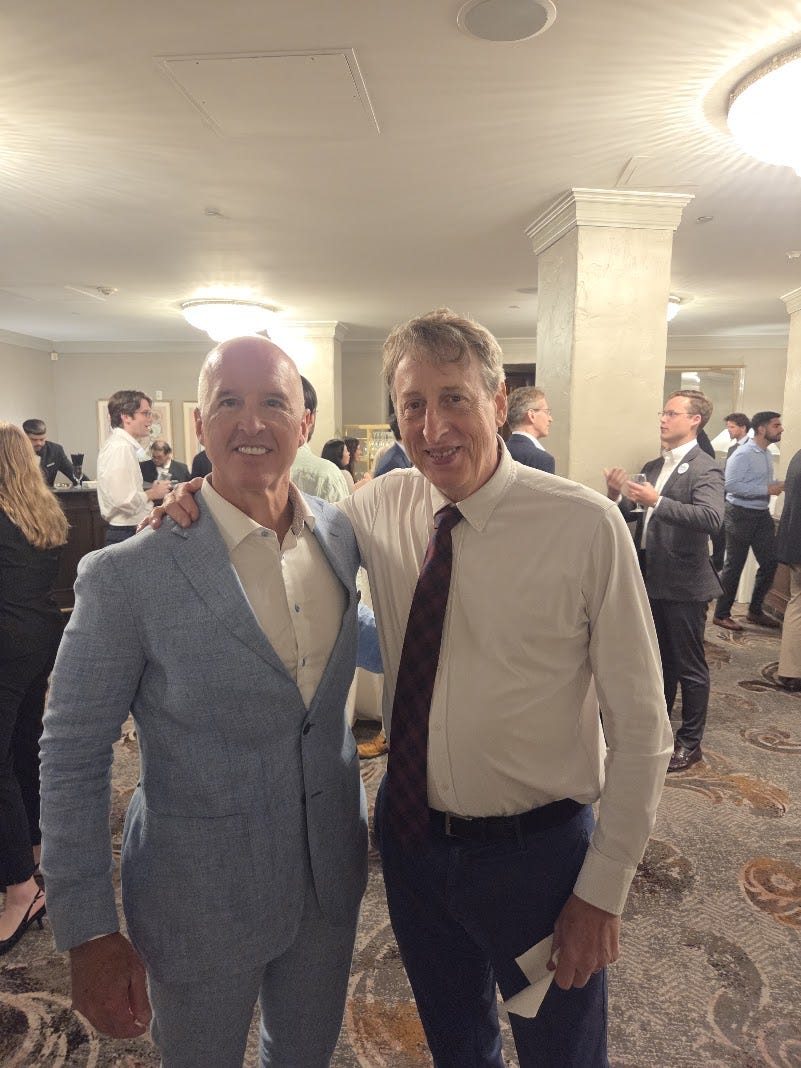


Norman Fenton built a career on mathematics. He mastered Bayesian methods of risk assessment. He trained students, published widely, advised government and industry. Universities honored him with fellowships. Colleagues praised his rigor. Then he spoke against COVID statistics.
I was regarded as a leading expert,” he said in a recent interview. That all changed when I started to talk about how the entire COVID narrative was being driven by flawed and easily manipulated statistics.
His universities recoiled. They distanced themselves from him, denied his renewals, and erased his presence. “I was censored, canceled, treated like an academic pariah.”
Table of contents
The Price of Questioning Authority
The story of Professor Norman Fenton is not simply about one academic’s fall from grace. It represents a seismic shift in how Western universities police thought, punish dissent, and prioritize ideology over intellectual honesty.
Fenton’s sin was simple: he applied his expertise in Bayesian statistics to analyze COVID-19 data and found the narrative wanting. The response was swift and brutal. Institutions that once paraded his name now turned their backs. Senior administrators disavowed him. Departments whispered and cut him off from projects. Colleagues avoided him in corridors, hoping silence might protect their grants.
From Turing Fellow to Academic Pariah
Perhaps most revealing was Fenton’s experience at the prestigious Alan Turing Institute, the UK government-funded center for artificial intelligence research. As a Turing Fellow, Fenton had insider access to what he describes as a disturbing reality: “Virtually all of the funding was essentially dedicated to finding clever algorithms to censor or ridicule people like us based on what far-lefts define as misinformation.”
The institute, meant to advance AI for the public good, had been transformed into what Fenton calls a “censorship apparatus.” Social scientists defined “misinformation,” and computer scientists coded algorithms to suppress it. When Fenton challenged COVID narratives in 2020-2021, he and his entire research group—five of six fellows—were not renewed. The sixth colleague refused to reapply, unwilling to suffer what he saw as inevitable rejection.
“This is what this is—this is British academia for you,” Fenton concluded.
The Long March Through the Institutions
Fenton refused to retreat. “All of the key institutions of state—legal, political, education, media—have been captured by far-left activists indoctrinated in universities,” he said. He named the corruption, even as others cowered. It is “the cultural Marxist long march through the institutions.”
This capture didn’t happen overnight. Tony Blair’s Labour government in the early 2000s installed unelected officials throughout Britain’s civil service, judiciary, and regulatory bodies—positions filled with ideological allies who remain entrenched today. As former Prime Minister Liz Truss recently revealed, even when conservatives won elections, these unelected bureaucrats blocked policy changes they opposed.
The result? A two-tier system where:
- 12,000+ arrests occurred in 2024 for “spicy memes” on social media
- Criticism of Hamas can result in midnight arrests
- Pro-Palestine activists receive protection while British patriots face surveillance
- Universities receive massive funding from China and Qatar while silencing domestic critics
- DEI infrastructure consumes resources meant for education and research
The University Corruption Crisis
Fenton’s analysis of academic corruption is devastating. With over 45 years of experience in the system, he identifies several critical problems:
Financial Capture
Universities have become addicted to three revenue streams that corrupt their mission:
- Government funding that demands ideological compliance
- Foreign funding from China and Qatar that shapes curricula
- Bloated administration that prioritizes HR and DEI over education
“If you take away government and foreign funding, you solve the problem,” Fenton argues. Universities would have to deliver education, not cultural Marxism.” Student fees alone could fund quality education if institutions eliminated wasteful bureaucracy and ideological programs.
Foreign Influence Operations
China and Qatar don’t just donate to UK universities—they control them. Chinese funding has captured entire AI departments, shaping what research gets done and what conclusions are acceptable. Qatari money floods Middle Eastern Studies programs, creating what Fenton calls “anti-Israel propaganda factories.”
“People have got no idea here the extent to which there’s this massive foreign government interference,” he warns.
The Indoctrination Pipeline
The corruption perpetuates itself through a vicious cycle:
- Universities indoctrinate students with far-left ideology
- Graduates enter law, media, education, and government
- They hire and promote people who share their worldview
- The next generation receives even more extreme indoctrination
- Traditional values, competence, and merit are systematically dismantled
This explains the seemingly inexplicable: How societies that defeated communism in the Cold War now embrace its intellectual offspring. How institutions that once championed free speech now zealously suppress it. How the educated classes became the most effective enforcers of ideological conformity.
The COVID Turning Point
The pandemic revealed the extent of institutional capture. Scientists who questioned lockdowns, mask mandates, or vaccine efficacy faced coordinated attacks. The Alan Turing Institute’s AI research focused on censoring dissent. Social media platforms deployed algorithms designed not to combat actual misinformation but to suppress any challenge to official narratives.
Fenton watched colleagues who had questioned climate change policies and government overreach suddenly accept every claim about Gaza and Israel from the same sources they knew to be unreliable. “Those very people who saw through that were incredibly—90% of them were the ones who decided to believe everything that exactly those same sources said about Gaza,” he observed with bewilderment.
The pattern exposed a deeper truth: Many “critical thinkers” were simply contrarians, not principled defenders of truth. They questioned narratives when fashionable but fell silent—or actively joined the mob—when dissent became truly costly.
A Path Forward: Reform or Collapse?
Despite the bleak landscape, Fenton believes reform is possible. His involvement with Ben Habib’s Advance UK party represents an effort to address institutional capture at its root.
Proposed Solutions
1. Financial Independence Cut all government and foreign funding to universities. Force them to survive on student fees, which would eliminate wasteful programs and ideological departments.
2. Transparency and Accountability Expose the extent of foreign influence, particularly from China and Qatar. Make all funding sources public and subject to scrutiny.
3. Merit-Based Systems Dismantle DEI bureaucracies that prioritize identity over competence. Return to objective standards in hiring, admissions, and research.
4. Protection for Dissenters Establish legal protections for academics who challenge orthodox views. End the practice of “cancellation” for intellectual disagreement.
5. Alternative Institutions Build parallel structures that value truth over ideology, merit over diversity metrics, and intellectual rigor over political conformity.
The Galileo Parallel
Like Galileo before the Inquisition, Norman Fenton faced a choice: recant or face ruin. Unlike many of his colleagues, he refused to bend. “I’ve got forty-five years of experience in the academic system,” he said. “I know the depth of corruption. And I feel it can be reformed.”
The comparison to Galileo is apt. The Italian astronomer challenged the scientific establishment of his day not with political ideology but with mathematical evidence. The Church demanded he renounce what his observations proved. He refused, reportedly muttering “And yet it moves” after his forced recantation.
Fenton’s contemporary heresy is similar: he used statistical analysis to question official COVID narratives. The establishment demanded silence. When he refused, they destroyed his career. But the numbers, like Galileo’s planets, don’t lie. And yet the data moves.
What This Means for All of Us
Fenton’s story matters because universities are not isolated institutions. They train doctors, lawyers, teachers, engineers, and policymakers. If universities prioritize ideology over truth, the corruption spreads throughout society.
We see this in:
- Medical boards punishing doctors who questioned COVID protocols
- Bar associations targeting lawyers who challenge progressive orthodoxy
- School systems indoctrinating children with gender ideology
- Corporate HR departments enforcing thought control through DEI
- Government agencies censoring citizens under the guise of “combating misinformation”
The corruption Fenton describes in academia is the source code for societal dysfunction. Until we address the universities, we cannot fix the downstream problems.
The Stakes: Truth or Tribalism
At its core, Fenton’s stand represents a fundamental choice: Will we organize society around truth-seeking or tribal loyalty? Can institutions that abandon objective reality in favor of ideological conformity serve any legitimate purpose?
The answer determines whether Western civilization can self-correct or whether it will continue its spiral into dysfunction, division, and decline.
Conclusion: Reclaiming Academic Integrity
Norman Fenton’s ordeal illuminates the crisis facing higher education and, by extension, free societies. When universities abandon their commitment to truth, when they punish scholars for following evidence to uncomfortable conclusions, when they become indoctrination centers rather than institutions of learning—they betray their foundational purpose.
But Fenton’s story also offers hope. He demonstrates that individuals can resist, that truth-tellers need not recant, that courage in the face of institutional pressure is both possible and necessary.
“Unless you get to the root, nothing’s going to happen,” Fenton insists. The root is the university system. The solution requires nothing less than wholesale reform: ending financial dependence on corrupting influences, dismantling ideological bureaucracies, and returning to merit, evidence, and truth.
Like Galileo, Fenton faces powerful institutions determined to silence him. Like Galileo, he refuses to recant. And like Galileo, history may vindicate him when the current madness passes and societies once again value truth over conformity.
The question is not whether Fenton is right—the evidence speaks for itself. The question is whether enough people will find the courage to stand with him before the institutions complete their long march to totalitarian control.
As Fenton reminds us: corruption in universities produces corruption in society. Until we address the source, the symptoms will only worsen. The choice is ours: reform the universities, or watch them reform us.
Key Takeaways
- Academic censorship has reached crisis levels, with dissenting professors facing career destruction
- UK universities are captured by foreign funding from China and Qatar
- The COVID pandemic exposed the extent of institutional corruption in academia
- AI research is being weaponized to censor rather than inform
- Reform requires cutting government/foreign funding and restoring merit-based standards
- The “long march through the institutions” by cultural Marxism has succeeded
- Individual courage and parallel institutions offer the only path forward
Discover more from Randy Bock MD PC
Subscribe to get the latest posts sent to your email.