

Public trust in science has fallen off a cliff over the past decade — and according to geologist and former Congressional science staffer Andrew Follett, it’s because science itself has become less trustworthy. In a candid conversation with Dr. Randy Bock, Follett breaks down how ideology, funding incentives, and institutional cowardice have quietly corrupted the scientific process, from climate modeling to COVID-19 policy to addiction medicine.
How Politicized Funding Undermines Trust in Science
Follett points to federal science funding as ground zero for the problem. He cites the National Science Foundation’s support for ideologically-driven research projects as evidence that grant money increasingly flows toward politically convenient conclusions rather than rigorous inquiry. Unlike pharmaceutical-funded studies — which must disclose conflicts of interest — government-funded research faces no equivalent transparency requirement, even though the government is, in Follett’s words, “just like corporations” when it comes to funder bias.
The Parapsychology “Control Group”
One of Follett’s sharpest illustrations involves parapsychology. Researchers who personally believe in psychic phenomena reliably produce statistically significant evidence for it, while skeptical researchers find nothing. The takeaway: research design and confirmation bias — not necessarily outright fraud — can be enough to manufacture whatever result a scientist wants to find.
The Replication Crisis and the “File Drawer Effect”
Follett explains how statistical confidence intervals are misused across social science and increasingly hard science. Running the same experiment repeatedly will eventually produce a “significant” result by chance alone — and those are the results that get published, while null or inconvenient findings are quietly shelved. This replication crisis is compounded by peer-reviewed journals maintaining explicit editorial positions on politically charged topics, undermining their claim to neutrality.
COVID-19: A Case Study in Scientific Failure
The conversation turns to COVID-19 policy as the clearest recent example of science subordinated to politics. Follett argues that lockdown decisions were rarely weighed against their true costs — lost schooling, deaths of despair, substance abuse, and delayed dating and family formation among young people. He and Dr. Bock compare state-level outcomes, noting that policy divergence between states like Florida and New York was covered by media in starkly partisan terms rather than evaluated on data.
The Politicization of Public Health Institutions
Follett recounts an incident involving a Biden administration science-integrity official allegedly citing a paper edited by her own brother-in-law before Congress — a claim he presents as a symptom of a broader culture where scientific authority is deployed selectively to support predetermined political outcomes.
Medical Free Speech and Institutional Retaliation
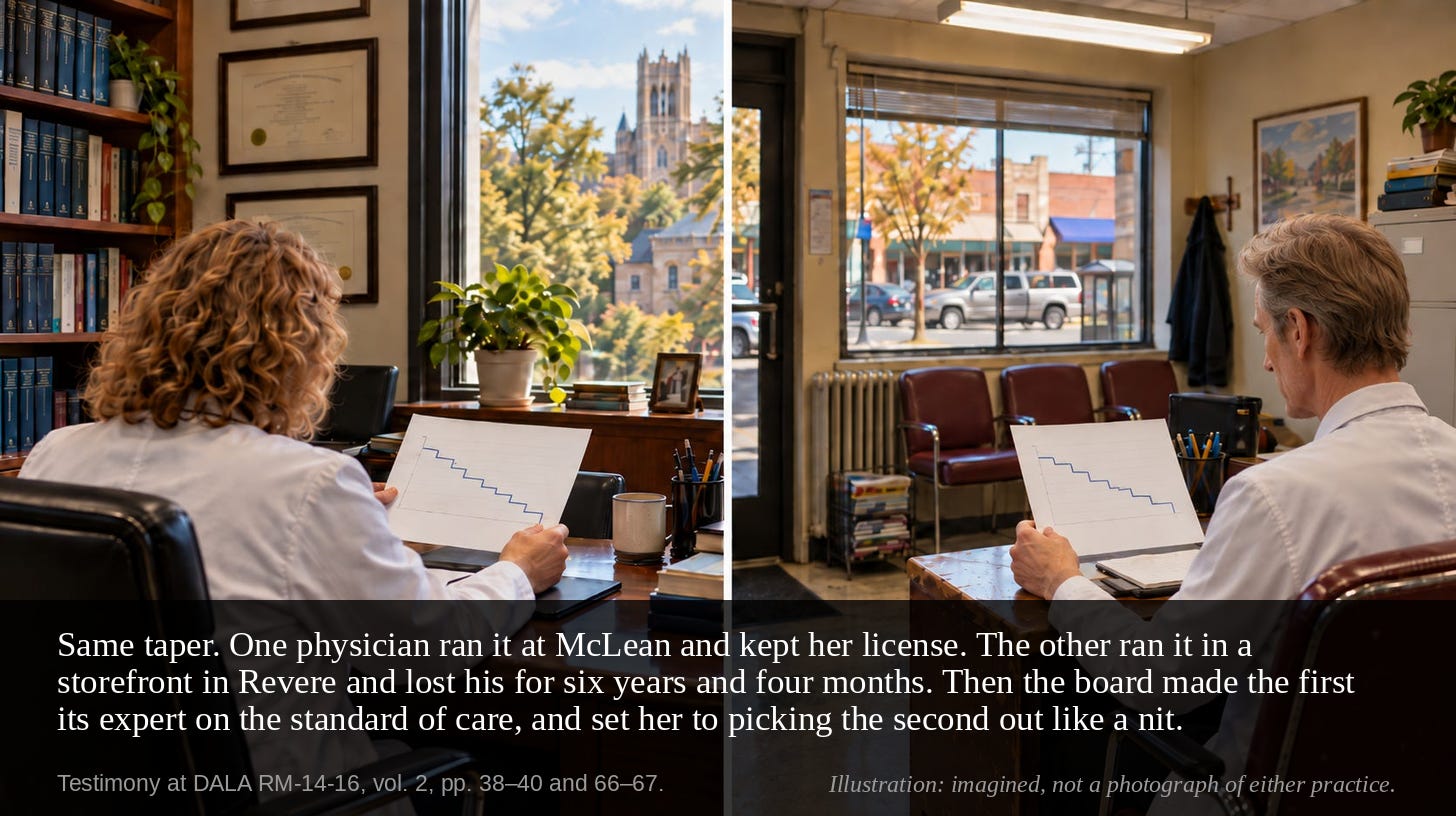
Dr. Bock shares his own experience losing his medical license in 2014 after treating narcotic addiction as a trauma-driven condition rather than strictly a disease — a professional and philosophical position that put him at odds with prevailing medical board orthodoxy. Both men describe a broader pattern: dissenting experts, from doctors to scientists to commentators like Joe Rogan, RFK Jr., and Tulsi Gabbard, are frequently pushed out of mainstream institutions once their views diverge from consensus.
What Would Restore Trust in Science?
Follett points to roughly 1870 as a “golden age” of scientific inquiry, when researchers had to persuade skeptical peers through evidence rather than institutional authority. He argues that reintroducing adversarial scrutiny — similar to how courtrooms function — and requiring funding transparency across all sources, public and private, would go further toward restoring credibility than any messaging campaign urging people to “trust the science.”
Final Thoughts
This conversation makes clear that trust in science won’t be rebuilt through appeals to authority or credentials alone. Follett and Dr. Bock argue that transparency, open debate, and a willingness to admit error — the actual foundation of the scientific method — are what’s been lost, and what must be restored.
FAQs
1. Why has public trust in science declined so sharply since 2018?
According to Andrew Follett, public trust dropped due to a combination of politicized research funding, inconsistent COVID-19 messaging, and high-profile cases where scientific claims appeared to align with political convenience rather than data.
2. What is the “replication crisis” in science?
The replication crisis refers to the widespread failure of published studies — particularly in social science and medicine — to produce the same results when the experiments are repeated, often due to selective publication of favorable findings.
3. Does government-funded research have the same disclosure requirements as corporate-funded research?
No. Follett notes that while pharmaceutical-funded studies must disclose funding sources, publicly funded research through agencies like the NSF or NIH faces no equivalent requirement, despite similar potential for funder bias.
4. How did COVID-19 policy affect trust in scientific institutions?
Follett argues that COVID-19 lockdown policies were rarely evaluated against their full costs — including educational, economic, and mental health impacts — and that inconsistent state-by-state outcomes were reported through a partisan lens rather than assessed on data.
5. What does Andrew Follett suggest would restore trust in science?
Follett advocates for adversarial scrutiny of research (similar to legal proceedings), full funding transparency across public and private sources, and a cultural return to open debate rather than deference to institutional authority.
Follow Andrew Follet on
Read Andrew Follet’s articles:
Find Dr. Randall Bock’s articles at Brownstone:

Get Dr. Randall Bock’s Book “Overturning Zika: The Pandemic That Never Was”
Discover more from Randy Bock MD PC
Subscribe to get the latest posts sent to your email.