

“Our country doesn’t get fixed without fixing the culture.” That’s the core message from veteran blogger and Culturcidal founder John Hawkins in his recent conversation with Dr. Randall Bock. Few sayings capture the moment better than the idea that politics is downstream from culture — the principle, popularized by the late Andrew Breitbart, that legislation and elections are merely symptoms of deeper cultural shifts. Hawkins, one of the earliest conservative bloggers and the founder of the once-massive Right Wing News, joined the show to discuss Big Tech censorship, the psychology of “cheap dopamine,” the unraveling of Pride Month’s original purpose, and why junk science keeps slipping past the public unchecked.
Table of Contents
From Right Wing News to X: Surviving Big Tech Censorship
Hawkins built Right Wing News into one of the largest conservative pages on Facebook, generating traffic he compares to legacy outlets like the Washington Post and the New York Times combined. That came crashing down after the 2016 election, when Facebook moved aggressively against pages it associated with “disinformation.” Right Wing News, with roughly 30 part-time employees at its peak, was one of the first major casualties.
He draws a direct line from that experience to the broader problem of big tech censorship: conservative creators remain dependent on platforms that, in his words, “hate and fear” them. He points to Parler’s removal from app stores and the tense contract standoff between The Daily Wire and Stephen Crowder over YouTube monetization as further proof that reach and income for conservative media can vanish overnight, by the decision of a handful of Silicon Valley executives. It’s part of why Hawkins has shifted his energy toward X (formerly Twitter), where he’s grown a following of roughly 8,000–9,000 in just a few months, betting that ownership under Elon Musk offers more durable ground.
Why Politics Is Downstream From Culture
The conversation’s central theme returns again and again to the idea that politics is downstream from culture. Hawkins credits Andrew Breitbart with the phrase, and it frames his entire approach to writing at Culturcidal: rather than chasing daily political horse-race coverage, he focuses on the cultural forces — psychology, economics, self-help, and social cohesion — that shape political outcomes years later.
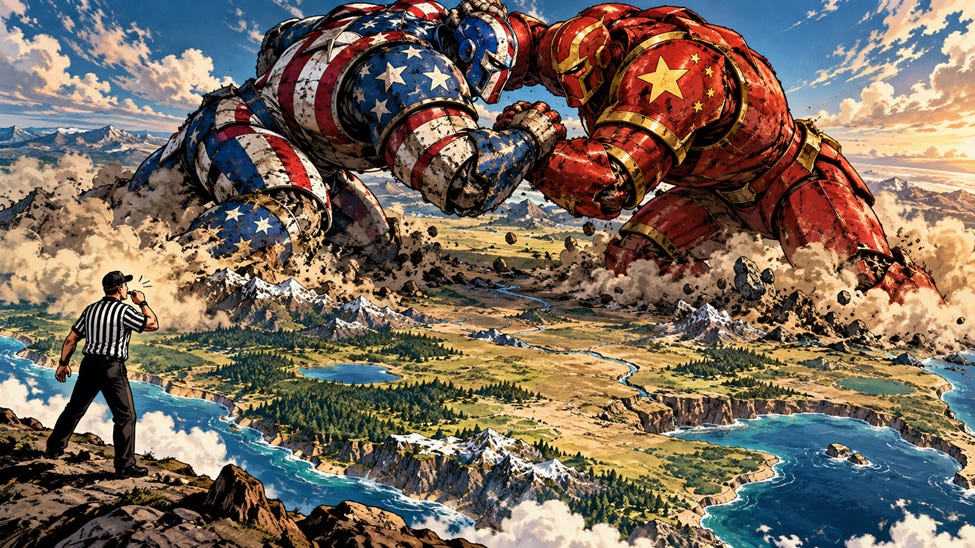
This isn’t a new idea (you can trace versions of it back through Breitbart’s own circle and even further), but Hawkins applies it with a specific warning: he believes the United States has reached a point where cultural fracture could realistically translate into the country splitting apart, not through civil war, but through a slow accumulation of broken trust and “going their own way” scenarios. Influential conservative writers like Thomas Sowell — whom Hawkins cites as a career model — have made similar arguments that every generation must be actively civilized into a shared culture rather than assuming it happens automatically. Readers interested in the deeper history of this idea can explore Andrew Breitbart’s background and influence for additional context.
Cheap Dopamine vs. Expensive Dopamine
One of Hawkins’ most-shared articles tackles what he calls “cheap dopamine” — the modern abundance of low-effort pleasures (video games, pornography, alcohol, endless scrolling) that deliver instant chemical reward but leave people unfulfilled. He contrasts this with “expensive dopamine”: the harder-won satisfaction that comes from working out, building a relationship, or accomplishing something meaningful. His argument is straightforward — the best nights of your life were never spent on the couch eating junk food and watching Netflix; they came from effort.
Dr. Bock connected this directly to his own clinical work running a long-term Suboxone-based opioid treatment program, where he favored a gradual, multi-month detox over indefinite maintenance therapy — treating the underlying behavior, not just managing the chemistry. Hawkins’ framework echoes research from addiction psychiatrist Dr. Anna Lembke, author of Dopamine Nation, who has written extensively about how pursuing effortful, even uncomfortable, activities builds a more durable and balanced capacity for pleasure than constantly chasing easy highs.
The Pride Month Debate and the Modern Culture War
Hawkins’ essay “Why America Should Never Have Another Pride Month” generated significant pushback and discussion, and he unpacked his reasoning on the show. His argument: the stigma that originally justified Pride Month has largely reversed, and gay Americans today, in his view, hold protected social status rather than facing the marginalization that existed decades ago. He draws a sharper line around newer additions to the “alphabet” umbrella, arguing that transgender identity and shifting pronoun norms shouldn’t be grouped with the original civil-rights framing of the movement.
He also leans on commentary from Daily Wire host Andrew Klavan, who separates personal tolerance for gay friends and family from organized identity activism, and connects the broader trend to a historical pattern: from Soviet class warfare to National Socialism’s ethnic nationalism, movements that organize society around grievance and division tend to fracture social cohesion rather than strengthen it. It’s a recurring feature of the broader culture war playing out across institutions, and Hawkins argues it has increasingly bled into cancel culture dynamics where dissent from group orthodoxy is treated as a moral offense.
One-Party Rule and the Erosion of Democratic Norms
Hawkins raises a pointed concern about court-packing proposals and filibuster elimination, arguing that once one party changes the rules to lock in power, the legitimacy of institutions like the Supreme Court erodes for everyone, regardless of party. He references conservative radio host Jesse Kelly’s controversial comments suggesting the country is drifting toward conditions that historically precede authoritarian rule — not as an endorsement, but as a warning about where unchecked rule-changing leads. His broader point: democratic systems only function when both sides accept the legitimacy of losing, and Americans increasingly behave as though winning by any means is acceptable.
Junk Science: From Zika to COVID to Climate Change
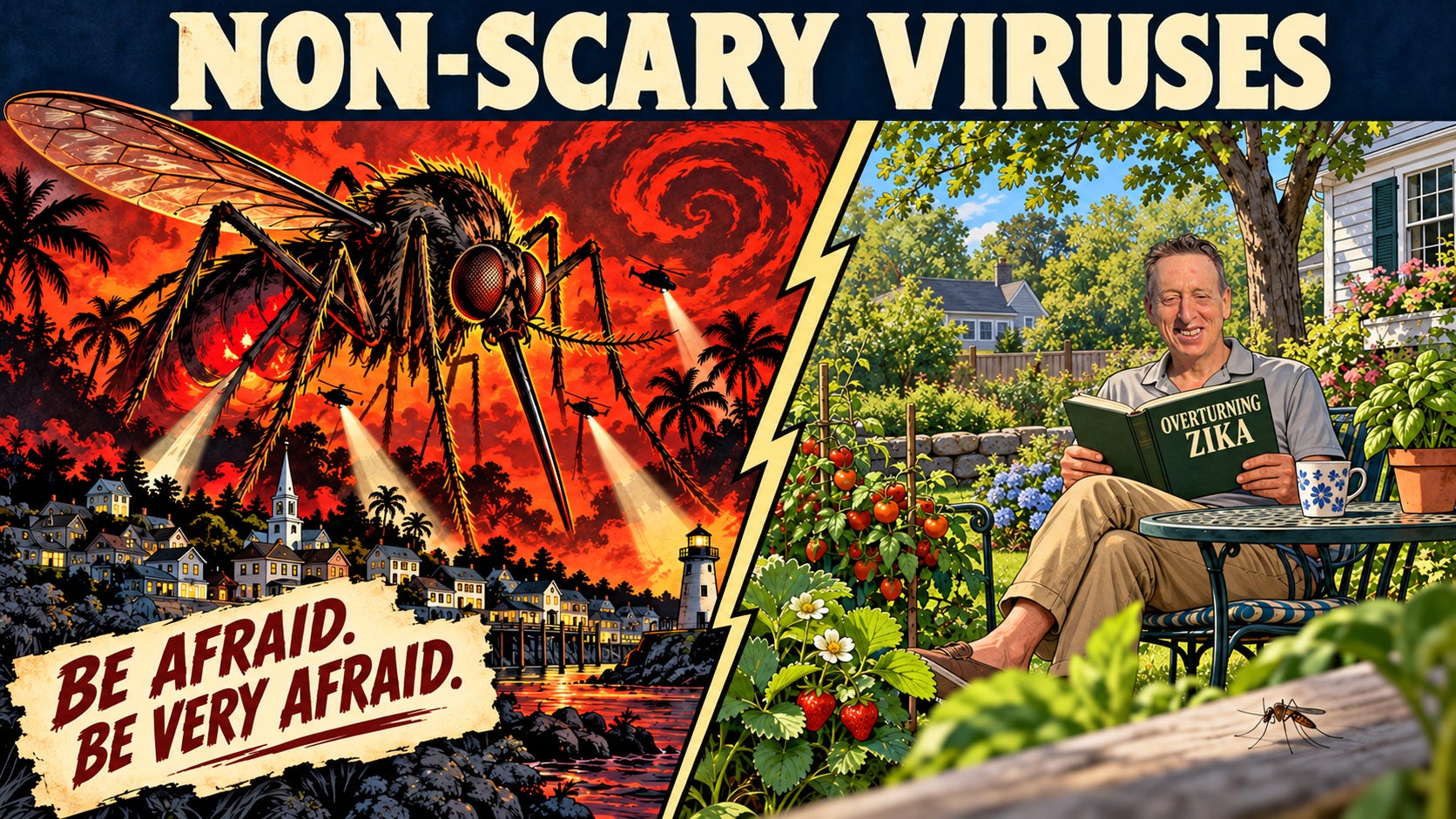
Dr. Bock shared insights from his own book on the 2016 Zika “pandemic that never was,” arguing that early, unproven hypotheses about Zika causing microcephaly hardened into accepted fact despite a lack of follow-up evidence. Hawkins drew the parallel to COVID-era science communication and climate modeling, arguing that financial incentives — from drug trial payouts to research grants — can quietly bend scientific conclusions toward whoever is funding them. Both agreed that genuine science thrives on reproducibility and uncertainty, while “settled science” rhetoric is often a sign that politics, not data, is driving the consensus.
Final Takeaways: Fixing Culture to Fix the Country
Whether the topic is Big Tech censorship, dopamine-driven distraction, Pride Month, or science funding, Hawkins keeps returning to the same conclusion: politics is downstream from culture, and no amount of winning elections will repair a country whose underlying values, incentives, and institutions are pulling in different directions. His advice for readers is the same advice behind his bestselling book, 101 Things All Young Adults Should Know — show up, do the hard things, and build a life (and a culture) worth being proud of.
For more interviews like this one, browse our full archive of guest interviews on randybock.com.
FAQ
What does “politics is downstream from culture” mean?
It means cultural values and norms shape political outcomes first, and laws or elections follow later as a result — not the other way around. The phrase is widely attributed to the late Andrew Breitbart.
Who is John Hawkins of Culturcidal?
John Hawkins is a veteran conservative blogger who founded Right Wing News, one of the largest conservative Facebook pages before its 2016–2017 deplatforming. He now writes at Culturcidal and is the author of 101 Things All Young Adults Should Know.
What is “cheap dopamine”?
It’s John Hawkins’ term for low-effort pleasures — video games, pornography, alcohol — that deliver quick reward but little lasting satisfaction, in contrast to “expensive dopamine” earned through effortful, meaningful activity.
Why does John Hawkins say America shouldn’t have another Pride Month?
Hawkins argues the social stigma that originally justified Pride Month has largely reversed, and that newer additions to the movement, like transgender activism, don’t fit the original civil-rights framing.
What happened to Right Wing News?
Right Wing News was one of the first major conservative pages deplatformed by Facebook after the 2016 election, leading Hawkins to eventually shut down the outlet and shift his focus to long-form cultural writing and X (Twitter).
Discover more from Randy Bock MD PC
Subscribe to get the latest posts sent to your email.