
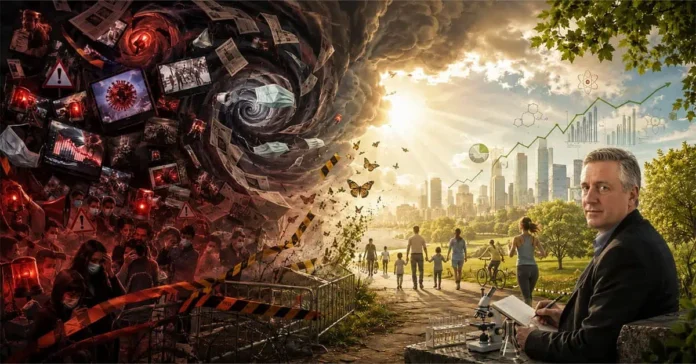
John Tierney learned journalism by leaving theory and walking into the world. He began in newspapers in the 1970s, moved through science magazines in the 1980s, joined The New York Times in 1990, wrote about New York, science, and public life, then carried that same plain style into books and City Journal. He describes the vocation without inflation: “I’m sort of a science writer, but also just a generalist.” The field was never only science for him. It was reason under pressure, with evidence doing the work that slogans could not do.
That breadth explains the career. Tierney never sounded like a man guarding a narrow credential. He sounded like a reporter with a notebook and a low tolerance for cant. “Journalism is perfect. You can kind of do whatever seems interesting.” That sentence carries his method. It also carries a rebuke to the modern guild, where credentials often precede curiosity, and narrative often precedes facts.
The new priesthood of journalism schools did not impress him. When the trade became more openly ideological, he saw the change without mysticism. “That, unfortunately, is what they teach at journalism schools these days.” The old press had biases, but it still needed a mixed public. The web broke that arrangement. Subscriber niches rewarded certainty, outrage, and tribal comfort. Fear became measurable. Anger became renewable.
Tierney did not arrive at skepticism through doctrine. He came to it by reporting. “It was going out and reporting and seeing how the real world diverged from the assumptions I had.” In Kenya, he was sent to see a population crisis. He expected crowding, hunger, and ruin. Instead, he found adaptation. Families changed plans. Young people moved to cities. Money came back. Piped water arrived. The doomsday frame did not hold.
Julian Simon had already given him the heresy: “Isn’t it wonderful that so many people can be alive in that country today?” Simon became a mentor. He later won the famous Simon-Ehrlich wager, a bet that key natural resources would get cheaper rather than scarcer over time. The lesson was simple but hard to keep in view. Count the trend. Do not let three anecdotes become a national emergency. Do not confuse fear with evidence.
Tierney’s work with Roy Baumeister returned to that same discipline. They wrote Willpower, then The Power of Bad. The second book gave a name to what he had seen in newsrooms for decades. Bad gets attention. Bad travels. Bad sells. “It’s so easy to create a crisis.” He remembered an early weather story built on one convenient police quote about shore traffic. That was not fraud in the grand sense. It was the daily temptation of the trade. The lead needed heat, so the world became hotter.
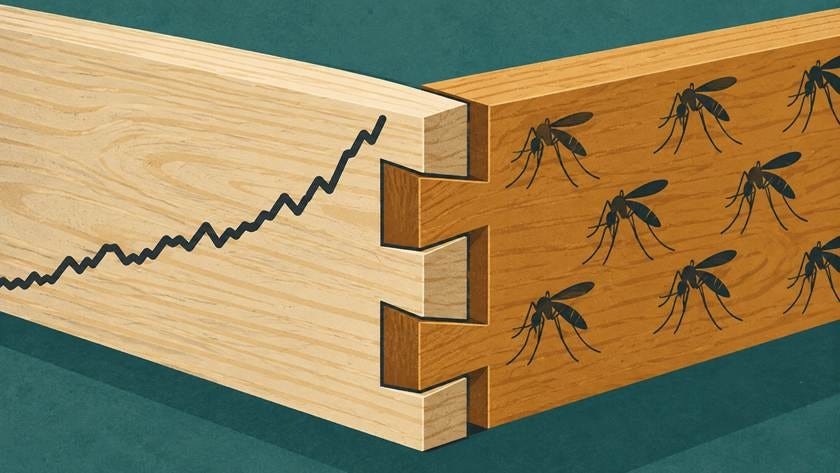
His phrase for the larger pattern is the crisis crisis. The rule is spare and sharp: “The world will always be in crisis. The crisis is never as bad as it sounds. And the solution will probably make things worse.” It is not a denial that problems exist. It is a warning against panic as policy. It asks for proportion. It asks who benefits. It asks what happened the last time the experts demanded emergency powers.
The business model explains much of the behavior. “Mass media depends on the power of bad, on the negativity bias.” It targets common fears using fear scales. Social media, for all its faults, can also make smaller publics possible. A few thousand people can care about history, art, science, or some stubborn fact the mass press has buried. That is not a cure, but it is a breach in the wall.
COVID became the largest test of the thesis. Tierney had spent a career watching crises inflate, yet the lockdown consensus still shocked him. “That was the worst public policy mistake, maybe the New Deal, but I think the lockdowns were clearly the worst public policy.” The costs spread through children, work, health, schools, commerce, and trust. The media moved in formation. Public health, already politicized, became less a science of disease than a license to manage society.
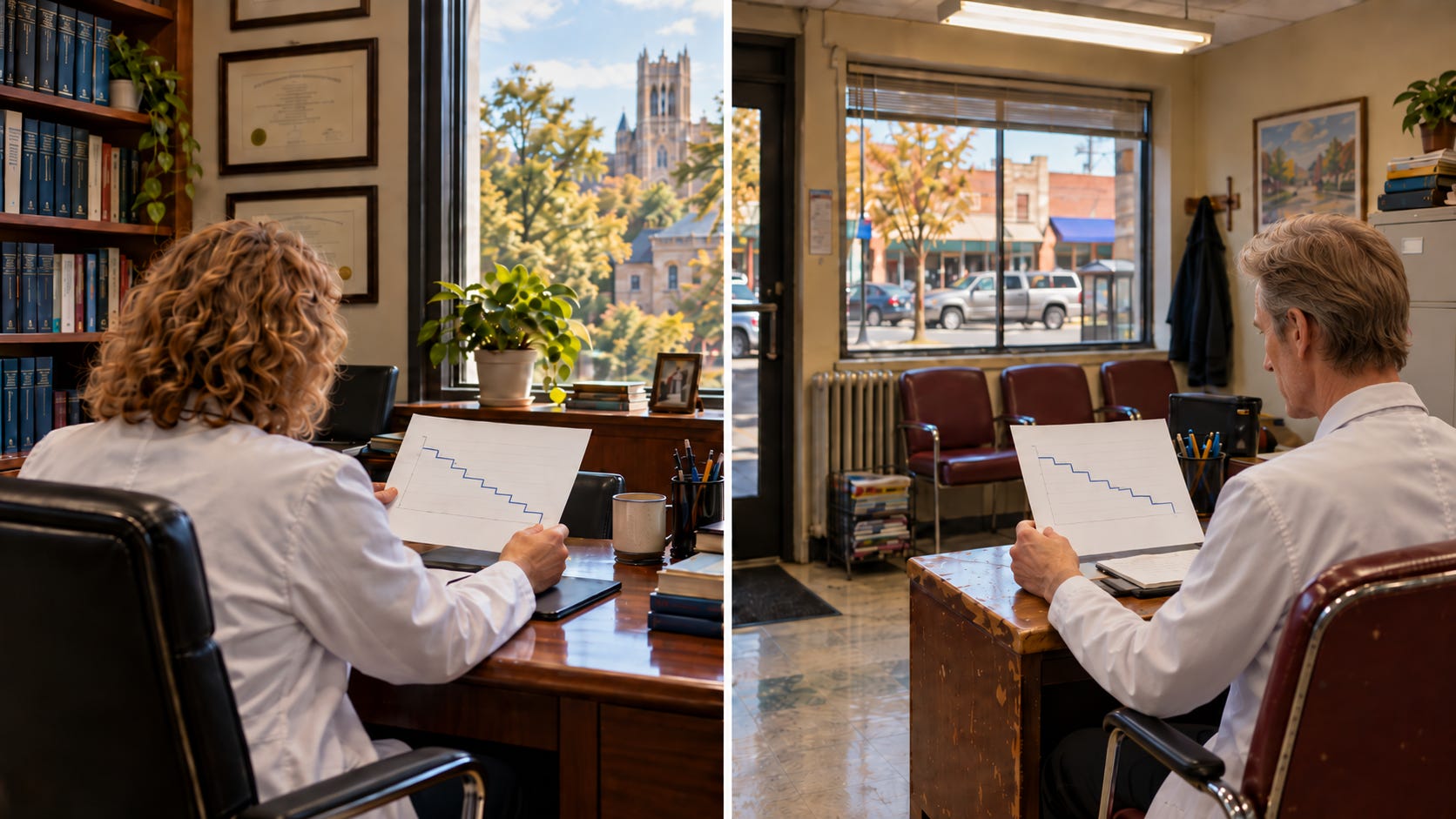
That loss of trust now shapes everything. The immune response was not only viral. It was civic. People learned what happens when institutions demand obedience while forbidding doubt. The public was told to accept models, mandates, and moral theater. Many complied. Many also remembered. Tierney’s rule remained the necessary first move: “The first thing is to look at the long-term trend.” Without that habit, every graph becomes a weapon, and every headline becomes a command.
Tierney’s answer is not despair. He still sees a better world than the headlines allow. By most measures, human well-being has risen for two centuries. Poverty has fallen. Literacy has spread. Children live. Food grows. Energy improves life. Disease recedes when order, wealth, and competence take hold. Poor countries often see this more plainly than rich ones. They remember darkness. They notice the electric light.
The rich world, by contrast, has produced an industry of saviors. There is more time, more money, more credentialed concern, and fewer genuine catastrophes to solve. So new catastrophes must be found. Sometimes they must be manufactured. The demand for injustice can exceed the supply. The demand for crisis can exceed the facts.
The answer begins with curation. Choose sources that can count. Choose writers who know the difference between a trend and a mood. Ask what the denominator is. Ask what happened before. Ask whether the cure enlarges the disease. Tierney’s journalism rests on that small civic hygiene. It is not flamboyant. It is not therapeutic. It is useful.
The world is not ending because someone found a headline that says it is. The bad thing may be real. It may still be smaller than advertised. The long trend may still be better. Tierney’s message lands there, in clear weather: be hopeful, but do not be gullible.
Discover more from Randy Bock MD PC
Subscribe to get the latest posts sent to your email.