


Medicine has always evolved through scientific discovery, technological innovation, and improvements in patient care. Yet some of the most profound changes in modern healthcare have not come from breakthroughs in biology or pharmacology—they have come from changes in the way medicine is organized, financed, and managed.
In a thoughtful conversation with healthcare executive Breaux Castleman, Dr. Randy Bock explores a transformation that has unfolded over four decades: the industrialization of medicine. Castleman, whose career included leading one of America’s largest multi-specialty medical groups after years of studying industries undergoing restructuring, argues that healthcare followed many of the same patterns seen in banking, aviation, and other regulated industries—but over a much longer timeline. What began as a gradual shift toward managed care ultimately reshaped physician employment, hospital ownership, insurance reimbursement, and the balance of authority within clinical practice.
Dr. Bock brings a complementary perspective shaped by decades in clinical medicine. While human biology has remained remarkably consistent, he reflects on how the environment surrounding patient care has changed dramatically. From corporate walk-in clinics to the rise of managed care organizations, physicians increasingly found themselves working within systems that rewarded efficiency, standardized protocols, and financial performance alongside clinical judgment.
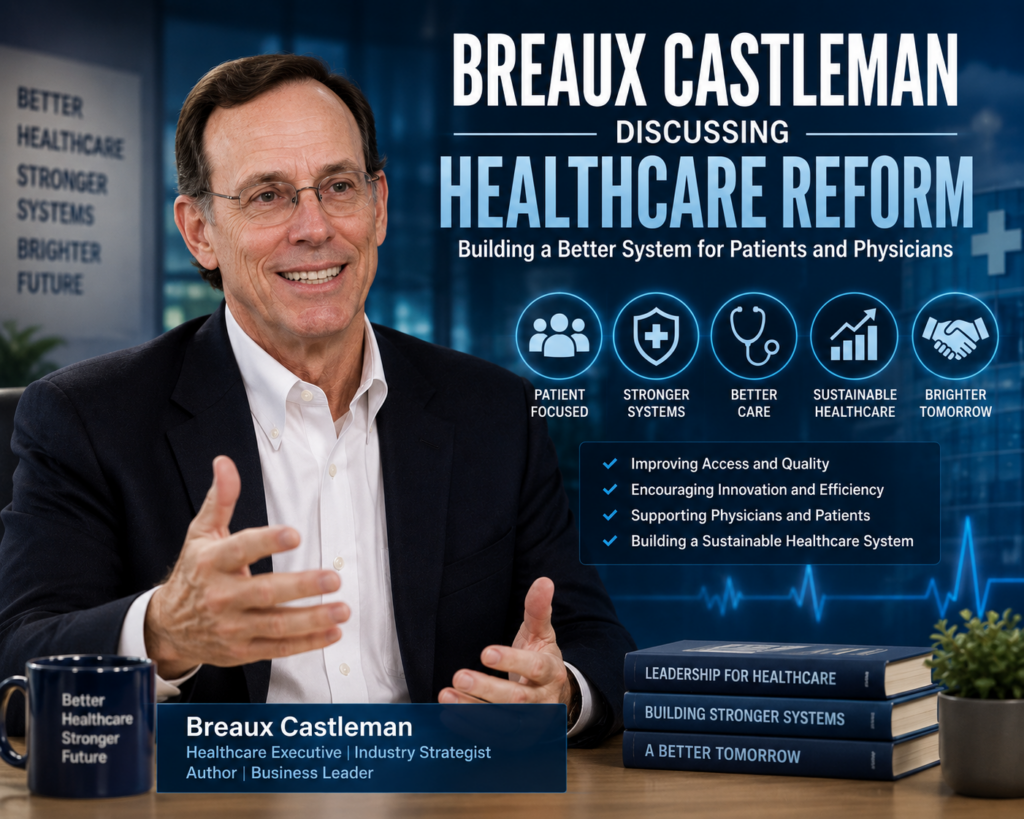
Castleman describes this transition as more than an administrative evolution. It represents a structural shift in healthcare, where independent medical practices gradually gave way to larger organizations, hospital acquisitions, integrated delivery systems, and insurance-driven care models. Each stage promised greater coordination and cost control, yet also introduced new questions about physician autonomy, patient choice, and the future of individualized medicine.
As artificial intelligence, predictive analytics, and increasingly sophisticated healthcare technologies continue to reshape medicine, the questions raised in this conversation become even more relevant. Can healthcare systems improve efficiency without sacrificing the physician-patient relationship? Can technology enhance clinical judgment without replacing it? And who ultimately benefits when medicine becomes increasingly industrialized?
This article examines the history, economics, and consequences of the industrialization of medicine through the combined insights of Breaux Castleman and Dr. Randy Bock, exploring what these changes mean for physicians, patients, and the future of healthcare.
Table of Contents
Understanding the Industrialization of Medicine
For most of the twentieth century, medicine in the United States revolved around a simple relationship: a physician, an independent medical practice, and a patient. Physicians made clinical decisions based primarily on their education, experience, and direct knowledge of the individual sitting before them. Hospitals served as places where doctors admitted and treated patients rather than as employers directing medical practice.
According to Breaux Castleman, that model began changing during the 1980s—not because human biology changed, but because healthcare itself started to resemble other industries he had spent decades studying.
Before entering healthcare, Castleman worked as a partner at Booz Allen Hamilton, specializing in industries experiencing large-scale restructuring. Banking, airlines, engineering, construction, and energy all underwent dramatic transitions driven by deregulation, consolidation, and changing financial incentives. Castleman noticed that healthcare eventually followed many of those same patterns, although over a much longer period than other industries.
He describes industrialization not as a conspiracy or a sudden event, but as a gradual economic transformation. Industries typically evolve through several recognizable stages:
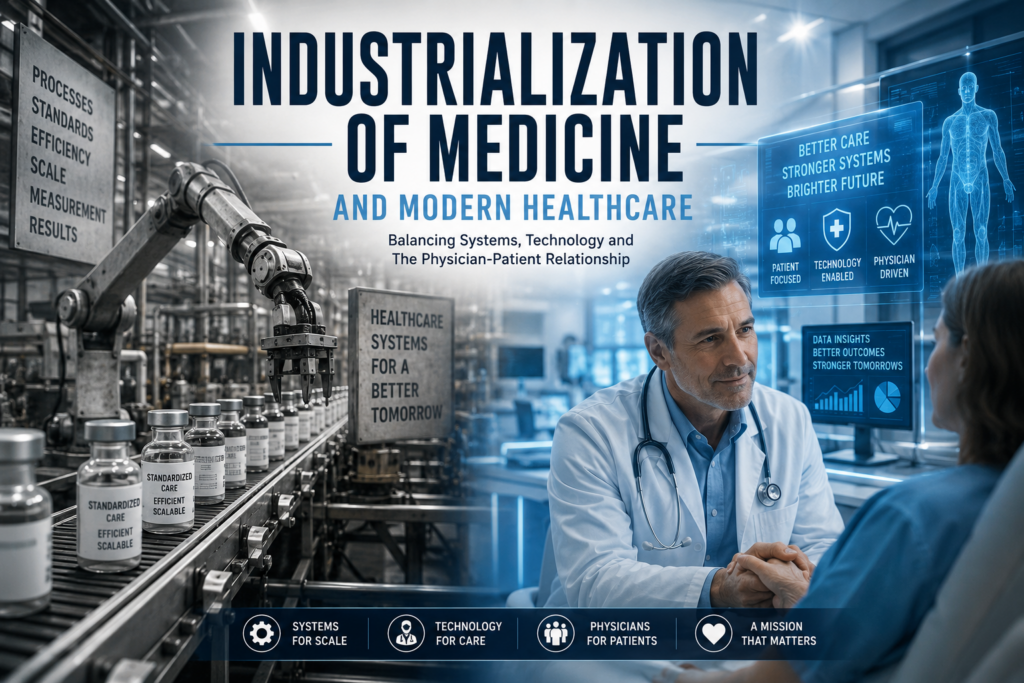
- Consolidation of independent businesses
- Increased standardization
- Greater administrative oversight
- Financial optimization
- Centralized decision-making
- Expansion of large corporate organizations
Healthcare, he argues, followed precisely this trajectory.
From Independent Practices to Organized Systems
Castleman’s firsthand experience began when he was recruited to lead Houston’s Kelsey-Seybold Clinic after the collapse of the Texas oil economy forced Booz Allen Hamilton to close its Houston office. Although he had little previous exposure to medicine, his expertise in organizational restructuring made him uniquely qualified to analyze why one of America’s largest multispecialty medical groups was struggling financially.
Rather than approaching healthcare as a physician, he approached it like a business consultant.
His first questions were straightforward:
- What business are we actually in?
- How does the market function?
- Where do costs originate?
- What incentives drive behavior?
- Why are physicians compensated the way they are?
These questions revealed something unusual.
Unlike manufacturing, where companies produce physical goods, physicians primarily sell expertise, judgment, and time. Every patient encounter depends on cognitive work: evaluating symptoms, interpreting evidence, making diagnoses, and deciding on appropriate treatment.
That makes medicine fundamentally different from industries built around standardized production. While administrative systems can become increasingly efficient, clinical judgment remains deeply individualized. Every patient brings a different history, different risks, different values, and different medical circumstances.
Why Healthcare Was Different From Other Industries
Castleman noted one characteristic that made physician practices especially unique.
Within many large multispecialty groups, physicians earned similar compensation regardless of seniority. A doctor practicing for three decades often earned roughly the same as a colleague only a few years into practice within the same specialty. Daily work also remained remarkably consistent throughout an entire career: evaluating patients, making diagnoses, coordinating specialty referrals, and exercising clinical judgment.
This stability contrasted sharply with other industries, where employees often climb management ladders or transition into executive roles.
Medicine’s value lay in professional independence.
That independence, however, would soon encounter powerful economic forces.
The Birth of Managed Care
One of the most significant turning points in American healthcare was the emergence of managed care.
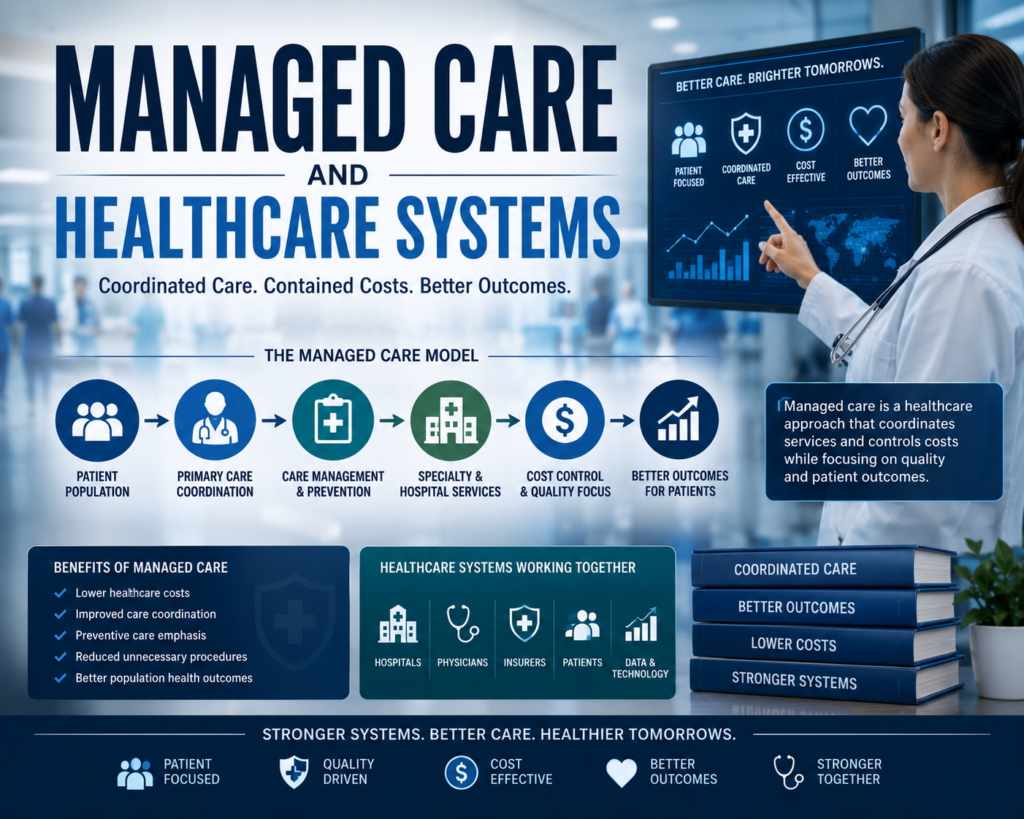
When Castleman joined Kelsey-Seybold Clinic in 1985, the organization had already embraced prepaid healthcare through Health Maintenance Organization (HMO) contracts and capitation payment models. Today these arrangements are commonly described as coordinated care.
Instead of billing separately for every office visit, laboratory test, or procedure, physicians received fixed monthly payments to care for a defined population of patients.
This seemingly simple financial change fundamentally altered medical incentives.
Under traditional fee-for-service medicine:
- Physicians were paid for each service provided.
- Revenue generally increased with additional visits and procedures.
- Clinical decisions remained largely under physician control.
Under managed care:
- Healthcare organizations assumed financial responsibility for an entire patient population.
- Efficiency became a central organizational objective.
- Preventive care gained greater financial importance.
- Administrative oversight expanded significantly.
These changes shifted healthcare from reactive treatment toward population management, but they also introduced new layers of bureaucracy into everyday clinical practice.
California Became the National Laboratory
Castleman observed that healthcare transformation did not occur uniformly across the country.
California emerged as the testing ground for managed care. Integrated organizations such as Kaiser Permanente demonstrated a model in which insurance plans, hospitals, physicians, and outpatient services operated within a single coordinated system. Kelsey-Seybold Clinic represented another early example of this organizational approach.
These organizations attempted to coordinate nearly every aspect of patient care:
- Primary care
- Specialty referrals
- Hospital admissions
- Diagnostic testing
- Insurance reimbursement
- Preventive medicine
From a systems perspective, the model promised greater efficiency and lower costs.
From the physician’s perspective, however, it increasingly meant practicing within organizational rules rather than exercising completely independent judgment.
A Transformation That Took Decades
Castleman emphasizes that industrialization unfolded gradually.
Unlike banking or aviation, where restructuring occurred over roughly two decades, healthcare’s transition extended across nearly forty years.
Several distinct phases emerged:
Phase One: Consolidation
Independent physicians increasingly joined larger medical groups or sold their practices to hospitals. Publicly traded physician management companies expanded rapidly during the late 1980s and early 1990s, accelerating consolidation throughout the healthcare sector.
Phase Two: Standardization
As healthcare organizations grew, standardized policies became more common. Clinical pathways, utilization review, and administrative oversight expanded, reducing variation in care while also limiting physician discretion. These changes reflected broader efforts to control costs and improve consistency across large health systems.
Phase Three: Patient Cost Sharing
Financial responsibility gradually shifted toward patients through deductibles, copayments, and other out-of-pocket expenses. Castleman explains that this redistribution of costs became another defining feature of industrialized healthcare.
Dr. Randy Bock’s Clinical Perspective
While Castleman analyzed healthcare from an executive and organizational standpoint, Dr. Randy Bock experienced these changes directly in clinical practice.
Reflecting on decades as a primary care physician, Dr. Bock notes that medicine itself changed far less than the systems surrounding it. Human anatomy, physiology, and the core principles of diagnosis remained remarkably consistent. What evolved were reimbursement systems, ownership structures, insurance relationships, and administrative expectations.
He recalls practicing in an era when independent physicians maintained control over staffing, scheduling, and clinical operations. Over time, however, solo practices became increasingly uncommon as larger healthcare organizations assumed greater control over employment, infrastructure, and decision-making.
This shift, he suggests, affected more than business operations—it altered the daily experience of practicing medicine.
Looking Ahead
By the early twenty-first century, healthcare had largely completed its transition from a profession dominated by independent physicians to one increasingly organized around integrated health systems, insurance networks, and corporate ownership.
Yet the central question remains unresolved:
Can medicine become more efficient without weakening the physician-patient relationship?
That question becomes even more pressing as artificial intelligence, predictive analytics, and increasingly sophisticated healthcare technologies continue to reshape clinical practice.
The Rise of Corporate Medicine
One of the defining characteristics of the industrialization of medicine has been the steady replacement of independent physician practices with large corporate healthcare organizations. What began as isolated acquisitions in the late 1980s gradually evolved into a nationwide restructuring of how healthcare is delivered.
Breaux Castleman describes this transformation as a predictable stage in industrial development. After studying industries such as banking, aviation, engineering, and energy, he recognized familiar patterns emerging in healthcare. Independent professionals who once controlled their own businesses increasingly became employees within larger organizations governed by administrative policies, financial objectives, and standardized operational procedures.
The implications extended far beyond ownership. As physicians became part of increasingly complex healthcare systems, many aspects of medical practice that had once been matters of individual clinical judgment came under organizational oversight.
Physician Consolidation Accelerated Across America
Castleman recalls that the late 1980s and early 1990s saw the rapid emergence of publicly traded physician management companies. These organizations acquired medical practices throughout the United States, offering physicians salaries, bonuses, and financial stability in exchange for ownership of their practices.
By the early 2000s, hospital acquisitions had become increasingly common. Castleman estimates that by the 2010–2015 period, roughly 60 percent of previously independent physicians had become affiliated with hospitals or larger healthcare organizations. Thousands of hospitals across the country actively purchased physician groups, fundamentally altering the structure of American medicine.
For many physicians, these changes offered practical advantages:
- Reduced administrative responsibilities
- Guaranteed salaries
- Greater access to technology and infrastructure
- Improved negotiating power with insurers
- Expanded referral networks
At the same time, they also meant surrendering a significant measure of professional independence.
The Decline of Independent Medical Practice
For generations, independent physicians made decisions about virtually every aspect of their practices.
They selected their staff.
Determined office policies.
Controlled scheduling.
Purchased equipment.
Made investment decisions.
Most importantly, they exercised independent clinical judgment without navigating multiple layers of organizational approval.
Dr. Randy Bock reflects on practicing during that era. As the owner of a solo primary care practice, he retained authority over staffing, workflow, and patient care. Over time, however, he became part of a shrinking minority as corporate employment increasingly replaced physician ownership.
He notes that many physician colleagues working within hospitals admired the independence he retained, even if operating a solo practice required greater financial and administrative responsibility.
Increasingly, however, maintaining that independence became economically difficult.
Economic Pressure Changed Physician Decisions
Castleman argues that industrial restructuring typically begins with financial pressure.
In healthcare, one of the earliest assumptions driving reform was that physician compensation represented a significant source of rising medical costs.
The initial objective therefore became reducing physician reimbursement.
Subsequent reforms focused on additional areas:
- Reducing unnecessary testing
- Standardizing treatment protocols
- Monitoring physician ordering patterns
- Linking diagnoses to approved treatments
- Increasing administrative review
Each initiative sought greater efficiency and cost control.
Collectively, however, they also transferred authority away from individual physicians and toward healthcare organizations, insurers, and regulatory systems.
Utilization Review and Prior Authorization
One of the most visible consequences of industrialized healthcare has been the expansion of utilization review.
Castleman explains that policymakers and insurers increasingly concluded physicians ordered too many diagnostic tests and procedures. Administrative systems were therefore developed to regulate when imaging studies, specialist referrals, or expensive treatments could be approved.
These systems introduced familiar concepts into modern medical practice:
- Prior authorization
- Clinical guidelines
- Evidence-based pathways
- Utilization management
- Standardized treatment algorithms
Supporters argue these mechanisms reduce waste and improve consistency.
Critics contend they may delay treatment, increase administrative burdens, and limit physician discretion in complex cases.
The interview itself does not attempt to resolve that debate. Instead, Castleman presents utilization review as a logical consequence of healthcare’s industrial restructuring.
When Financial Incentives Influence Medical Decisions
Dr. Randy Bock contributes a particularly personal perspective on how financial incentives can shape clinical practice.
Reflecting on his experience working for an early corporate walk-in clinic chain, he describes organizational expectations that encouraged physicians to maximize use of revenue-generating services, particularly diagnostic imaging. In one physicians’ meeting, he recalls being encouraged to keep the X-ray equipment in constant use, even when his clinical judgment suggested imaging was unnecessary.
For Dr. Bock, this expectation conflicted with how he had been trained to practice medicine.
He emphasizes that diagnosis often begins with careful listening, history-taking, and physical examination. While laboratory studies and imaging can be invaluable, they should support—not replace—clinical reasoning.
This distinction highlights one of the article’s central themes:
Medicine is fundamentally a cognitive profession.
Technology informs judgment.
It should not dictate it.
Medicine Cannot Be Fully Standardized
One of Castleman’s most important observations is that physicians do not manufacture identical products.
Every patient encounter differs.
Each individual presents a unique combination of:
- Medical history
- Genetics
- Symptoms
- Personal preferences
- Risk factors
- Social circumstances
- Family support
- Treatment goals
Because of this variability, complete standardization has natural limits.
Administrative systems can standardize documentation, billing, scheduling, and quality reporting. Yet clinical judgment remains dependent on context that cannot always be reduced to algorithms or checklists.
This perspective helps explain Castleman’s concern that industrialization should not erode the physician’s ability to make individualized decisions for individual patients.
The Physician-Patient Relationship Under Pressure
As healthcare organizations expanded, the traditional physician-patient relationship also evolved.
Rather than operating solely as independent professionals serving individual patients, many physicians became employees accountable to multiple stakeholders:
- Hospital administrators
- Insurance companies
- Government reimbursement systems
- Corporate management
- Quality measurement programs
- Regulatory agencies
These additional obligations introduced competing priorities alongside patient care.
Castleman does not argue that coordination is inherently harmful. Rather, he suggests that every structural reform should ultimately strengthen—not weaken—the relationship between physician and patient.
That distinction becomes increasingly important as healthcare continues to integrate technology, automation, and artificial intelligence into everyday clinical practice.
Corporate Medicine: Opportunity and Risk
The interview presents a nuanced picture of corporate medicine rather than a simple endorsement or condemnation.
Large healthcare organizations can offer:
- Better coordination of care
- Shared electronic health records
- Improved communication among specialists
- Greater investment in advanced technologies
- Population health management
- Expanded preventive services
At the same time, consolidation can also create risks:
- Reduced physician autonomy
- More administrative oversight
- Greater reliance on standardized protocols
- Complex insurance requirements
- Increased organizational influence over clinical decisions
Castleman frames these developments as the natural consequences of restructuring rather than isolated policy changes.
Transition to the Next Era
By the 2020s, industrialization had reshaped nearly every aspect of American healthcare.
Independent medical practices had become less common.
Hospital employment had become the norm for many physicians.
Managed care had matured.
Healthcare organizations increasingly relied on sophisticated data systems, predictive analytics, and coordinated networks.
Yet the next phase of transformation was already emerging.
Artificial intelligence, machine learning, and advanced diagnostic technologies promised unprecedented improvements in medical decision-making—but they also raised a new question:
If machines become increasingly capable of analyzing disease, what remains uniquely human about the practice of medicine?
That question forms the foundation of the final sections of this article.
Artificial Intelligence and the Next Phase of Industrialized Medicine
Over the past four decades, healthcare has evolved from a profession dominated by independent physicians into a highly integrated system of hospitals, insurance companies, electronic medical records, and standardized clinical pathways. Yet Breaux Castleman believes another transformation is already underway—one driven by artificial intelligence, predictive analytics, and increasingly sophisticated digital technologies.
Unlike earlier phases of healthcare restructuring, this next chapter is not simply about ownership or reimbursement. It concerns how information is gathered, interpreted, and used to support medical decision-making.
For physicians, the challenge is no longer whether technology will become part of everyday practice—it already has. The more important question is how these tools will influence the physician’s role and whether they will strengthen or weaken the physician-patient relationship.
Technology Has Always Changed Medicine
Medicine has never been static.
Every generation of physicians has adapted to new technologies:
- The stethoscope revolutionized physical examination.
- X-rays transformed diagnosis.
- Antibiotics changed infectious disease treatment.
- CT scans and MRI imaging expanded diagnostic precision.
- Electronic health records digitized patient information.
- Genomic medicine introduced personalized treatment strategies.
Castleman points out that many of the rising costs in healthcare have not resulted solely from physician compensation but from the continual introduction of increasingly advanced—and increasingly expensive—medical technologies. Diagnostic tools that once consisted primarily of a simple chest X-ray have expanded to include CT scanners, MRI systems, PET imaging, and numerous specialized diagnostic procedures.
Each technological advance has improved diagnostic capabilities.
Each has also increased the complexity and cost of delivering care.
Artificial Intelligence Is Different
Artificial intelligence differs from previous medical technologies because it is designed not merely to collect information but to analyze it.
Modern AI systems can assist physicians by:
- Recognizing imaging abnormalities.
- Identifying drug interactions.
- Predicting disease risk.
- Reviewing thousands of medical studies.
- Suggesting differential diagnoses.
- Detecting patterns difficult for humans to recognize.
These capabilities have the potential to improve both accuracy and efficiency.
However, neither Castleman nor Dr. Randy Bock suggests that technological capability alone should determine how medicine is practiced.
Instead, the discussion consistently returns to a more fundamental principle:
Technology should assist physicians—not replace their independent judgment.
Human Biology Has Changed Very Little
One of Dr. Randy Bock’s most insightful observations is that despite extraordinary advances in healthcare administration and technology, the human body itself has changed very little.
Human beings still experience many of the same illnesses physicians treated decades ago.
The liver functions much as it always has.
The kidneys function much as they always have.
Patients continue to seek care for familiar medical problems, even though treatments and diagnostic tools continue to evolve.
This distinction matters because it reminds us that healthcare is ultimately centered on people rather than systems.
Technology may evolve rapidly.
Human vulnerability does not.
Data Can Inform Clinical Judgment—But Not Replace It
Artificial intelligence excels at processing enormous quantities of information.
Clinical medicine, however, requires much more than information processing.
Every patient presents unique circumstances:
- Personal values
- Family responsibilities
- Financial limitations
- Emotional concerns
- Cultural beliefs
- Previous medical experiences
- Individual tolerance for risk
No algorithm can fully understand these human factors without physician interpretation.
Castleman repeatedly emphasizes that every encounter between a doctor and a patient is unique. While healthcare organizations can standardize administrative processes, the practice of medicine itself resists complete standardization because every patient brings different needs and priorities. This uniqueness is central to preserving individualized care within increasingly industrialized healthcare systems.
The Physician’s Loyalty Must Remain Clear
Throughout the interview, one principle consistently emerges.
Physicians serve patients.
They do not serve billing systems.
They do not serve algorithms.
They do not serve administrative metrics.
They do not serve corporate performance targets.
Technology should support—not redefine—that professional commitment.
Dr. Bock’s earlier experiences with corporate walk-in clinics illustrate how financial incentives can sometimes influence clinical behavior in ways that conflict with physician judgment. His account reinforces the importance of maintaining independent clinical reasoning even within larger healthcare organizations.
Artificial intelligence introduces similar questions.
If AI recommendations become increasingly accurate, physicians will still bear responsibility for deciding when those recommendations fit the individual patient—and when they do not.
Can Efficiency and Compassion Coexist?
One of the promises of industrialized healthcare has always been greater efficiency.
Integrated systems can:
- Reduce duplicate testing.
- Improve communication among specialists.
- Coordinate chronic disease management.
- Expand preventive care.
- Share electronic health records.
- Improve access to clinical information.
These achievements should not be overlooked.
Yet efficiency alone does not define high-quality healthcare.
Patients also value:
- Trust
- Empathy
- Communication
- Continuity
- Professional judgment
- Individualized care
Many of these qualities cannot be measured through administrative metrics alone.
They emerge from relationships built over time.
Preserving Physician Autonomy in the Age of AI
As artificial intelligence becomes more deeply integrated into healthcare, physician autonomy may become even more important rather than less.
Independent judgment enables physicians to:
- Recognize when algorithms may not fit unusual cases.
- Balance competing medical risks.
- Incorporate patient preferences into treatment decisions.
- Consider social and psychological factors beyond clinical data.
- Exercise professional responsibility when evidence is uncertain.
AI can dramatically improve decision support.
It cannot assume ethical responsibility.
That responsibility remains with the physician.
The Future of Healthcare
Castleman’s decades of observing industries in transition lead him to a measured conclusion.
Healthcare will continue evolving.
Technology will continue advancing.
Corporate organizations will continue growing.
Artificial intelligence will become increasingly sophisticated.
These developments are unlikely to reverse.
The more meaningful challenge is ensuring that these changes strengthen rather than diminish the core purpose of medicine.
Healthcare systems exist to support patient care—not the other way around.
A Question That Will Shape the Next Generation of Medicine
The interview concludes with a question that extends beyond healthcare economics or organizational design:
As medicine becomes increasingly industrialized and technologically advanced, can society preserve the physician’s independent commitment to the individual patient?
That question will likely define the next era of healthcare reform.
Regardless of how powerful technology becomes, the practice of medicine will continue to depend upon trust, ethical judgment, and meaningful relationships between physicians and those they serve.
Frequently Asked Questions (FAQ)
What is the industrialization of medicine?
The industrialization of medicine refers to the gradual transformation of healthcare from a system dominated by independent physicians into one increasingly organized around hospitals, insurance companies, integrated health systems, standardized administrative processes, and corporate management. In the interview, Breaux Castleman describes this as a decades-long restructuring similar to changes he observed in other industries, with healthcare adopting larger organizational models over roughly forty years.
How did managed care change healthcare?
Managed care shifted healthcare away from traditional fee-for-service reimbursement toward coordinated systems that emphasized population health, preventive care, and cost management. According to Castleman, these changes also expanded utilization review, prior authorization, and standardized clinical pathways, introducing additional administrative oversight into everyday medical practice.
Why has physician autonomy declined?
The interview attributes the decline in physician autonomy to multiple structural changes, including physician employment by hospitals, practice consolidation, increased insurance oversight, standardized treatment pathways, and growing administrative responsibilities. Castleman presents these developments as part of the broader industrialization of healthcare rather than isolated policy decisions.
Does corporate medicine improve patient care?
The conversation presents both potential benefits and challenges.
Large healthcare organizations may improve:
– Care coordination
– Electronic health record integration
– Communication among specialists
– Preventive healthcare
– Population health management
At the same time, Castleman and Dr. Randy Bock discuss concerns that increasing organizational control may reduce physician independence and introduce financial or administrative pressures that affect clinical decision-making.
Will artificial intelligence replace physicians?
Neither Castleman nor Dr. Bock suggests that AI should replace physicians. Instead, the interview emphasizes that technologies such as artificial intelligence and predictive analytics can enhance diagnosis and communication while leaving ethical responsibility and individualized clinical judgment with the physician. The physician-patient relationship remains central to effective medical care.
Why is the physician-patient relationship so important?
Throughout the discussion, both speakers emphasize that every patient encounter is unique. While healthcare systems can standardize administrative functions, individualized care depends on trust, communication, professional judgment, and an understanding of each patient’s circumstances—qualities that cannot be fully standardized or automated.
Conclusion
Medicine has always evolved, but the most significant changes of the past four decades have come not from human biology but from the systems surrounding patient care. As Breaux Castleman explains, the industrialization of medicine has reshaped ownership, reimbursement, administration, and physician employment in ways that mirror the restructuring of many other industries. From the rise of managed care and integrated health systems to the expansion of hospital employment and administrative oversight, healthcare has become increasingly organized around large-scale institutions.
Dr. Randy Bock complements this organizational perspective with the lived experience of a practicing physician. He reminds readers that while medical science and technology continue to advance, the fundamental purpose of medicine remains unchanged: caring for individual patients. His reflections underscore the importance of preserving clinical judgment, ethical responsibility, and the physician-patient relationship even as healthcare adopts new technologies and organizational models.
Artificial intelligence, predictive analytics, and digital health tools will almost certainly become more influential in the years ahead. Used wisely, they can support diagnosis, improve communication, and enhance coordination of care. Yet technology should remain a means to an end—not an end in itself.
Ultimately, the future of healthcare should not be measured solely by efficiency or cost reduction. It should also be measured by whether patients continue to receive compassionate, individualized care from physicians empowered to exercise independent clinical judgment. The industrialization of medicine has transformed how healthcare is delivered; preserving the physician’s loyalty to the patient will determine whether that transformation serves its highest purpose.
Key Takeaways
- Healthcare has undergone a decades-long industrial transformation.
- Managed care fundamentally changed reimbursement and organizational structures.
- Physician employment by hospitals has replaced many independent practices.
- Administrative oversight and standardized protocols have expanded significantly.
- Artificial intelligence offers powerful diagnostic tools but should support—not replace—clinical judgment.
- The physician-patient relationship remains the foundation of effective healthcare.
- Future healthcare reforms should strengthen, rather than weaken, physician autonomy and individualized patient care.
Suggested Internal Links
- Medical Freedom
- Addiction Not a Disease
- The Methadone Industrial Complex
- Public Health
- Politics
- Vaccine Debate
- Other interviews discussing healthcare reform and physician independence
Suggested External Authority Links
- https://www.americaoutloud.news/the-industrialization-of-medicine
- New England Journal of Medicine
- https://ir.ionis.com/node/11321/pdf
- https://www.kelsey-seybold.com/why-kelsey-seybold/our-history/1971-2005
- https://www.govinfo.gov/content/pkg/STATUTE-87/pdf/STATUTE-87-Pg914.pdf
- https://about.kaiserpermanente.org/expertise-and-impact/public-policy/integrated-care
- https://buckleyinstitute.com/2026-disinvitation-dinner-speaker-jay-bhattacharya/
- https://www.nih.gov/about-nih/nih-director
- https://www.metropolitanclubnyc.org/?direct=true
Discover more from Randy Bock MD PC
Subscribe to get the latest posts sent to your email.


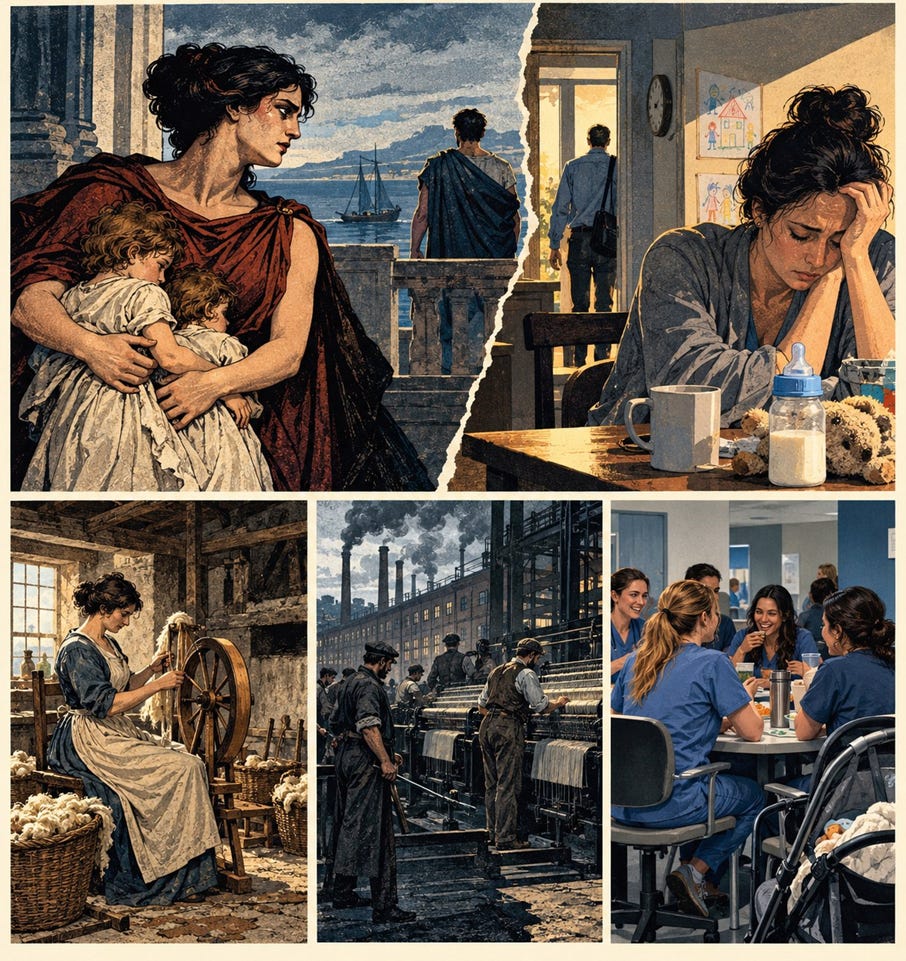
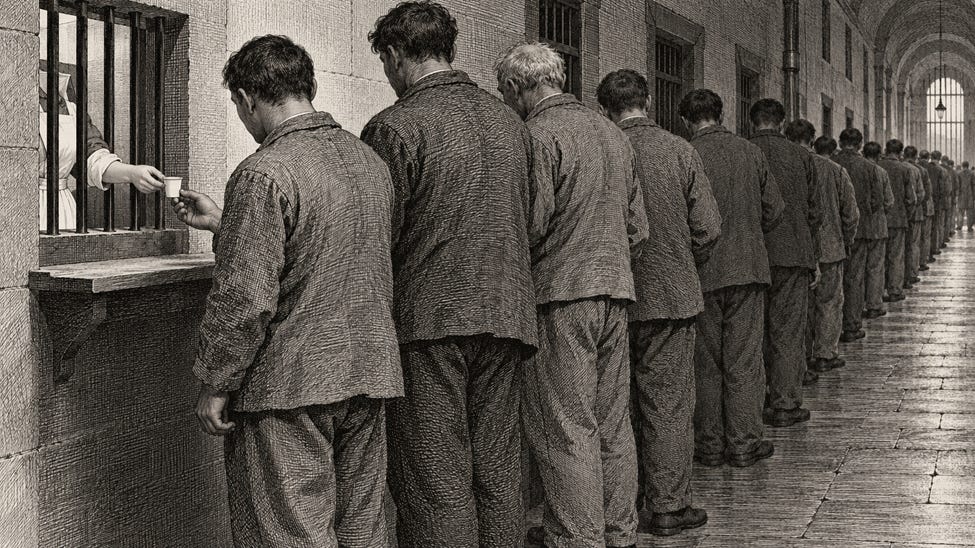



[…] Organizational restructuring shifted independent physician practices toward corporate health networks and standardized protocols. (Credit: Randy Bock MD PC) […]