
Yale professor, physician, and sociologist Nicholas Christakis recently launched For the Love of Science, intended to explain not merely scientific findings but the craft itself, particularly for PhD candidates and undergrads considering scientific careers. As Christakis put it, “Science is a hallmark of our civilization,” and its advances remain “at the root of our health, our wealth and our security.”
That defense of science arrives at a difficult moment. Public confidence in scientific institutions has weakened badly since COVID. Christakis described frustration with prolonged school masking and policies that became detached from evolving evidence. He was exasperated with mandates requiring children to wear masks outdoors (long after the data had shifted): “I was pulling my hair out.”
The deeper issue was rigidity masquerading as science. Many officials appeared unable or unwilling to recalibrate once policies had hardened into ideology. Institutional behavior resembled self-protection. I noted that many officials seemed driven by “misalignment of interest” and bureaucratic self-preservation.
Christakis repeatedly returned to the distinction between scientific certainty and scientific process. “You don’t emerge like Athena, fully armored from the head of Zeus,” he said, describing the gradual formation of scientists through repetition, failure, and incremental work. Yet he also emphasized the rare exhilaration of genuine discovery. Speaking about his famous work on obesity and social contagion, he recalled the moment he first visualized the spread of behavior through human social networks. “It’s an incredible, thrilling thing to see something that hadn’t been seen before,” he said. “Once you’ve drunk from that well, once you’ve had that experience, it’s intoxicating.”
That work helped establish one of Christakis’ defining themes: “emergence”. He often uses the metaphor of carbon allotropes to explain the concept. Arrange carbon atoms one way, and you get graphite, soft and dark. Arrange them another way, and you get a diamond, hard and clear. “The properties are not properties of the carbon atoms,” he explained. “They are properties of the collection of carbon atoms.” The same principle, he argues, governs human societies. “The same human beings, when connected in different ways, can give rise to different properties.”
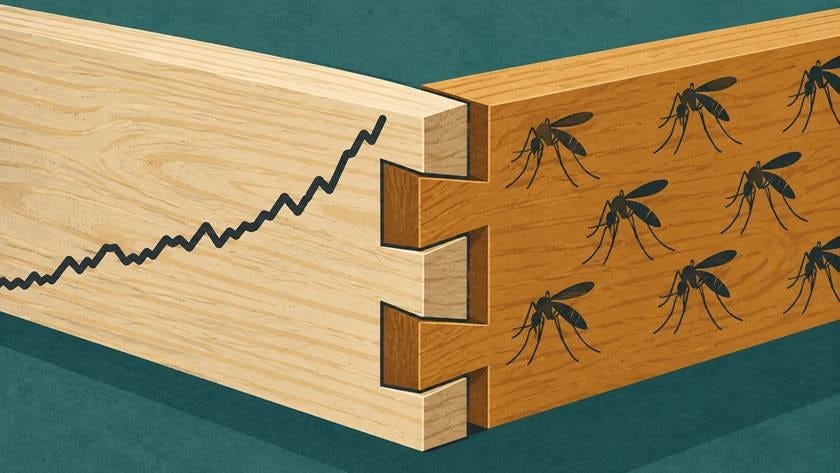
Those network structures influence not only behavior but also the spread of epidemics, panic, cooperation, and trust itself. Christakis described how assortative social networks, in which highly connected people cluster together, may actually slow the spread of epidemics compared with hub-and-spoke systems like airline routes. The structure of the network matters as much as the pathogen moving through it.
The conversation eventually moved beyond epidemiology toward something more fundamental: friendship. Christakis sees friendship not as a sentimental ornament but as a profound evolutionary adaptation. Human beings form durable, voluntary bonds with unrelated individuals, a trait relatively rare in nature. “Friendship is a very unusual phenotype,” he observed. His research now explores even the biological and olfactory dimensions of social attachment, including the subtle role smell may play in immediate human affinity.
Beneath all the technical language sat a larger question about civilization itself. Christakis defended curiosity-driven science and public investment in research, arguing that many transformative discoveries emerge unpredictably from obscure lines of inquiry. I countered that institutions often become bloated, insulated, and unaccountable. He conceded inefficiencies while defending the broader enterprise.
The unresolved tension remains central to modern society. Science requires freedom, skepticism, and trust. Bureaucracies often produce conformity instead. The challenge is preserving the former without surrendering entirely to the latter.
As Christakis put it, “You join this conversation that has stretched back centuries and will stretch forward centuries.” Whether the public still wishes to join that conversation may depend on whether scientific institutions can recover the humility they too often lost.
Discover more from Randy Bock MD PC
Subscribe to get the latest posts sent to your email.