
This week’s conversation with Pastor Darrell Scott cuts straight to the fault line between health and politics in America—a divide that too often masquerades as racial, when it’s really moral, familial, and spiritual. Black and White America experience such different health outcomes, not from biology, but from broken homes, lost purpose, and the slow corrosion of work and meaning.
When Pastor Darrell Scott endorsed Donald Trump in 2015, he became a marked man. The Cleveland minister– known for his pulpit thunder and street-level candor– was called a “sellout,” “Uncle Tom,” and worse. But he didn’t flinch. “I wasn’t going to vote for Hillary Clinton,” he said. “My decision wasn’t emotional– it was intellectual.”
Scott had met Trump in 2011, long before the campaign escalator ride. He asked the blunt question no one else dared: “What makes you think Black people will vote for you? Word on the street is you’re a racist.” Trump met his gaze. “I’m probably the least racist person you’ll ever meet,” he said– and left it at that. “He didn’t oversell it,” Scott recalled. “He didn’t trot out the token Black friend story. He just stood on it.”
Scott saw something the media missed: Trump’s instincts for connection, his appetite for work, and his willingness to treat politics like business– results first, optics later. “If people could see the Trump I see behind the scenes, he’d win,” Scott told his congregation. And he did.
The pastor had weathered storms before. He came up through Cleveland’s rough neighborhoods, where church was sometimes the only structure in sight. “I was born under Eisenhower,” he said. “Trump’s the most pro-Black president in my lifetime– not because he reacted to riots, but because he acted before they happened.”
That word– proactive— carries weight for him. He believes most presidents “helped Blacks after the fire,” while Trump “built the fire station first.” Critics scoffed. Scott didn’t care. He saw opportunity where others saw outrage.
I told him there’s a larger divide here– between the “mommy” and “daddy” parties. Democrats soothe; Republicans challenge. “Democrats ask, ‘How do you feel?’ Republicans ask, ‘What did you do?’” Scott smiled. “Maybe. But the Black community’s been burned by both parents.”
Pastor Scott bristles at statistics that reduce people to data points. “They always say ‘per capita’– Black crime, Black poverty, Black incarceration. But no one asks what’s fueling it,” he said. “Most of our crimes are financial. When people can work, they don’t rob, they don’t steal, they don’t sell dope.” He told the story of a depressed Ohio city that turned gangs into city workers. “The mayor gave them jobs. They didn’t have to hustle anymore. The crime disappeared,” he said. “Fix the economy and you fix the streets.”
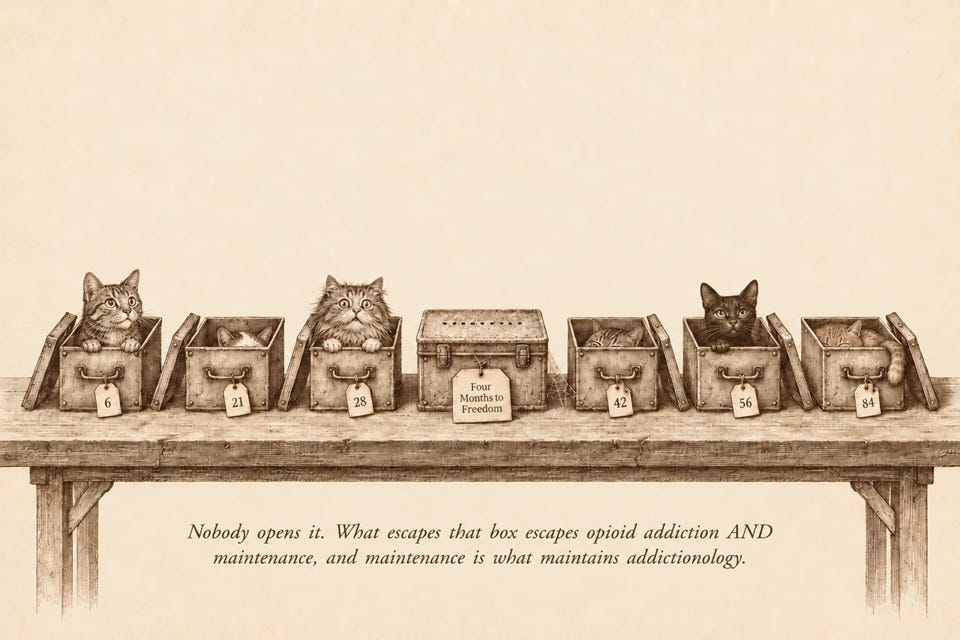
We talked about addiction. I mentioned Bruce Alexander’s Rat Park experiment— rats in empty cages consumed cocaine until they died, but rats in lively, social cages ignored it. “That’s the spiritual side,” Scott said. “People self-medicate when their environment kills their hope,” I told him. Methadone clinics had become permanent fixtures in the same neighborhoods that once thrived on work. “We traded sobriety for maintenance,” I said. He nodded. “Because when the opioid crisis crossed color lines, it became a disease instead of a crime. When it was in Harlem, we sent them to jail.”
Our talk returned to family—the real incubator of health. “A mother’s love heals,” I said. “But a father’s love builds direction.” Scott agreed, though carefully, as if stepping across a tender place. His pride in the Black family was unmistakable, yet so was the awareness of its fractures. “Just because a father isn’t in the home doesn’t mean he’s not in the child’s life,” he said. “I know men who had kids in high school and never left them. The home might be split, but the heart isn’t.” He mentioned LeBron James– another son of Ohio. “LeBron’s dad wasn’t there, but Eddie Jackson was,” Scott said. “He negotiated LeBron’s first Nike contract. Gave him the business mindset. He was the steady hand.”
For Scott, fatherhood is destiny. “We’ve got Democrats talking about families separated at the border,” he said, “but millions of Black families were split by prison walls because of minor drug charges. That’s the real separation.” Trump, he believes, understood that wound. “He gave people a chance to work, to matter,” Scott said. “When men can earn, they don’t need the bottle or the needle.”
During Trump’s first term, opioid deaths briefly declined– the only lull in three decades (probably you never heard this, given it was nearly universally ignored by legacy media’s begrudging any Trump success).

“He didn’t have a fancy plan,” I said. “Just jobs.” Scott grinned. “Sometimes that’s the plan.”
He still hears the criticism. “They say Trump’s not sympathetic enough,” Scott said. “But sympathy doesn’t pay rent. Daddy love says, ‘Get up.’ And that’s what our community needed.” The pastor’s theology is practical. “You can’t save a man who won’t stand up,” he said. “And you can’t blame color for a broken will.” Public health tends to treat numbers—life expectancy, incarceration, addiction—as disconnected statistics. But Pastor Scott’s story reminds us that those figures live inside people, families, and neighborhoods.
Join us at 5 pm ET weekdays on America Out Loud Talk Radio. Listen on iHeart Radio, our world-class media player, or our free apps on Apple, Android, or Alexa. Discover all the episodes on podcast networks, i.e., Apple Podcasts, Spotify, Pandora, TuneIn, Stitcher, and iHeart. You’ll find them the day after they air on talk radio, available on podcast. Extraordinary voices for extraordinary times.
Discover more from Randy Bock MD PC
Subscribe to get the latest posts sent to your email.