
Drug addiction recovery is about more than ending substance use. For people whose lives have been shaped by years of addiction, destructive behaviors, and repeated incarceration, rebuilding a life requires something deeper: understanding the thinking patterns, internal messages, and personal decisions that contributed to their circumstances.
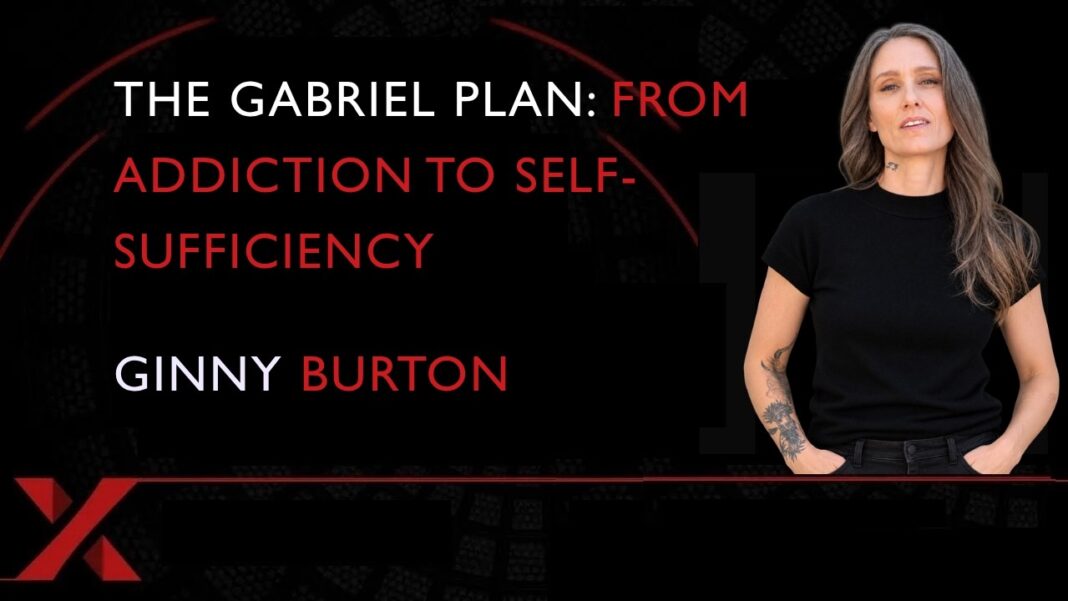
Ginny Burton knows this reality firsthand.
Her journey began with drug use at an age when most children are still discovering the world around them. By twelve, she was using hard street drugs. At fourteen, she was smoking crack cocaine. What followed was nearly three decades of addiction, incarceration, damaged relationships, and separation from her children.
But at forty, while facing the possibility of a fourth prison sentence, Burton reached a turning point. She recognized that something had to change, and that the system she had depended on was not going to provide everything she needed to build a different life.
Nearly fourteen years later, she has transformed her experiences into a process she now teaches inside correctional facilities.
Her story raises an important question: What does it actually take to help someone move beyond addiction and become self-sufficient?
Drug Addiction Recovery: A Childhood Lost to Addiction
Burton’s relationship with drugs and incarceration began remarkably early.
By the age of twelve, she was using hard street-level narcotics. Two years later, she was smoking crack cocaine. Her involvement with incarceration also began around twelve, establishing a destructive pattern that would continue until she reached forty.
Her experience illustrates how early exposure to drugs and destructive environments can shape the direction of an individual’s life.
Over time, her relationship with drugs became increasingly consuming. What initially developed as psychological dependence eventually became physical dependence.
The consequences extended far beyond her own health and well-being.
Her family relationships deteriorated. Her children were separated from her care and became part of the system. People who cared about her were affected by the decisions she made while pursuing drugs.
Burton describes becoming someone she had never intended to become.
Addiction had gradually taken control of her priorities, relationships, and decisions. The pursuit of drugs became so dominant that she was willing to victimize herself and others around her.
This is an important dimension of addiction that often gets lost in discussions focused exclusively on substances. Addiction can affect an entire network of relationships, leaving consequences that extend across families and communities.
The Cycle of Addiction and Incarceration
For nearly thirty years, Burton’s life followed a destructive cycle involving drug use, criminal behavior, and incarceration.
Prison and jail repeatedly separated her from the environments in which she struggled to manage her behavior. But separation alone did not equip her with the skills necessary to live differently after release.
Burton eventually became resentful of the system because she expected it to provide the tools she needed to navigate life outside prison.
Those tools never arrived in the way she had expected.
Her experience highlights a fundamental distinction between interrupting destructive behavior and addressing the underlying patterns that sustain it.
Incarceration can physically remove someone from an environment where destructive behaviors are occurring. However, what happens when that individual returns to society?
If the thinking patterns, internal messages, and behavioral mechanisms that contributed to the original problems remain unchanged, the conditions that made recovery difficult may still be present.
This raises important questions about prison rehabilitation and the purpose of correctional institutions.
Should the goal be limited to confinement and punishment, or should correctional systems also help individuals develop the capacity to make different decisions?
Burton’s experience suggests that meaningful change requires more than simply removing someone from their previous environment.
Facing a Fourth Prison Sentence: The Turning Point at Forty
At forty, Burton faced another arrest and the prospect of a fourth prison sentence.
This time, however, something was different.
She describes reaching a point where she recognized that her life was heading toward death. Her final arrest became the moment when she understood that continuing along the same path was no longer an option.
She also recognized that the system was not going to deliver the transformation she needed.
Prison had provided something important: separation from an environment she could not manage on her own. But what she did with that separation would ultimately become her responsibility.
Rather than waiting for someone else to change her circumstances, Burton decided to turn inward.
She began examining the mechanisms behind her destructive behavior.
This meant looking closely at her thought processes, the messages she repeated to herself, and the internal patterns that had influenced her decisions for more than three decades.
Instead of focusing exclusively on what had happened to her, she began examining how she thought, how she responded to circumstances, and what needed to change.
It was a different approach from simply waiting for another intervention.
Understanding the Internal Mechanisms Behind Addiction
One of the most significant aspects of Burton’s story is her emphasis on examining the internal processes that contributed to her behavior.
She describes dismantling the mechanisms that had sustained her destructive lifestyle.
This included questioning her own thinking, examining the messages she carried internally, and identifying the patterns that repeatedly directed her toward harmful decisions.
Her approach places considerable emphasis on personal responsibility.
That does not mean ignoring the circumstances surrounding addiction. Burton acknowledges the difficult experiences that shaped her life, including the environments, relationships, and events that contributed to her trajectory.
But she also recognizes that understanding those circumstances is different from remaining trapped by them.
Her transformation involved moving beyond resentment and developing a process that allowed her to approach life differently.
This distinction matters when discussing substance abuse recovery.
Stopping drug use is an important step, but rebuilding relationships, developing better judgment, managing personal responsibilities, and learning to navigate everyday challenges are also essential parts of creating a different future.
Recovery must ultimately become something that can be practiced in ordinary life, not simply something that happens inside a correctional facility.
From Personal Recovery to Helping Others in Prison
Nearly fourteen years after her turning point, Burton has taken the process she developed and brought it into correctional facilities.
Rather than keeping her experience to herself, she now teaches others to examine the internal mechanisms and thought processes that contributed to destructive behavior.
This represents an important development in her story.
Someone who spent nearly three decades caught in addiction and incarceration is now working with people who face similar challenges.
Her experience gives her a perspective that cannot easily be acquired through textbooks or institutional training alone.
She understands the consequences of addiction from personal experience: the damaged relationships, the loss of personal direction, the repeated involvement with the criminal justice system, and the difficulty of imagining a different future.
Burton reports that people participating in the process are turning their lives around and describes the results as encouraging.
Although her experience should not be interpreted as proof that one approach works for everyone, it raises an important possibility: correctional facilities can become places where people begin developing the skills necessary to make different choices.
The question is whether these opportunities can be expanded, evaluated, and made available to more people.
Why Recovery Requires More Than Incarceration
Burton’s experience challenges the assumption that removing someone from society automatically addresses the problems that led to incarceration.
Confinement can interrupt a destructive pattern, but it does not necessarily teach someone how to establish healthier relationships, manage responsibilities, or make decisions after release.
The transition back into society presents its own challenges.
People leaving prison must navigate employment, family relationships, financial responsibilities, and the everyday pressures of independent living.
Without the ability to approach these challenges differently, returning to familiar patterns can become a serious risk.
This is why rehabilitation deserves attention beyond the question of punishment.
A meaningful approach to prison rehabilitation should consider whether individuals are developing practical skills, greater self-awareness, and the capacity to take responsibility for their decisions.
Burton’s work offers one perspective on how that process might begin.
Her story also reminds us that people should not be permanently defined by the worst periods of their lives. Past behavior matters, and accountability matters, but the possibility of personal transformation should not be dismissed.
Personal Responsibility and the Possibility of a Different Future
Perhaps the most important lesson from Burton’s journey is that personal transformation requires active participation.
She does not describe her recovery as something that simply happened when she left prison. Instead, she describes a deliberate process of examining and changing the internal patterns that had influenced her life.
Her experiences taught her that she could not depend entirely on institutions to provide the skills she needed.
She had to become actively involved in changing her own circumstances.
Today, she uses those difficult experiences to help others begin examining their own lives.
Her journey from early drug use and repeated incarceration to teaching inside correctional facilities demonstrates the possibility of moving beyond a destructive past.
It also raises a larger question for society: Are we doing enough to help people develop the skills necessary to live independently after incarceration?
Punishment may interrupt a pattern. Separation may create an opportunity. But rebuilding a life requires something more.
It requires the ability to think differently, accept responsibility, and develop the capacity to make better decisions.
Ginny Burton’s story is ultimately about the possibility of recovery, personal accountability, and learning to build a life that no longer revolves around addiction.
Watch the Full Interview
Ginny Burton’s experience offers a powerful starting point for a broader discussion about addiction, incarceration, institutional accountability, and self-sufficiency.
In the full conversation, we explore what meaningful recovery requires, why incarceration alone may not prepare people for life outside prison, and how individuals can begin rebuilding their lives.
Watch the complete interview to hear more about her journey and the process she now teaches inside correctional facilities.
Frequently Asked Questions
1. Who is Ginny Burton?
Ginny Burton is a recovery advocate and educator whose personal experience includes nearly three decades of addiction and incarceration. After transforming her own life, she began teaching the process she developed inside correctional facilities.
2. How did Ginny Burton overcome drug addiction?
At forty, while facing a fourth prison sentence, Burton began examining her internal thought processes, personal messaging, and behavioral patterns. She developed a process focused on understanding and changing the mechanisms that contributed to her destructive behavior.
3. Why is incarceration not always enough to overcome addiction?
Incarceration can separate individuals from environments where destructive behaviors occur, but confinement alone does not necessarily provide the practical skills needed to navigate life after release. Rehabilitation also requires attention to personal development and behavioral change.
4. What role does personal responsibility play in addiction recovery?
Personal responsibility involves recognizing one’s decisions, examining destructive patterns, and actively participating in the process of change. Burton’s experience emphasizes that individuals must become involved in rebuilding their lives rather than relying entirely on external institutions.
5. What is Ginny Burton doing today?
Nearly fourteen years after her turning point, Burton teaches the process she developed inside correctional facilities. She reports that participants are making meaningful changes and turning their lives around.
Discover more from Randy Bock MD PC
Subscribe to get the latest posts sent to your email.