

In 1971, President Richard Nixon declared drug abuse “public enemy number one.” The United States was confronting an apparent heroin epidemic, including alarming reports of addiction among American servicemen in Vietnam. The government responded with an ambitious federal treatment program, one that would eventually help establish methadone maintenance as a central feature of American addiction medicine.
Half a century later, opioid addiction remains a major public health problem. Methadone and buprenorphine are routinely presented as the gold standard of treatment, even as the institutions delivering them have become substantial commercial enterprises. How did a federal initiative intended to help people escape addiction become a system in which patients may remain on opioid medications indefinitely?
That question animates my conversation with historian Emily Dufton, author of Addiction, Inc.: Medication-Assisted Treatment and America’s Forgotten War on Drugs, published by the University of Chicago Press in April 2026.
Dufton approaches the subject through a personal tragedy. A childhood friend, Dana, died by suicide after years of escalating prescription opioid use. His death, along with the deaths of other former classmates, prompted her to investigate why established addiction treatments had failed to reach people like him.
Her research took eight years. What she found was a history of federal experimentation, political ambition, pharmaceutical commercialization, and a treatment system whose incentives have changed considerably since its inception.
Nixon’s forgotten treatment experiment
The original federal initiative was more varied than today’s popular accounts suggest. Under psychiatrist Jerome Jaffe, Nixon’s administration supported methadone maintenance alongside detoxification, abstinence-based programs, therapeutic communities, counseling, and residential rehabilitation.
Dufton stresses that Jaffe resisted being remembered simply as “Mr. Methadone.” His ambition was a multimodal system in which patients could pursue different forms of recovery according to their circumstances.
That history matters because the contemporary debate frequently assumes that maintaining patients on opioid medications represents the definitive treatment solution. Yet the original program entertained a much broader range of approaches, including helping patients become drug-free.
The Vietnam experience provided another important lesson.
In 1971, congressional investigators warned that tens of thousands of heroin-addicted servicemen might return home as dangerous, chronically dependent men. Returning soldiers were subjected to urine testing, and those testing positive faced delays in leaving Vietnam.
But the subsequent research of epidemiologist Lee Robins challenged the assumption that heroin use inevitably produced permanent addiction. Many veterans stopped using heroin after returning to the United States; relatively few resumed sustained dependent use.
The distinction between drug exposure, physical dependence, and persistent compulsive use is fundamental. A person who has used heroin, even repeatedly, has not necessarily acquired a permanent condition requiring lifelong pharmacological management.
The Suboxone business
The later history of buprenorphine introduces a different set of incentives.
The Drug Addiction Treatment Act of 2000 permitted qualified physicians to prescribe certain controlled substances for opioid dependence outside traditional methadone clinics. Buprenorphine, marketed principally as Suboxone, became the major beneficiary.
Dufton recounts how Reckitt Benckiser Pharmaceuticals, subsequently Indivior, transformed a federally supported therapeutic development into an extraordinarily successful commercial product. The company’s sales strategy increasingly targeted physicians treating prescription opioid dependence, drawing on marketing personnel previously employed by Purdue Pharma.
The parallels with OxyContin are difficult to overlook. A pharmaceutical company can profit from widespread opioid prescribing; another can profit from the continuing treatment of opioid dependence. In both cases, commercial success need not correspond to successful long-term recovery.
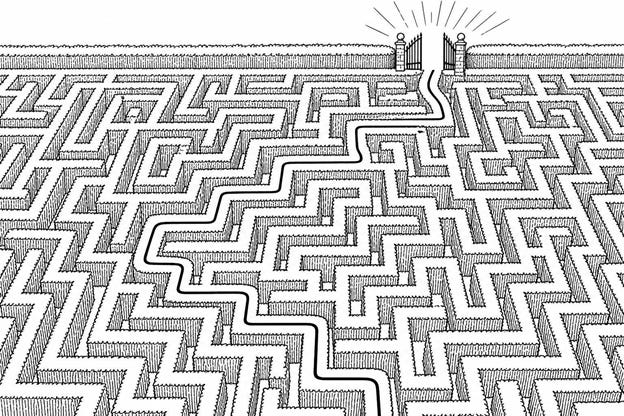
That does not establish that buprenorphine lacks therapeutic value. It does raise a question about what constitutes successful treatment. Does a patient’s remaining on medication represent an endpoint, or should treatment also offer a credible route toward eventual independence?
My own experience treating opioid dependence has led me to question the assumption that maintenance should be indefinite. Withdrawal can be managed through gradual tapering, although the difficulty varies considerably, and discontinuation carries risks. For appropriately selected patients who wish to stop, successful treatment can include leaving opioid medication behind.
A conspiracy of interests
During our conversation, I describe what I call a “conspiracy of interests.” It requires no secret meetings and no deliberate coordination.
Consider an ice cream cone falling onto the sidewalk. Ants, flies, birds, and other creatures converge to consume it. None arranged for the ice cream to fall; each responds to an opportunity.
Something similar can occur in medicine. Pharmaceutical manufacturers, treatment operators, regulators, and professional organizations may pursue their individual interests while collectively sustaining a system whose outcomes deserve closer scrutiny.
Dufton agrees that the commercialization of addiction treatment has distorted the original public health mission. She describes the rise of a methadone industry whose business model depends on continuing patient enrollment. We also consider whether the same description applies to the Suboxone industry.
Yet we differ over the implications. Dufton favors accessible, coordinated treatment, including maintenance medications, without the financial exploitation that has characterized parts of the American system. I place greater emphasis on recovery that can eventually free a patient from maintenance medication altogether.
These positions are not necessarily incompatible. Medication can reduce overdose risk and stabilize patients, while individualized treatment can preserve the possibility of tapering when clinically appropriate and desired.
What should treatment accomplish?
One of Dufton’s most interesting conclusions concerns the treatment options that disappeared as the American system became increasingly commercialized.
The early federal program did not prescribe one universal destination. It supported several forms of treatment because patients had different needs and different goals. Dufton wants to recover that flexibility, along with a public commitment to making care accessible.
I would go further in questioning the assumptions underlying maintenance itself. When a person remains dependent on a prescribed opioid for years, we should distinguish clinical stability from freedom from dependence. Both may have value, but they are different outcomes.
Our disagreement is substantial, yet our conversation repeatedly returns to the same concern: treatment systems must serve patients, including patients who want to become medication-free.
Dufton’s book restores a largely forgotten chapter of American medical and political history. It also invites a question that every addiction-treatment provider should be prepared to answer.
When treatment becomes a continuing source of revenue, who has the strongest incentive to help the patient leave?
Discover more from Randy Bock MD PC
Subscribe to get the latest posts sent to your email.