
A physician learns early that the route of administration matters. A substance swallowed, injected into muscle, or delivered directly into a vein can produce different effects. Dose matters too, including the concentration that reaches a particular tissue and the speed of its arrival. These ordinary clinical considerations stand at the center of Marc Girardot’s bolus hypothesis.
When I spoke with Girardot in 2022, he was trying to explain why some vaccine recipients reported serious injuries while others appeared unaffected. He proposed that accidental injection into a blood vessel could deliver a concentrated cluster of vaccine particles to vulnerable tissues. The location and concentration of that exposure, he argued, could help explain different outcomes.
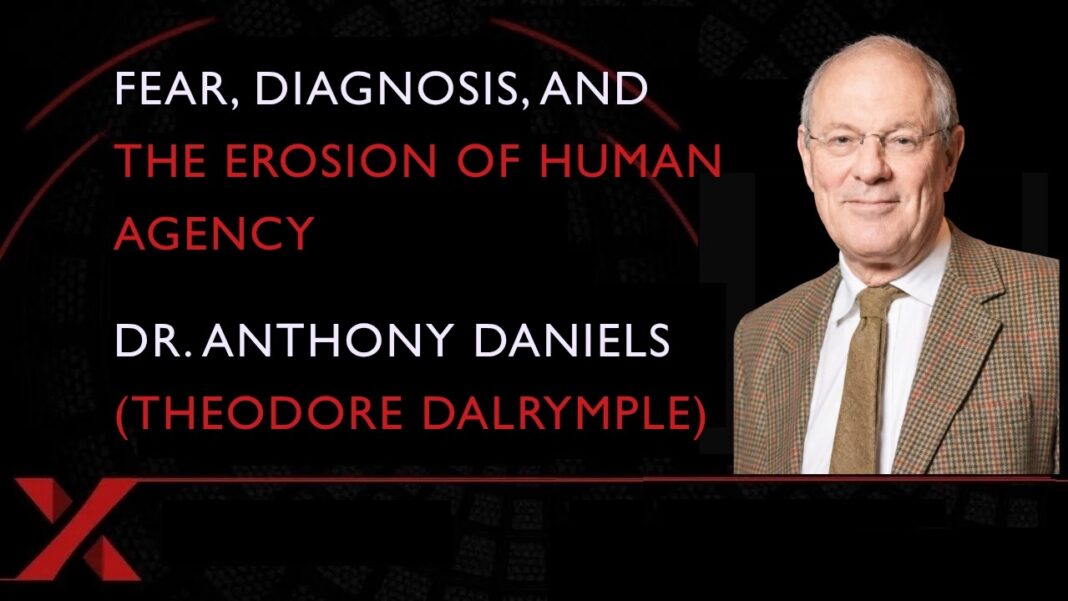
Our exchanges took place under constraints that deserve to be remembered. On December 5, 2022, YouTube notified me that it had removed a separate interview, “Coronavirus Conversation, with Marc Girardot (on PRE-EXISTING immunity to Covid-19).” The notice announced a first strike against my channel and cited its medical misinformation policy.
YouTube’s stated reason was that it prohibited content “explicitly denying the existence of COVID-19 or its severity.” That was the platform’s characterization; the notice did not identify the offending statement or provide a timestamp. The title concerned pre-existing immunity, a subject that requires examining what immune recognition existed before a person’s exposure to SARS-CoV-2. The removal notice alone does not establish what was said or whether YouTube characterized it accurately.
That separate removal gives context to the awkward references to the “V word” in this bolus interview. We were speaking in an environment where a medical exchange could bring the loss of a recording and a penalty against the channel. Such penalties can influence which questions a host asks and how plainly a guest answers.
Girardot approached the injection question through his background in technology, manufacturing, and consulting, including biotechnology. He treated vaccination as a repeated procedure subject to human error. His concern was whether an occasional error in delivery could produce consequences that an analysis of the vaccine’s ingredients alone would miss.
His concern also became personal when one of his sons felt unwell after vaccination. Girardot arranged an evaluation; his son proved to be fine. That reassuring result mattered because his explanation had to accommodate both an injured recipient and an unharmed one.
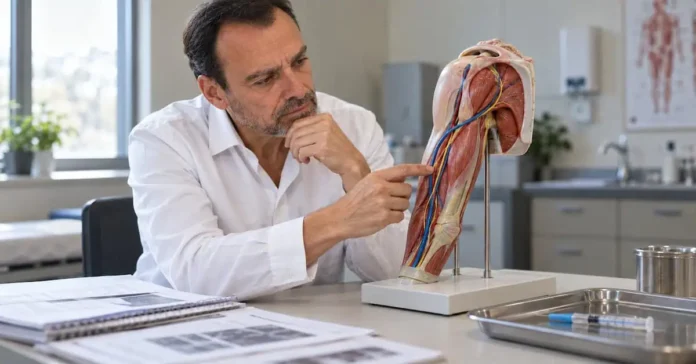
His proposed sequence begins with a needle entering a blood vessel. A rapid injection introduces a bolus into the circulation; vaccine particles then reach cells lining blood vessels. Girardot argued that an immune attack on affected cells could damage that lining, leading to clotting, organ injury, or disruption of barriers separating blood from protected tissues.
Aspiration was one practical issue we examined. Pulling back on the syringe plunger before injecting checks for blood, and I recalled its being part of my training. Girardot advocated aspiration and slower injection. His argument raises measurable questions about the frequency of intravascular delivery and whether changing technique reduces injury.
A 2021 mouse study supplied experimental grounds for investigating the route: intravenous administration of Pfizer’s mRNA vaccine could induce acute myopericarditis. That finding supports further investigation under defined conditions; it does not establish how often accidental intravenous vaccination occurs in people. pmc.ncbi.nlm.nih.gov
Girardot expanded his argument in The Needle’s Secret, published in March 2024, and continues writing through his Bolus Theory Series. His broader claims about chronic disease require evidence extending well beyond the original injection question. Meanwhile, CDC guidance continues to say aspiration is unnecessary at recommended vaccination sites. bookshop.org
Near the interview’s end, I asked, “Is there a way to verify your theory?” Girardot cited a reported Danish reduction in myocarditis, then acknowledged that he could not find the study. Both statements belong in the record. YouTube’s removal of another interview supplied no answer to my question: a study that measures technique and subsequent outcomes.
Discover more from Randy Bock MD PC
Subscribe to get the latest posts sent to your email.