

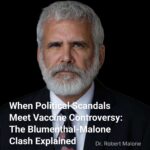
Political scandal erupts as Senator Blumenthal attacks vaccine scientist Dr. Robert Malone over CDC shooting. Learn about stolen valor claims, ACIP controversy, and free speech debates in this explosive political clash.
Table of contents
The Stolen Valor Senator Strikes Again
In the halls of Washington D.C., where political scandals brew daily, Senator Richard Blumenthal has once again found himself at the center of controversy. This time, his target isn’t a political opponent but Dr. Robert W. Malone, a respected vaccine scientist and ACIP committee member appointed by HHS Secretary Robert F. Kennedy Jr.
A Pattern of Deception: Blumenthal’s Vietnam Lies
Blumenthal’s credibility problem isn’t new. Back in 2008, he boldly told veterans, “We have learned something important since the days that I served in Vietnam.” The truth tells a different story entirely.
The Real Story Behind Blumenthal’s Military Service:
- In 1970, facing potential deployment, Blumenthal secured a coveted Marine Reserve position
- His unit focused on local projects like campground maintenance and Toys for Tots drives
- He never served in Vietnam, despite repeatedly implying otherwise to veterans
In 2003, Blumenthal doubled down on his deception, telling Iraq and Afghanistan veterans, “When we returned, we saw nothing like this.” These statements represent classic stolen valor – falsely claiming military honors and experiences never earned.
The Modern Drive-By: Attacking Dr. Malone
Now, from his secure Washington perch, Blumenthal has targeted Dr. Robert W. Malone with what can only be described as a political drive-by shooting. In August 2025, following a tragic incident at the CDC where a disturbed gunman killed a police officer, Blumenthal immediately weaponized the tragedy for political gain.
The Manufactured Controversy
Blumenthal’s attack centered on a meme Dr. Malone had posted hours before the shooting – a piece of satirical content completely unrelated to the tragic events. As Malone explained, “Blumenthal basically accused me of thought pre-crime because I had posted that particular meme at ten-thirty in the morning when the shooting occurred at five PM.”
Key Facts About the Attack:
- The meme was posted at 10:30 AM
- The shooting occurred at 5:00 PM
- No connection existed between the content and the tragedy
- Blumenthal used terms like “random,” “senseless,” and “deranged” to describe both the perpetrator and link it to Malone
Free Speech Under Fire: The First Amendment Implications
This controversy goes far beyond personal politics – it strikes at the heart of constitutional rights. Dr. Malone’s response was clear: “Apparently, based on Senator Blumenthal’s attacks on me, I would say he’s also an opponent of the First Amendment. Because this is just free speech and moreover, it’s humor — the last bastion in a tyranny of freedom of speech for free people.”
The Bigger Picture: Silencing Vaccine Skeptics
Blumenthal’s attack isn’t isolated but part of a systematic pattern targeting those who question vaccine research and public health orthodoxy. Dr. Robert Malone, who had worked on early research into mRNA technology but is now critical of mRNA vaccines, has suggested that COVID vaccines may cause cancer. His appointment to the ACIP committee represents a significant shift toward transparency in vaccine policy.
Why This Matters:
- Malone advocates for rigorous, transparent science
- His ACIP critiques expose selective data practices in vaccine recommendations
- The attack may be defending pharmaceutical interests
- Scientific debate is being criminalized through political pressure
The ACIP Connection: Kennedy’s Revolutionary Appointments
The new members will join the Advisory Committee on Immunization Practices, or ACIP, which advises the Centers for Disease Control and Prevention. Robert F. Kennedy Jr.’s appointment of vaccine-critical scientists like Malone to the ACIP committee has shaken the medical establishment to its core.
Defending the Status Quo
Blumenthal’s aggressive targeting of Malone appears designed to:
- Protect pharmaceutical industry interests
- Maintain bureaucratic control over vaccine policy
- Silence legitimate scientific debate
- Intimidate other potential critics
The Dangerous Precedent: Criminalizing Satire
Perhaps most concerning is Blumenthal’s apparent inability – or unwillingness – to distinguish between satirical content and genuine threats. His Harvard magna cum laude education seems worthless when applied to real-world situations requiring basic judgment and constitutional understanding.
What This Means for Americans
When elected officials begin treating humor and political satire as potential criminal acts, we’ve crossed a dangerous line. The incident raises serious questions about:
- The erosion of First Amendment protections
- Political weaponization of tragedy
- The silencing of scientific dissent
- Abuse of senatorial power
The Pattern Continues: From Vietnam to Virginia
The connection between Blumenthal’s stolen valor past and his current attacks on Dr. Malone reveals a consistent pattern of deception and opportunism. Whether fabricating military service or manufacturing controversies, the Senator demonstrates a troubling willingness to distort truth for political gain.
Moving Forward: The Need for Accountability
As this political scandal unfolds, Americans must ask themselves: Can we trust elected officials who’ve built careers on lies to suddenly champion truth? The Blumenthal-Malone controversy serves as a stark reminder of why transparency, honest debate, and constitutional protections remain essential in our democracy.
The stakes couldn’t be higher: When senators attack scientists for posting memes while claiming stolen military valor, our political system has reached a crisis point that demands immediate attention from voters and fellow lawmakers alike.
Related Keywords: political corruption, government accountability, military service fraud, vaccine policy, scientific debate, constitutional rights, political weaponization, medical freedom
Discover more from Randy Bock MD PC
Subscribe to get the latest posts sent to your email.