


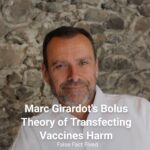
What if the way an injection is administered matters as much as the substance being injected? In this 2022 interview, I speak with Marc Girardot about his bolus theory, a hypothesis proposing that accidental entry of an injected vaccine dose into a blood vessel could help explain certain patterns of injury.
Girardot argues that the route an injection takes through the body, the concentration of material reaching particular tissues, and the speed at which it disperses may influence the biological response. He believes these factors deserve greater investigation, particularly in discussions about mRNA vaccines and reported cases of myocarditis.
The interview examines his reasoning, his comparisons with other injection procedures, and the scientific questions that must be answered before his proposed mechanism can be accepted or rejected.
It also preserves an important moment in the conversation: when asked for evidence supporting his claim that Denmark experienced a reduction in myocarditis after changing injection practices, Girardot acknowledges that he could not locate the study.
That distinction matters. A hypothesis can raise legitimate research questions without every claim supporting it being established.
Table of Contents
What Is Marc Girardot’s Bolus Theory?
Marc Girardot’s bolus theory proposes that the accidental injection of a concentrated dose of a vaccine directly into a blood vessel could produce a different biological response from an injection administered into the intended tissue.
The word bolus refers to a concentrated quantity of a substance delivered over a relatively short period. In medicine, bolus administration is used in certain clinical settings to deliver drugs or other substances rapidly.
Girardot applies this concept to vaccination. He argues that an injection intended for muscle tissue might occasionally enter a blood vessel and that the resulting distribution of vaccine material could differ from the intended intramuscular route.
In his account, this difference could influence where vaccine components travel, which cells encounter them, and how the immune system responds.
His broader hypothesis proposes that concentrated exposure in particular tissues could contribute to inflammation or injury, including injury involving the heart or blood vessels.
These are Girardot’s proposed explanations, not established conclusions about the cause of vaccine-related injuries.
The central question is whether the mechanisms he describes occur under real-world vaccination conditions frequently enough to explain a meaningful proportion of observed adverse events.
Answering that question requires evidence beyond biological plausibility or comparisons with other injection procedures.
How Did the Bolus Theory Develop?
Girardot explains in the interview that his interest developed during the COVID-19 pandemic, when he began examining epidemiological data and research concerning vaccine technology.
His professional background was primarily in business, technology, complex systems, and work involving biotechnology and pharmaceuticals. He describes approaching the subject through systems analysis and an interest in identifying mechanisms that might explain unexpected outcomes.
He became particularly interested in the way mRNA vaccines deliver genetic instructions into cells and how the immune system responds to the resulting antigen expression.
Girardot argues that the intended route of administration should be considered when evaluating the biological effects of these vaccines.
During the interview, he describes a model in which the distribution of vaccine material, the concentration reaching particular tissues, and the timing of immune responses could influence the nature of an injury.
His reasoning attempts to connect injection technique with the possibility of different outcomes among recipients.
However, an explanatory model must do more than describe a plausible mechanism. Researchers must establish whether the proposed events actually occur in people, measure their frequency, and determine whether they explain clinical outcomes better than competing explanations.
That is the distinction between proposing a theory and demonstrating that it accurately describes what happens in clinical practice.
What Is the Proposed Connection Between Injection Technique and Vaccine Injury?
The central claim in Girardot’s hypothesis concerns the difference between an intended intramuscular injection and an unintended intravascular injection.
An intramuscular injection is administered into muscle tissue. An intravascular injection delivers a substance directly into a blood vessel.
These routes are not interchangeable. Medicines and vaccines are developed and administered according to specified routes, and deviations from the recommended route can affect their performance or safety.
Girardot argues that an accidental intravascular injection could change how quickly vaccine material enters circulation and where it is distributed.
He focuses particularly on the possibility that concentrated exposure might affect the endothelium, the layer of cells lining blood vessels.
According to his proposed mechanism, damage to these cells could trigger further biological responses, potentially involving inflammation or blood clotting.
He also suggests that the location and concentration of exposure could help explain why different individuals might experience different outcomes.
However, several distinct questions must be answered before this chain of events can be established:
- How frequently does unintended intravascular administration occur during routine vaccination?
- What quantity of vaccine material, if any, would enter a blood vessel under these circumstances?
- How would that exposure affect the distribution of the vaccine’s components?
- Would the resulting biological effects correspond to documented clinical injuries?
- Could the proposed mechanism explain differences in the frequency and severity of those injuries?
Evidence supporting one step in this chain would not automatically establish all the others.
The theory therefore needs to be evaluated as a series of testable claims rather than as a single explanation for every reported adverse event.
The Scientific Question of Myocarditis
One of the most important subjects in the interview is myocarditis, an inflammation of the heart muscle. Pericarditis, which affects the tissue surrounding the heart, is also discussed.
These conditions have received attention in research concerning COVID-19 mRNA vaccination.
Girardot argues that the route of administration could influence the likelihood or nature of certain adverse reactions. To support further investigation of this possibility, he refers to an animal experiment examining intravenous and intramuscular administration of an mRNA COVID-19 vaccine.
The study, published in Clinical Infectious Diseases in 2022, reported histopathological findings consistent with acute myopericarditis in mice that received the vaccine intravenously.
The researchers did not observe the same pattern of myopericarditis in the intramuscular group under the conditions examined.
This finding is relevant to the question of whether administration route can affect biological outcomes. However, the distinction between an animal experiment and evidence from human vaccination is essential.
The experiment does not establish how frequently accidental intravenous administration occurs in people. Nor does it demonstrate that Girardot’s broader theory explains the full range of reported vaccine-related injuries.
The study also cannot, by itself, establish that changing routine injection practices would reduce myocarditis in human populations.
Other research has raised questions about the reproducibility and interpretation of animal models of mRNA vaccine-associated myocarditis, underscoring the importance of examining the full body of evidence rather than relying on a single experiment.
The appropriate conclusion is that the study provides a research finding about a particular experimental model. Its implications for routine human vaccination require separate evaluation.
Vaccine Aspiration: Why Does It Matter to the Interview?
A substantial part of the discussion concerns aspiration, a procedure in which a healthcare professional pulls back on the syringe plunger after inserting the needle and before injecting the substance.
If blood appears in the syringe, this can indicate that the needle has entered a blood vessel.
Girardot argues that aspiration should be reconsidered as a precaution against unintended intravascular administration. He also advocates slower injection, believing that the speed of delivery could influence the concentration of material reaching particular tissues.
During the interview, I describe my own medical training and recall being taught to aspirate before administering certain injections.
That recollection provides historical context for the discussion, but the question of current best practice must be answered through contemporary clinical evidence and guidance.
The US Centers for Disease Control and Prevention (CDC) states that aspiration is not recommended before administering routine vaccines at the recommended injection sites. Its guidance explains that the relevant blood vessels are not considered large enough to allow an intravenous push of vaccine under the circumstances described.
The CDC also notes that aspiration can increase discomfort and that evidence has not established a safety benefit from routinely aspirating before vaccination.
This creates an important distinction between Girardot’s proposed precaution and established vaccination guidance.
His argument is that the possibility of unintended vascular administration warrants reconsideration of aspiration. Current US guidance, by contrast, does not recommend routine aspiration for vaccination at the designated sites.
Evaluating the disagreement requires evidence about the actual frequency of unintended vascular administration, the effectiveness of aspiration in preventing it, and the balance of potential benefits and disadvantages.
The interview raises those questions, but it does not settle them.
What Can Other Injection Procedures Tell Us?
Girardot compares vaccination with dental nerve blocks, cosmetic filler injections, and injections used by bodybuilders.
His purpose is to demonstrate that unintended intravascular administration is a recognized concern in some injection settings.
These comparisons provide context, but different procedures must be evaluated according to their specific anatomy, substances, equipment, injection sites, and clinical objectives.
For example, cosmetic fillers and certain other injectable substances have distinct risks when inadvertently introduced into a blood vessel. Evidence about those procedures cannot automatically establish the risk associated with an intramuscular vaccine.
Likewise, the experiences of people who self-administer substances for bodybuilding cannot directly establish the frequency or consequences of unintended vascular administration during routine vaccination.
The useful research question is whether these other fields provide evidence about mechanisms that might also be relevant to vaccination.
If so, researchers would need to determine which similarities are biologically meaningful and which differences limit the comparison.
A persuasive explanation must account for both.
The Difference Between Biological Plausibility and Proof
A recurring theme in the interview is the attempt to identify a mechanism that could connect injection technique with reported adverse events.
Mechanistic reasoning is an important part of scientific research. It can help researchers formulate hypotheses, design experiments, and identify questions that deserve further investigation.
However, a plausible mechanism is not the same as a demonstrated cause.
For Girardot’s theory to become an established explanation, evidence would need to support several separate propositions.
First, researchers would need reliable information about the frequency of unintended intravascular administration during routine vaccination.
Second, they would need to demonstrate that the proposed exposure can produce the specific biological effects described, under conditions relevant to human vaccination.
Third, they would need evidence connecting those effects with documented clinical outcomes.
Finally, studies would need to establish whether the theory explains those outcomes better than alternative mechanisms or combinations of contributing factors.
These requirements are particularly important when a hypothesis is used to explain a wide range of conditions.
A theory that proposes a common cause for myocarditis, thrombosis, neurological symptoms, and other conditions must be tested against the evidence for each outcome individually.
Similar timing or a shared proposed mechanism does not establish that different conditions have the same cause.
The scientific value of Girardot’s hypothesis therefore depends on whether its predictions can be measured, independently reproduced, and distinguished from competing explanations.
The Danish Myocarditis Claim: An Important Unanswered Question
Near the end of the interview, I ask Girardot whether his theory can be verified or falsified.
In response, he refers to a reported reduction in myocarditis following a change in injection practices in Denmark. He describes a figure of approximately 60 percent and contrasts Denmark with Norway.
I ask to see the study supporting that claim.
Girardot acknowledges that he could not locate the study and asks me to send it to him if I find it.
That exchange is important because it preserves the difference between a reported claim and a verified research finding.
Without an identifiable study, it is not possible to assess the reported figure, determine how the comparison was conducted, or establish whether the proposed change in injection practice caused the alleged reduction.
A reliable evaluation would require the original data or publication, a clear description of the relevant protocols, comparable populations and observation periods, and an analysis of other factors that might have affected the results.
The claim should therefore not be treated as established evidence that aspiration prevents myocarditis.
It remains a claim raised during the interview for which the supporting study was not identified.
Preserving this admission is part of making the conversation available for meaningful scrutiny.
YouTube, Censorship, and the Decision to Publish This Interview
This recording has an additional history.
On December 5, 2022, YouTube removed an earlier interview I had conducted with Girardot about pre-existing immunity to COVID-19 and issued a strike against my channel.
The decision affected what I was willing to upload to that channel afterward. As a result, I did not publish this separate conversation about his bolus theory there at the time.
The interview remained a record of a discussion that had taken place in 2022, but it was not made available to a wider audience through that channel.
I am now bringing the conversation forward because questions about medical procedures, research methods, and competing explanations for adverse events deserve examination.
Making a discussion available does not mean endorsing every statement made during it. It allows viewers to hear the argument in its original context, examine the evidence cited, and identify where further research is needed.
The distinction is especially important in medical discussions, where both unsupported certainty and the premature dismissal of testable questions can interfere with productive inquiry.
Marc Girardot’s Book, The Needle’s Secret
In 2024, Girardot published The Needle’s Secret: Unraveling the Mystery of Vaccine Harm, and the Bolus Theory Revolution.
The book develops the argument presented in this interview and expands on his proposed connection between injection technique and adverse health outcomes.
The 2022 recording offers an opportunity to hear Girardot explain the hypothesis before the book’s publication.
It also preserves the questions raised during the original exchange, including the challenge of identifying evidence that could verify or falsify the theory.
Readers who explore his subsequent work should distinguish between the claims he advances, the evidence he presents in support of them, and conclusions that have been independently established by research.
The existence of a detailed explanation does not, by itself, establish that the explanation is correct. Equally, a testable hypothesis should be evaluated by examining its predictions and the quality of the available evidence.
What Would It Take to Test the Bolus Theory?
The most productive way to examine the bolus theory is to identify the evidence that could support or contradict it.
Several questions would be particularly important.
1. How often does unintended intravascular administration occur?
Researchers would need reliable measurements relevant to routine vaccination rather than estimates drawn from substantially different procedures.
2. Does the proposed mechanism occur under realistic conditions?
Laboratory and animal studies could investigate how route, dose, and distribution affect biological responses. Their limitations would need to be clearly acknowledged when considering implications for people.
3. Do clinical data support the predicted pattern of injury?
Studies should examine specific outcomes and consider other possible explanations, including differences in age, sex, underlying health, timing, and other relevant factors.
4. Does changing injection practice produce a measurable difference?
Comparative studies would need clearly documented protocols, appropriate control groups, sufficiently large populations, and transparent methods. Any proposed intervention would also need to be consistent with applicable clinical guidance and ethical requirements.
5. Can independent researchers reproduce the findings?
A convincing result should not depend entirely on a single analysis or an unverified report. Independent replication would help determine whether the observed associations are robust.
These questions are not merely obstacles to accepting the theory. They are the means by which its validity can be assessed.
A hypothesis becomes more useful when it makes predictions that can be tested and potentially disproved.
Conclusion: Medical Questions Deserve Evidence-Based Answers
Marc Girardot’s bolus theory offers a proposed explanation for how injection route and the distribution of vaccine material might influence certain biological responses.
In this 2022 interview, he argues that unintended intravascular administration deserves closer attention and that aspiration and slower injection should be reconsidered.
The conversation also reveals the limits of the evidence presented. An animal experiment involving intravenous administration provides information about that experimental setting, but it does not establish the frequency of accidental intravenous vaccination in people or prove Girardot’s broader explanation for vaccine-related injuries.
His claim about a Danish reduction in myocarditis remains unverified within the interview because he could not locate the study he cited.
Those distinctions matter.
Medical practice should be informed by reliable evidence, and proposed explanations for adverse events should be examined through rigorous research. Questions about injection technique deserve investigation when there is a sound basis for asking them, but recommendations should not be treated as established merely because a mechanism seems plausible.
Preserving this interview allows viewers to assess Girardot’s argument, consider the questions it raises, and recognize where evidence is still needed.
The objective is not to substitute one unquestioned position for another. It is to make the reasoning available for examination and to encourage a more rigorous discussion of medical evidence.
Frequently Asked Questions
1. What is Marc Girardot’s bolus theory?
Marc Girardot’s bolus theory proposes that unintended intravascular administration of a concentrated vaccine dose could influence the distribution of vaccine material and contribute to certain injuries. The hypothesis remains distinct from an established explanation for vaccine-related adverse events.
2. What does bolus mean in vaccine administration?
A bolus is a quantity of a substance delivered over a relatively short period. Girardot uses the term to describe his proposed scenario in which a concentrated dose enters a blood vessel rather than remaining in the intended injection tissue.
3. What is vaccine aspiration?
Aspiration involves pulling back on the syringe plunger before injecting to check for blood return. Girardot advocates reconsidering this practice, but the US CDC does not recommend routine aspiration before administering vaccines at recommended injection sites.
4. Does an animal study prove the bolus theory?
No. A published mouse experiment reported myopericarditis findings after intravenous administration of an mRNA COVID-19 vaccine. An animal study cannot, by itself, establish how often unintended intravascular administration occurs in humans or validate Girardot’s broader theory.
5. Did the interview establish that aspiration reduces myocarditis?
No. Girardot cited a reported reduction in myocarditis in Denmark after a change in injection practice, but he acknowledged that he could not locate the study. The interview therefore does not establish that aspiration reduces myocarditis.
Research and Evidence
Source 1: Animal research on intravenous mRNA vaccine administration
A study published in Clinical Infectious Diseases investigated intravenous and intramuscular administration of a COVID-19 mRNA vaccine in mice. The researchers reported myopericarditis findings in the intravenous group under the conditions studied.
- Research: Intravenous Injection of Coronavirus Disease 2019 (COVID-19) mRNA Vaccine Can Induce Acute Myopericarditis in Mouse Model
- Published: 2022
- Read the study: Full research paper in Clinical Infectious Diseases
The study is relevant to the discussion of administration route, but it does not establish the frequency of accidental intravenous vaccination in humans or prove the full bolus theory.
Source 2: CDC guidance on vaccine injection technique
The CDC explains why routine aspiration is not recommended for vaccination at the recommended injection sites. Its guidance discusses anatomical considerations, pain, and the available evidence for the procedure.
- Official guidance: CDC Vaccine Administration Guidelines
- Additional explanation: CDC Pink Book: Vaccine Administration
These sources are important because the article discusses a proposed change to established vaccination practices. Readers should be able to compare Girardot’s recommendation with current clinical guidance.
Source 3: Marc Girardot’s book
- Title: The Needle’s Secret: Unraveling the Mystery of Vaccine Harm, and the Bolus Theory Revolution
- Author: Marc Girardot
- Publication year: 2024
The book expands on the hypothesis discussed in the 2022 interview. It can provide additional context about Girardot’s position, but his claims should still be evaluated against independently available evidence.
Discover more from Randy Bock MD PC
Subscribe to get the latest posts sent to your email.