

The MAHA movement may have begun as a health message, but it has become something much larger: a political coalition assembled around a simple proposition that cuts across traditional party lines—America should become healthier.
That proposition sounds almost impossible to oppose.
Yet the politics surrounding Make America Healthy Again, or MAHA, are anything but simple.
In my conversation with Patriek Karayil, we explored the tension at the center of MAHA: a movement broad enough to attract former Democrats, independents, unconventional Republicans, parents, environmentalists, health-freedom advocates, and critics of pharmaceutical and corporate influence can also become difficult to hold together.
The question is no longer simply whether MAHA can attract attention.
The more important question is whether it can deliver results that persuade people to stay.
Karayil’s description of the MAHA voter is particularly important. He sees this group as unusually valuable in an increasingly polarized political environment—a group that is not necessarily married to either traditional party identity or the entire Republican agenda.
That makes the MAHA voter potentially powerful.
It also makes the voter potentially temporary.
If the movement underdelivers, the very voters who helped create its political importance may become the voters who walk away.
Table of Contents
What Is the MAHA Movement?
MAHA stands for Make America Healthy Again. Under Secretary Robert F. Kennedy Jr., the federal government’s MAHA agenda has focused on reforming food, health and scientific systems and addressing what the administration describes as the root causes of chronic disease.
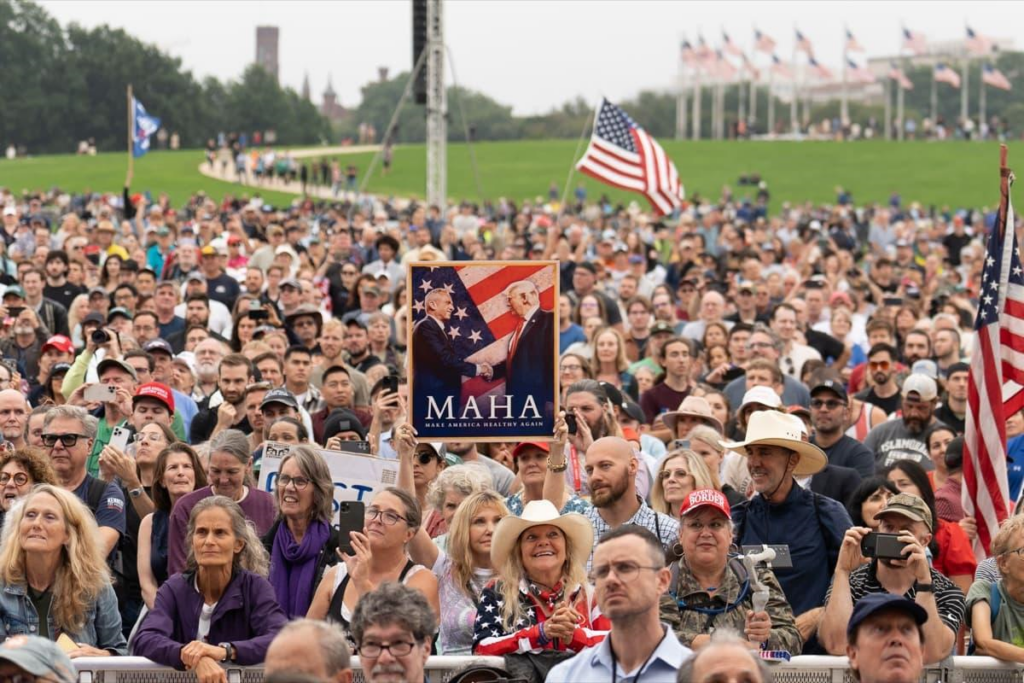
The official agenda is broad.
It encompasses food policy, chronic disease, childhood health, scientific research, healthcare, environmental exposures and questions surrounding public-health institutions.
The breadth is part of MAHA’s appeal.
It is also part of its problem.
As Karayil explained during the interview, MAHA is not one issue. It is “multidimensional.” The transcript identifies issues ranging from prescription prices and healthcare affordability to food reform, synthetic food dyes, agricultural policy, vaccine policy and data transparency.
That means two people can identify as MAHA supporters while disagreeing about a substantial number of individual policies.
They can nevertheless agree on the larger objective:
America should be healthier.
That common objective may be the movement’s most important political asset.
The Power—and Problem—of a Broad Coalition
Political coalitions are rarely built because everyone agrees.
They are built because enough people agree on something important enough to overcome their disagreements.
MAHA illustrates this dynamic particularly well.
The coalition contains people whose political histories do not fit neatly into the conventional Republican-Democrat divide. Karayil described MAHA voters as including former Democrats, independents, environmental voters, Sanders supporters and others who found aspects of Kennedy’s message more authentic or compelling than traditional party politics.
This is why MAHA is politically interesting.
It is not simply another conservative constituency.
Nor is it simply an extension of traditional Republican politics.
It contains people who may agree on food, corporate influence, environmental exposures, pharmaceutical pricing or public-health transparency while disagreeing sharply on other political questions.
Current MAHA organizations themselves emphasize a similarly broad agenda. MAHA Action lists priorities including food-system reform, restoring public trust in government agencies, healthcare reform and reducing exposure to substances it considers harmful.
The coalition therefore has an unusual structure:
Different political identities, overlapping health concerns.
That can be powerful.
But it creates a permanent balancing act.
Why MAHA Voters May Be the Last Persuadable Voters
Perhaps the most provocative idea in the interview is Karayil’s characterization of the MAHA voter as a persuadable voter.
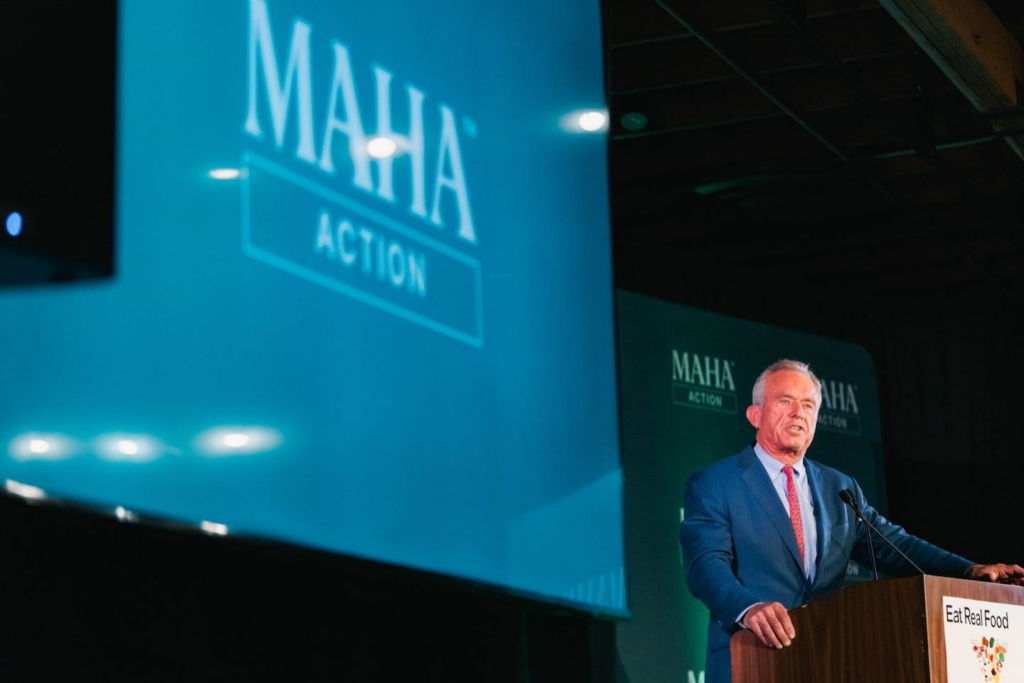
His argument is straightforward: America is intensely polarized, but MAHA attracts people who are not necessarily locked into conventional political identities.
Karayil describes the group as valuable precisely because both parties want them. He argues that whoever can hold these voters could gain an electoral advantage.
That creates an unusual political equation.
The MAHA voter can be viewed simultaneously as:
- a health-policy voter;
- a skeptical voter;
- an independent voter;
- a former Democrat;
- an unconventional Republican;
- a distrustful voter;
- or someone primarily motivated by their family’s health.
The category is therefore less about traditional ideology and more about what people want government to accomplish.
That distinction matters.
A voter who is primarily concerned with whether food is healthier, whether public-health information is trustworthy, whether environmental exposures are adequately regulated, or whether healthcare is affordable may not care whether an issue fits neatly into the traditional political spectrum.
They may simply ask:
Did you fix it?
That may be the most important question facing MAHA.
The Problem With Polls
The interview also began with a warning about political polling.
The concern was not that all polls are necessarily fraudulent. It was that the wording and construction of polling questions can influence the answers people provide.
Karayil agreed that polling data must be interpreted carefully because the way questions are phrased can influence results.
This matters enormously for MAHA.
A movement that crosses conventional ideological boundaries is particularly difficult to measure with conventional political questions.
Ask voters whether they support a controversial political figure and you may receive one answer.
Ask whether they support reducing chronic disease, improving food quality, increasing transparency or reducing conflicts of interest in public health and you may receive another.
The wording can change the apparent constituency.
That does not mean polling should be ignored.
It means polling should be understood as measurement, not reality itself.
The MAHA movement exists in an information environment where people increasingly question who produces the information, who funds it, how it is communicated and what incentives influence it.
That skepticism is not limited to polling.
It is central to the movement itself.
Health Is the Point of Convergence
For all of MAHA’s internal disagreements, the central concept remains surprisingly simple:
Health is the point of convergence.
Karayil repeatedly returned to the idea that the desire to make the country healthier resonates with people who otherwise disagree politically. The transcript identifies food reform, prevention, healthcare affordability and other health-related objectives as potential areas of common ground.
This helps explain why MAHA can bring together seemingly incompatible political constituencies.
Someone may be skeptical of pharmaceutical companies.
Someone else may be concerned about food additives.
Another voter may be focused on childhood chronic illness.
Another may care primarily about environmental contamination.
Another may want greater transparency from government agencies.
These are different concerns.
But they can converge around one question:
Why are Americans getting sicker, and what can be done about it?
That question has political power precisely because it is broader than a single policy.
RFK Jr.’s Unique Political Position
Robert F. Kennedy Jr. occupies an unusual place within American politics.
His political identity did not originate in the contemporary Republican movement. His family name carries a long association with Democratic politics, while his own political evolution eventually brought him into alliance with Donald Trump and the Republican coalition.
Karayil argues that this history matters.
He describes Kennedy as carrying a political lineage associated with working-class Democrats, civil rights, skepticism toward concentrated corporate power and a particular American political tradition that, in his view, has become politically homeless.
That history may help explain why Kennedy can speak to people who do not identify comfortably with contemporary partisan categories.
It also explains why the MAHA coalition does not necessarily look like a conventional Republican constituency.
The voters may have arrived for different reasons.
Some may have come through environmental concerns.
Others through distrust of pharmaceutical companies.
Others through COVID-era experiences.
Others through concerns about food.
Others through dissatisfaction with traditional political institutions.
The common denominator is not necessarily ideology.
It is skepticism and health.
MAHA’s Internal Contradiction
Here is where the movement faces its greatest challenge.
The broader the coalition becomes, the more difficult it becomes to maintain agreement.
Karayil describes MAHA as “multistranded” precisely because there are so many different health and policy issues inside it.
Vaccines, for example, are extraordinarily polarizing.
Food policy can be contentious.
Agriculture is contentious.
Environmental regulation is contentious.
Pharmaceutical policy is contentious.
Government authority is contentious.
Scientific institutions are contentious.
And yet all of these subjects can become part of the MAHA conversation.
That creates a paradox.
The diversity of MAHA makes the coalition possible, but the same diversity makes the coalition difficult to govern.
If one faction believes the government is moving too slowly on food reform, another believes it is moving too aggressively on regulation, and another is primarily concerned about vaccine policy, maintaining a coherent political identity becomes difficult.
Coalition politics requires compromise.
But compromise can also disappoint the people who joined because they expected transformation.
The Persuadable Voter Can Also Be the Most Disappointed Voter
This is perhaps the central lesson of the interview.
The MAHA voter is valuable because the voter is not permanently committed.
But that is also the danger.
Karayil explicitly argues that many MAHA voters are not married to the Republican Party or the administration. If they believe MAHA is underdelivering, they may leave.
That creates a very different political relationship from traditional partisan loyalty.
A committed partisan may tolerate disappointing results because party identity itself is part of the motivation.
A persuadable voter has fewer reasons to tolerate failure.
The persuadable voter asks for evidence.
The persuadable voter asks for results.
The persuadable voter asks whether the promises became policy.
And eventually, the persuadable voter may ask whether anything actually changed.
From COVID Resentment to Chronic Disease Prevention
Another major challenge is time.
The emotional and political environment created by COVID-19 cannot remain at maximum intensity forever.
Karayil acknowledged this directly in the interview. He described COVID as a once-in-a-generation event that helped bring MAHA into the political foreground, while noting that by 2026 the emotional immediacy of 2020 was already fading.
That creates a strategic necessity.
MAHA cannot remain merely a reaction to COVID.
It must become a framework for addressing chronic disease and long-term health.
That is a much harder task.
COVID created urgency.
Chronic disease requires persistence.
A political movement can mobilize quickly around an emergency.
It is much harder to sustain attention around dietary patterns, childhood health, environmental exposures, healthcare costs, scientific transparency and prevention year after year.
This is the difference between a political moment and a political movement.
Can Government Make People Healthy?
The interview also confronted an important philosophical question:
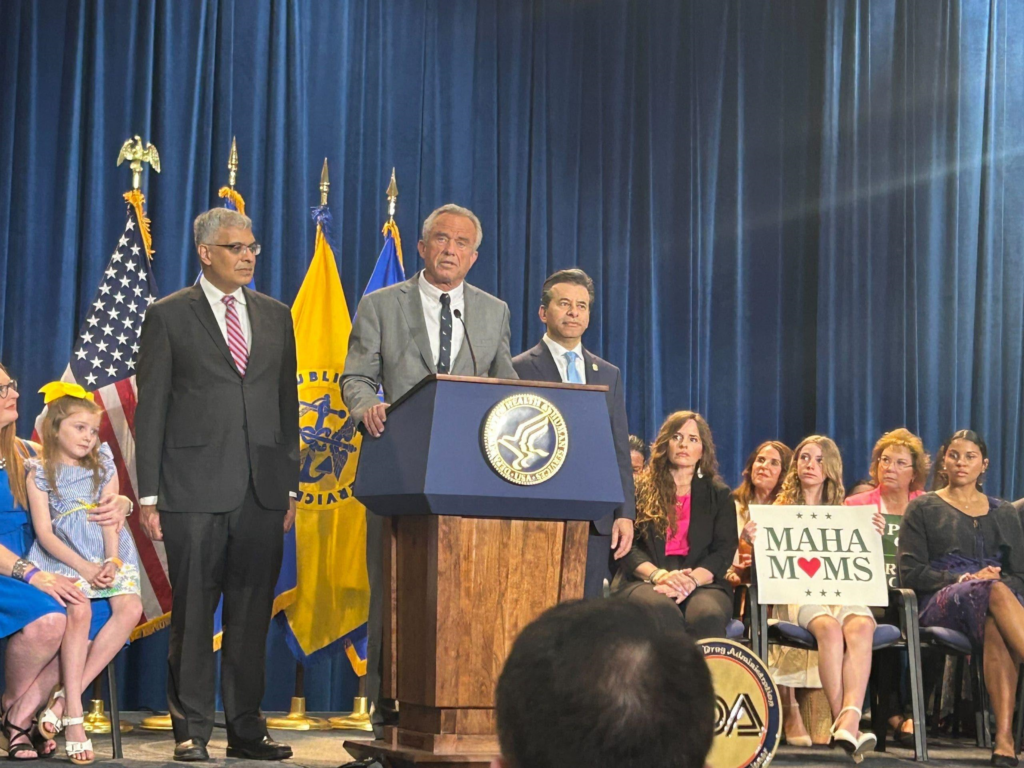
What should government actually do about health?
The answer offered in the conversation is that government cannot force people to live healthy lives.
It cannot legislate exercise.
It cannot force someone to eat broccoli.
It cannot mandate eight hours of sleep.
It cannot eliminate every unhealthy choice.
Karayil’s argument is instead that government can create conditions in which people have better information and are protected from harms imposed without meaningful consent.
That distinction is crucial.
The role of government becomes less about dictating individual behavior and more about establishing the conditions for informed choice.
That includes, according to the interview:
- a more transparent information environment;
- disclosure of conflicts of interest;
- greater transparency around scientific information;
- cleaner water;
- scrutiny of food ingredients;
- and policies designed to prevent harms imposed on people without their consent.
This is a potentially powerful middle ground.
It does not require government to become everyone’s doctor.
It requires government to make it easier for citizens to know what they are actually choosing.
The Information Environment May Be the Real Battle
One of the strongest ideas in the interview concerns information asymmetry.
Karayil argues that Americans face an enormous amount of conflicting health information. The result, he suggests, is “information paralysis”: people become unsure about what to eat, what to avoid and which authorities to trust.
This problem is larger than MAHA.
It is a problem for modern public health itself.
When citizens encounter competing claims from government agencies, corporations, universities, physicians, advocacy organizations, influencers and political groups, trust becomes a scarce resource.
Who should people believe?
And perhaps more importantly:
Why should they believe them?
The answer cannot simply be, “Because an institution said so.”
Trust increasingly requires transparency.
Who conducted the study?
Who funded it?
What conflicts of interest exist?
What data are available?
Can independent researchers examine the evidence?
What assumptions were made?
What happens when the evidence changes?
These questions are not inherently partisan.
They are requirements for a healthy information ecosystem.
Transparency Versus Authority
The MAHA debate therefore reaches beyond specific health policies.
It challenges the relationship between citizens and institutions.
A traditional model of public health can operate through institutional authority:
Experts determine the recommendation.
Government communicates it.
Citizens are expected to follow it.
The MAHA worldview, as represented in this interview, asks for something different:
Show the evidence.
That does not automatically make every MAHA claim correct.
Skepticism is not proof.
But skepticism can serve a useful democratic function when it demands greater transparency and accountability.
This distinction matters because a movement built entirely around distrust eventually faces a problem of its own.
If every institution is corrupt, every expert is compromised and every official source is propaganda, then the movement has no reliable foundation either.
A durable health movement therefore needs more than skepticism.
It needs better standards of evidence.
Why Narrative Matters
Data alone rarely creates a political movement.
People need a story that explains why the data matter.
MAHA has one of the simplest political narratives available:
America is sick.
The causes are systemic.
Institutions have failed.
The food system needs reform.
Public-health institutions need greater transparency.
Government should address root causes.
And Americans should have greater freedom to make informed health decisions.
Whether every part of that narrative survives scrutiny is a separate question.
But its political power is obvious.
The narrative connects individual experience to systemic explanation.
A parent sees a child struggling with chronic health problems.
A consumer looks at a food label.
A patient sees the cost of medication.
A citizen loses confidence in an institution.
A farmer faces regulatory pressures.
Different experiences become connected through a common story.
That is how coalitions form.
The Danger of Overpromising
But narrative creates another risk.
The larger the promise, the greater the disappointment when results do not match expectations.
The MAHA movement has attracted people precisely because it promises significant change.
The official federal MAHA agenda itself describes an ambitious effort to reform America’s food, health and scientific systems and address chronic disease.
That creates a high standard.
If people believe MAHA will fundamentally transform American health, incremental victories may not be enough.
If people believe their concerns are finally being heard, symbolic gestures may eventually become insufficient.
And if people believe political power has been captured by the movement, they will expect political results.
This is why Karayil’s warning about delivering “wins” matters. The interview argues that maintaining the coalition requires tangible accomplishments rather than relying indefinitely on political alignment.
MAHA Must Become More Than a Reaction
The most important question for MAHA may therefore be what happens after the original political energy fades.
Karayil describes the goal as institutionalizing MAHA principles so that the movement can become durable rather than disappearing with the political moment.
That is the difference between a campaign slogan and a governing philosophy.
A slogan can mobilize people.
A governing philosophy must survive disagreement.
It must produce measurable policies.
It must withstand changes in leadership.
It must survive the news cycle.
It must survive the next election.
And eventually, it must survive the person whose name helped create it.
That may be MAHA’s greatest test.
The Real Test Is Results
The MAHA movement does not need every American to agree about everything.
That is impossible.
The coalition’s strength may actually depend on its ability to tolerate disagreement.
The more important requirement is that people can agree on a limited number of measurable objectives.
Better health.
Greater transparency.
More reliable scientific information.
A healthier food environment.
Lower barriers to prevention.
Greater accountability.
More informed choice.
If those objectives produce measurable improvements, the coalition has a reason to survive.
If they do not, political loyalty alone may not save it.
That is especially true because the MAHA constituency is not uniformly partisan.
These voters arrived through different doors.
They can leave through different doors too.
The Last Persuadable Voter
That brings us back to the title of our conversation: the last persuadable voter.
The phrase captures something important about contemporary American politics.
When political identities become increasingly rigid, the most valuable voter may be the person who refuses to be permanently categorized.
The MAHA voter can be conservative on one issue, liberal on another, libertarian on a third and completely independent on a fourth.
That makes the voter difficult to classify.
But it also makes the voter politically important.
The challenge for the Republican coalition is obvious: can it retain these voters without alienating them by abandoning the health concerns that brought them into the coalition?
The challenge for MAHA itself is even more fundamental:
Can a coalition built from political distrust become a durable governing movement without becoming another institution people distrust?
That is the paradox.
MAHA’s greatest asset is skepticism.
Its greatest vulnerability is disappointment.
Its greatest opportunity is health.
And its greatest political resource may be the voters who have not yet decided where they belong.
The Future of the MAHA Movement
The future of Make America Healthy Again will probably depend less on whether the slogan remains popular and more on whether the movement can translate its broad coalition into durable policy.
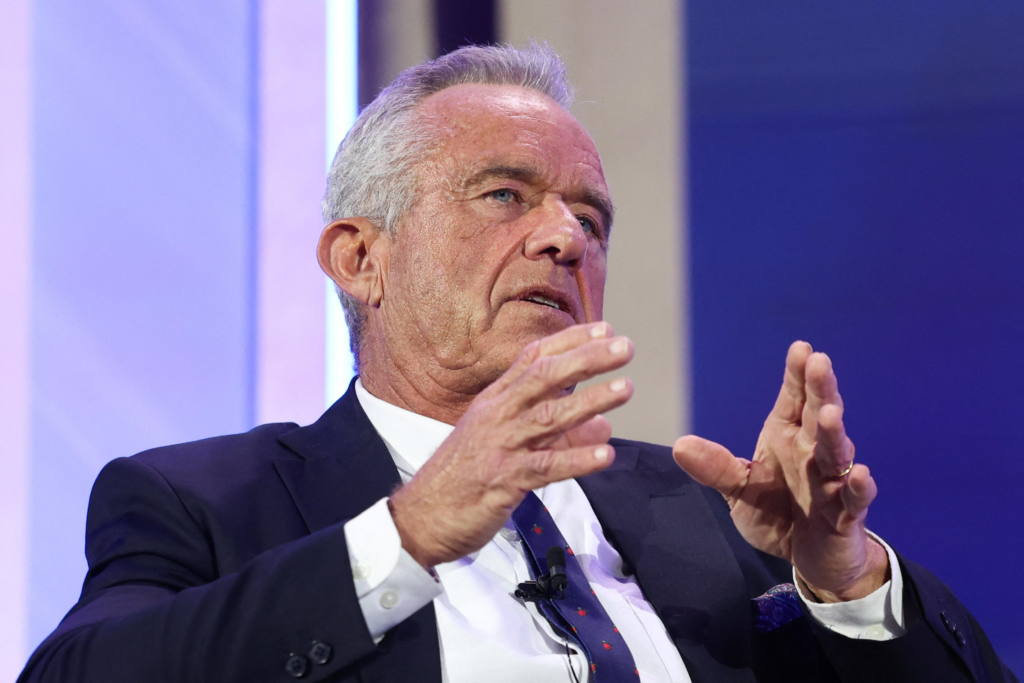
There are signs that MAHA has already moved beyond a campaign slogan. The federal government has established a formal MAHA agenda, while organizations such as the MAHA Institute and MAHA Action are building political, policy and grassroots structures around the movement.
But institutionalization creates a new challenge.
A movement born from skepticism must remain willing to scrutinize its own side.
That means MAHA supporters should be able to criticize Republican politicians.
They should be able to criticize the Trump administration.
They should be able to criticize RFK Jr.
They should be able to challenge MAHA organizations.
They should be able to question scientific claims coming from allies as readily as they question claims coming from opponents.
Otherwise skepticism becomes tribalism.
And tribalism would destroy the very independence that makes the MAHA voter valuable.
Final Thought: Health Before Party
The most compelling part of the MAHA project may ultimately have little to do with partisan politics.
It is the possibility of creating a political conversation in which health becomes a point of common ground.
People do not need to agree about every political question to agree that children should be healthy.
They do not need to share the same ideology to demand honest information.
They do not need to vote for the same candidates to want cleaner food, safer water, affordable healthcare and transparent institutions.
That is the opportunity.
But it comes with a condition.
MAHA has to deliver.
The persuadable voter cannot be permanently persuaded by rhetoric.
The voter will eventually look at outcomes.
If MAHA can turn skepticism into transparency, political energy into durable reform, and a temporary coalition into measurable improvements in health, it could become much more than a campaign slogan.
If it cannot, the same independence that made the MAHA voter politically valuable may make that voter the first to leave.
The future of the movement may therefore depend on one deceptively simple question:
Can MAHA make America healthy enough to keep the voters who made MAHA politically powerful?
About the Interview
This article is based primarily on the interview “MAHA, RFK Jr., and the Last Persuadable Voter” featuring Patriek Karayil. The discussion covers MAHA’s political coalition, health reform, persuadable voters, information transparency, chronic disease prevention, government accountability and the challenge of turning a post-COVID political movement into a durable governing framework.
Related Resources
- Patriek Karayil: https://x.com/PatriekKarayil
- MAHA Institute: https://www.mahainstitute.us/
- Official HHS MAHA initiative: https://www.hhs.gov/maha/index.html
FAQs
What is the MAHA movement?
The MAHA movement, or Make America Healthy Again movement, is a broad health-policy coalition focused on improving American health and addressing issues such as chronic disease, food policy, healthcare, environmental exposures, scientific transparency, and public health.
What does RFK Jr. have to do with the MAHA movement?
RFK Jr. became a central political figure associated with MAHA by bringing together voters concerned about chronic disease, food policy, environmental health, pharmaceutical influence, public-health institutions, and health freedom.
Who are MAHA voters?
MAHA voters are a politically diverse group that can include former Democrats, independents, unconventional Republicans, and voters who prioritize health and institutional reform over traditional party loyalty. In the interview, Patriek Karayil describes them as an unusually important group of persuadable voters.
Why are MAHA voters considered persuadable?
MAHA voters may not be permanently committed to one political party. Their support can depend on whether political leaders actually deliver meaningful results on the health issues that motivated them. The interview emphasizes that failure to deliver could weaken the coalition.
What issues does the MAHA movement address?
The MAHA movement encompasses multiple health-related issues, including food reform, healthcare affordability, prescription prices, environmental exposures, vaccine policy, chronic disease prevention, and data and scientific transparency.
Can the government make people healthy?
The interview argues that government cannot realistically force individuals to exercise, eat certain foods, sleep properly, or otherwise live healthy lifestyles. Instead, government can help create conditions that make healthier choices possible by improving transparency and addressing harms imposed without meaningful consent.
Why is transparency important to MAHA?
Transparency is important because the movement questions whether citizens receive complete and trustworthy health information. The interview emphasizes conflicts of interest, scientific transparency, dietary guidance, and the broader information environment.
Is MAHA only about COVID-19?
No. While COVID-19 helped bring the health-freedom movement and MAHA into greater political prominence, the interview argues that MAHA must eventually move beyond COVID-related resentment toward longer-term issues such as chronic disease prevention and sustainable health reform.
What is the biggest challenge facing the MAHA movement?
One of the biggest challenges is maintaining unity within a coalition that contains many different factions and priorities. The movement’s diversity creates political strength, but it can also make agreement and coherent policymaking difficult.
Can the MAHA movement become a lasting political movement?
According to the interview, MAHA would need to institutionalize its principles, deliver measurable results, and continue addressing chronic disease and health reform after the political urgency surrounding COVID fades.
Discover more from Randy Bock MD PC
Subscribe to get the latest posts sent to your email.