How First Principles Thinking Challenges Modern Pandemic Policy
For more than a century, public health has been credited with some of humanity’s greatest achievements. Clean drinking water, improved sanitation, vaccination campaigns, and advances in infectious disease control have dramatically increased life expectancy across the globe. Yet the COVID-19 pandemic reignited an uncomfortable question that many assumed had already been settled:
Where should public health end and individual liberty begin?
During the pandemic, governments around the world imposed unprecedented lockdowns, business closures, travel restrictions, vaccine mandates, school shutdowns, and mass quarantine policies. These interventions were often presented as unquestionable necessities, supported by “the science” and justified in the name of protecting society.
But were they?
According to economist and former Australian senior civil servant Sanjeev Sabhlok, the debate extends far beyond COVID-19. It reaches back hundreds of years into the very foundations of public health itself. In a wide-ranging conversation with Randy Bock, Sabhlok argues that many of today’s most controversial policies are built upon assumptions that have rarely been examined from first principles.
Rather than asking whether a particular lockdown succeeded or failed, he asks a more fundamental question:
Why does public health possess the authority to regulate the lives of healthy individuals in the first place?
That question leads into a fascinating historical journey through economics, political philosophy, public health ethics, quarantine history, and the evolution of government power during times of crisis.
Whether readers ultimately agree with Sabhlok’s conclusions or not, his challenge is difficult to dismiss: if societies are willing to surrender extraordinary powers to governments during emergencies, they should first understand the historical foundations upon which those powers rest.
Public Health Before Politics
Modern public health is often viewed as an unquestionable social good. Governments monitor disease outbreaks, regulate sanitation, inspect food supplies, oversee vaccination programs, and coordinate emergency responses to epidemics. These responsibilities have become so deeply embedded within modern society that few people stop to ask why governments perform them—or where the limits of those responsibilities should lie.
Historically, however, public health was far more modest in scope.
Its earliest objectives were practical rather than ideological: ensuring access to clean water, removing sewage from densely populated areas, improving urban sanitation, and reducing the spread of infectious disease through environmental improvements. These efforts produced measurable benefits and became some of the most successful government interventions of the nineteenth century.
Over time, however, the scope of public health expanded dramatically.
Today, public health agencies routinely address issues that extend far beyond communicable diseases. Obesity, smoking, alcohol consumption, climate change, mental health, dietary choices, firearm violence, social inequality, and even loneliness have increasingly been framed as public health concerns.
Critics argue that this expansion has blurred the distinction between protecting communities from genuine external harms and influencing personal lifestyle choices.
Sabhlok contends that this evolution occurred without society ever pausing to ask a foundational question:
What is the legitimate purpose of public health?
What Does “First Principles” Really Mean?
One of the central themes throughout Sabhlok’s work is the concept of first principles thinking.
The phrase is often associated with science and engineering, but economists have long used the same approach when evaluating government policy.
Instead of asking whether an existing institution performs well, economists begin with a much simpler question:
If government did not already perform this function, would there be a compelling reason to create it today?
This approach strips away tradition, political assumptions, and institutional inertia.
For every proposed government intervention, economists typically ask several sequential questions:
- Does a genuine market failure exist?
- Are individuals incapable of solving the problem themselves?
- Does government possess information unavailable to citizens?
- Would government intervention create greater benefits than costs?
- Could the same objective be achieved with fewer restrictions on individual liberty?
These questions are routinely applied to taxation, transportation, education, environmental regulation, and monetary policy.
Yet Sabhlok argues that remarkably few scholars have ever applied the same rigorous analysis to public health itself.
After reviewing hundreds of public health textbooks, journal articles, and policy documents, he concludes that the field largely assumes its own legitimacy rather than continually re-evaluating it.
Whether one agrees with that assessment or not, it highlights an important intellectual distinction.
Questioning the scope of public health is not the same as opposing sanitation, vaccination, or disease prevention. Instead, it asks whether each intervention should continually justify itself through evidence, proportionality, and careful cost-benefit analysis rather than relying on institutional authority alone.
A Forgotten Question in Public Health
Throughout history, societies have repeatedly expanded government authority during moments of crisis.
- Wars have produced emergency powers.
- Economic collapses have expanded financial regulation.
- Terrorist attacks have increased surveillance.
- Pandemics have broadened public health authority.
The difficult question is not whether emergency actions are sometimes justified. The more difficult question is whether those temporary powers quietly become permanent institutions long after the emergency has passed.
Sabhlok believes this pattern has shaped the modern public health establishment.
What began as an effort to improve sanitation and prevent epidemics gradually evolved into a far broader system capable of regulating large areas of everyday life.
From this perspective, COVID-19 did not create an entirely new model of public health—it exposed trends that had been developing for decades.
Understanding how that transformation occurred requires looking far beyond the events of 2020. It requires returning to the nineteenth century, when economists, physicians, and political reformers first debated the proper relationship between disease prevention, government authority, and individual freedom.
Those forgotten debates continue to influence public health policy today, often in ways that few policymakers—or citizens—fully recognize.
The Forgotten History of Quarantine
To understand today’s debates over lockdowns and public health policy, it is necessary to travel back more than six centuries.
Long before epidemiologists understood bacteria, viruses, or vectors of disease transmission, European societies faced an invisible enemy they could neither explain nor control: the plague.
With little scientific knowledge available, governments turned to one of the earliest organized public health interventions in history—quarantine.
The term itself originated from the Venetian practice of requiring ships arriving from plague-affected regions to remain isolated for forty days before passengers or cargo were permitted to disembark. The Italian phrase quaranta giorni, meaning “forty days,” eventually evolved into the English word quarantine.
At the time, the policy appeared reasonable.
If disease arrived from abroad, preventing potentially infected travelers from entering cities might reduce transmission.
The difficulty, however, was that medieval Europe had almost no understanding of how diseases actually spread.
Bubonic plague was largely transmitted through fleas carried by rodents, while many other infectious diseases followed entirely different transmission pathways. Governments were attempting to solve biological problems using assumptions rather than scientific evidence.
Despite these limitations, quarantine gradually became embedded within public health practice.
For centuries, it remained one of the most recognizable tools governments employed during epidemics.
Yet according to Sanjeev Sabhlok, remarkably few modern public health professionals have seriously revisited the historical evidence surrounding quarantine’s effectiveness—or the vigorous debates that surrounded it during the nineteenth century.
Jeremy Bentham: Defining the Proper Role of Government
One of the first thinkers to influence modern public health was the English philosopher and economist Jeremy Bentham.
Today, Bentham is best known as the founder of utilitarianism—the principle that governments should pursue policies producing “the greatest happiness for the greatest number.”
Although critics often portray utilitarianism as a justification for broad government intervention, Sabhlok argues that Bentham’s actual writings reveal a more nuanced position.
Bentham believed government intervention should be limited, targeted, and justified through careful cost-benefit analysis.
Rather than assuming government should regulate every aspect of society, he asked policymakers to demonstrate that intervention would produce greater overall benefits than allowing individuals and markets to address problems independently.
In many ways, this became an early form of modern economic policy analysis.
Bentham recognized that certain public health problems—particularly sanitation, clean water, and contagious disease—created what economists now describe as negative externalities. One person’s actions could impose costs on others who had no ability to avoid those consequences.
These situations, he argued, could justify carefully designed government action.
Importantly, however, Bentham did not advocate unlimited authority.
His writings consistently emphasized proportionality, evidence, and minimizing unnecessary interference with individual liberty.
Sabhlok believes this distinction has largely disappeared from modern public health discussions, where intervention is often assumed to be justified simply because officials claim to be acting in the public interest.
Whether one accepts that criticism or not, Bentham’s framework raises a timeless policy question:
How much government intervention is enough—and when does necessary protection become unnecessary control?
Charles Maclean: The Forgotten Opponent of Quarantine
If Bentham helped define why governments might intervene in matters of public health, physician Charles Maclean challenged one of the most important interventions of his era.
Today, Maclean is rarely mentioned outside specialized historical scholarship.
Yet during the early nineteenth century, he became one of the most outspoken critics of quarantine policy in Britain.
Unlike many of his contemporaries, Maclean did not reject science or deny the existence of infectious disease.
Instead, he questioned whether quarantine actually achieved its intended purpose.
After examining numerous plague outbreaks, shipping records, and historical accounts, Maclean concluded that quarantines frequently imposed enormous economic and social costs while failing to prevent disease transmission.
His criticism was rooted not in ideology but in observation.
He argued that outbreaks continued despite strict quarantines, suggesting that governments often misunderstood how diseases spread.
Although some of his conclusions reflected the limited scientific knowledge of his time, his broader method was remarkably modern.
Rather than defending existing policies because they had always been used, Maclean insisted that governments evaluate them using empirical evidence.
His central question remains surprisingly relevant today:
If a public health intervention imposes enormous social costs, shouldn’t its effectiveness be demonstrated rather than assumed?
Sabhlok believes Maclean’s work has been largely overlooked within contemporary public health education.
While modern textbooks often celebrate the historical development of quarantine, they devote comparatively little attention to the vigorous nineteenth-century debates questioning whether quarantine worked at all.
That omission, he argues, leaves students with an incomplete understanding of public health history.
Edwin Chadwick and the Sanitation Revolution
If Charles Maclean represented skepticism toward quarantine, Edwin Chadwick represented one of public health’s greatest success stories.
Working in Victorian England during rapid industrialization, Chadwick confronted cities overwhelmed by overcrowding, inadequate sanitation, contaminated drinking water, and recurring outbreaks of cholera and typhoid.
Unlike earlier generations, Chadwick focused less on isolating people and more on improving the environment in which they lived.
His landmark investigations documented appalling urban conditions:
- Raw sewage flowing through streets.
- Drinking water contaminated by human waste.
- Overcrowded housing with poor ventilation.
- Limited waste disposal systems.
Rather than relying on quarantine alone, Chadwick advocated massive investments in sanitation infrastructure.
- Modern sewer systems.
- Safe drinking water.
- Improved drainage.
- Waste management.
- Public hygiene.
These reforms transformed urban health throughout Britain and eventually influenced public health systems across Europe, North America, and beyond.
Although Chadwick misunderstood some aspects of disease transmission—germ theory had not yet been fully established—his practical reforms dramatically reduced mortality.
For Sabhlok, this distinction is significant.
The greatest achievements in public health did not arise primarily from restricting healthy people’s movements.
They emerged from addressing environmental conditions that allowed disease to flourish in the first place.
In other words, preventing illness often proved more effective than attempting to control populations after outbreaks had already begun.
From Sanitation to Expanding Government Authority
The success of sanitation reforms elevated public health’s reputation enormously.
Governments demonstrated that well-designed interventions could save lives.
As a result, public health institutions gradually expanded their responsibilities.
Initially, they focused on clean water, waste disposal, housing standards, and infectious diseases.
Later, their remit widened.
- Nutrition.
- Smoking.
- Alcohol consumption.
- Air pollution.
- Road safety.
- Mental health.
- Climate change.
- Social inequality.
- Obesity.
- Violence.
Each expansion was often justified by genuine concerns about population health.
Yet critics argue that this steady growth also transformed public health from a discipline primarily concerned with controlling communicable diseases into one increasingly involved in shaping individual behavior.
That evolution lies at the heart of today’s debates.
Supporters contend that governments must address the broad social determinants of health if they hope to improve population outcomes.
Critics respond that public health should distinguish more carefully between preventing harm to others and directing private lifestyle choices.
COVID-19 brought those competing philosophies into direct conflict, forcing governments to balance collective safety against individual liberty on a scale rarely seen in modern democratic societies.
Medical Panic: The Missing Variable in Pandemic Policy
While much of the public debate surrounding COVID-19 focused on epidemiological models, infection rates, and government mandates, Sanjeev Sabhlok believes a different factor deserves far greater attention:
Human psychology.
Specifically, he argues that pandemic policy cannot be fully understood without examining medical panic—the fear experienced by healthcare professionals when confronting a novel and potentially deadly disease.
Rather than viewing lockdowns solely as political decisions, Sabhlok suggests they may also reflect institutional reactions to uncertainty, limited resources, and the natural instinct for self-preservation.
His argument shifts the discussion away from ideology and toward a broader question:
How do human beings make decisions when they believe lives—including their own—are at immediate risk?
Fear Has Always Shaped Public Health
History suggests that fear has frequently influenced responses to epidemics.
During outbreaks of plague in medieval and early modern Europe, physicians often faced impossible circumstances.
Medical science had little understanding of infectious disease.
Effective treatments were virtually nonexistent.
Protective equipment did not exist.
Mortality rates could be devastating.
Historical records describe physicians leaving affected cities, refusing patients, or limiting direct contact whenever possible. While many doctors displayed extraordinary courage, others understandably feared for their own safety and the safety of their families.
From Sabhlok’s perspective, this reaction should not be viewed simply as a moral failure.
It should be recognized as a predictable human response.
Doctors are not immune to fear.
In many respects, they may have even greater reasons to panic than the general population because they understand the potential consequences of emerging diseases while simultaneously facing the greatest exposure.
This perspective does not excuse poor policy decisions.
Instead, it attempts to explain how those decisions might arise under conditions of extreme uncertainty.
When Healthcare Systems Fear Collapse
One recurring message throughout the COVID-19 pandemic was the need to “flatten the curve.”
The concept was straightforward.
If infections occurred too rapidly, hospitals could exceed their capacity to provide care.
Intensive care units might become overwhelmed.
Medical staff could become ill themselves.
Essential services could fail.
Whether particular projections ultimately proved accurate in every location remains the subject of ongoing debate.
However, the underlying concern reflected a genuine operational challenge faced by healthcare systems.
Modern hospitals are designed for efficiency.
Under ordinary conditions, this approach makes economic sense.
Hospitals maintain enough beds, staff, and equipment to meet expected demand while avoiding the enormous expense of maintaining large amounts of unused capacity.
The downside becomes apparent during extraordinary emergencies.
If demand suddenly increases far beyond normal levels, there may be little reserve capacity available.
Sabhlok argues that this structural reality may contribute significantly to medical panic.
Healthcare professionals understand these limitations better than anyone else.
When confronted with a rapidly spreading disease whose characteristics remain uncertain, many naturally fear that the system itself may fail.
That fear, he suggests, can influence recommendations made to political leaders.
Do Leaders Shape Public Fear?
Public anxiety rarely develops in isolation.
Citizens often look to trusted experts for guidance during crises.
Government officials.
Scientists.
Public health agencies.
Medical associations.
Hospital leaders.
Their language influences how societies interpret risk.
Sabhlok points to contrasting international experiences during COVID-19 to illustrate this dynamic.
He argues that when senior medical leaders communicate confidence, acknowledge uncertainty honestly, and avoid alarmist messaging, public reactions tend to remain calmer.
Conversely, when officials emphasize worst-case scenarios, catastrophic projections, or emergency rhetoric, public fear may intensify regardless of whether those outcomes ultimately occur.
This does not necessarily imply bad faith.
Leaders facing incomplete information often believe emphasizing caution is the responsible course.
Nevertheless, communication itself becomes part of the public health response.
How risks are described can shape behaviour almost as much as the risks themselves.
Sweden’s Different Approach
Among developed nations, Sweden became one of the most closely watched exceptions to widespread lockdown policies.
Rather than imposing many of the strict legal restrictions adopted elsewhere, Swedish authorities relied more heavily on voluntary recommendations, personal responsibility, and existing pandemic preparedness plans.
Chief State Epidemiologist Anders Tegnell became the public face of that strategy.
Throughout the pandemic, Tegnell consistently communicated in measured, restrained language.
He acknowledged uncertainty.
He advised caution.
But he generally avoided presenting COVID-19 as an existential threat requiring indefinite suspension of normal society.
Supporters viewed this approach as an example of calm leadership grounded in proportionality.
Critics argued that Sweden accepted avoidable risks, particularly during the early stages of the pandemic.
Even today, researchers continue to debate Sweden’s overall outcomes, balancing mortality, healthcare capacity, educational disruption, economic effects, and long-term societal impacts.
For Sabhlok, however, Sweden illustrates a broader principle.
Leadership style matters.
A calm public message can reduce widespread panic even when confronting significant uncertainty.
Whether one agrees with Sweden’s policy choices or not, the country’s experience highlights the importance of communication alongside medical interventions.
The Cost of Fear
Public health discussions often focus on measurable outcomes:
- Infection rates
- Hospitalizations
- Deaths
- Vaccination coverage
- Economic indicators
Far less attention is paid to the consequences of fear itself.
Yet fear carries substantial costs.
Businesses delay investment.
Schools close.
Routine medical care is postponed.
Mental health deteriorates.
Families become isolated.
Trust in institutions weakens.
Communities become increasingly polarized.
These effects may not appear immediately in epidemiological charts, but they shape societies for years after emergencies end.
Sabhlok argues that governments should therefore evaluate pandemic policies using broader cost-benefit analysis rather than measuring success solely by reductions in disease transmission.
Such an approach would consider both direct health outcomes and indirect consequences affecting education, mental health, economic opportunity, civil liberties, and social cohesion.
This perspective does not reject public health interventions.
Rather, it insists that every intervention should be assessed within the context of its full societal impact.
Beyond COVID-19
One of the most striking aspects of Sabhlok’s argument is that he does not view COVID-19 as unique.
Instead, he sees it as one example within a much longer historical pattern.
Across centuries, societies have repeatedly encountered unfamiliar diseases.
Officials have faced uncertainty.
Medical professionals have feared being overwhelmed.
Governments have expanded emergency powers.
Citizens have accepted extraordinary restrictions in exchange for promised safety.
Most emergencies eventually pass.
The institutions created during those emergencies, however, often remain.
This historical pattern raises an enduring policy question that extends well beyond COVID-19:
How can democratic societies prepare for future pandemics without allowing emergency measures to become permanent features of government?
Answering that question requires more than better epidemiological models.
It requires examining history, economics, psychology, ethics, and constitutional principles together.
Only then can public health policies balance two objectives that are sometimes presented as opposites but are ultimately inseparable:
Protecting lives while preserving freedom.
Preparing for the Next Pandemic: Can Public Health Be Rebuilt on First Principles?
After examining centuries of public health history, Sanjeev Sabhlok arrives at a conclusion that differs from many post-COVID reform proposals.
He argues that the primary lesson of the pandemic is not simply that governments overreacted—or underreacted—but that modern public health institutions should return to first-principles thinking.
Instead of assuming every existing policy deserves to continue, policymakers should continually ask fundamental questions:
- What specific problem is this intervention trying to solve?
- Is there clear evidence that it works?
- Are the benefits proportional to the costs?
- Could the same objective be achieved through less restrictive means?
- How will emergency powers be limited once the crisis has passed?
These questions, Sabhlok believes, should become routine components of public health decision-making rather than exceptional philosophical exercises.
A Different Model for Pandemic Preparedness
One of Sabhlok’s more ambitious proposals concerns healthcare capacity itself.
Rather than relying on widespread societal restrictions whenever hospitals approach capacity, he argues that governments should invest more heavily in resilient healthcare infrastructure before emergencies occur.
His vision includes:
- Greater surge capacity within hospitals.
- Dedicated infectious disease treatment facilities.
- Larger strategic reserves of protective equipment.
- Better training for healthcare workers.
- Clear operational plans for future outbreaks.
- Systems designed to isolate infectious patients while minimizing disruption to the broader community.
The underlying principle is straightforward.
If healthcare systems remain confident that they can manage sudden increases in patient volume, there may be less pressure to recommend extraordinary restrictions affecting entire populations.
Critics may question the financial cost of maintaining additional capacity that could remain unused for long periods.
Supporters, however, argue that the economic and social costs experienced during COVID-19 demonstrate that resilience itself has value.
The debate ultimately reflects differing judgments about risk, preparedness, and how societies choose to insure themselves against low-probability but high-impact events.
Public Health and Individual Liberty Are Not Opposing Goals
Perhaps the most important takeaway from the interview is that the discussion need not be framed as a choice between public health and freedom.
That framing often dominates public debate.
One side emphasizes protecting lives.
The other emphasizes protecting civil liberties.
In reality, democratic societies require both.
Public health institutions exist because infectious diseases can create genuine risks that individuals cannot always manage alone.
At the same time, constitutional democracies recognize that emergency powers should remain proportionate, transparent, and subject to ongoing review.
The challenge is finding a framework that respects both principles simultaneously.
History offers examples supporting each concern.
Poor sanitation devastated nineteenth-century cities until governments invested in clean water and sewer systems.
Conversely, history also shows that emergency powers adopted during crises can outlast the emergencies that justified them.
Recognizing both realities encourages more balanced policymaking than viewing either public health or liberty as absolute values.
Lessons from History
One recurring theme throughout the conversation is the importance of historical memory.
Many contemporary debates surrounding lockdowns, quarantine, and pandemic management are often presented as though they emerged for the first time in 2020.
In reality, similar arguments have appeared repeatedly over centuries.
Physicians, economists, political philosophers, and government officials have long disagreed about:
- The effectiveness of quarantine.
- The proper role of government during epidemics.
- The balance between collective safety and individual rights.
- The limits of emergency authority.
- The responsibilities owed to healthcare workers.
Understanding these earlier debates does not automatically answer today’s policy questions.
It does, however, remind us that many of our current disagreements have deep historical roots.
Public health has always involved difficult trade-offs.
COVID-19 did not create those tensions.
It revealed them.
Conclusion: Asking Better Questions
The COVID-19 pandemic generated countless arguments about masks, vaccines, lockdowns, school closures, travel restrictions, and public health mandates.
Many of those debates became intensely political.
Sanjeev Sabhlok proposes stepping back from the immediate controversies and asking a different set of questions altogether.
Rather than beginning with ideology, he begins with first principles.
What is the legitimate purpose of public health?
Which interventions produce measurable public benefit?
When should governments intervene?
How should costs be weighed alongside benefits?
How can societies protect vulnerable populations without unnecessarily restricting healthy individuals?
Reasonable people will undoubtedly answer these questions differently.
Some readers will agree with Sabhlok’s historical interpretation.
Others will challenge aspects of his conclusions or emphasize different evidence.
That disagreement is both expected and healthy.
The value of revisiting first principles lies not in guaranteeing unanimous answers but in encouraging more rigorous public debate.
Public health has improved millions of lives through sanitation, clean water, vaccination, nutrition, and disease prevention.
Those achievements deserve recognition.
At the same time, history reminds us that every expansion of governmental authority should remain open to careful scrutiny.
Democratic societies are strongest when evidence, transparency, and open discussion guide public policy rather than fear or unquestioned assumptions.
As new infectious diseases inevitably emerge, the challenge will not simply be responding quickly.
It will be responding wisely.
Frequently Asked Questions
What is public health?
Public health is the science and practice of protecting and improving the health of populations through disease prevention, sanitation, health education, policy, and community-wide interventions.
What is quarantine?
Quarantine refers to restricting the movement of people who may have been exposed to an infectious disease in order to reduce potential transmission while determining whether they become ill.
What is the difference between quarantine and isolation?
Isolation separates individuals who are known to be infected from others. Quarantine generally applies to people who may have been exposed but are not yet known to be ill.
Who was Jeremy Bentham?
Jeremy Bentham was an English philosopher, jurist, and economist whose theory of utilitarianism influenced modern public policy, law, and cost-benefit analysis.
Who was Charles Maclean?
Charles Maclean was a nineteenth-century physician who questioned the effectiveness of quarantine and argued that public health policies should be evaluated through observation and empirical evidence.
Who was Edwin Chadwick?
Edwin Chadwick was a British social reformer whose work on sanitation, sewer systems, and clean drinking water helped shape modern public health and significantly reduced infectious disease in Victorian Britain.
What are first principles in public policy?
First-principles thinking involves examining a policy from its most fundamental assumptions rather than accepting existing institutions or practices simply because they already exist.
Why is balancing public health and individual liberty important?
Public health measures can protect communities from infectious disease, while individual liberties safeguard personal autonomy and democratic governance. Effective policy seeks to protect both rather than treating them as mutually exclusive goals.
Find Dr. Randall Bock’s articles at Brownstone:

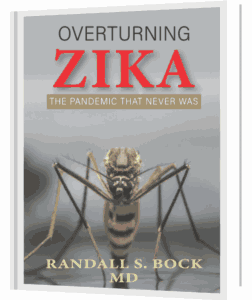
Get Dr. Randall Bock’s Book “Overturning Zika: The Pandemic That Never Was”
Discover more from Randy Bock MD PC
Subscribe to get the latest posts sent to your email.